We often imagine “hell” as a distant realm or a condition reached after death. This passage of the Gita turns our attention to life as it is lived now
Read essay →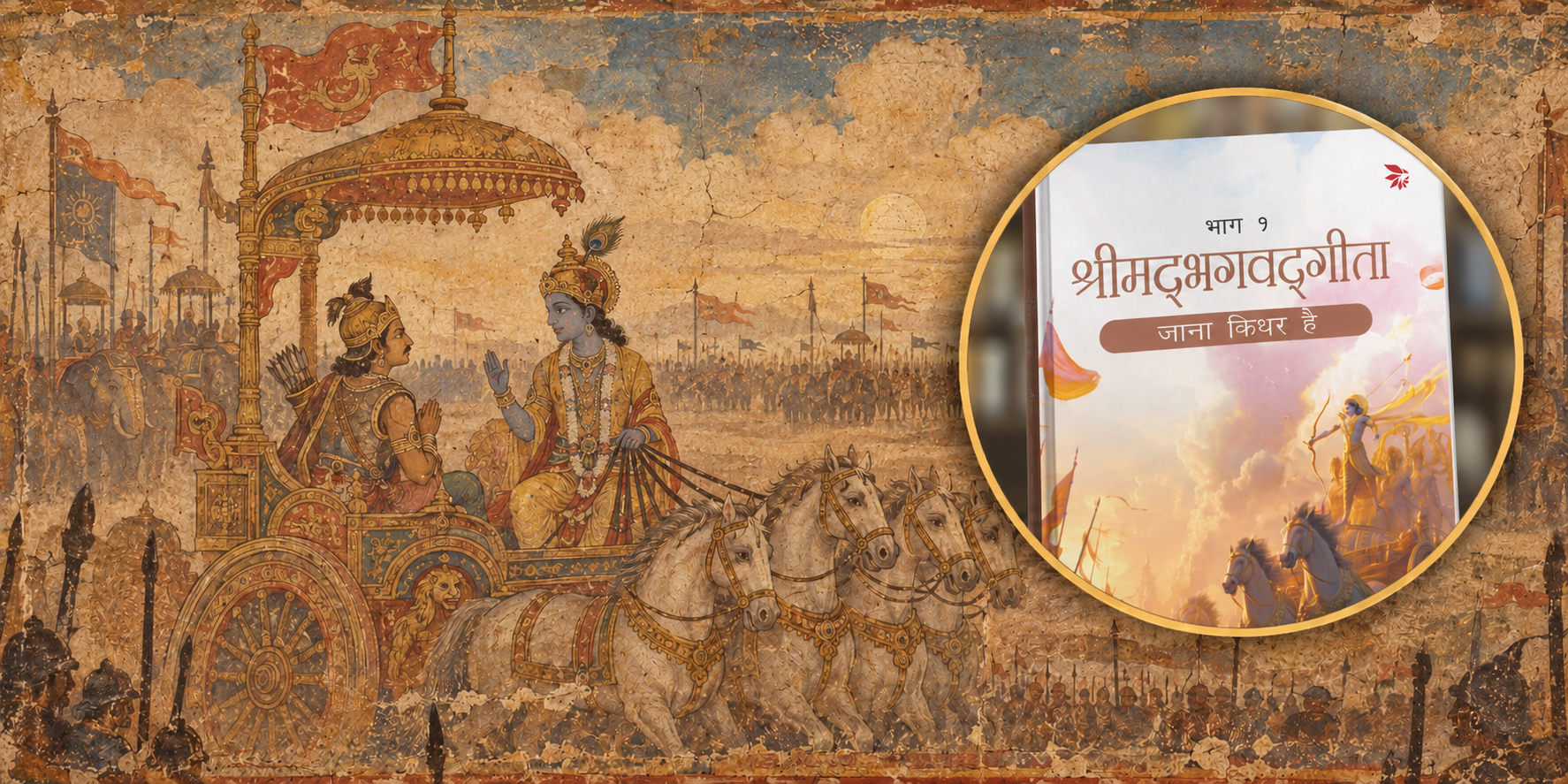
SHRIMAD BHAGAVAD GITA · PART 1
Shrimad Bhagavad Gita Part 1 - Which Way Should We Go?
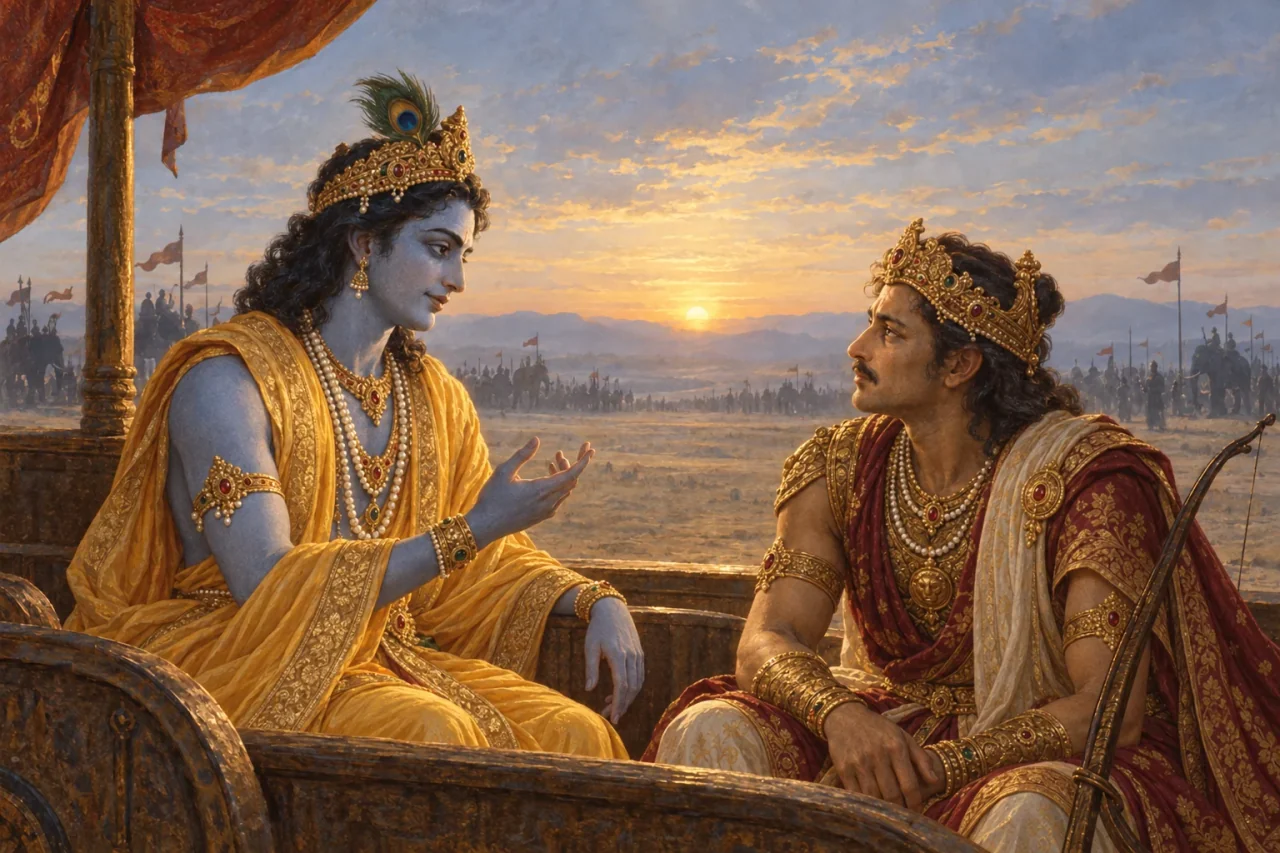
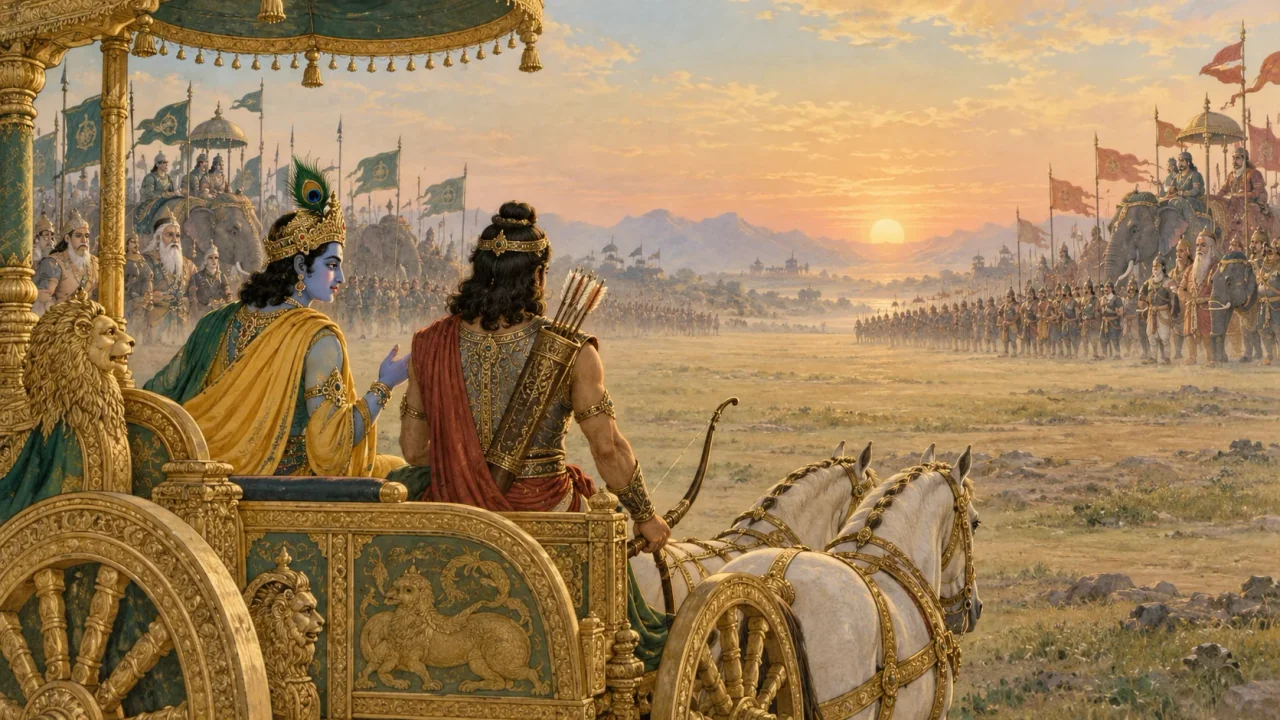
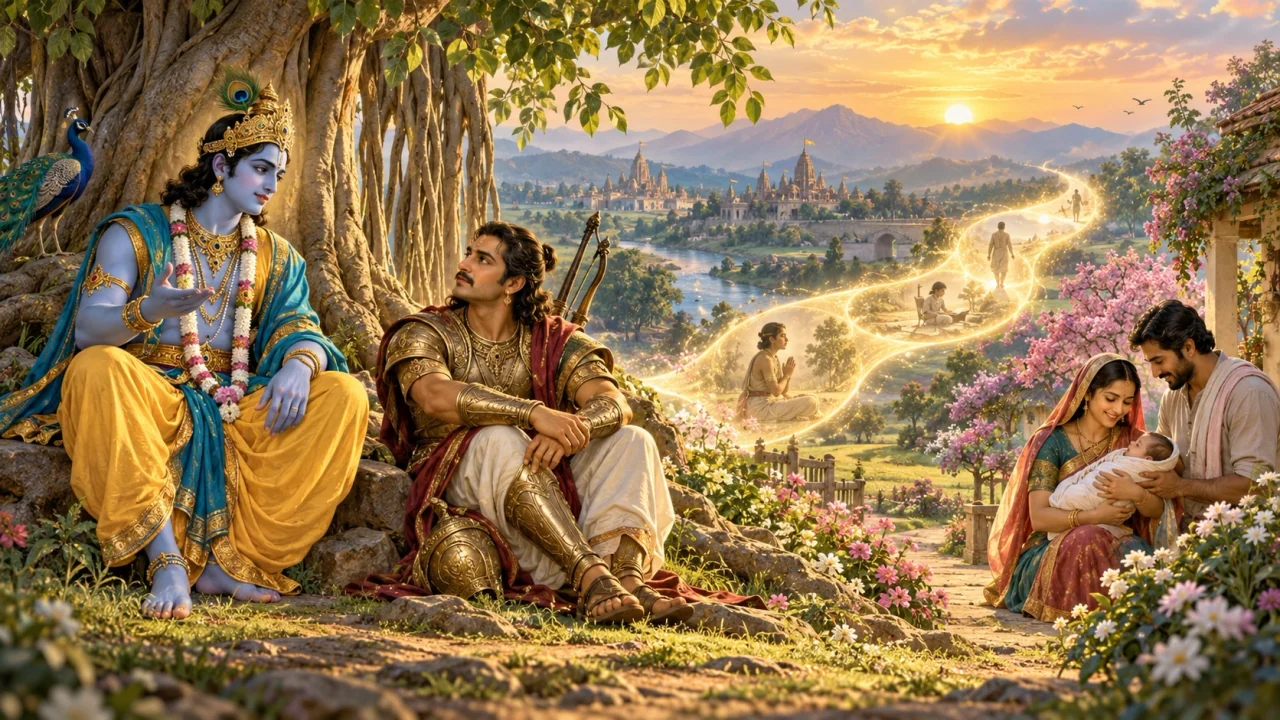
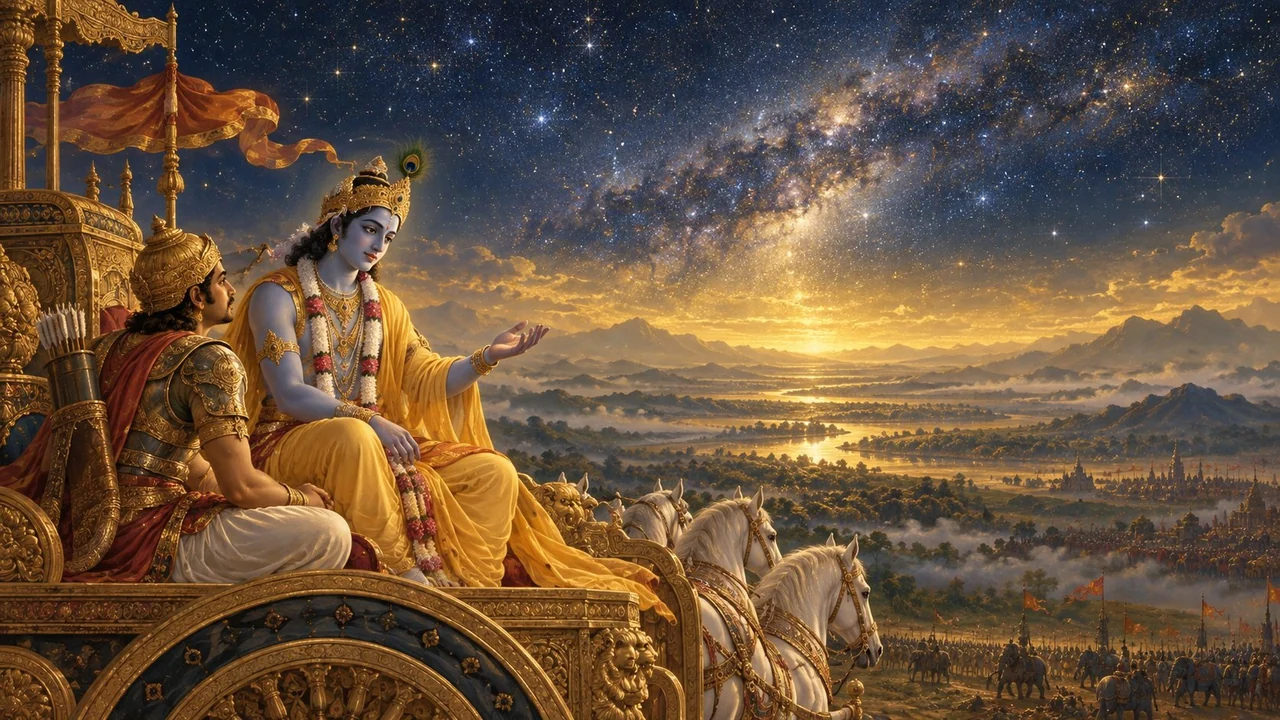
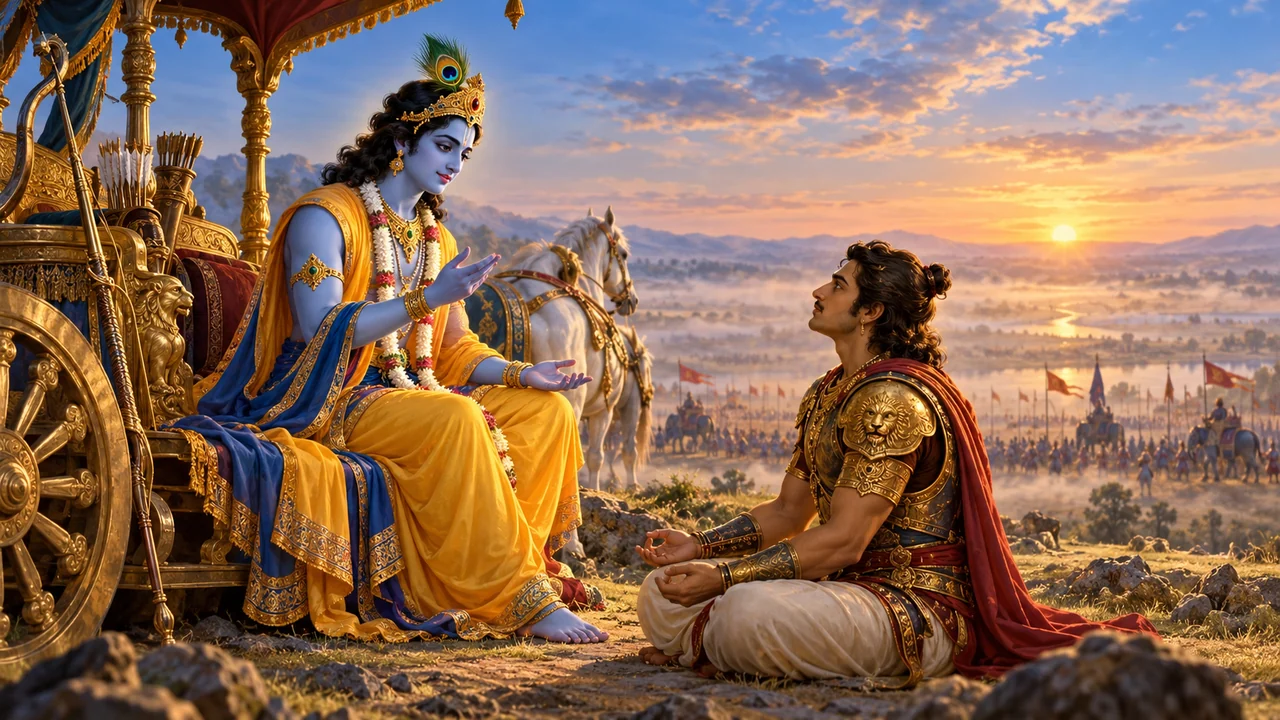
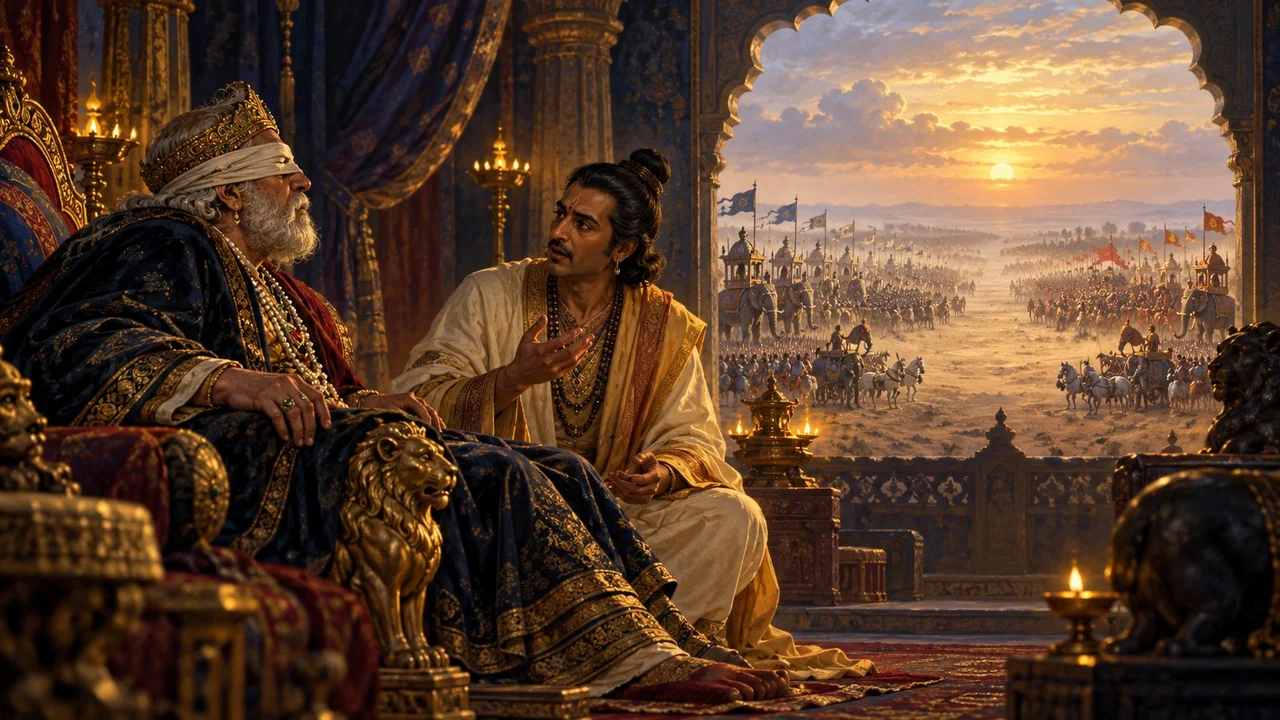
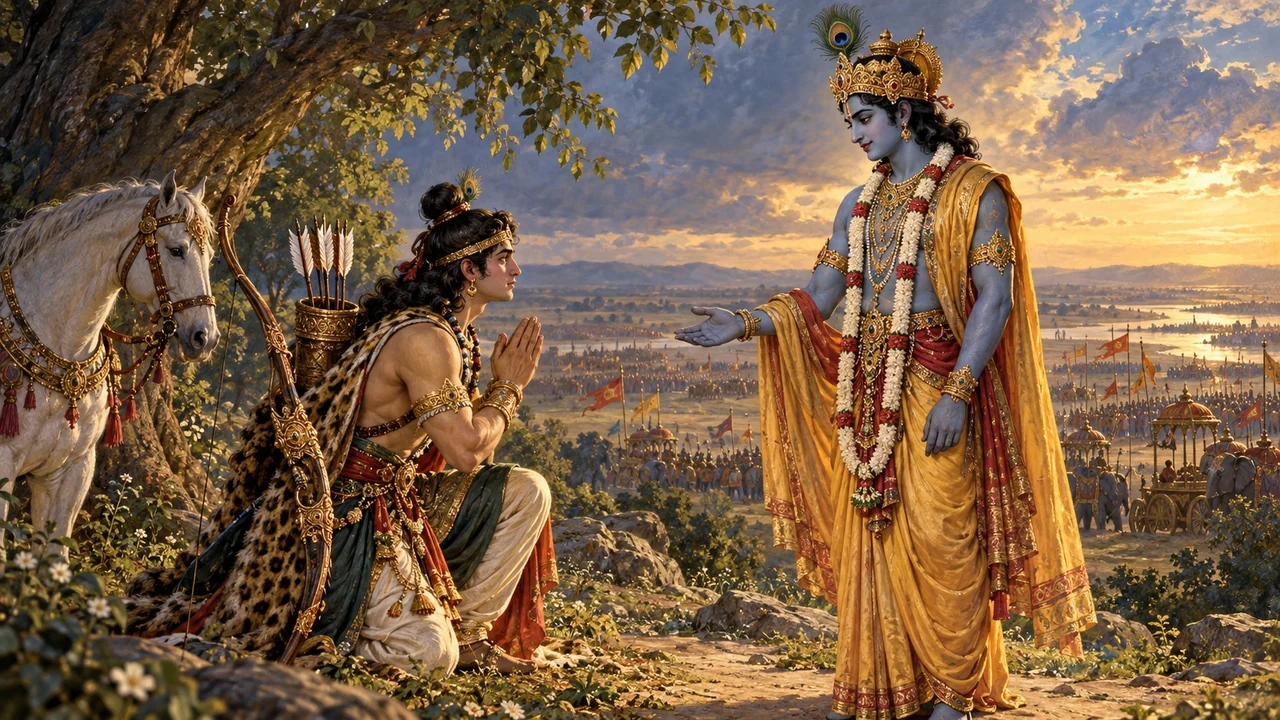
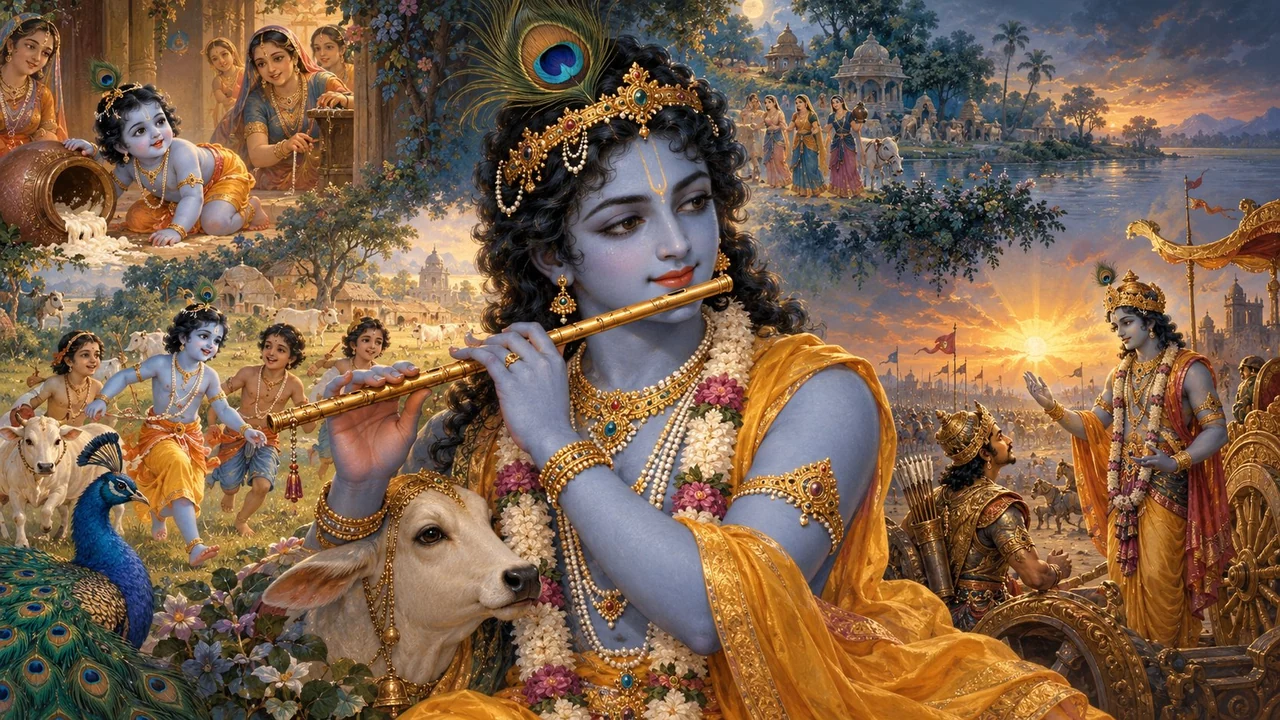
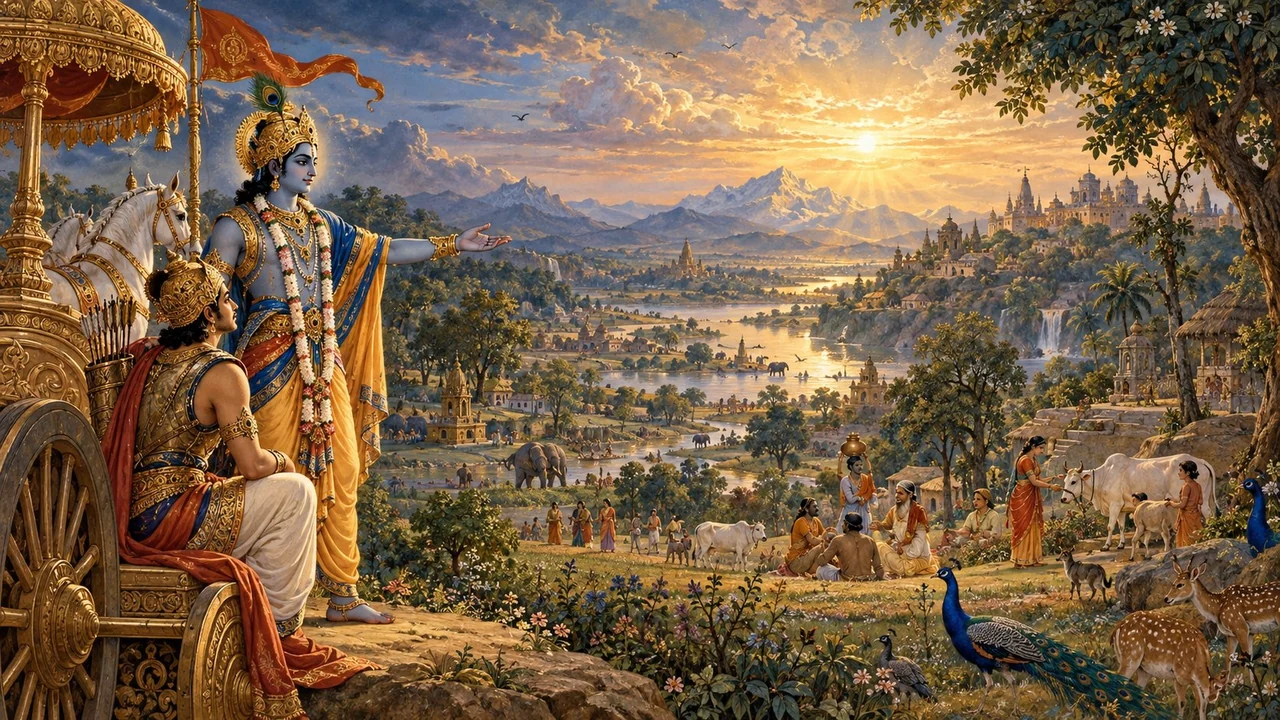
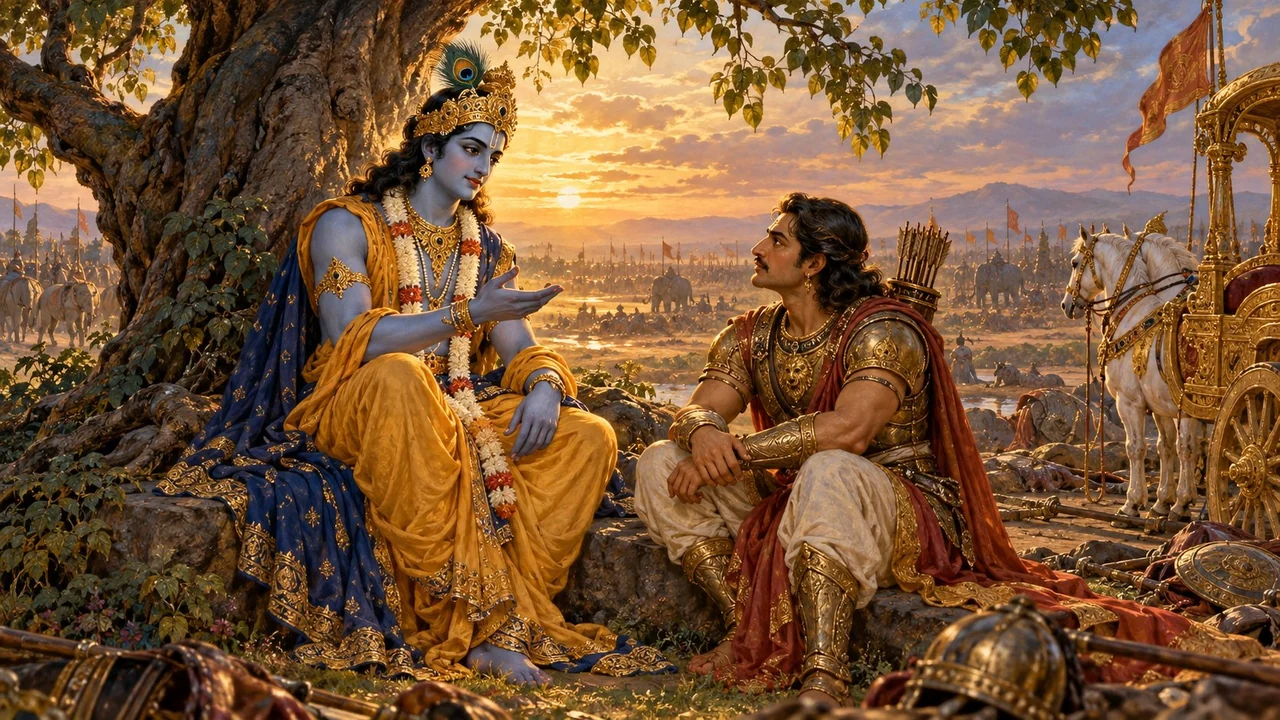
In this first part, Arjuna asks Shri Krishna to place his chariot between the two armies. He wants to see whom he must face in battle. At that moment, he holds his bow and is confident in his strength. But as soon as Shri Krishna brings the chariot to a halt before Bhishma and Dronacharya, Arjuna begins to see things differently. Those before him are no longer merely warriors. They are his teachers, elders, brothers, sons, friends and relatives.
The people he must fight are bound to him by many of the relationships that have shaped his life. At the sight of them, another struggle begins within him. Outside, everyone is ready for battle, but within him a question arises: can any happiness be gained by destroying one's own people?
Arjuna tells Shri Krishna what he is experiencing. His limbs are growing weak, his mouth is drying up and his body is trembling. The Gandiva begins to slip from his hand. His skin burns and his mind reels. He feels unable even to remain standing. Arjuna, who was prepared to confront others only moments before, now feels helpless before the turmoil of his own mind.
The question before him is no longer simply one of winning or losing. He is now asking what purpose such a victory would serve.
Arjuna tells Shri Krishna that he desires neither victory nor a kingdom, nor the pleasures they might bring. The very people for whose sake a kingdom, wealth and the pleasures of life are desired stand before him, having given up hope of preserving their lives and possessions. If they are gone, what will he do with a kingdom? If the relationships with which joy is shared are broken, where will the joy in that achievement remain?
This thought becomes so powerful for Arjuna that he does not wish to kill his own people even for dominion over the three worlds, let alone a kingdom on earth. He feels that doing so would bring sin and remorse rather than happiness. Again and again, he asks Shri Krishna how they could be happy after destroying their own family.
His concern then reaches beyond the people standing immediately before him. He thinks of the future of their families. He fears that the destruction of a family will also destroy its traditions and moral order. Family life will be shattered, the practice of dharma will weaken, and future generations will suffer its effects. Duties towards the ancestors will also be neglected. Presenting these fears to Shri Krishna, Arjuna asks why they should not consider turning away when these consequences of destruction are already visible to them.
He also says that if others, driven by greed, cannot see the wrong in what they are doing, must he do the same? How can another person's loss of discernment become a reason to abandon one's own?
Yet amid these questions, Arjuna's own decision remains unclear. Within him are compassion, attachment to his relationships, fear of wrongdoing and deep uncertainty about duty. The very action for which he came prepared now seems doubtful in its meaning. His mind wants to preserve those relationships, yet cannot make sense of the situation in which he finds himself.
Finally, Arjuna says that even if he were to lay down his weapons and offer no resistance, and those facing him were to kill him, he would consider that more beneficial. Having said this, he puts aside his bow and arrows and sits down at the rear of the chariot, overwhelmed by grief.
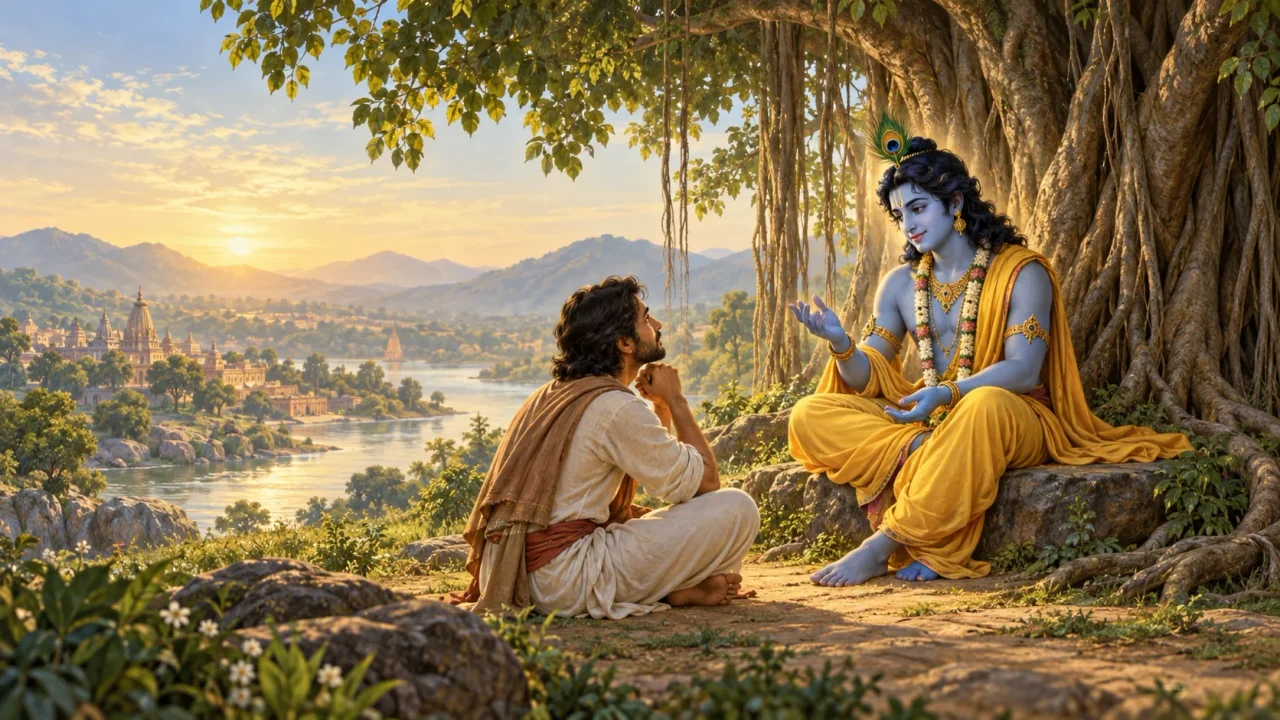
The first chapter ends here. Arjuna's doubt has not yet been resolved. Shri Krishna's detailed teaching is still to begin. First, Arjuna's inner confusion comes fully into view—the confusion in which a person, despite possessing strength, cannot decide what step to take next.
The essence of Arjuna Vishada Yoga emerges in this state. There may come a moment in life when ability, experience and achievements can no longer provide direction. The question then is no longer what we can do; it becomes what we ought to do. Arjuna lays this very condition of his heart before Shri Krishna. The bow has slipped from his hand, but his need for the right direction has now become clear.
The author, Dr. Rajesh Takyar, has explained all of this in great detail and in very simple language in his book 'Jana Kidhar Hai'.