Sometimes an important task is right in front of us, yet the mind says we should wait a little longer. If this happens repeatedly, it is useful to exa
Read
Gita & philosophy
Blog
Read 96 Blog
Sometimes an important task is right in front of us, yet the mind says we should wait a little longer. If this happens repeatedly, it is useful to exa
Read
Change is necessary in life, but caring for the new life that follows change is just as necessary. The chapter on Agni and Soma in Madhavshiv presents
Read
In the search for knowledge, right guidance matters as much as the right questions. Someone's words may attract us, but we also need to observe their
Read
Sometimes it seems that putting work aside will end all our difficulties. Yet the body continues to function, the mind continues to think, and our dec
Read
Arjuna’s questions to Krishna open a journey of humility, preparation, Radha’s welcome, and the care needed to hold an experience.
Read
Across both parts of Cockroach, Maya’s question and Aryav’s training connect strength with restraint and concern for another life.
Read
In Part Sixteen of the Shrimad Bhagavad Gita, arjava brings thought, speech, and action together. How can we practise honest, considerate simplicity while recognisin
Read
Renunciation does not mean fleeing duty. Part Eighteen distinguishes action, desire, and attachment to results, showing how responsibility can be fulfilled with inwa
Read
Food, rest, action, and remembrance of God connect spiritual practice with the whole of life. The Gita’s dialogue invites us to move beyond excess and bring moderati
Read
The dignity of giving lies in its intention, proper use, and respect for the recipient. The Gita’s distinctions between sattvic, rajasic, and tamasic giving invite r
Read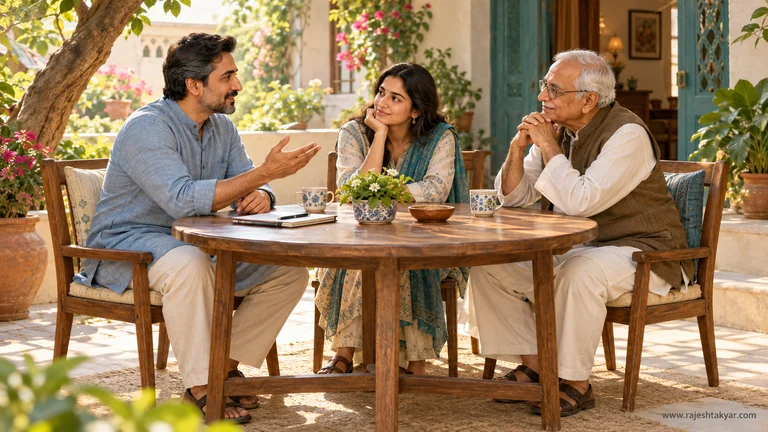
Speaking truthfully, preserving dignity, and seeking another’s welfare: four tests of speech invite us to examine our words, intentions, and inner dialogue.
Read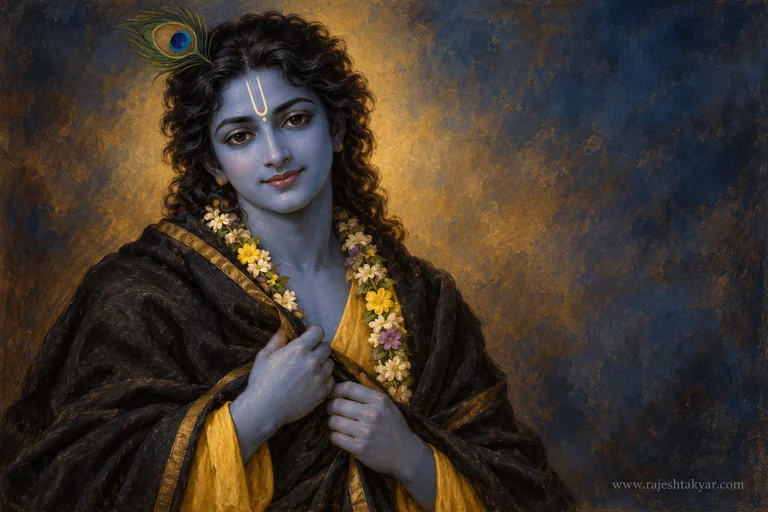
Kanha’s closeness, Gopal’s compassion, Murlidhar’s sweetness, and Vasudev’s universal presence reveal the qualities and relationships held in Krishna’s names.
Read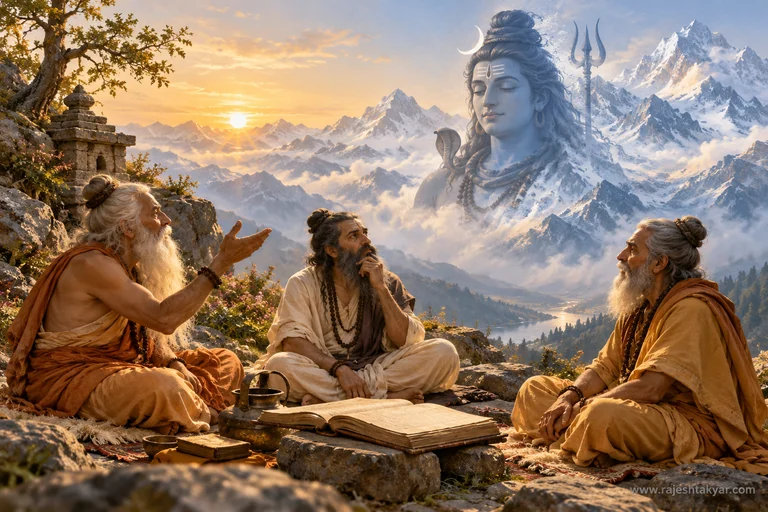
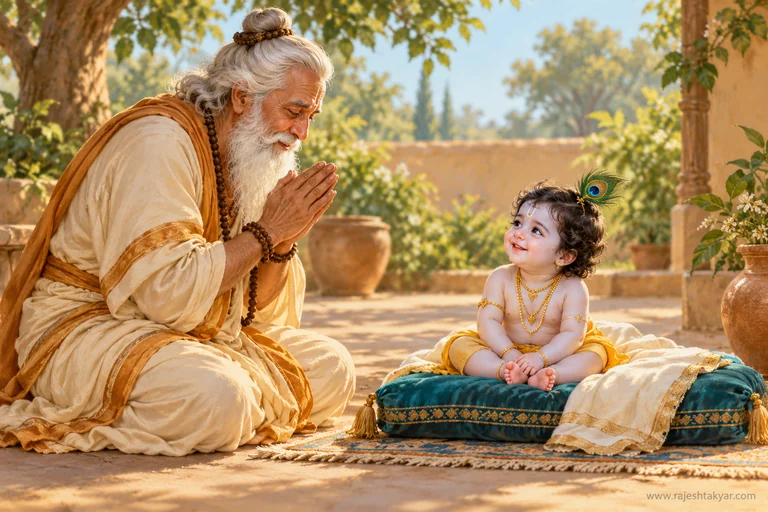
Garga asks the child Krishna for unwavering devotion, service, and lasting remembrance beyond wealth, powers, and pleasures.
Read
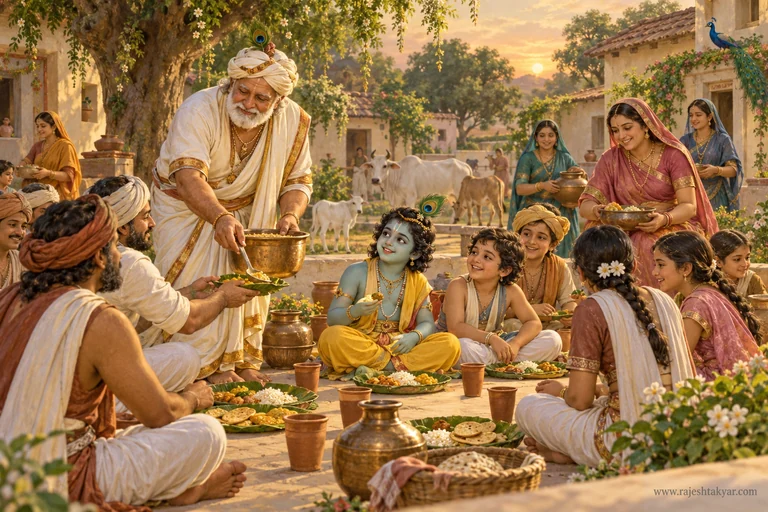
Returning home after the forest fire, Nanda’s giving and a shared meal reveal gratitude expressed through daily life.
Read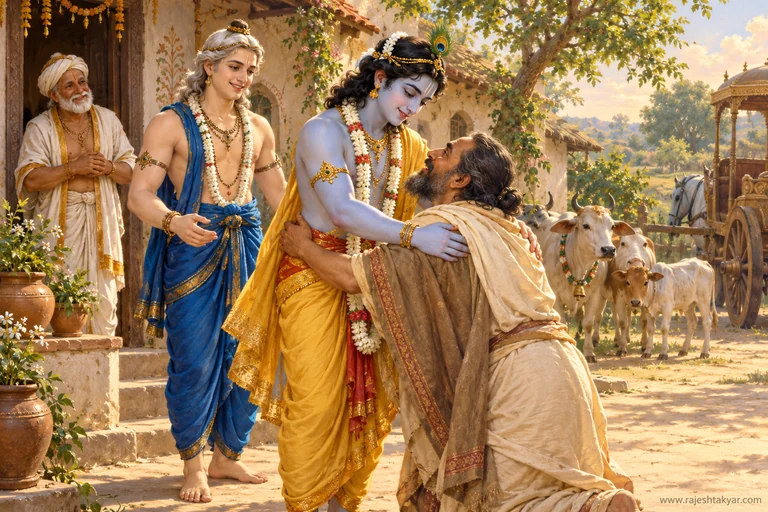
Krishna’s welcome and Nanda’s understanding of Akrura invite us to see a person’s heart alongside their outward circumstances.
Read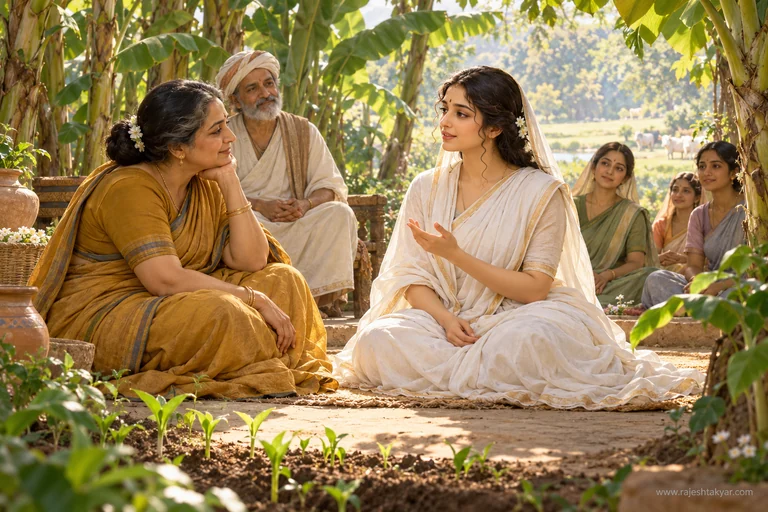
Yashoda’s question and Radha’s teaching illuminate how companionship, remembrance and awareness nurture the tender shoot of devotion.
Read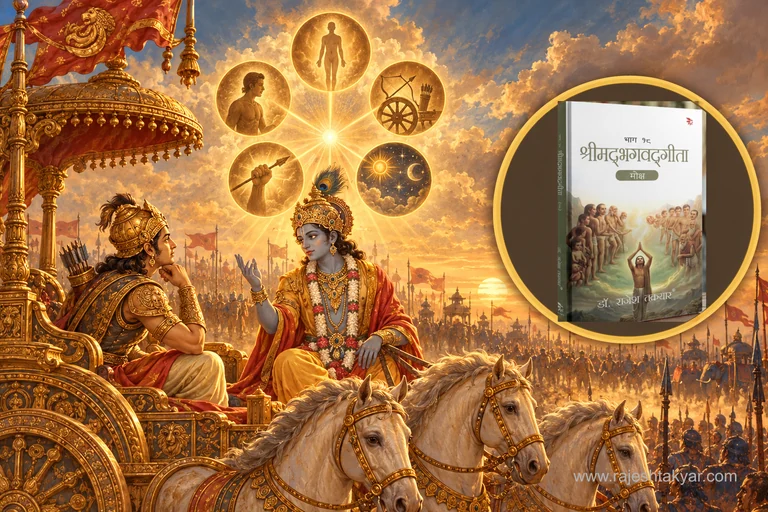
An exploration of the five causes of action—its basis, the doer, the instruments, the various efforts and the divine—drawn from Part 18 of the Shrimad Bhagavad Gita.
Read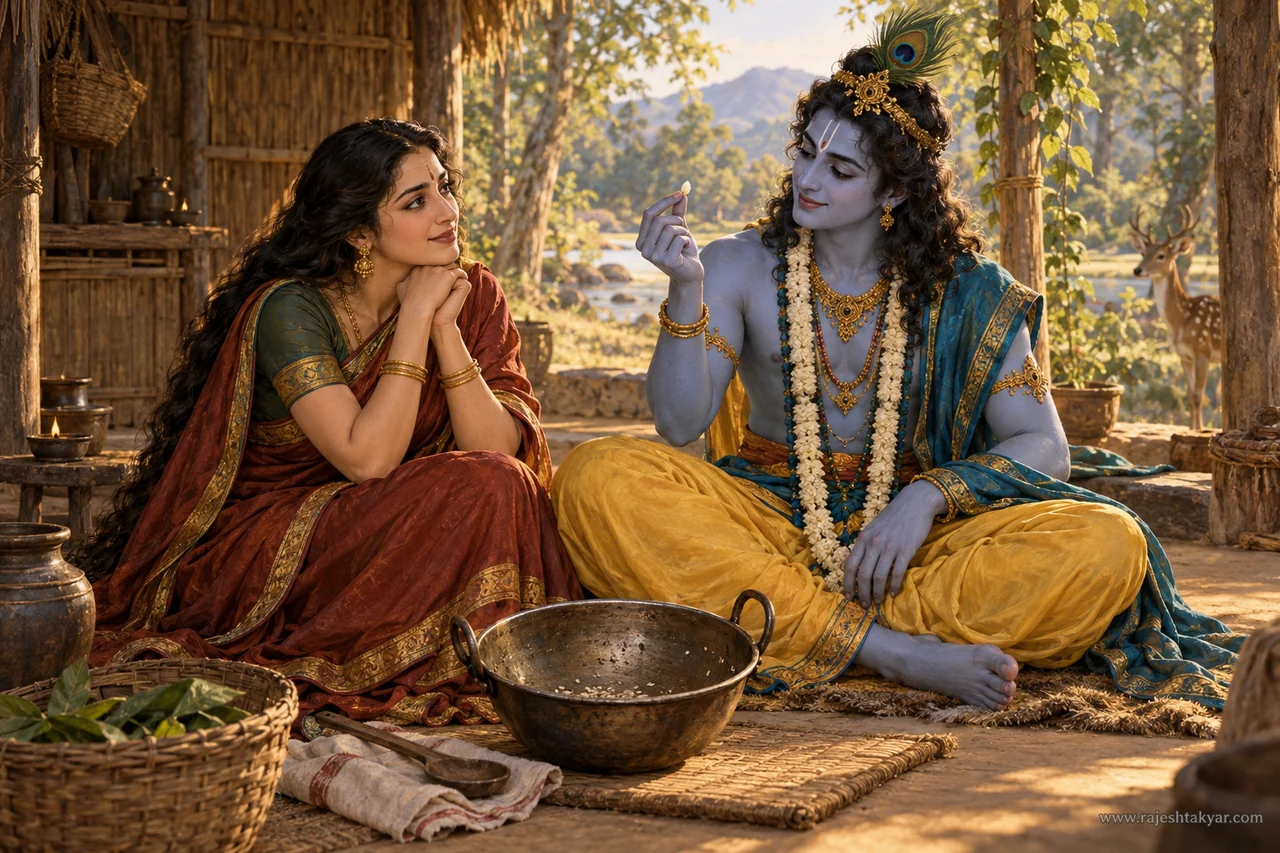
Draupadi and Krishna’s relationship reveals protection of dignity, help in scarcity and companionship within grief.
Read

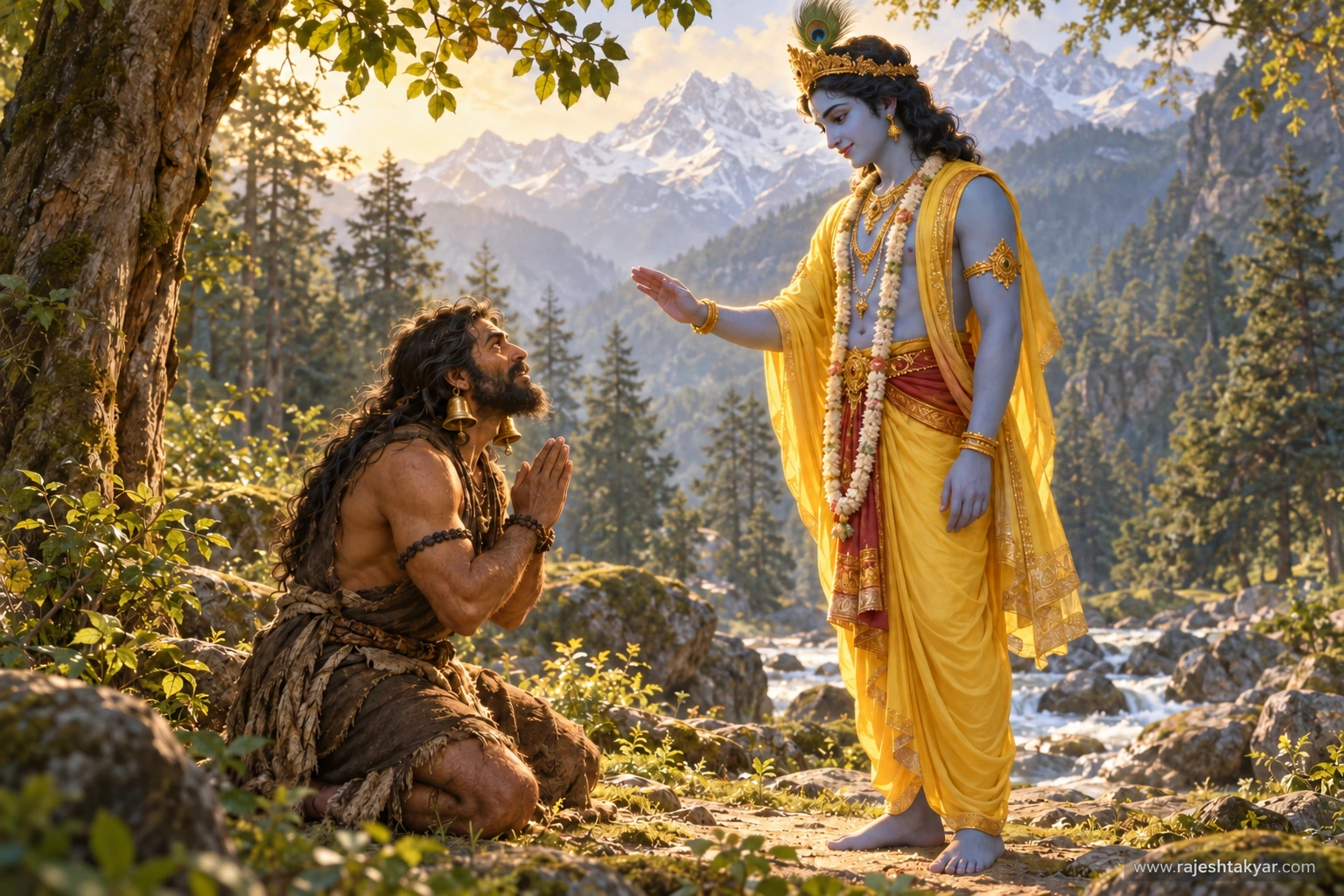
Ghantakarna’s story explores readiness to listen, hostility attached to devotion and the meaning of inner change.
Read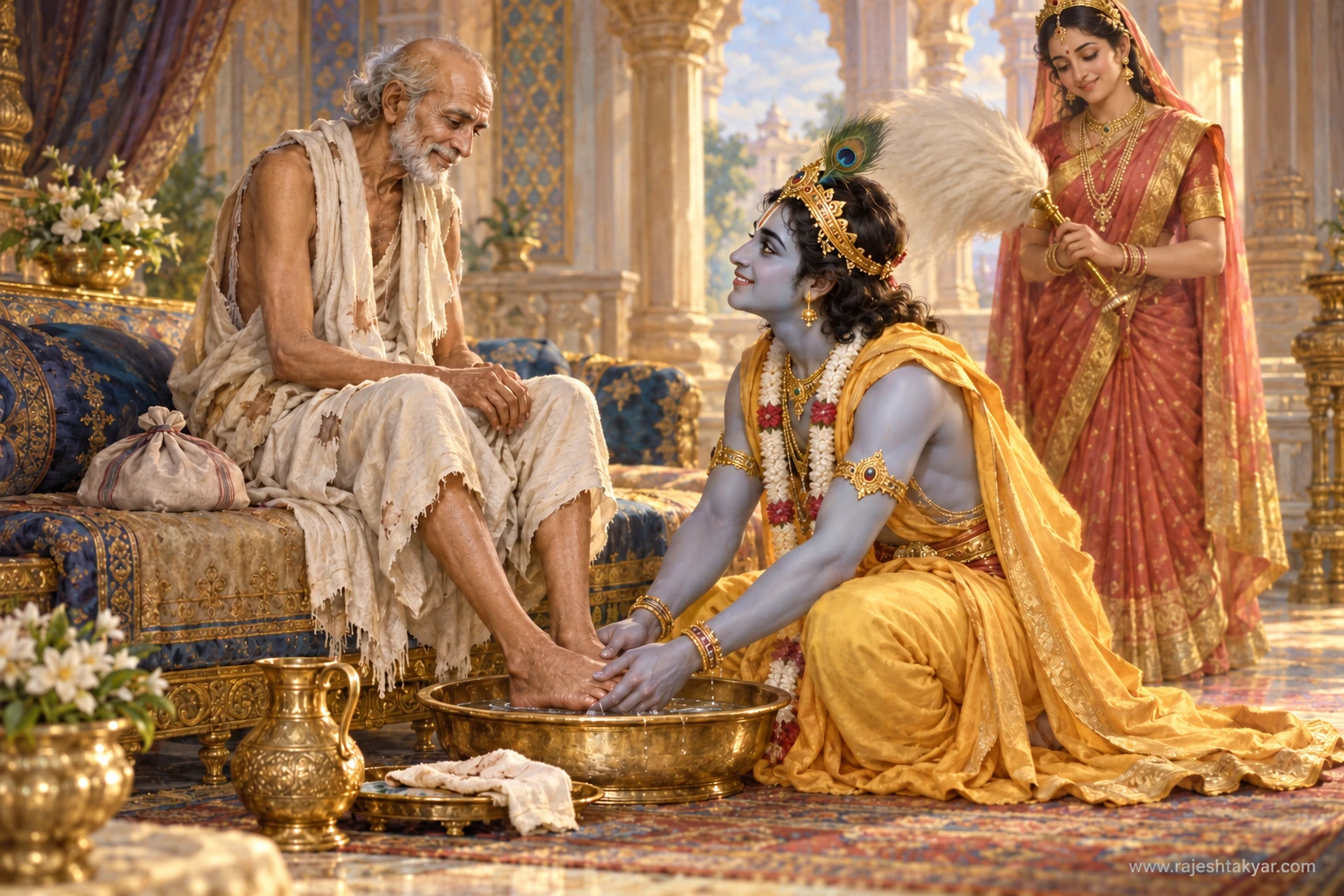
The Hesitation Before Meeting Friendship holds a tender question: when circumstances change, does our affection change with them? Why can we feel hesitant about stan
Read
A reflection on using time well, patience for the fruits of action, study and service, and beginning good work today instead of postponing it until old age.
Read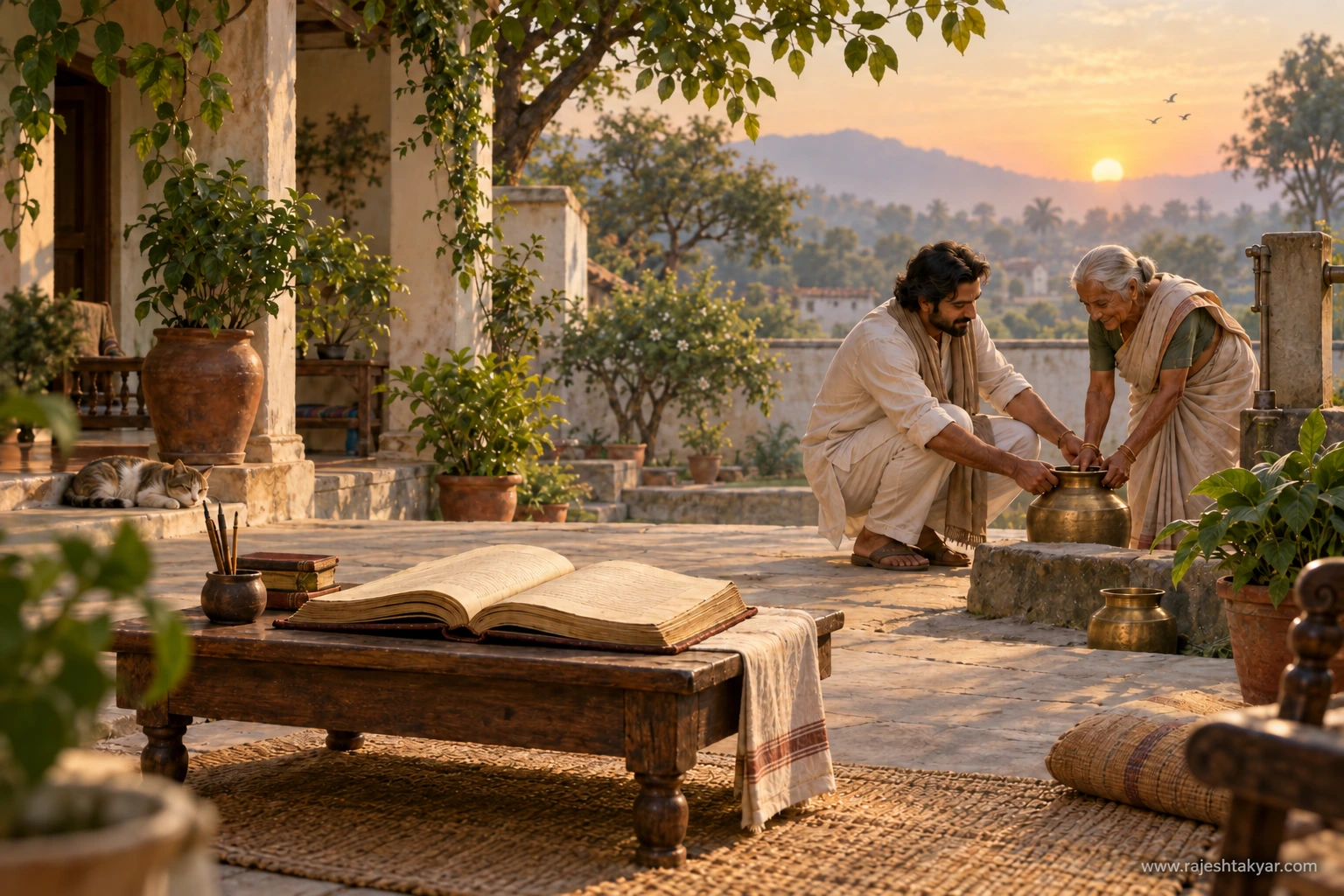
An article on the difference between knowledge and intellect, the role of experience, and the journey towards deeper understanding.
Read
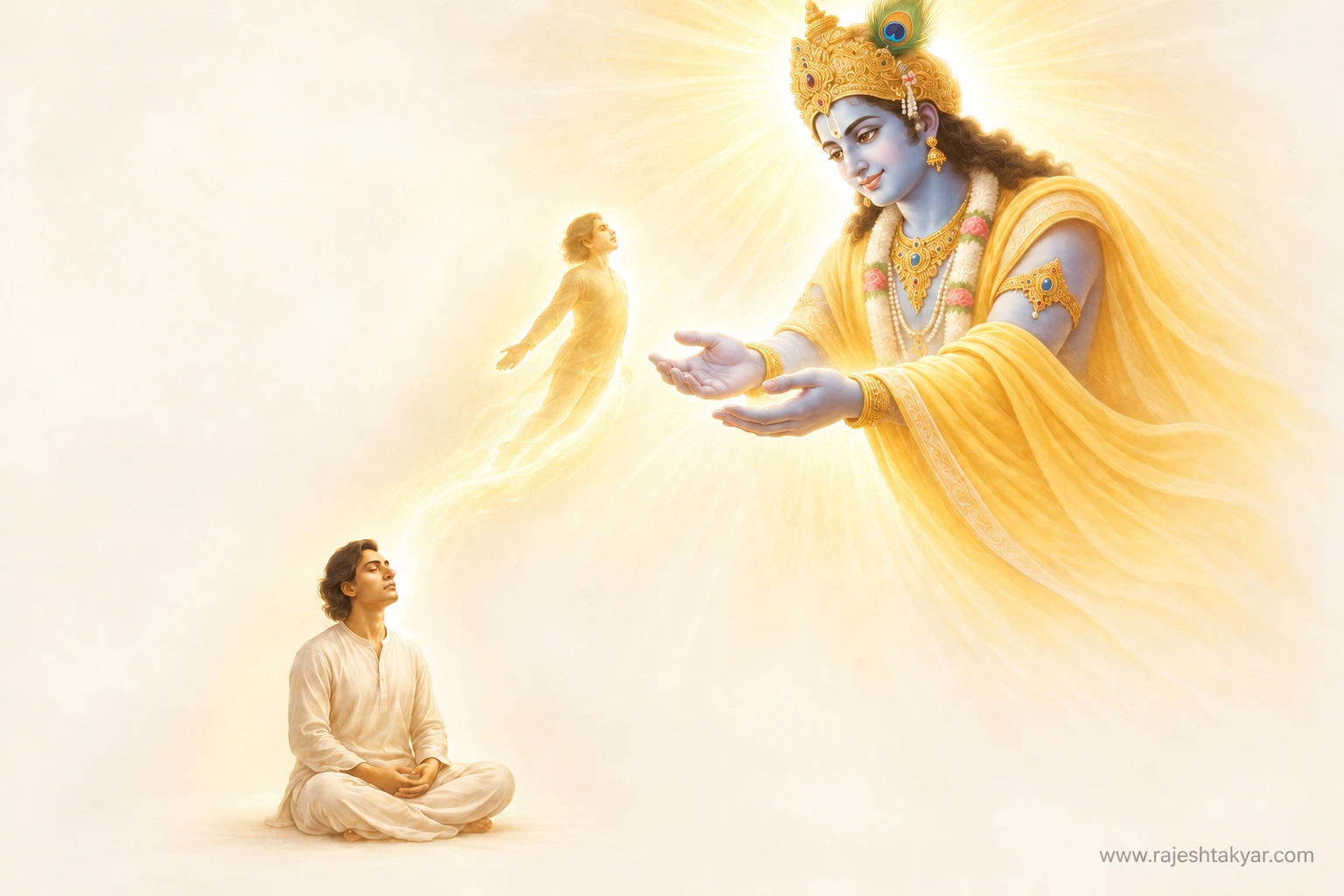
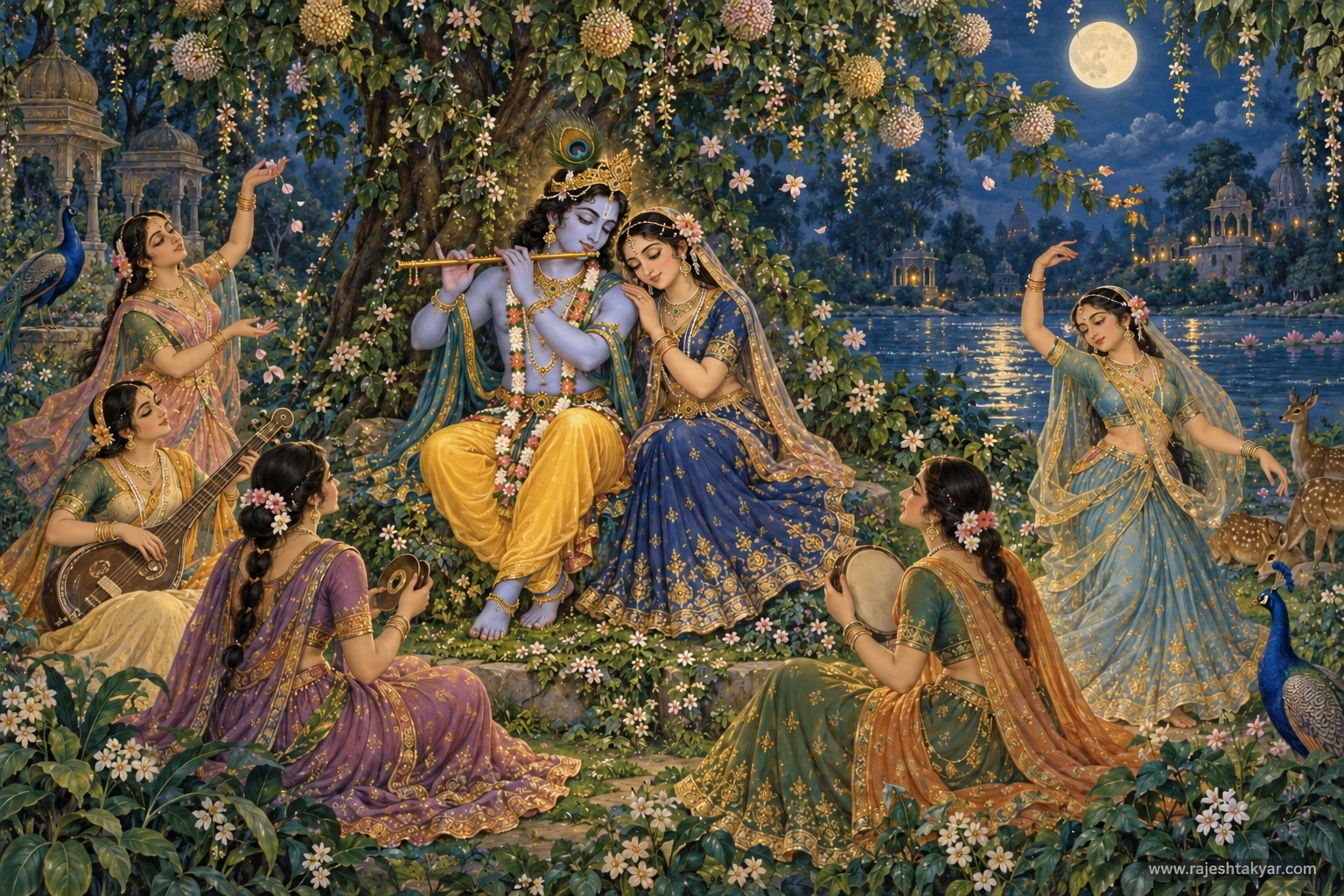
Based on Shri Garga Samhita, Vrindavan Khanda, Chapter 24, this article reflects on the poetic scene of the Nidhivan lila—Yamuna bank, kadamba grove, music, dance, p
Read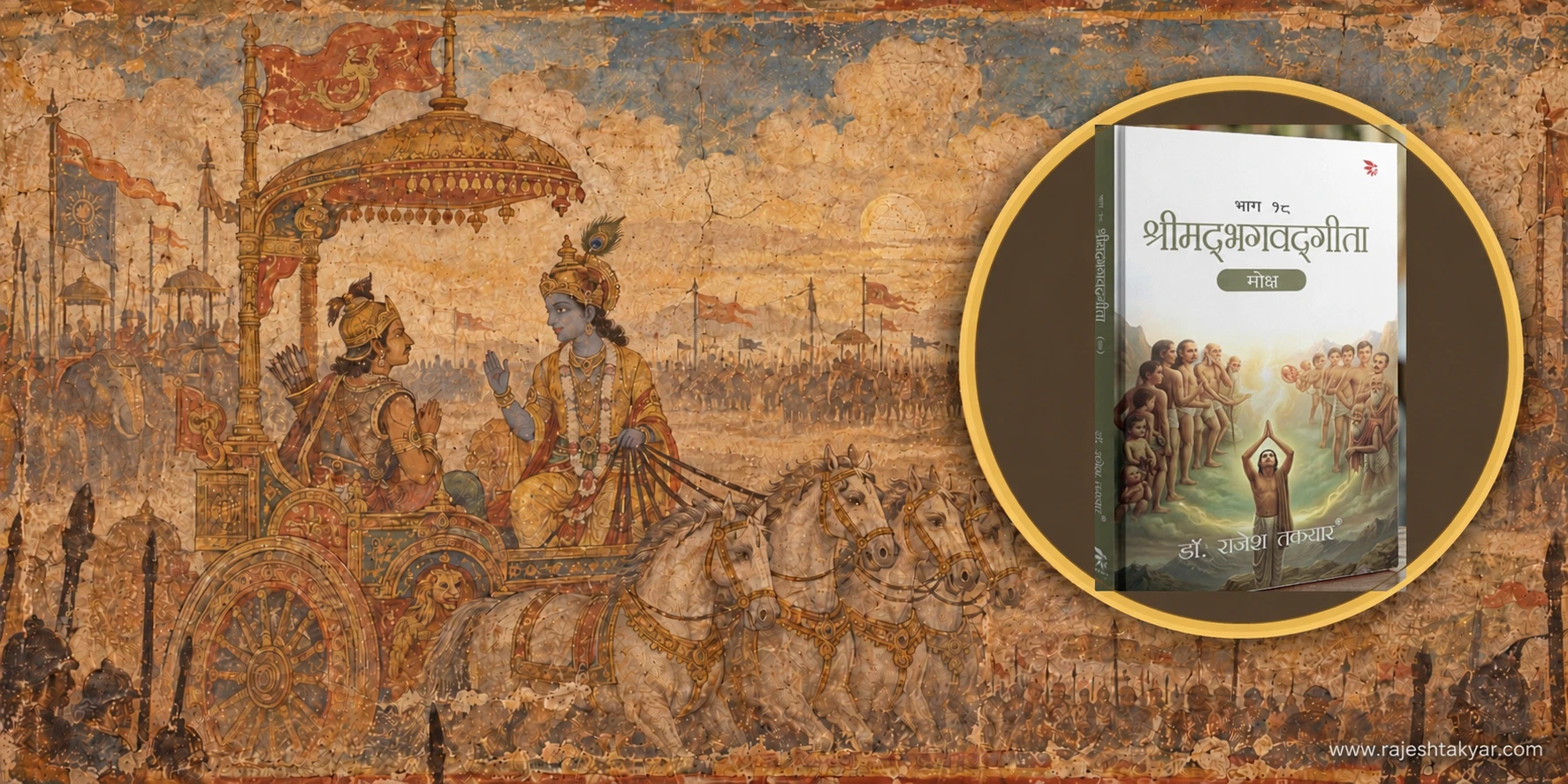
Arjuna asks Shri Krishna to explain separately the true meanings of renunciation and relinquishment. By now, many aspects of action, knowledge, devotion and self-res
Read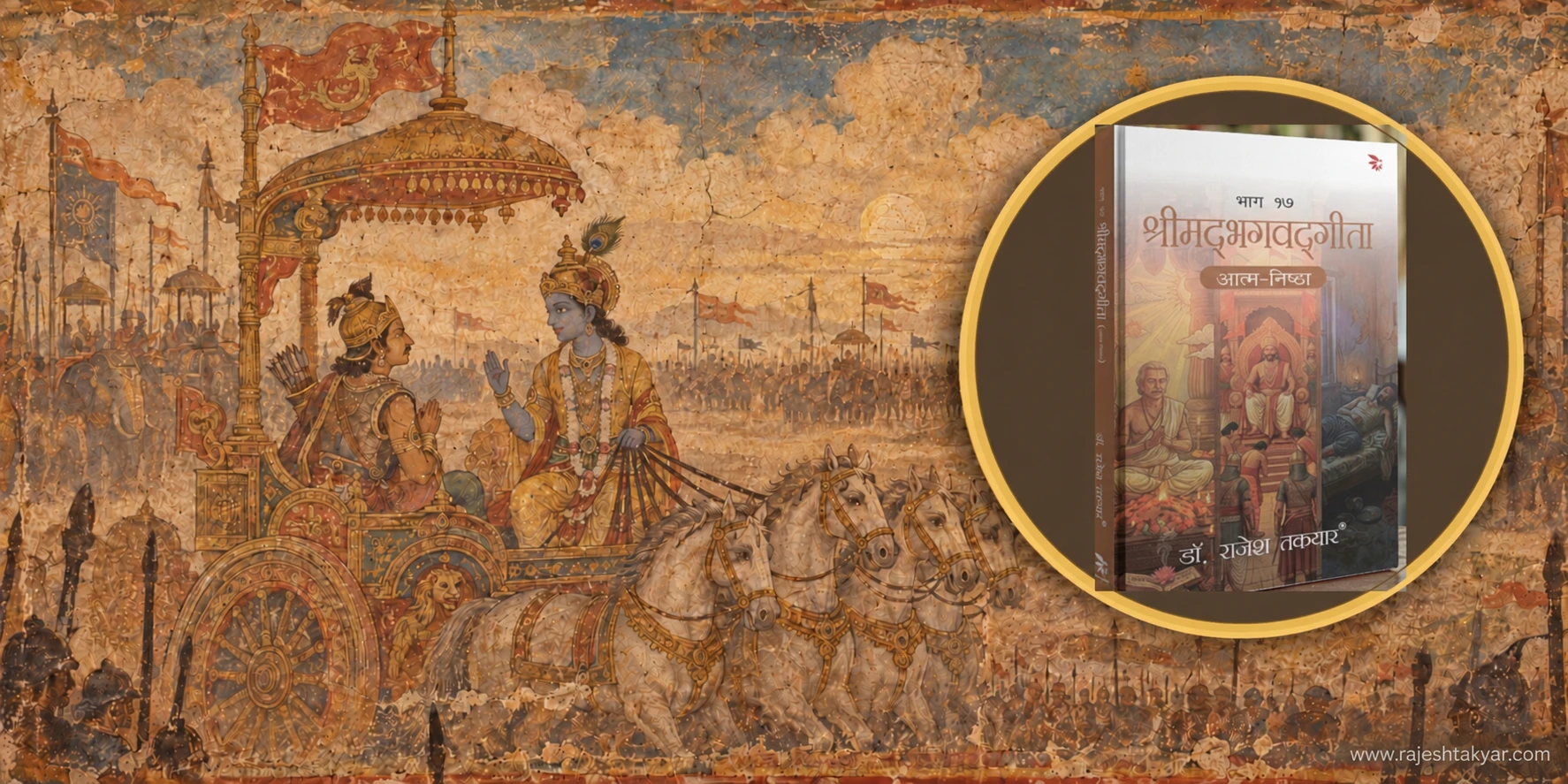
Arjuna asks Shri Krishna about people who do not follow the scriptural method but still worship with faith. What kind of commitment do they have—sattvic, rajasic or
Read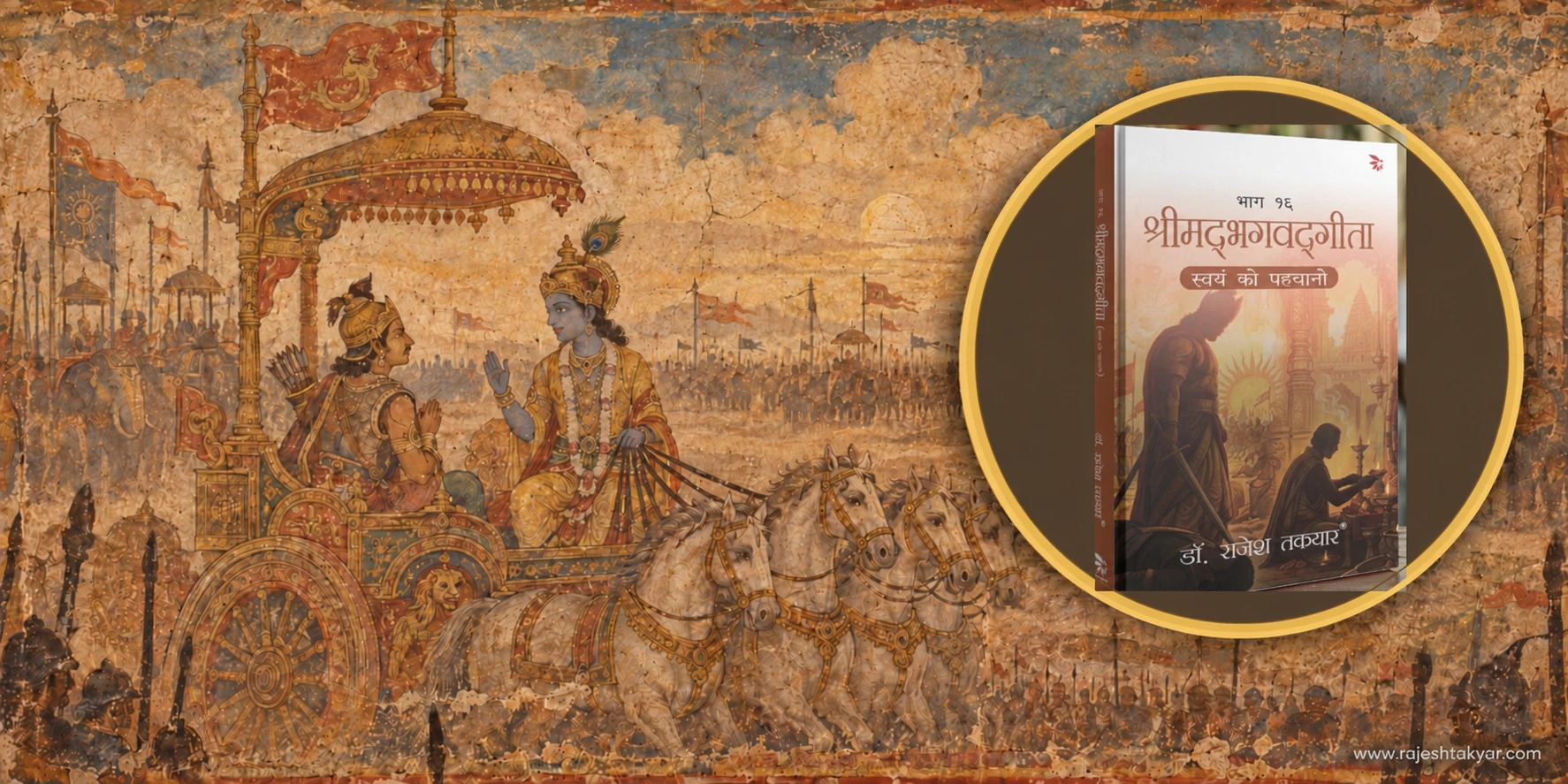
Shri Krishna explains to Arjuna two kinds of tendencies within a person: divine and demonic. They can be recognised through conduct, resolve and the direction of lif
Read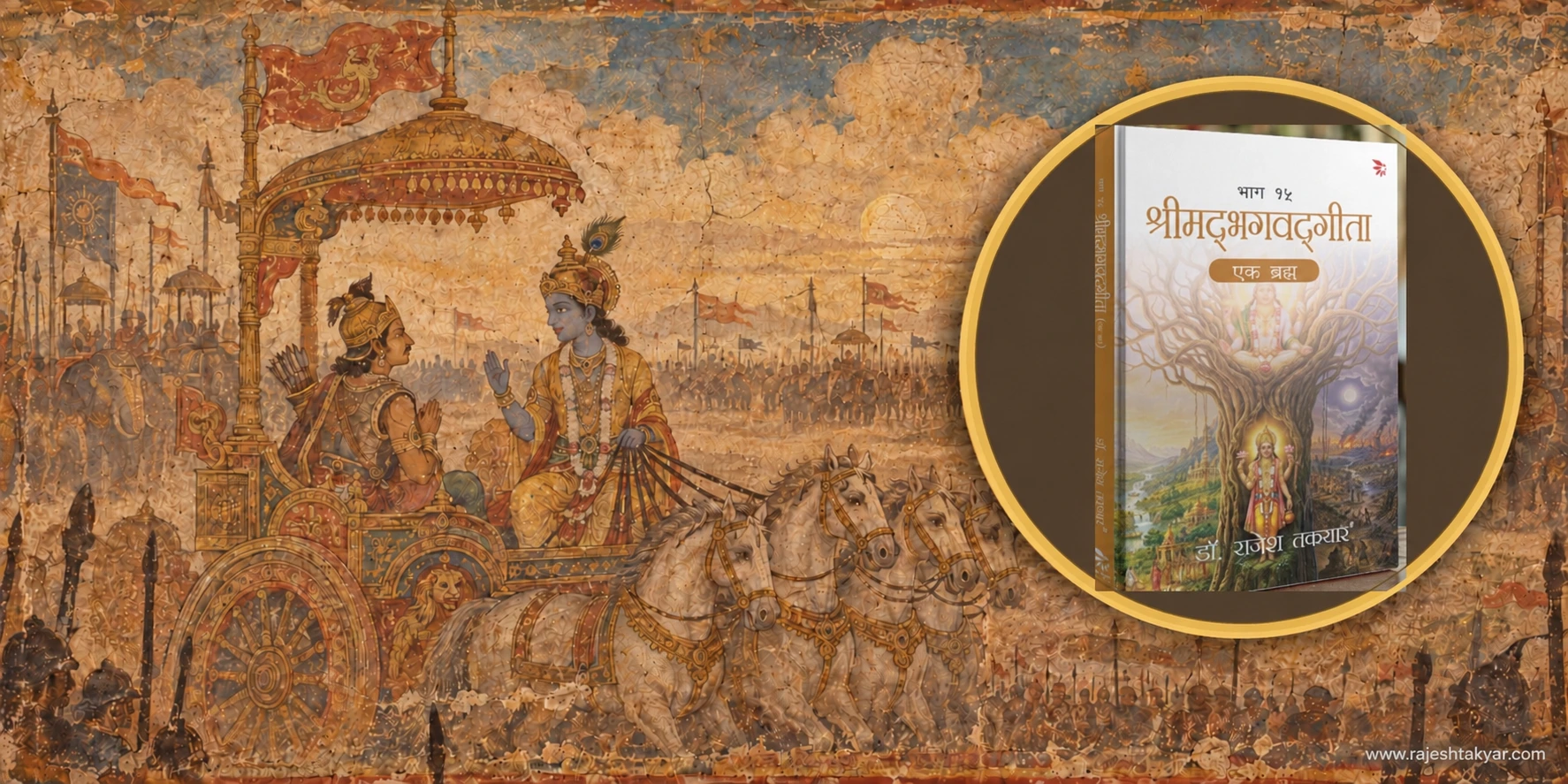
Shri Krishna presents Arjuna with a profound image of the world. He describes it as an ashvattha tree whose roots are above and whose branches spread below. Its grow
Read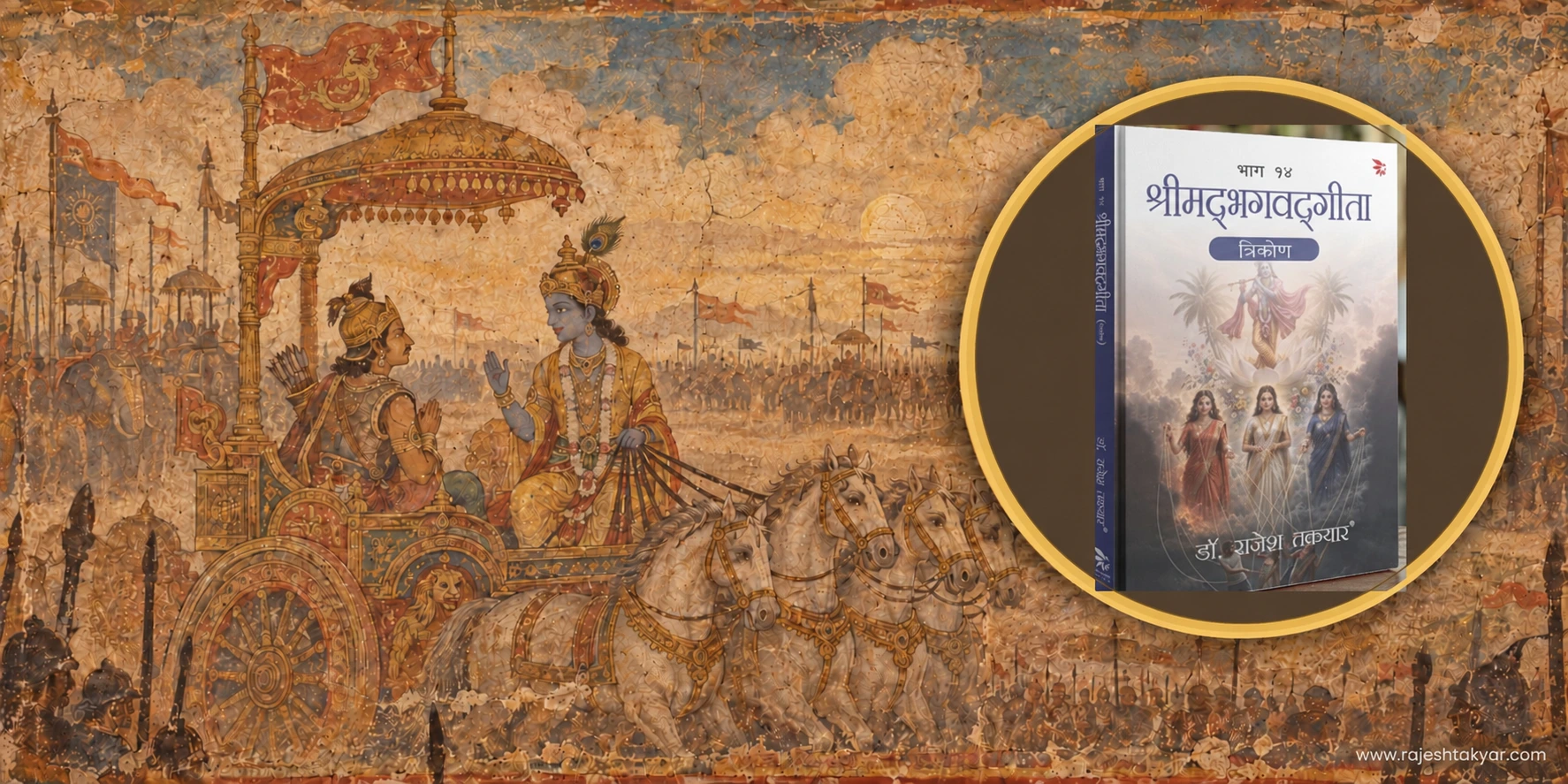
Shri Krishna gives Arjuna knowledge by which a seeker can understand the bonds of nature and move beyond them. He says that sattva, rajas and tamas arise from nature
Read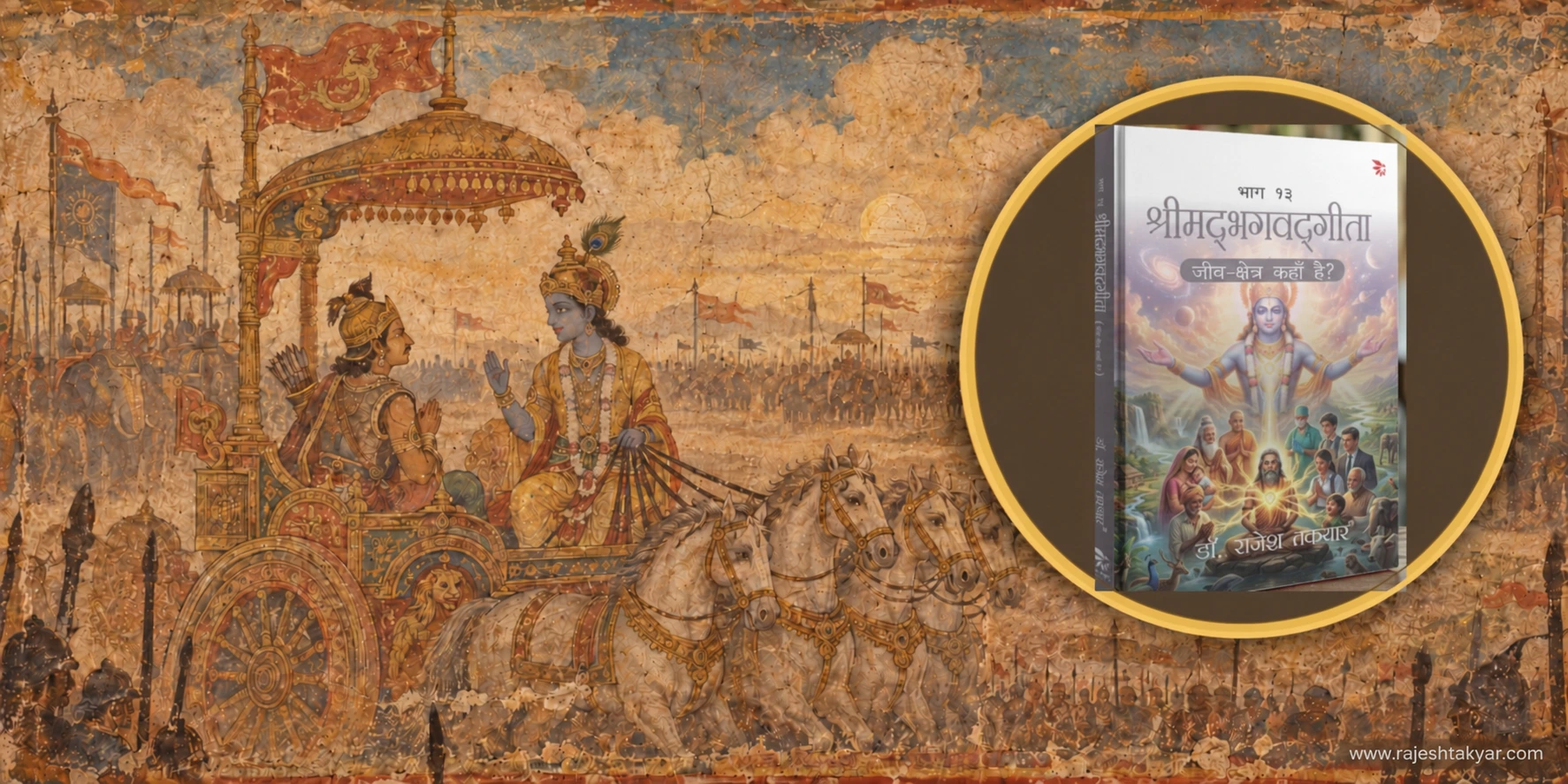
Shri Krishna explains to Arjuna the distinction between the body and the one who knows it. He calls the body the field and the one who knows this field the knower of
Read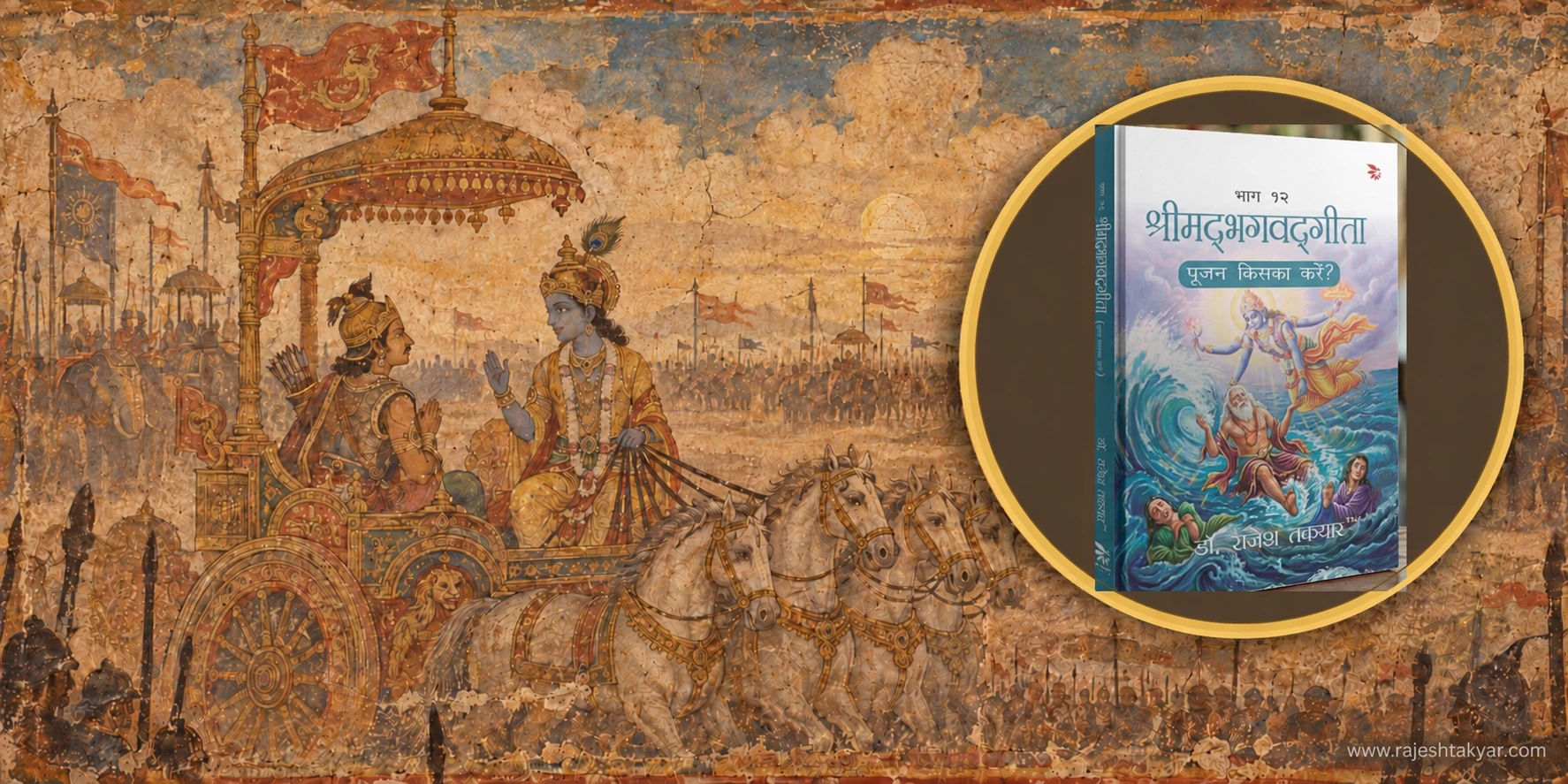
Arjuna asks Shri Krishna who is the greater yogi: those devotees who worship His personal form, or those who contemplate the unmanifest, imperishable Brahman. He wan
Read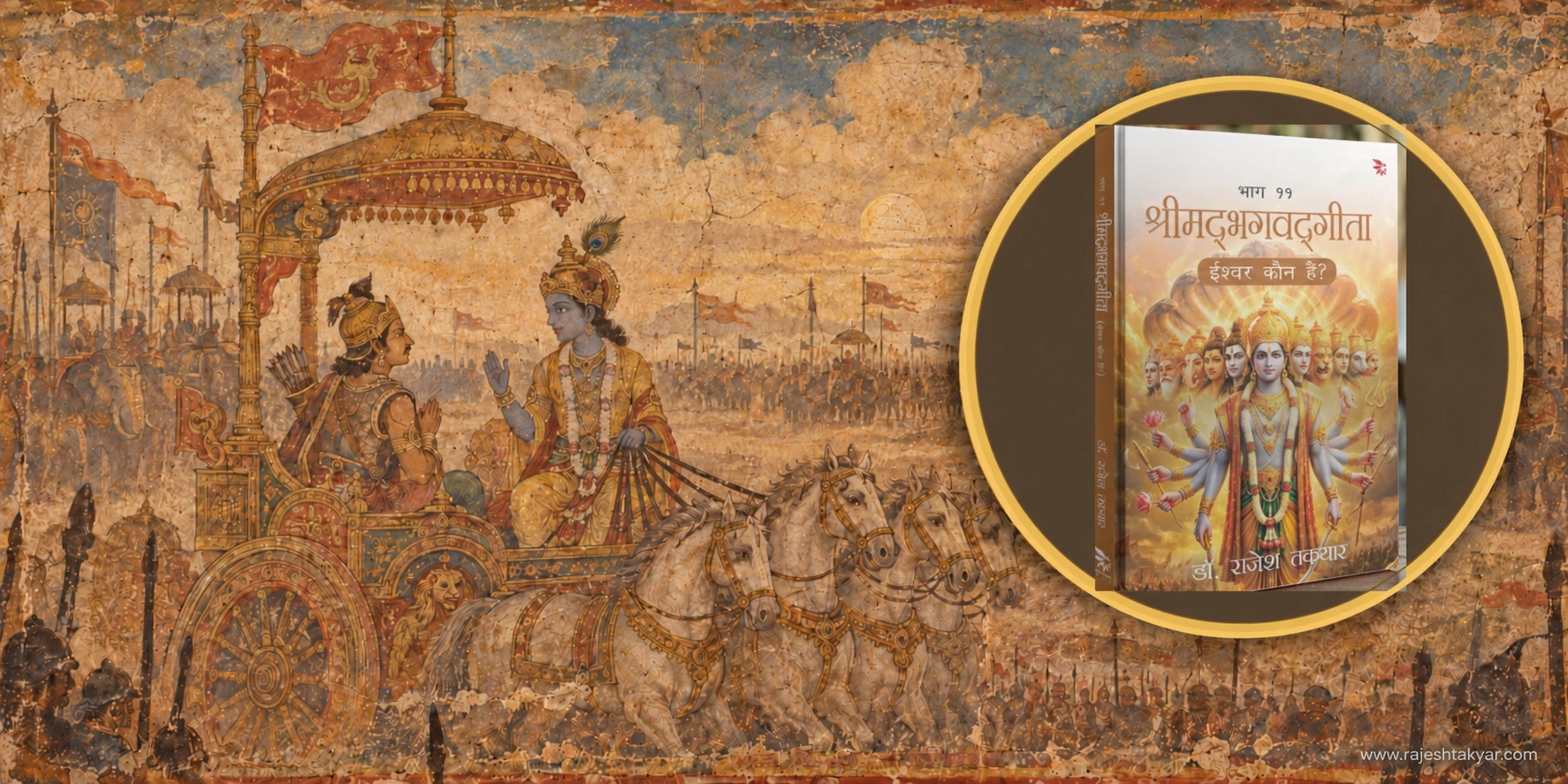
After hearing about Shri Krishna’s glory and the foundation of creation, a new question arises in Arjuna. He says that Shri Krishna’s grace has removed his delusion.
Read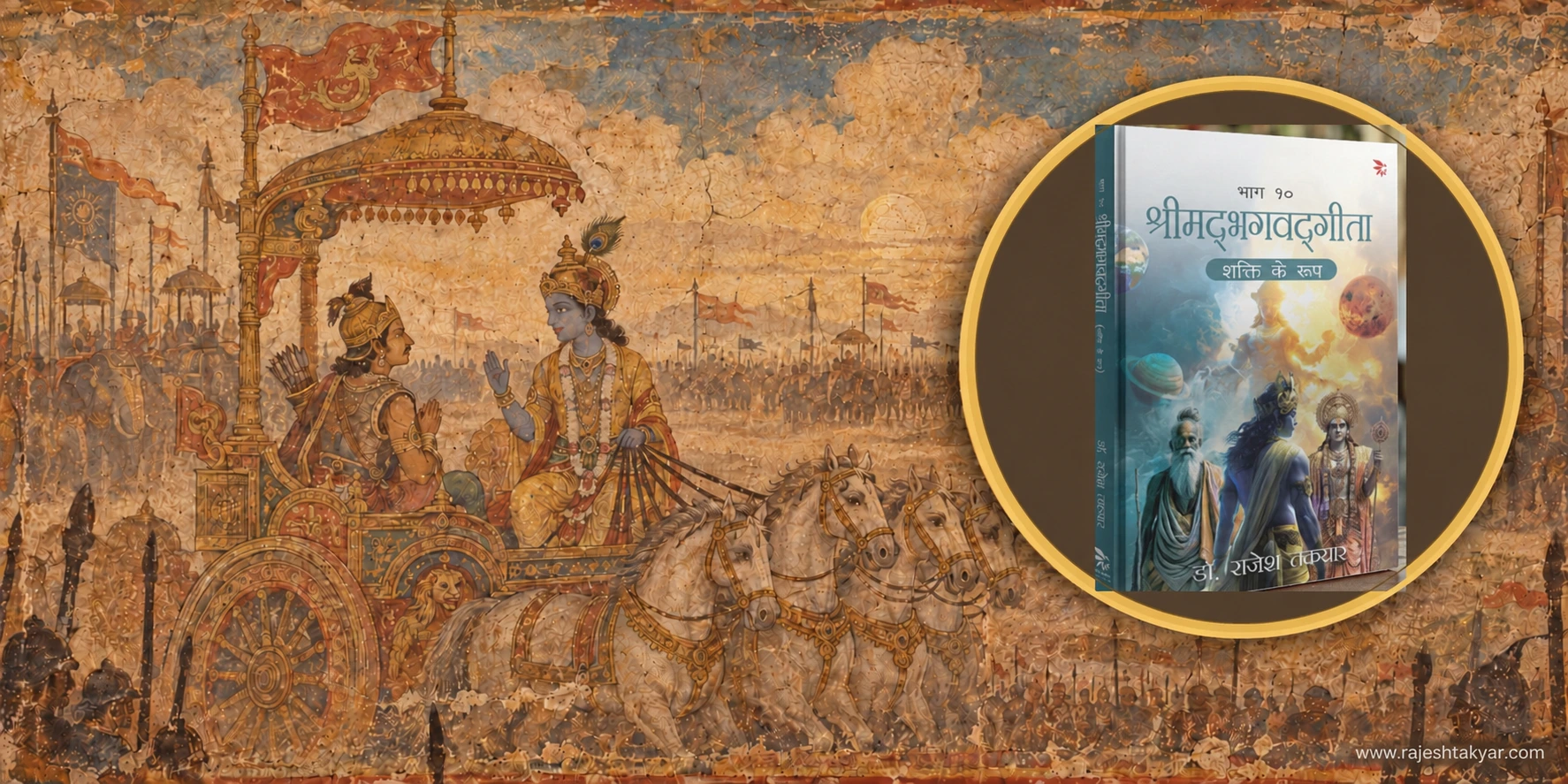
Wishing Arjuna well, Shri Krishna explains His nature more clearly. He says that He is unborn, without beginning and the supreme foundation of all worlds. One who kn
Read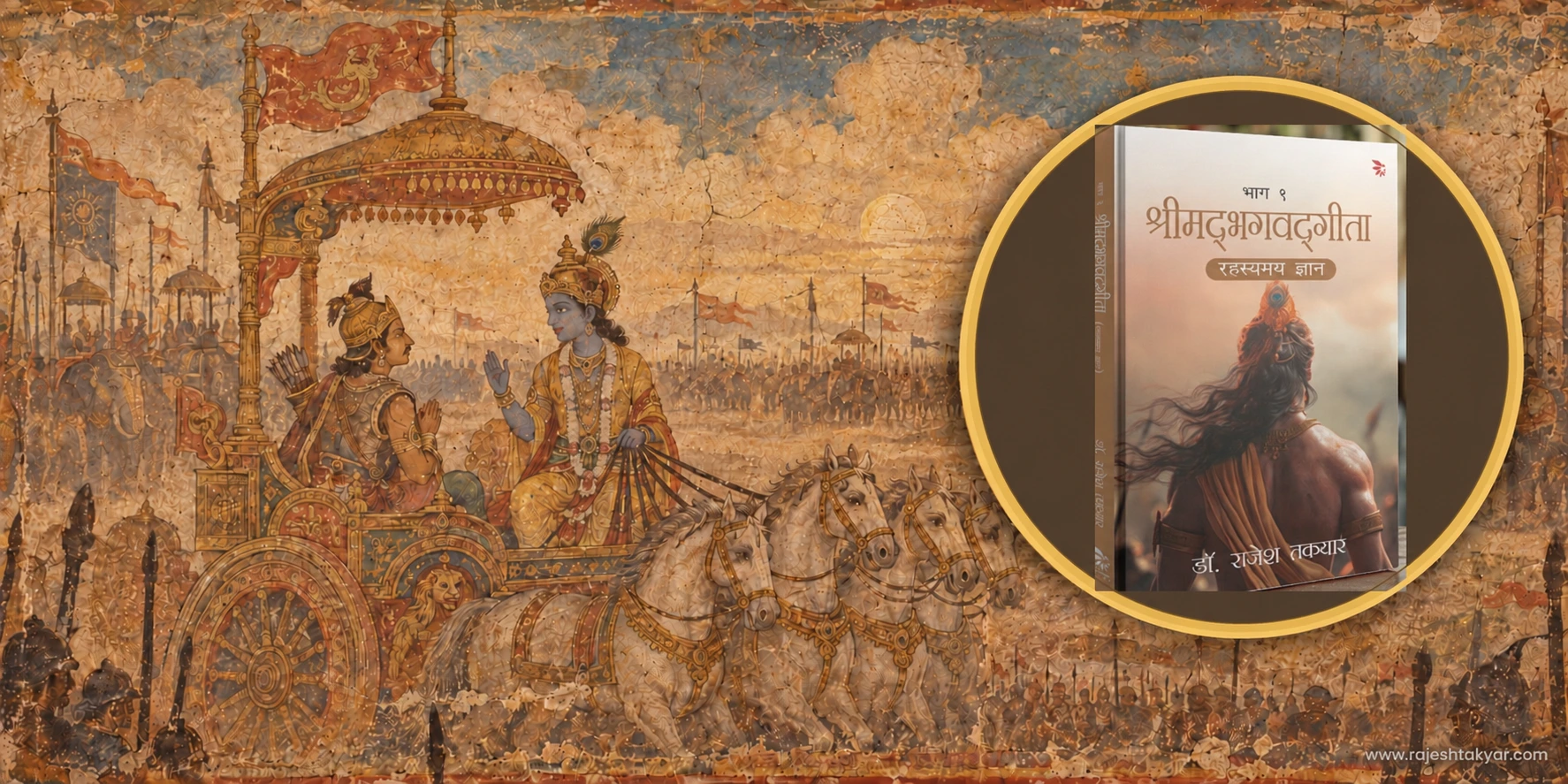
Shri Krishna tells Arjuna that He will now share profoundly subtle knowledge. It is connected with experience, purifies a person and points toward freedom from inaus
Read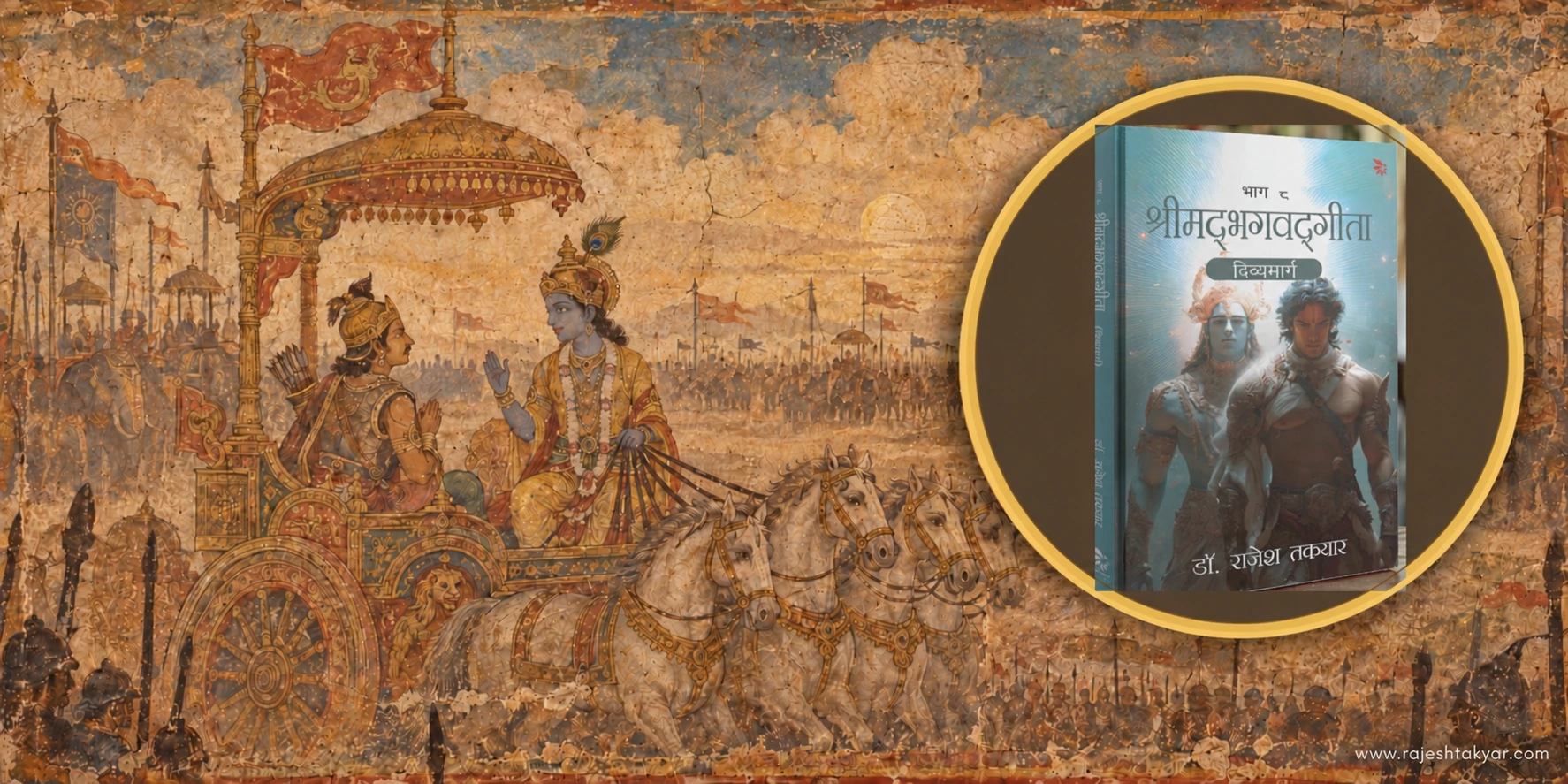
Arjuna asks Shri Krishna about Brahman, the self and action. He also wants to understand the material, divine and sacrificial dimensions of existence. An important p
Read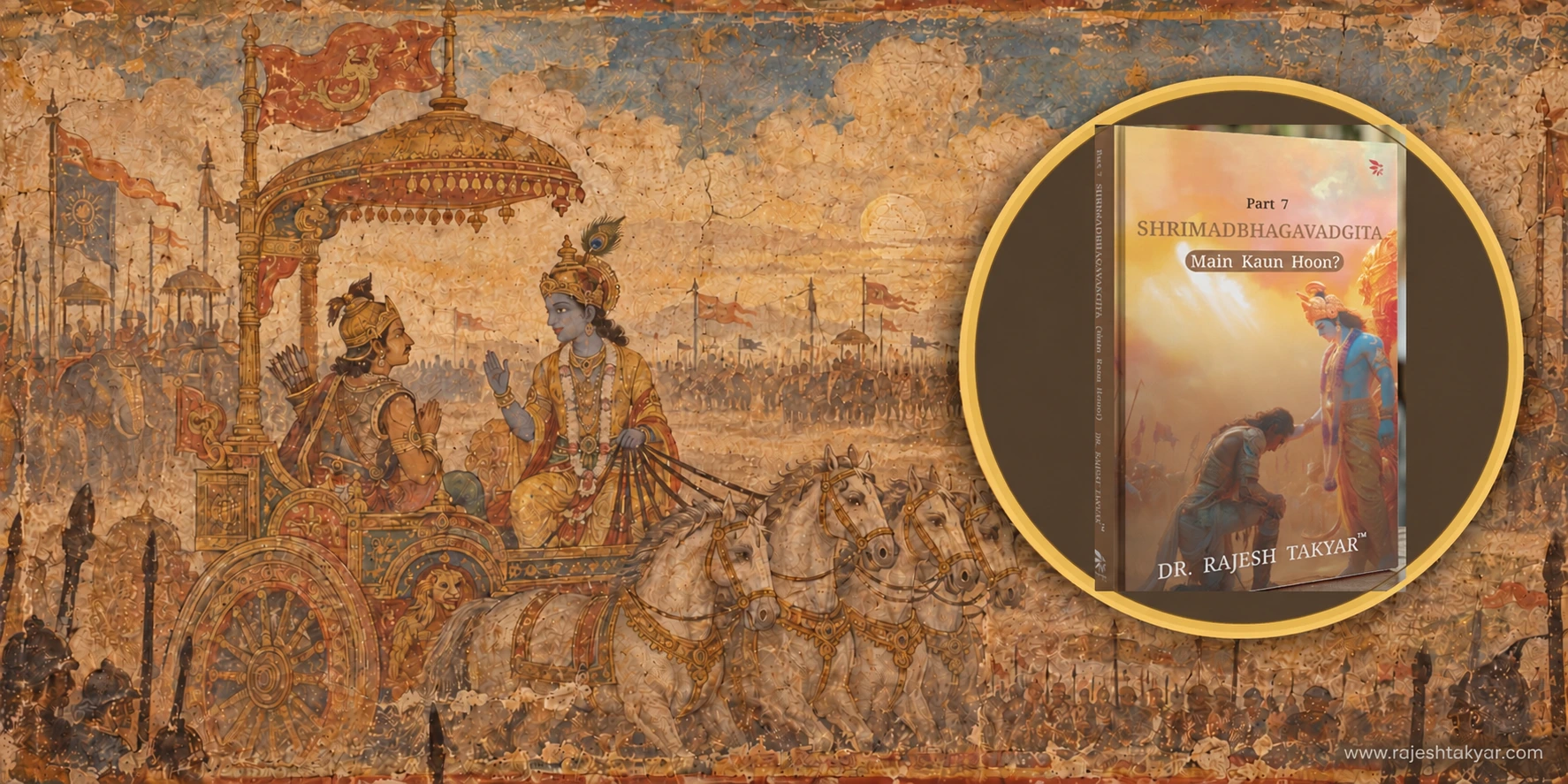
Shri Krishna tells Arjuna that by practising yoga with the mind fixed on Him and by taking refuge in Him, Arjuna can know His true nature. He is now going to explain
Read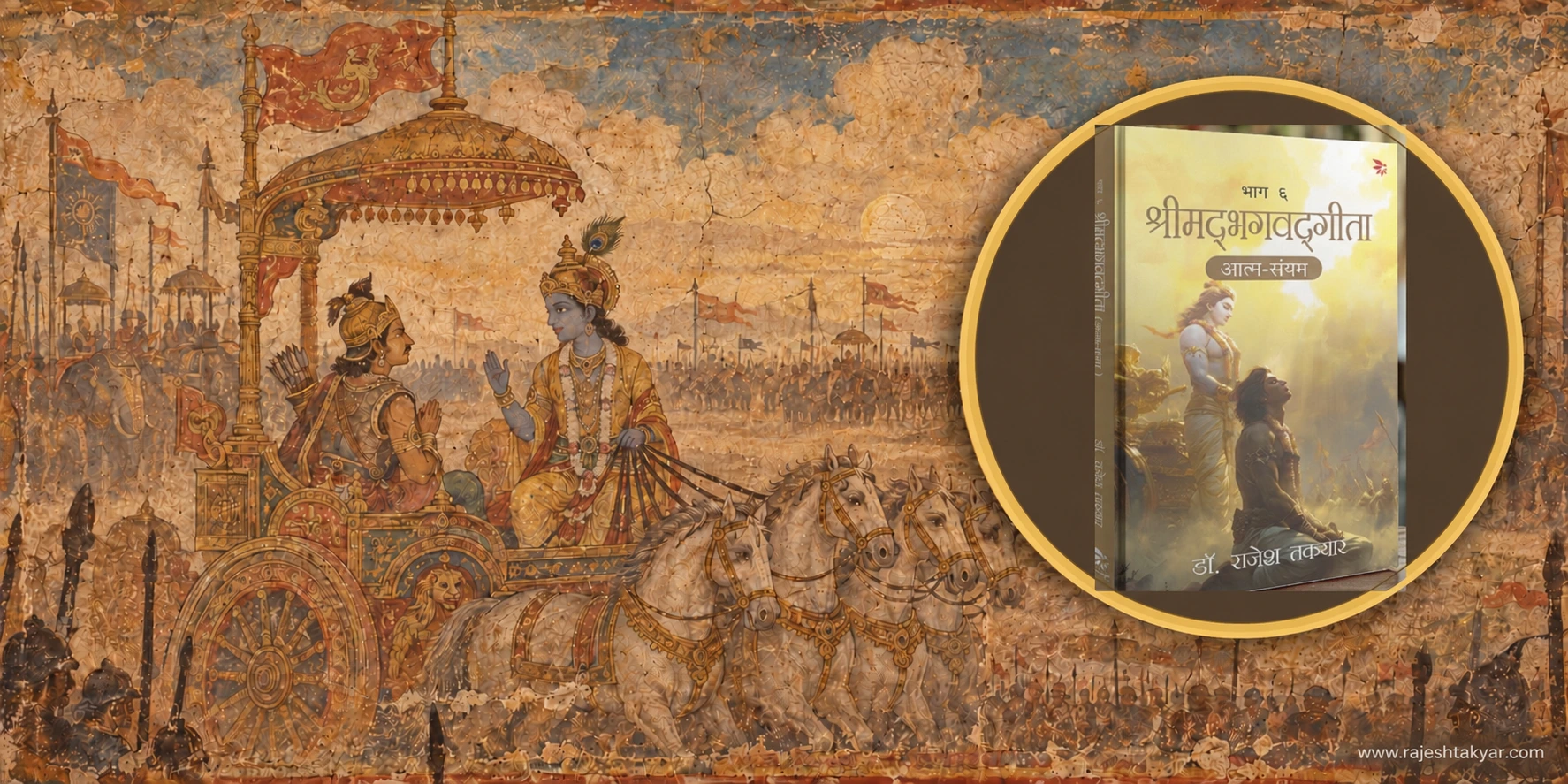
Shri Krishna explains to Arjuna that the true yogi and renunciant is one who performs one’s duty without depending on the fruits of action. Simply stopping work does
Read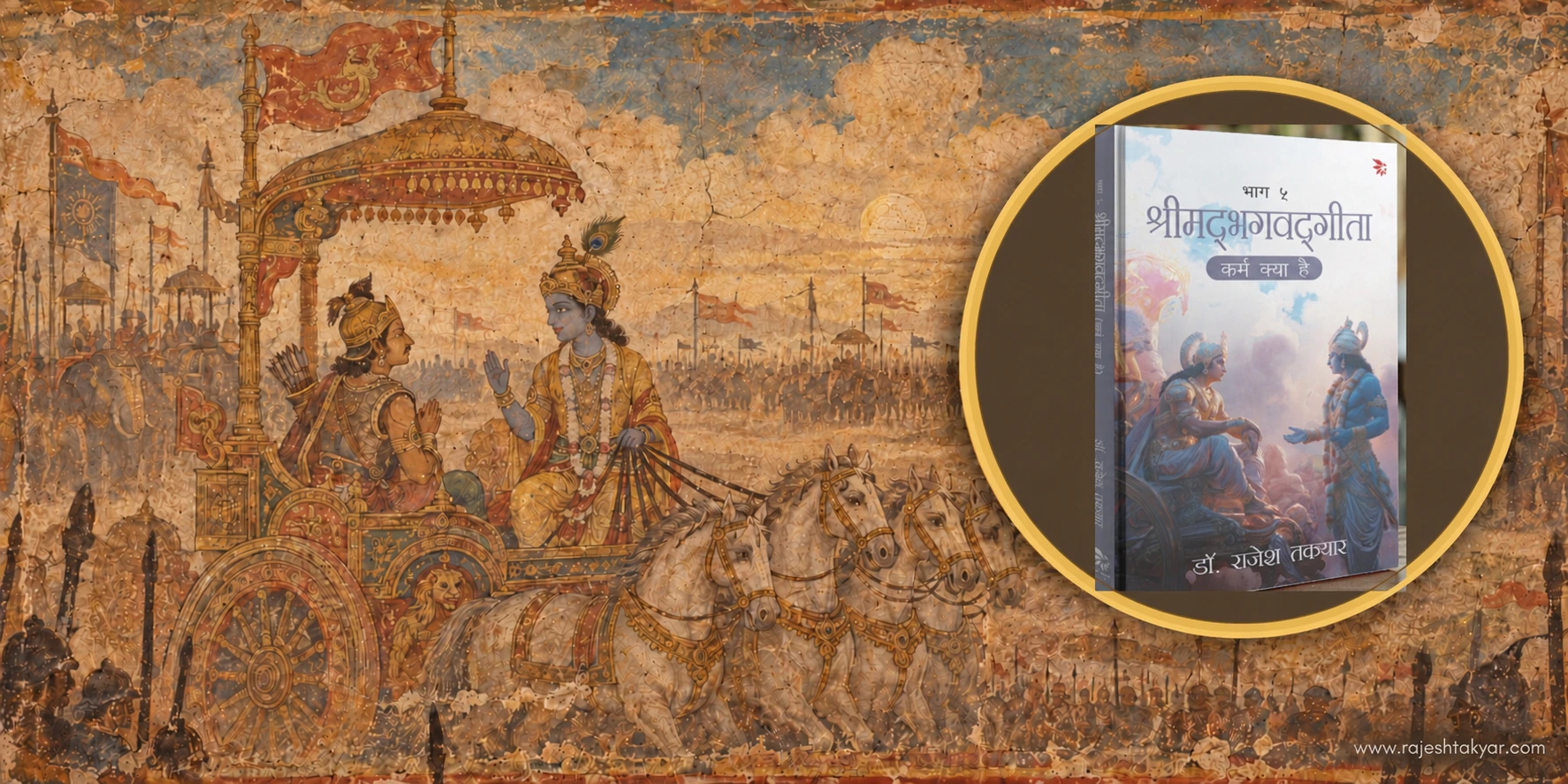
A question still remains in Arjuna’s mind. At times Shri Krishna speaks of renouncing actions, and at other times praises the yoga of action. Arjuna asks which of th
Read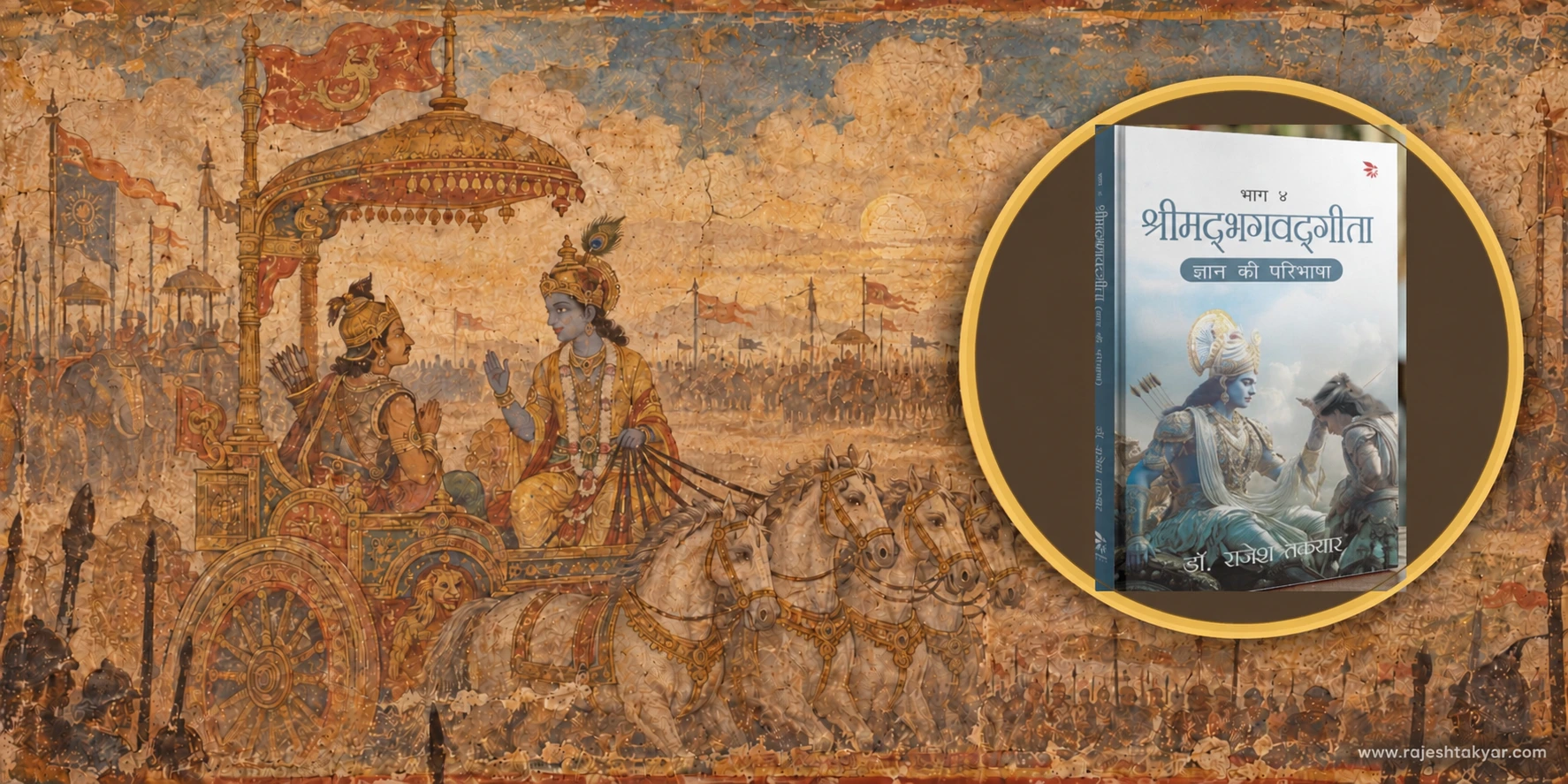
Arjuna asks Shri Krishna: His own birth is recent, while the Sun is very ancient. How, then, could He have taught this yoga to the Sun at the beginning?
Read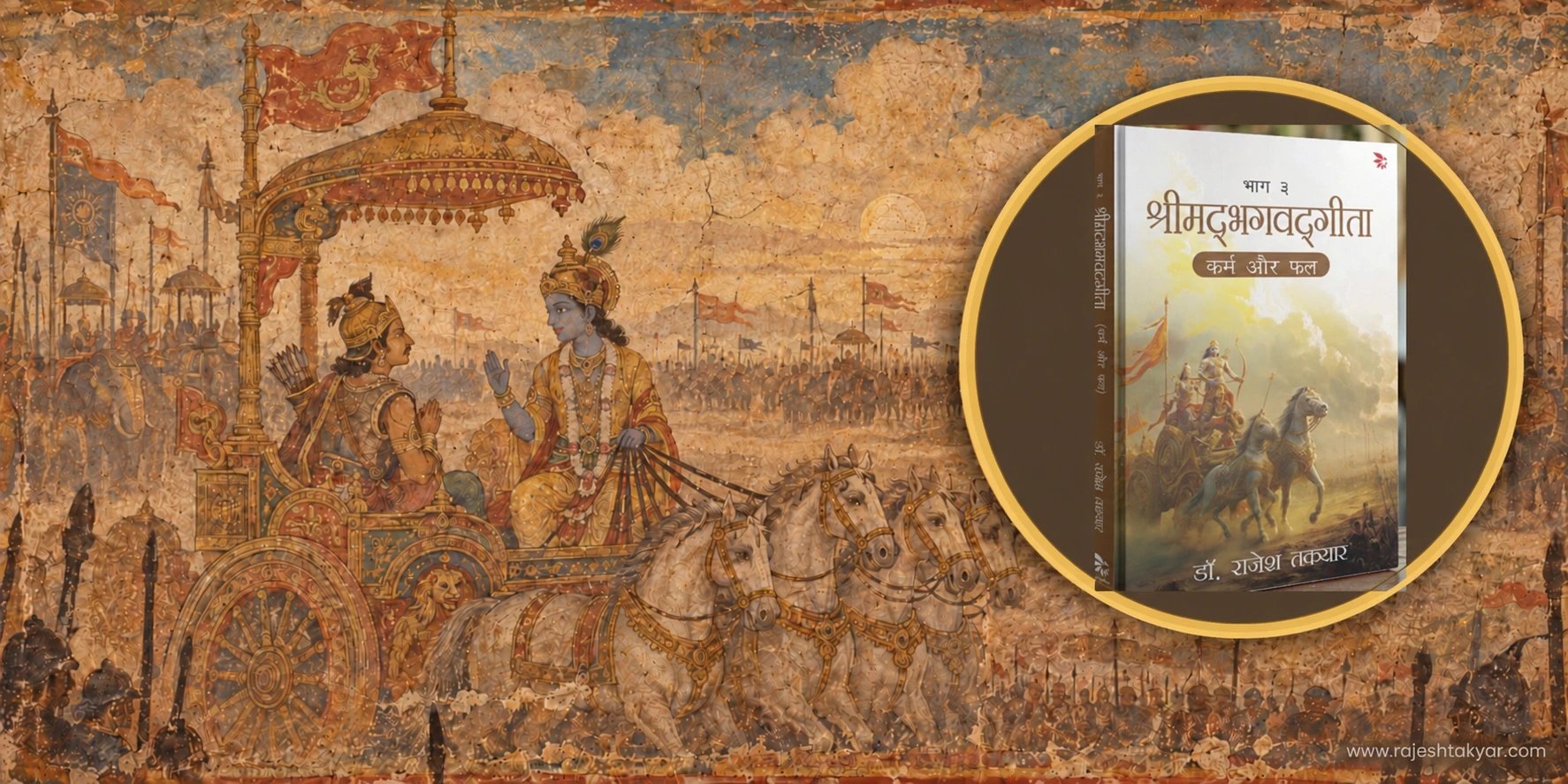
Arjuna says to Shri Krishna: if knowledge is superior to action, why is He urging him to undertake such a difficult action? Arjuna’s understanding is still unsettled
Read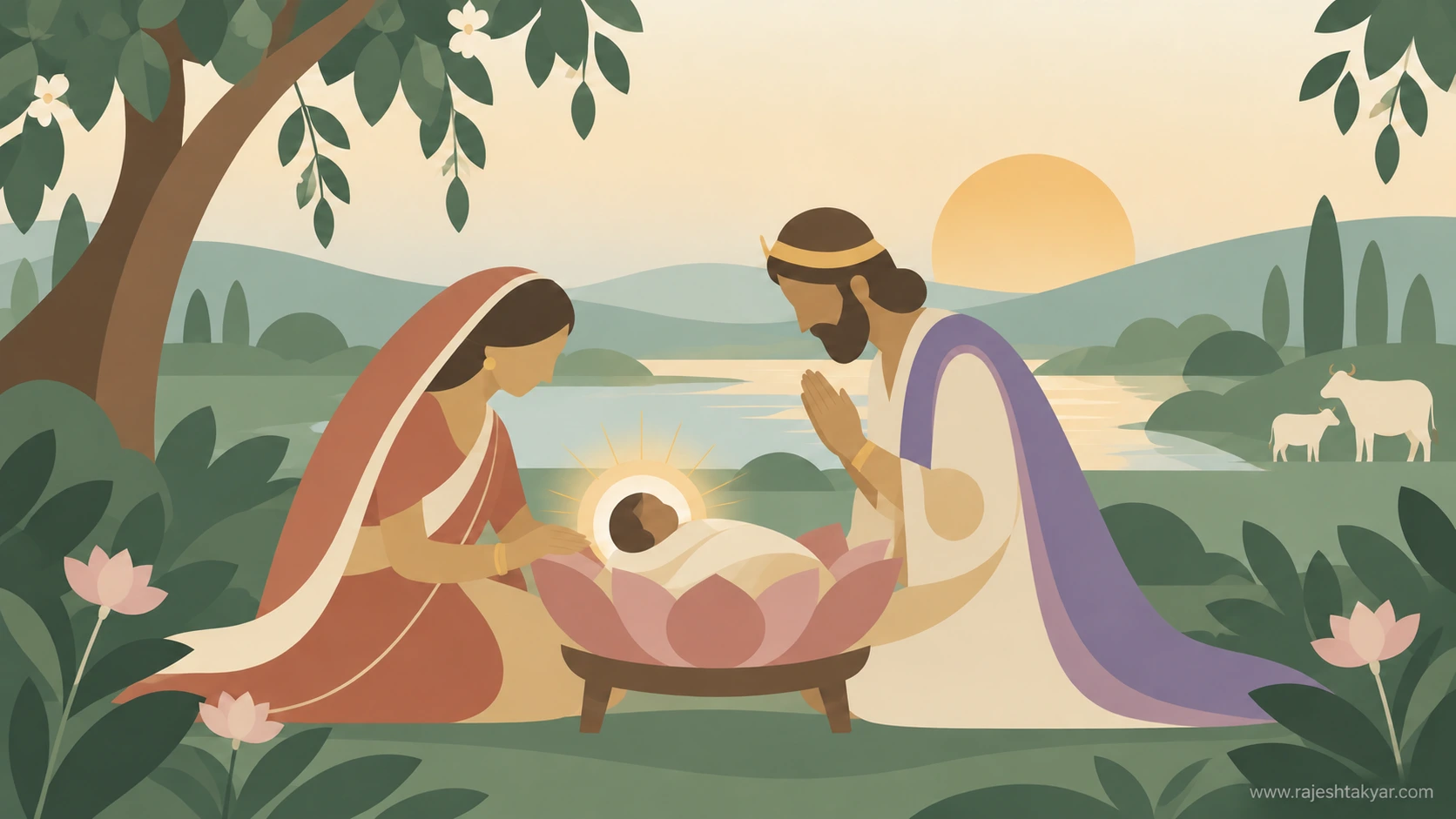
The book presents Radha’s manifestation in Goloka and her arrival at Vrishabhanu and Kalavati’s home on earth as distinct narrative layers. This article reads those
Read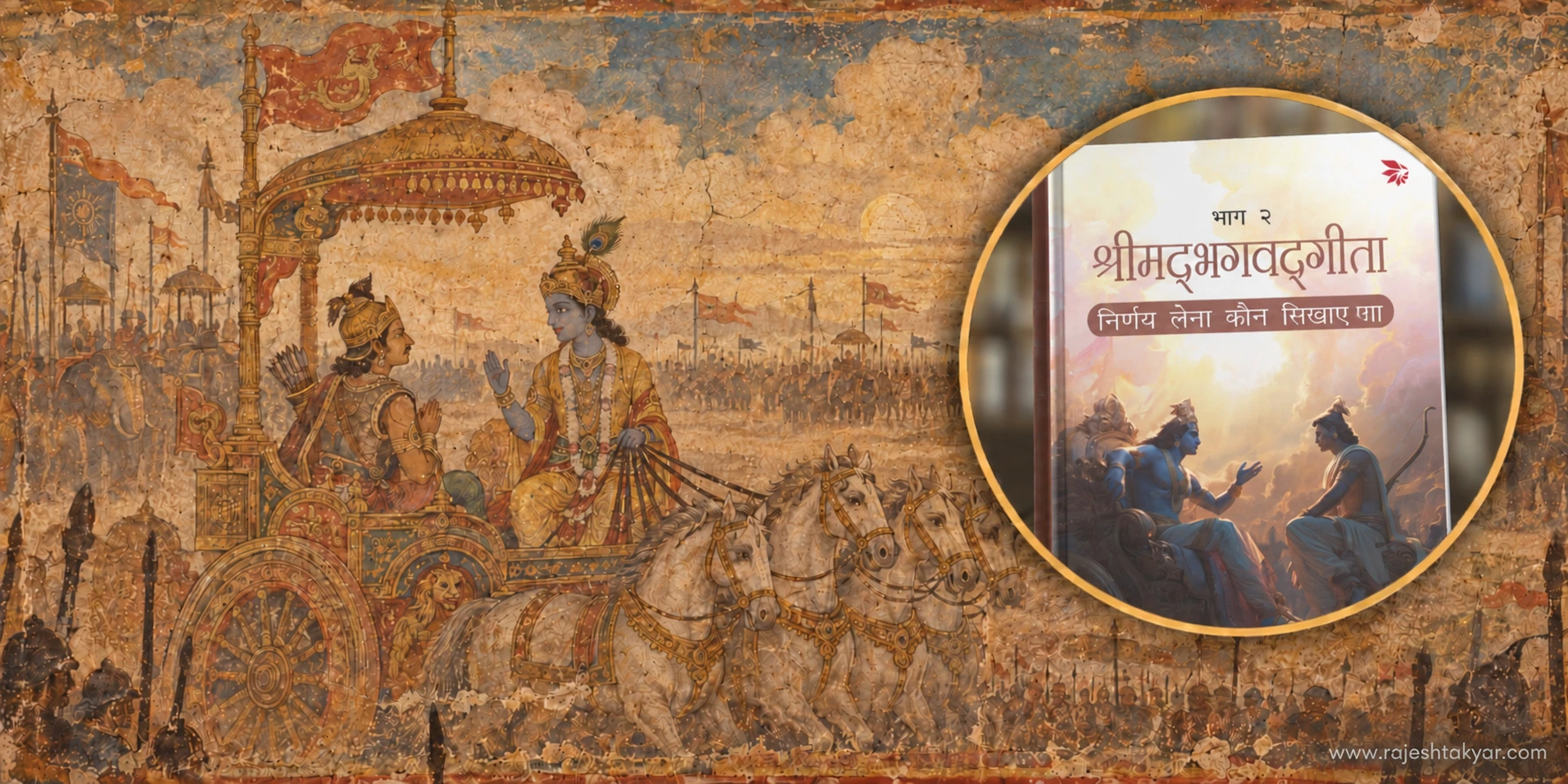
Arjuna tells Shri Krishna that he cannot understand what it would be right for him to do. On one side is his duty; on the other are relationships whose loss even in
Read
We often imagine “hell” as a distant realm or a condition reached after death. This passage of the Gita turns our attention to life as it is lived now
Read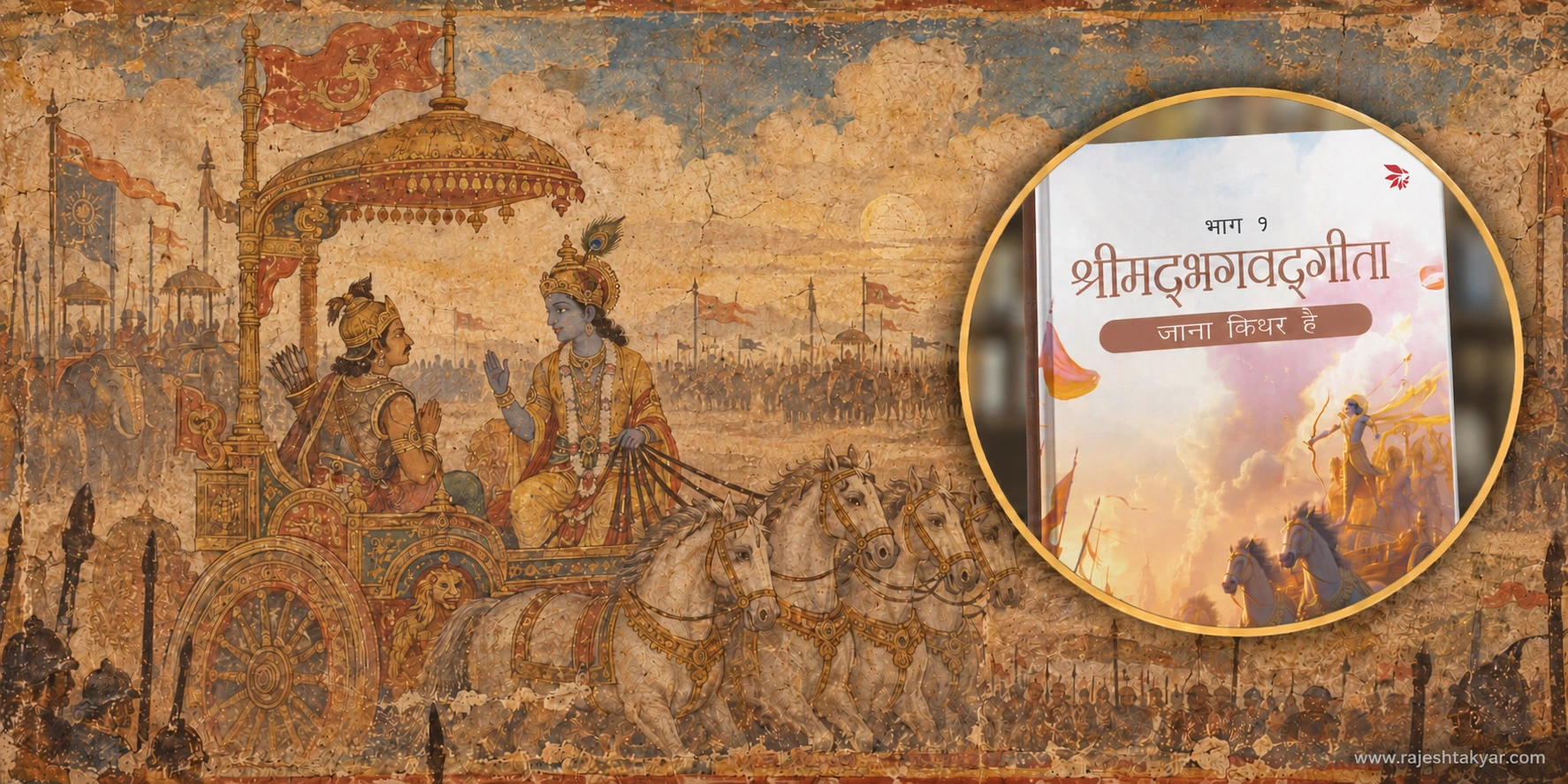
Arjuna lays his compassion, attachment and uncertainty about duty before Shri Krishna. Arjuna Vishada Yoga reveals the need for the right direction even when one pos
Read
Sattva, rajas, and tamas influence human experience and action. The closing question and answer in Chapter 14 describe transcendence as recognizing their movement wi
Read
In Madhavshiv’s “Agni and Soma” chapter, fire represents transformation and radiance, while Soma represents coolness and nourishment. Their balance sustains the worl
Read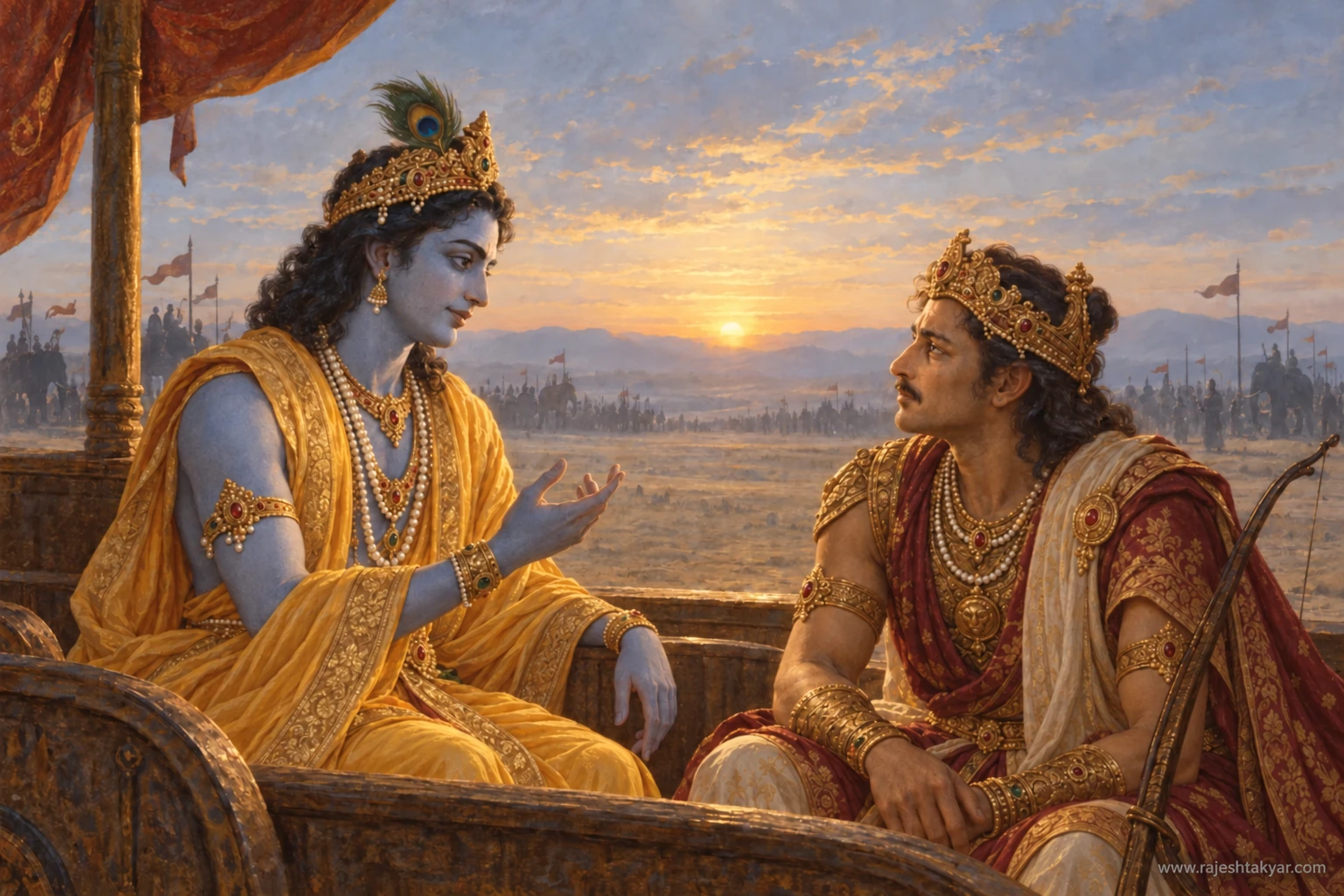
A clear introduction to the Gita’s journey from Arjuna’s dilemma through the soul, action, the mind, devotion, God, human nature and liberation.
Read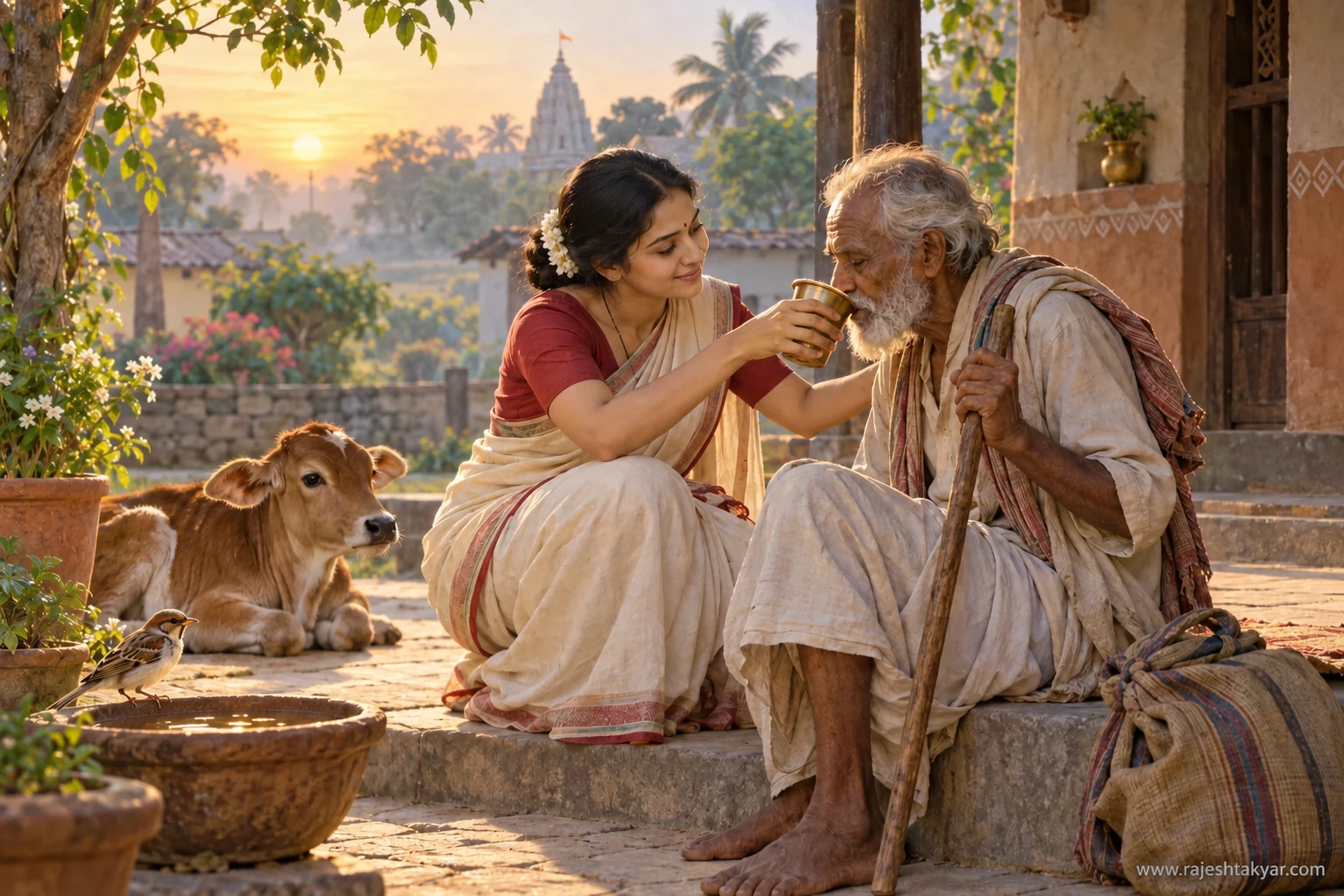
Ask someone how devotion can be recognized, and they may mention worship, chanting, fasting, or visiting a temple. These are important expressions of
Read
How quickly we judge a living being by its past actions. It is easy to regard someone who was once violent as forever violent, and easier still to kee
Read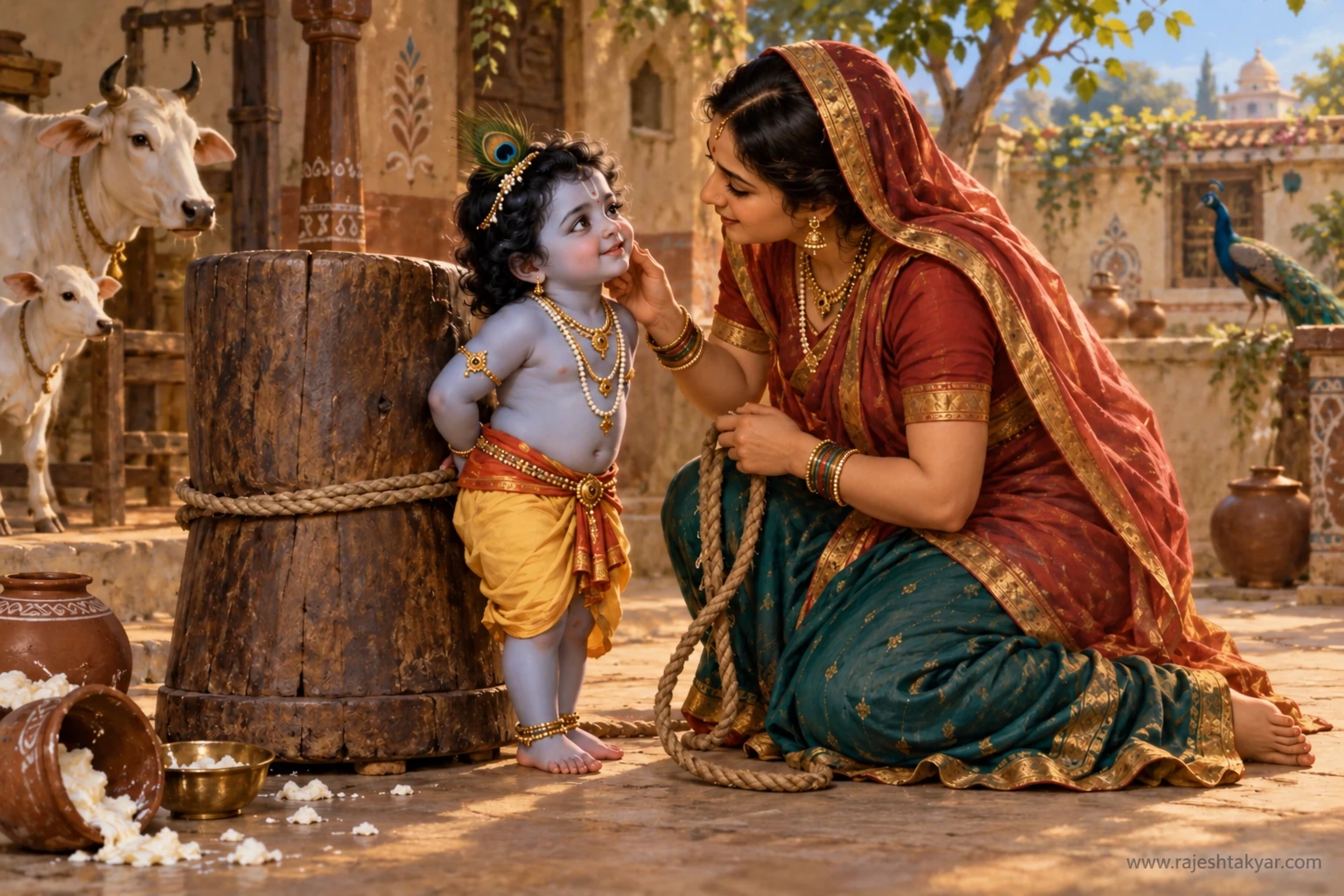
A child sits in his mother’s lap, yet he is also the divine figure in whom the mystery of creation rests. In the chapter “Yashoda Prem” of Dr. Rajesh
Read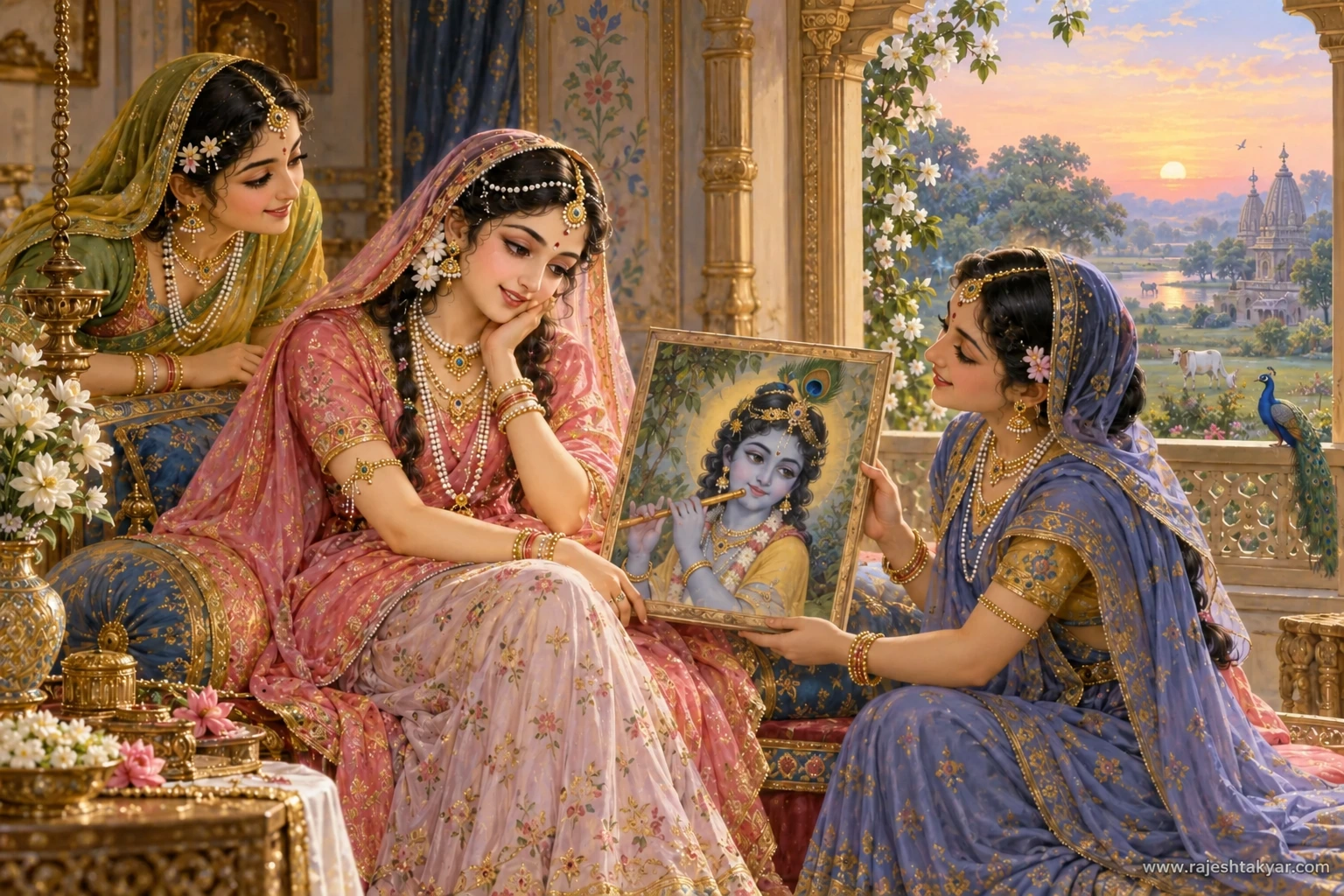
A picture of someone dear can make us happy and, at the same time, sharpen our awareness that the person is absent. A picture gives the eyes a form to
Read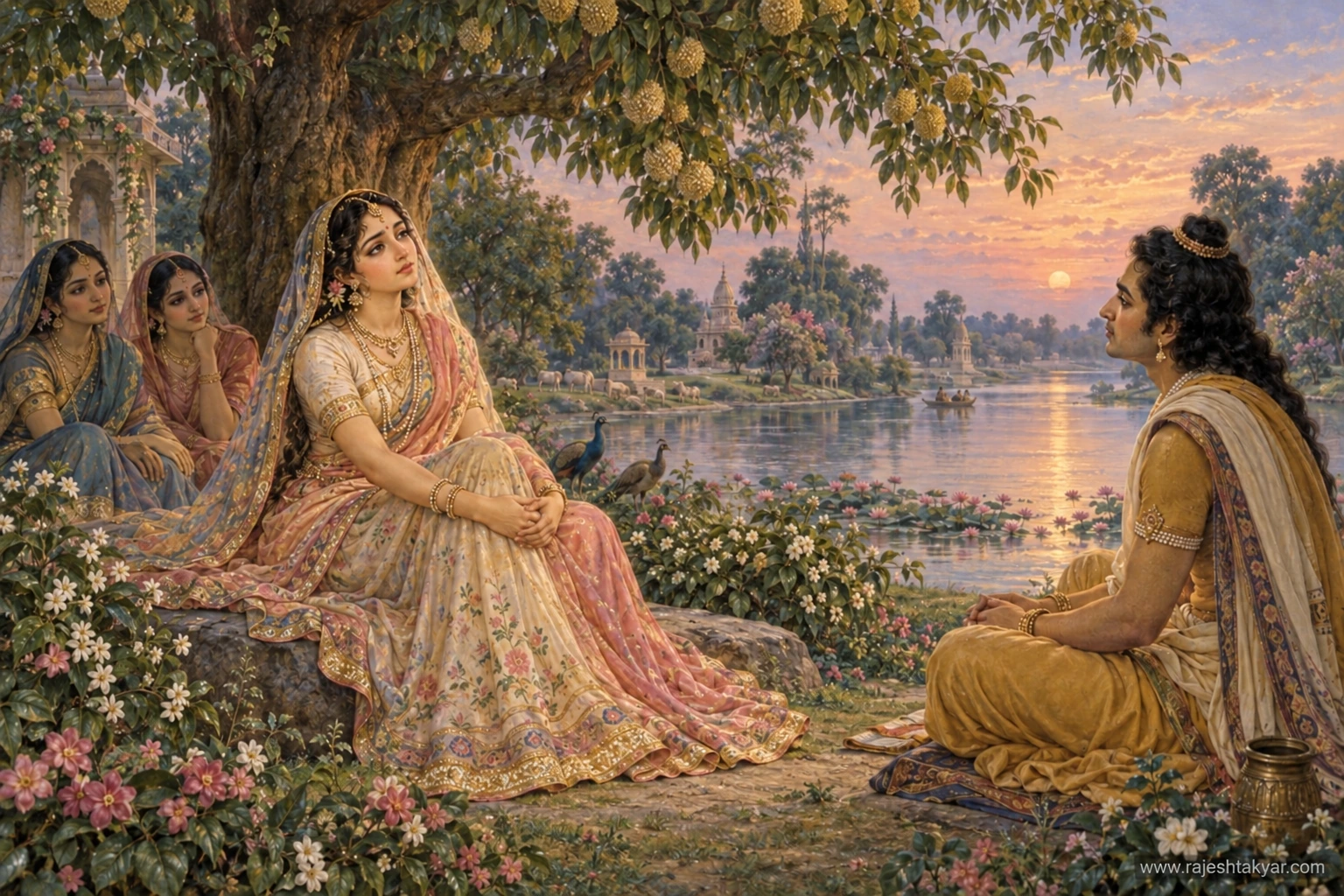
Sometimes even the most beautiful scenes in life cannot comfort the heart. The river continues to flow, flowers bloom on the trees, and the moon scatt
Read
Even after working hard, we sometimes feel that we are standing in the same place. The day has been busy and we are tired, yet the work that matters h
Read
When we look at a necklace, we first notice its beads. The thread holding them together often remains unseen. In Part 7, Krishna uses this simple imag
Read
As soon as we begin a task, we start imagining its outcome. Will we be praised or criticised? Will we succeed or fail? Sometimes these worries occupy
Read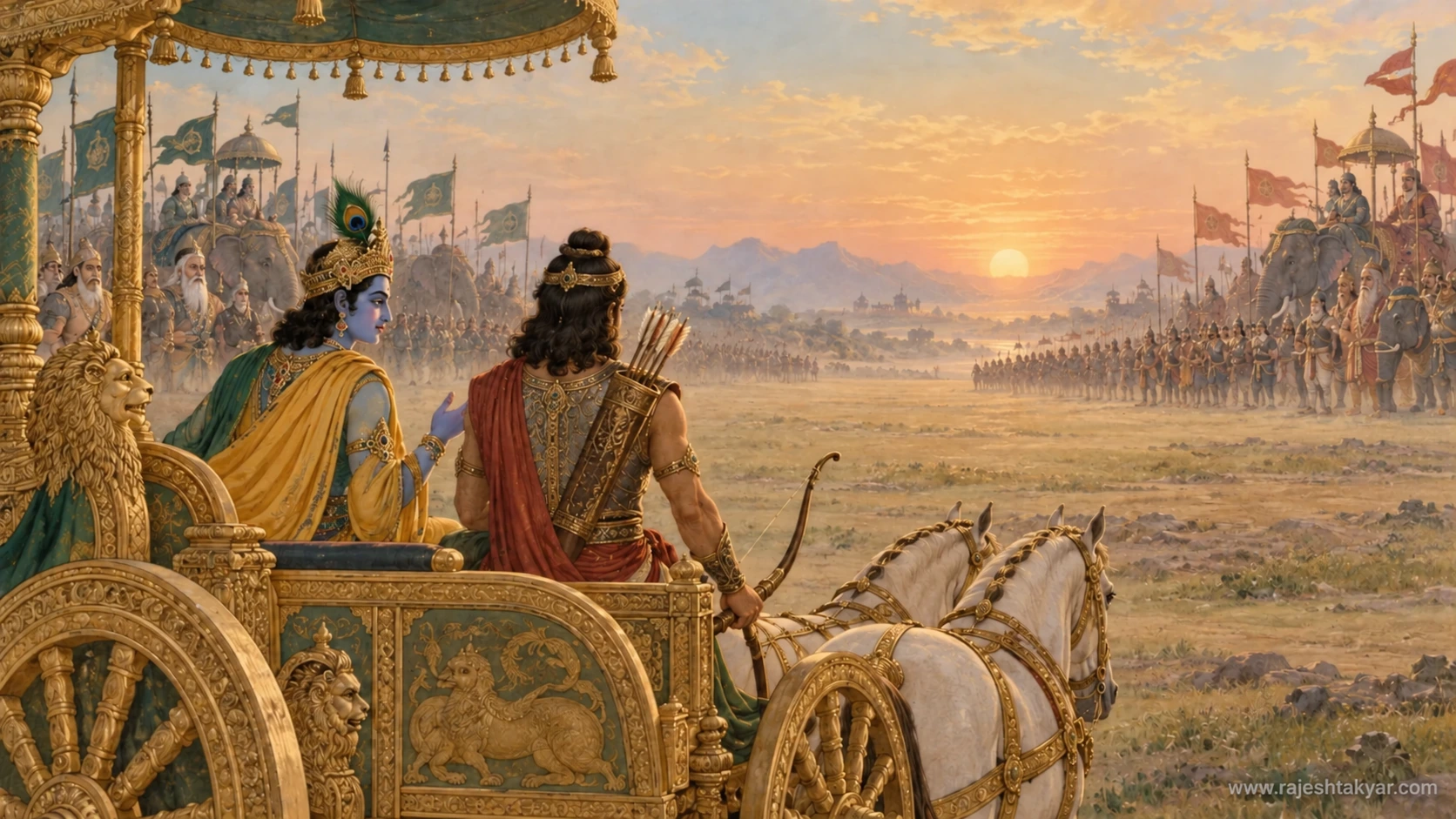
Some decisions are difficult to act on even when we think we know the answer. What stands before us is not merely a task, but people we love, old memo
Read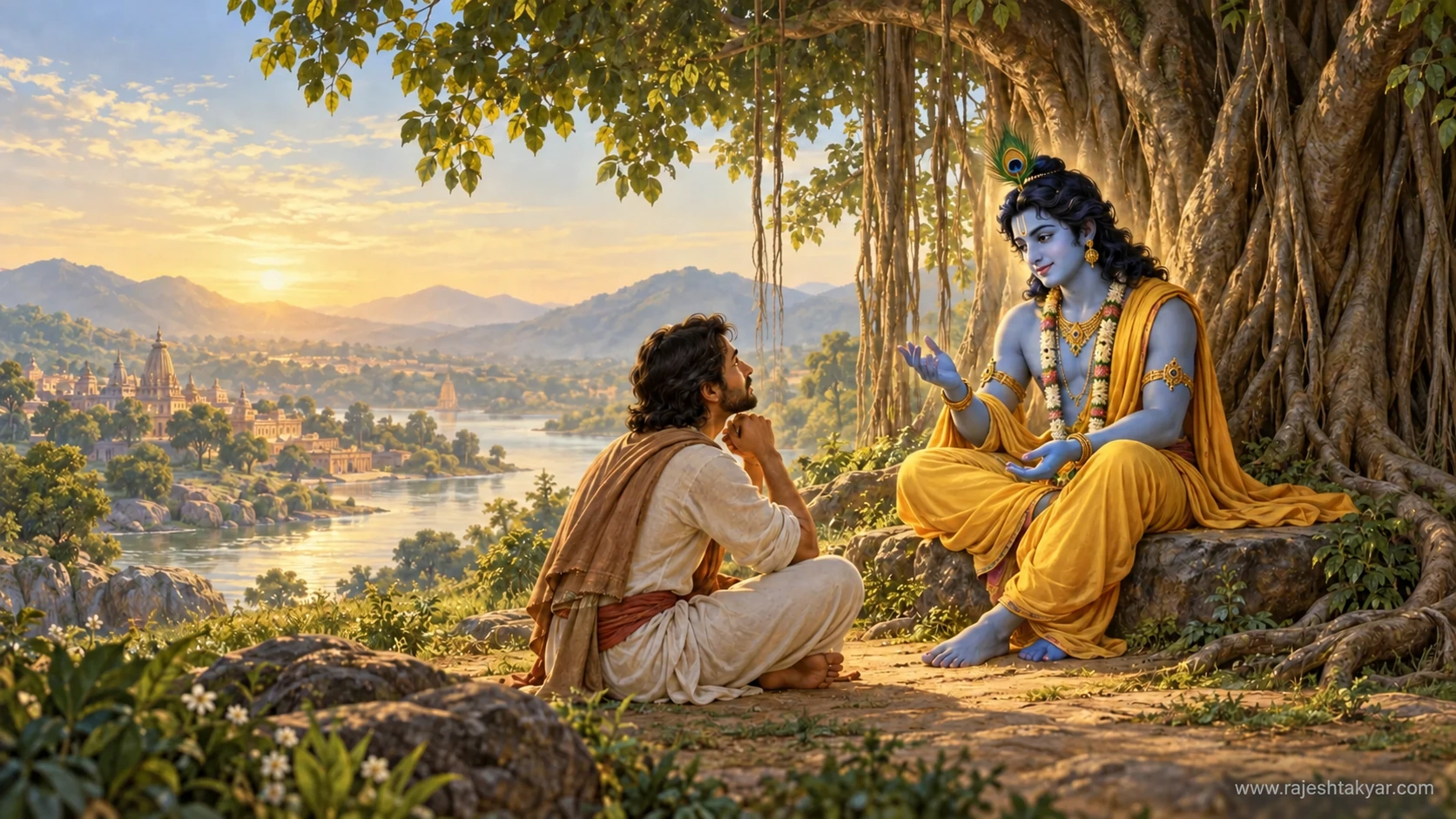
We often approach a guru looking for an answer to an immediate difficulty. But a guru also opens our way of seeing, so that we can meet future questio
Read
A reflection on Radha and Krishna’s love, caring for sacred places, and making devotion part of everyday service.
Read
Twenty questions about reading the Shrimad Bhagavad Gita: action, decisions, anxiety, relationships, life’s purpose and applying its teachings in everyday life.
Read
Krishna answers Arjuna’s question about unfinished spiritual practice, sincere action, devotion, and the journey of the soul across lives.
Read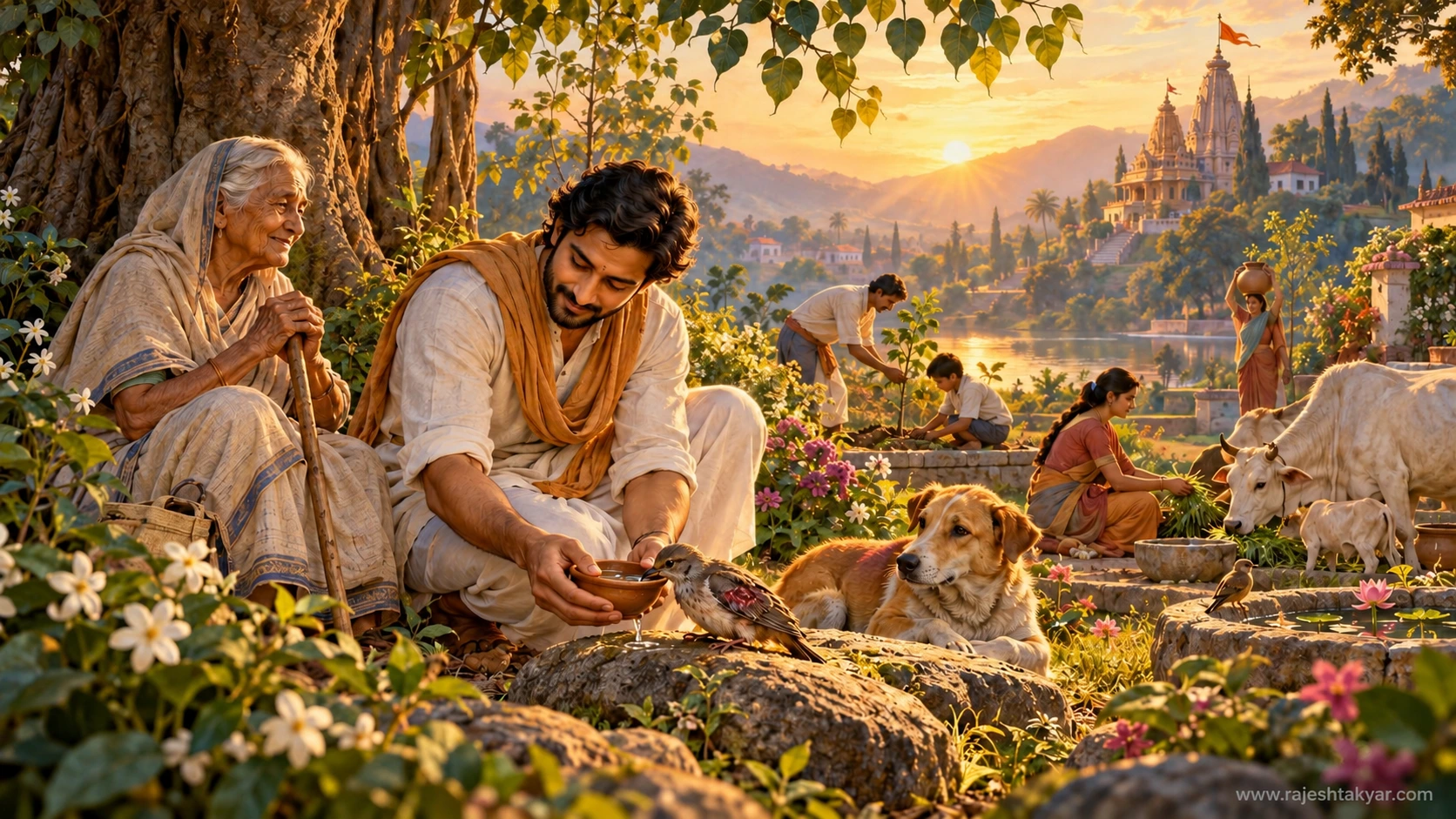
Who is a religious person, what does he do, why is he a religious person? A religious person is one whose soul is connected to religion, whose every action is based
Read
God is not only the Supreme Being but can be experienced in all the forms of love. Human beings often think of God only as a great power or supreme being.
Read
Have you ever found yourself standing in front of a decision, where there are people on both sides and no path seems easy? The mind knows that something has to be do
Read
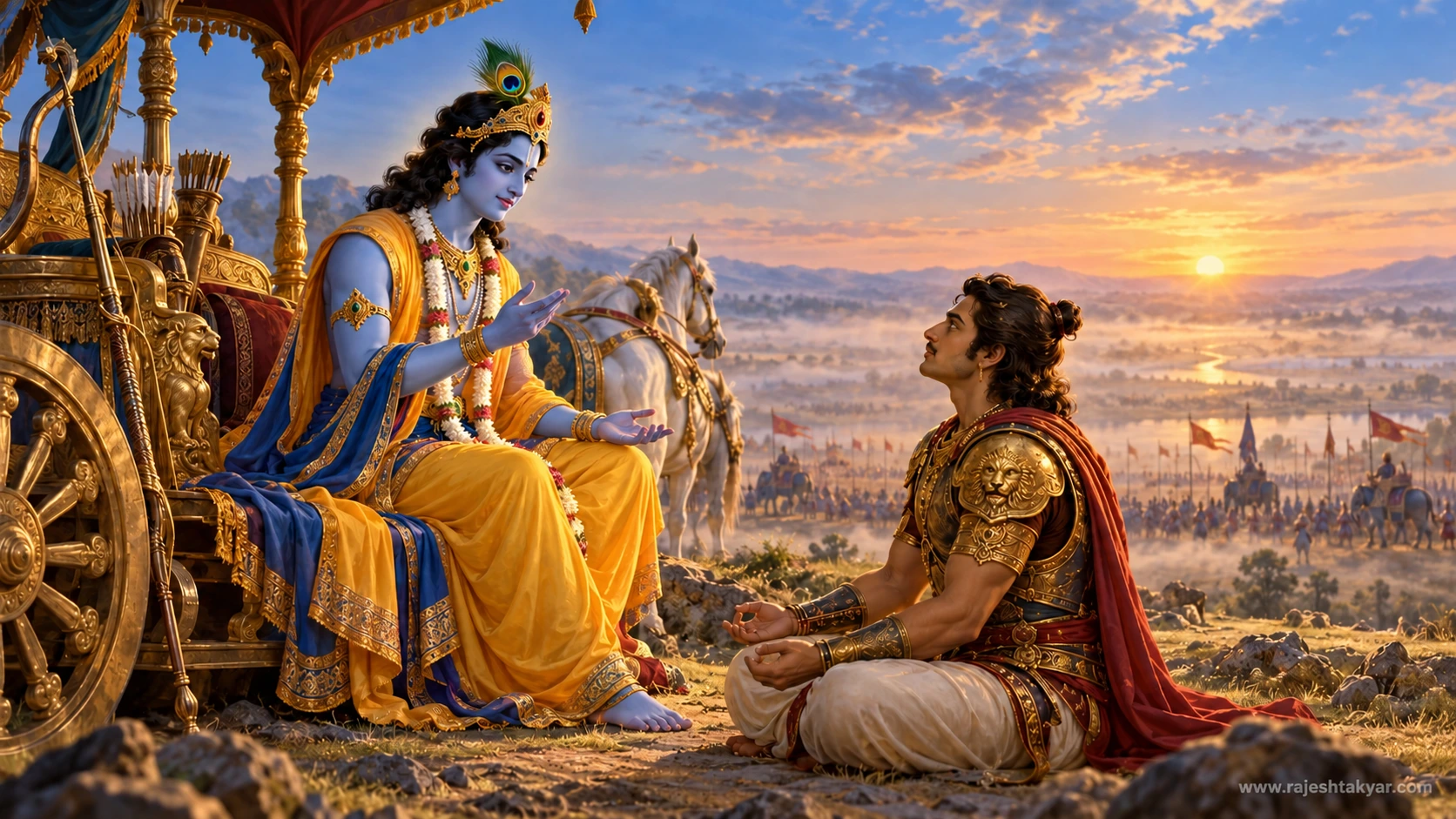
Apne juhwati pranam praneepanam tathapare.pranapanagati rudhva pranayamparayana.॥ 29 ॥ This is verse number 29 of chapter four of Srimad Bhagavad Gita. In this, Lord
Read
Many human beings say that it is not right to say that the soul does, but it is right to say that it does. Which is not appropriate. In the Vedas, Shastras and Upani
Read
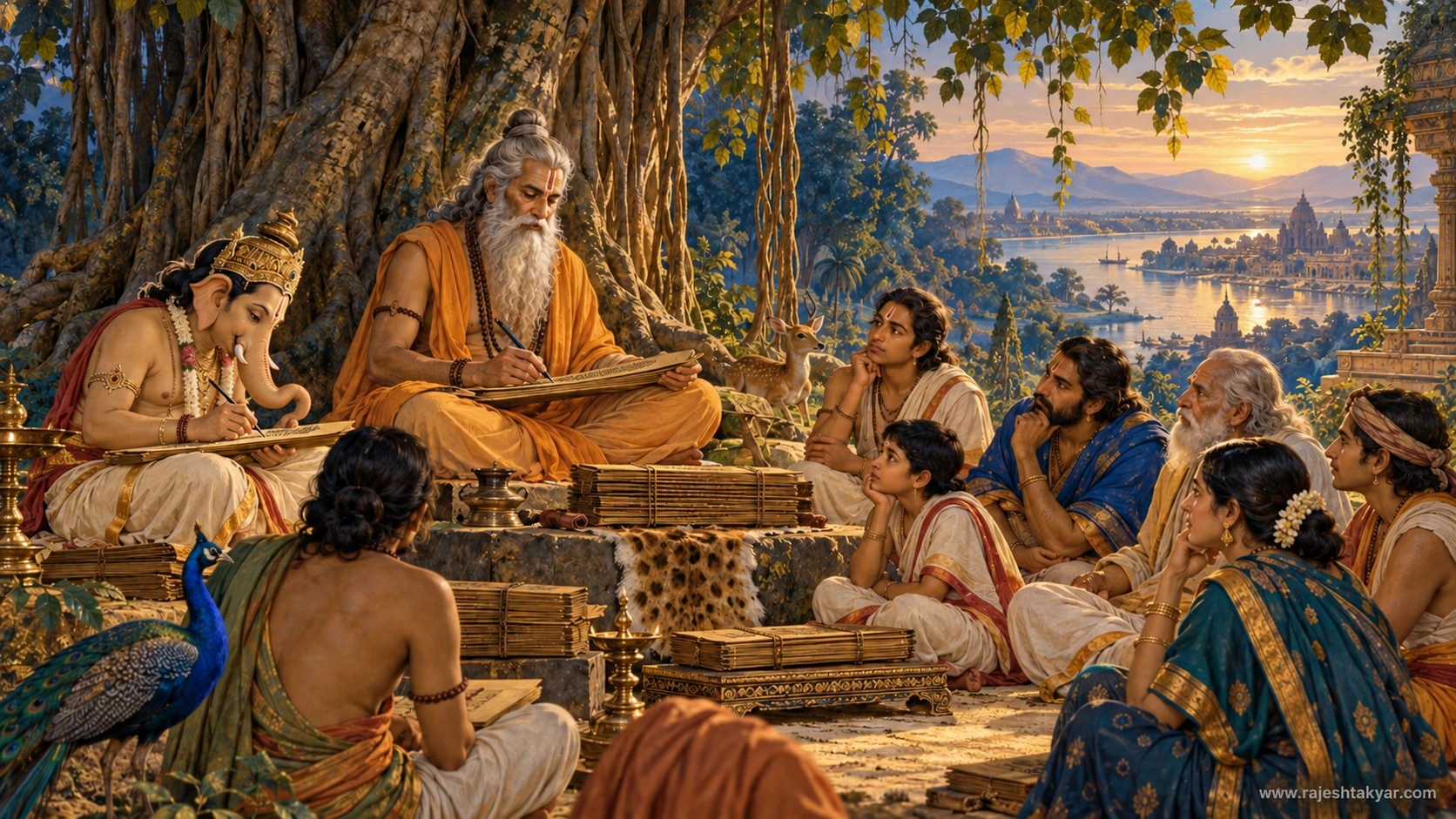
There is a big dilemma in the mind of the common man whether Mahabharata should not be read or it should not be kept at home. There is a verse in the first chapter o
Read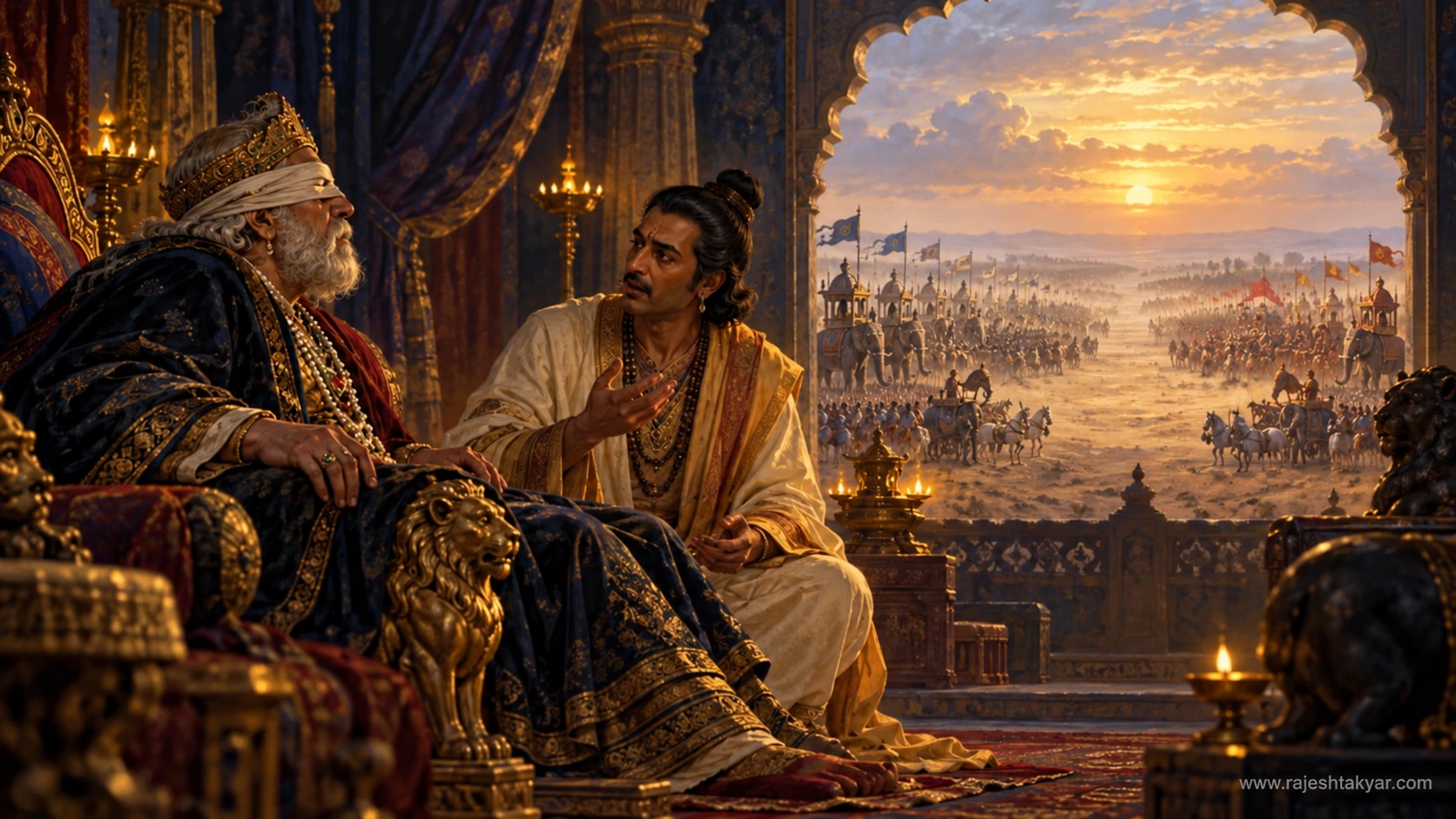
Dharmakshetre Kurukshetre Samveta Yuyutsavah.Mamakah Pandavashchaiva Kimkurvat Sanjay॥ 1. Srimad Bhagavad Gita begins with Panchavinshodhyay of Bhishma Parva of the
Read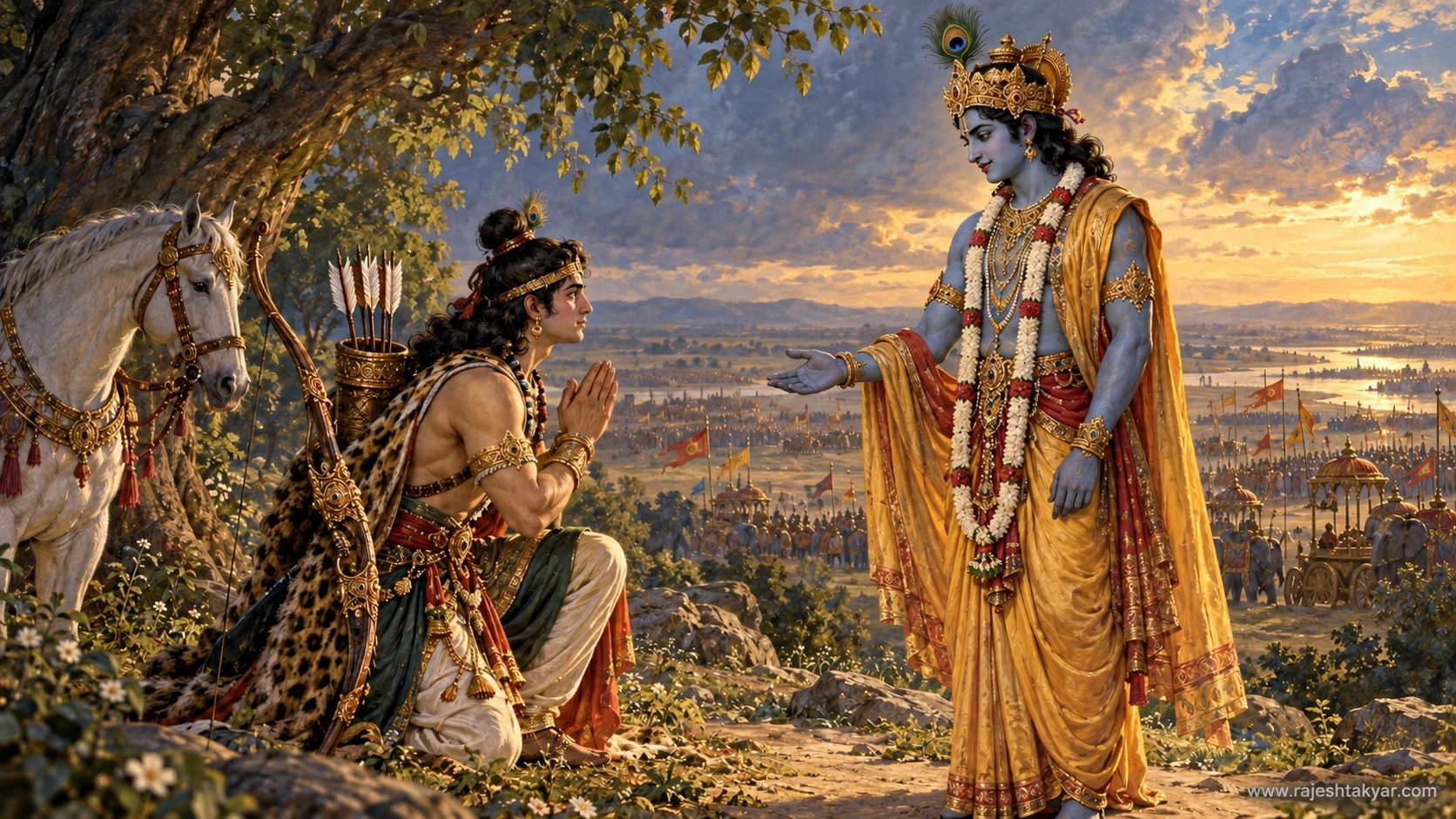
Chapters 60 and 66 of Maheshwarkhand-Kumarikakhand [2] of Skandapuran describe Ghatotkacha marriage and his son Barbarik in great detail. There is no mention of Barb
Read
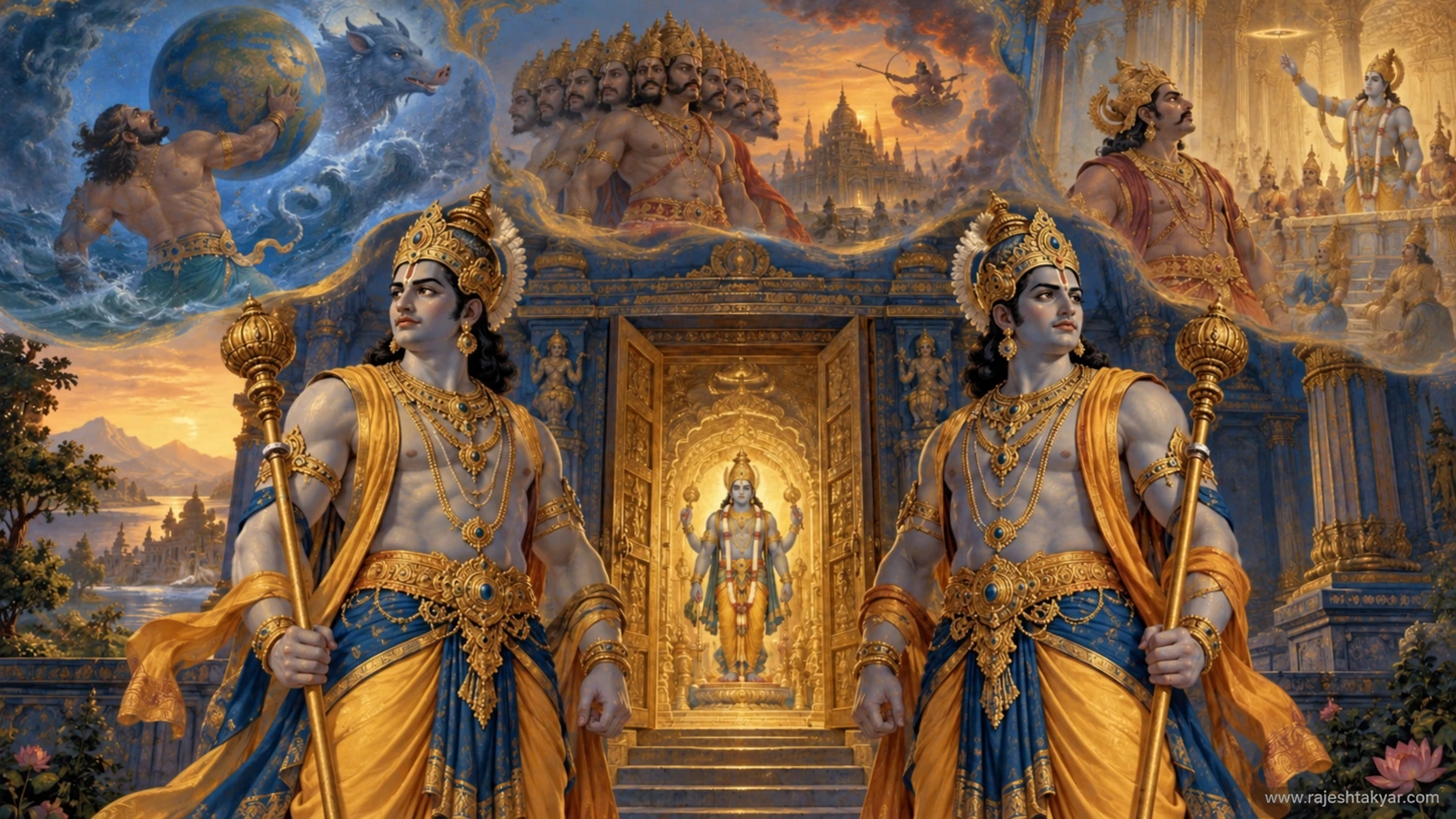
It is told in the Kartikamas Mahatmya of Skandapuran that due to the vision of Maharishi Kardam, two sons named 'Jai' and 'Vijay' were born from the womb of Trinavin
Read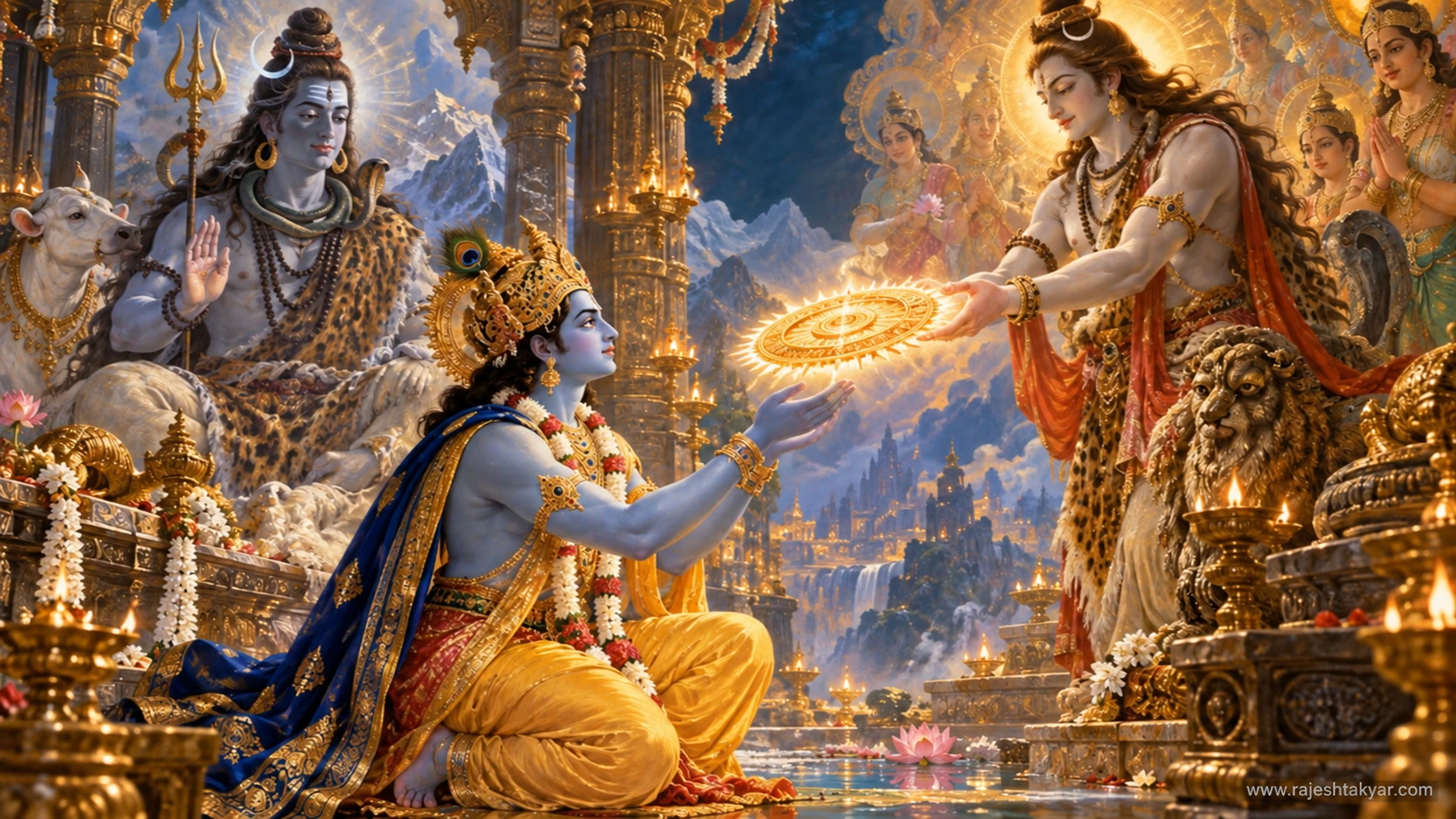
The story of Lord Krishna receiving Sudarshan Chakra is an important and interesting incident in Hindu mythological stories. There are many stories about its attainm
Read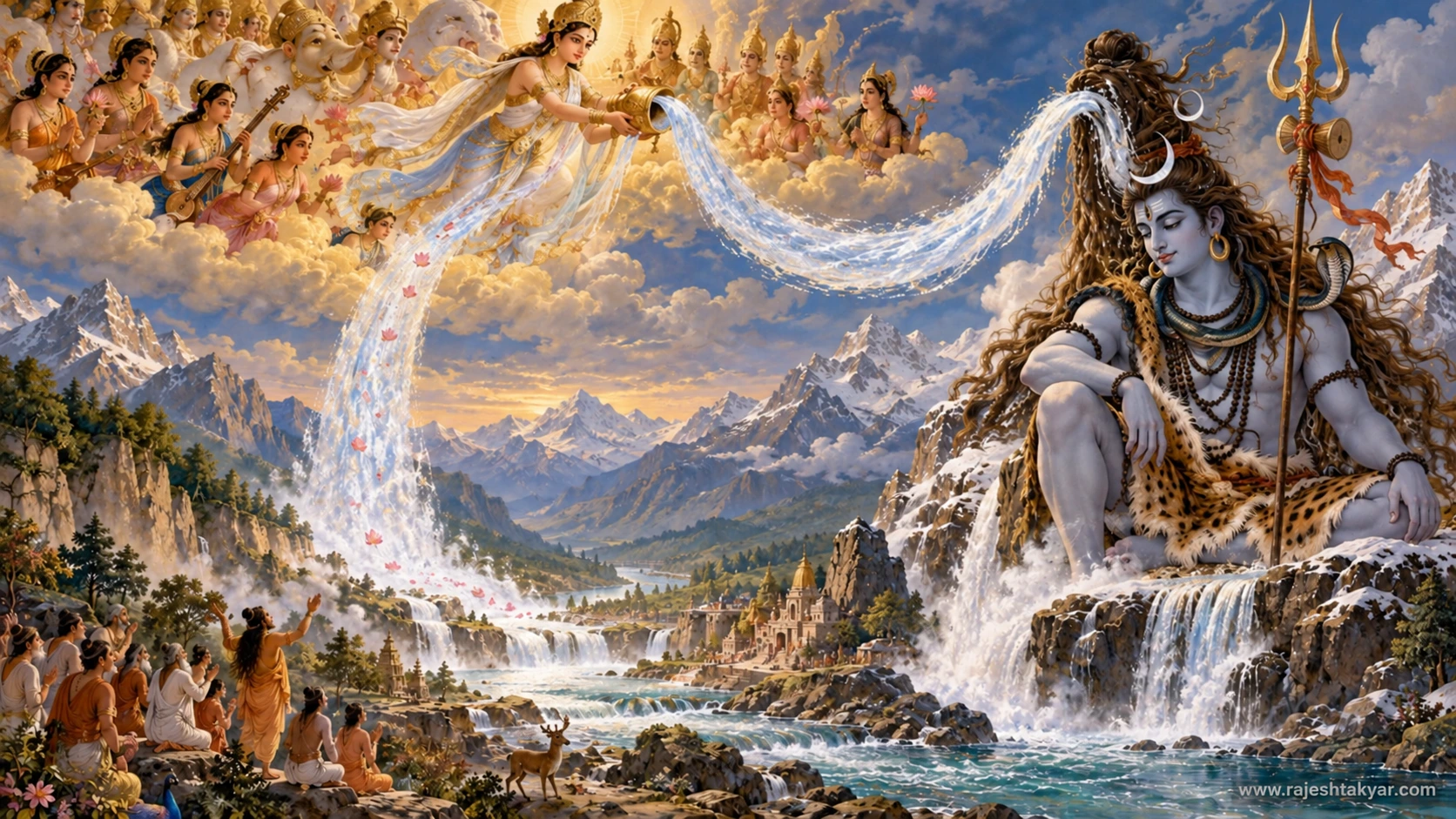
Brahmapuranam has two parts, one named Purvabhag and the other named Uttarbhag. The origin of Ganga has been told in the story under chapter number 72 ‘Shivvivah’ of
Read
Explore the fascinating journey of human birth. From conception to delivery, discover the miraculous process of how we come into this world.
Read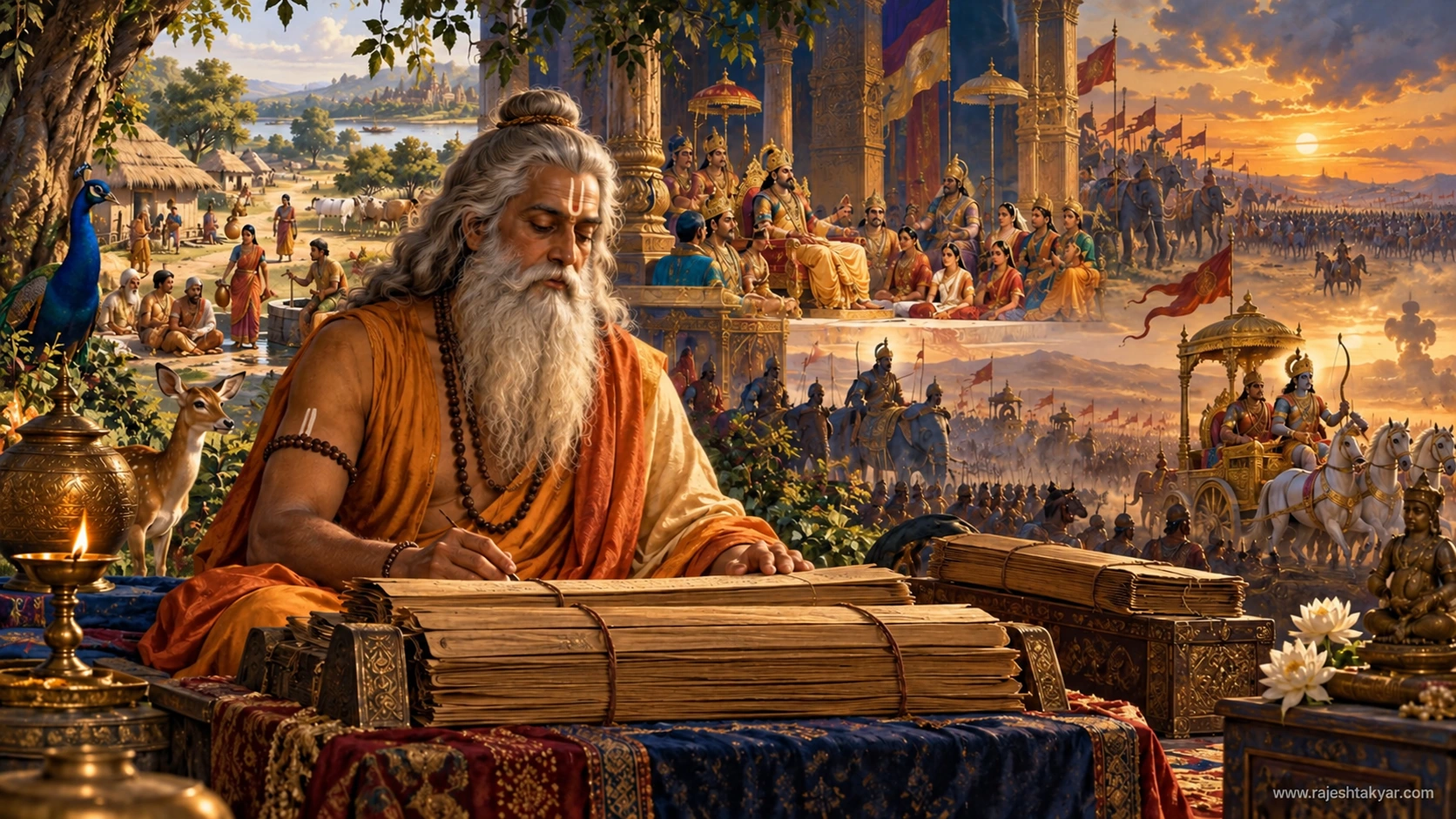
Explore the profound truths of the Mahabharata and its timeless wisdom. Dive into the essence of this ancient epic and unravel its eternal relevance.
Read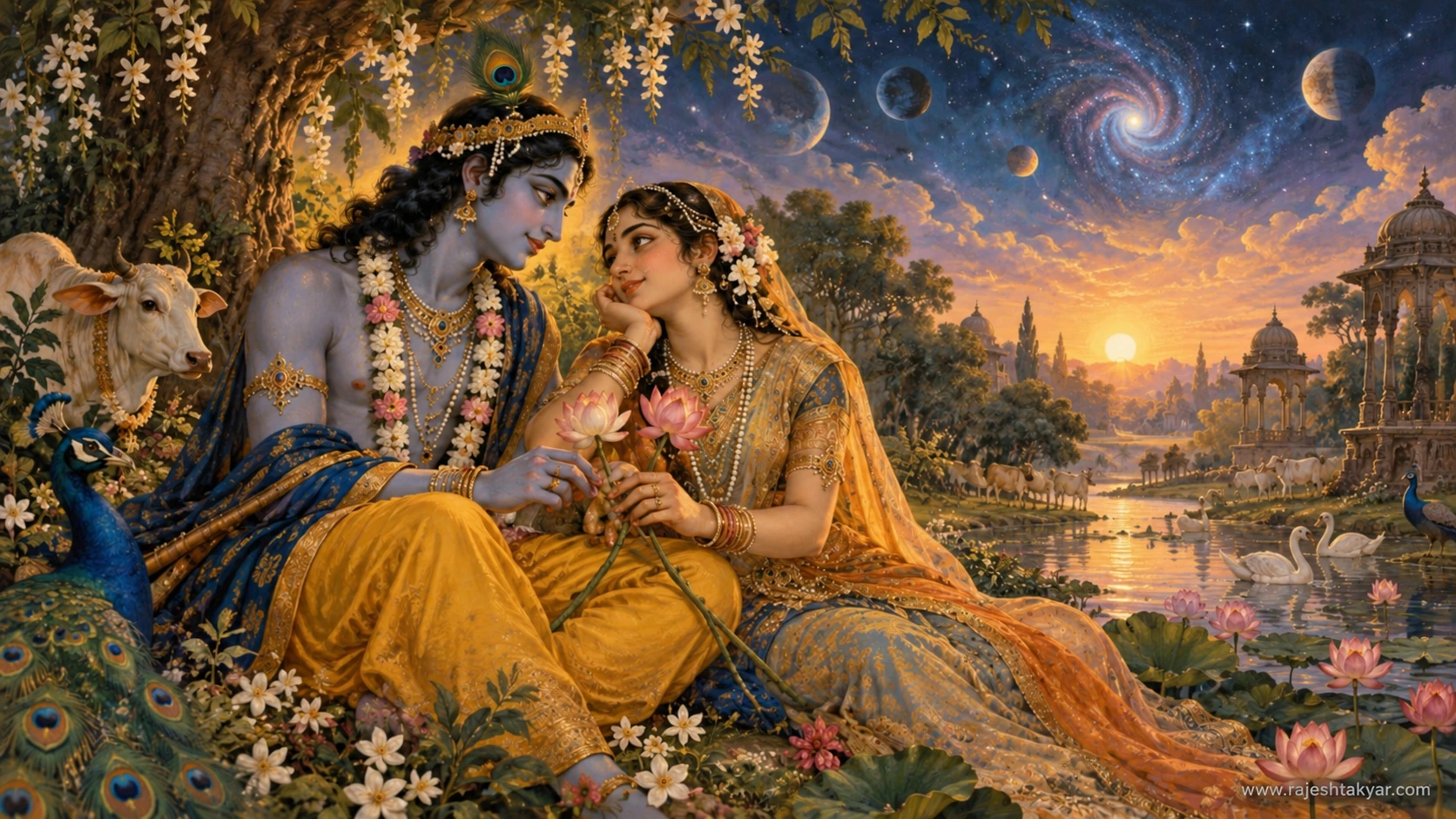
Explore the origin of love and its profound impact on our lives. Discover the mysteries of 'where does love come from' in this insightful blog post.
Read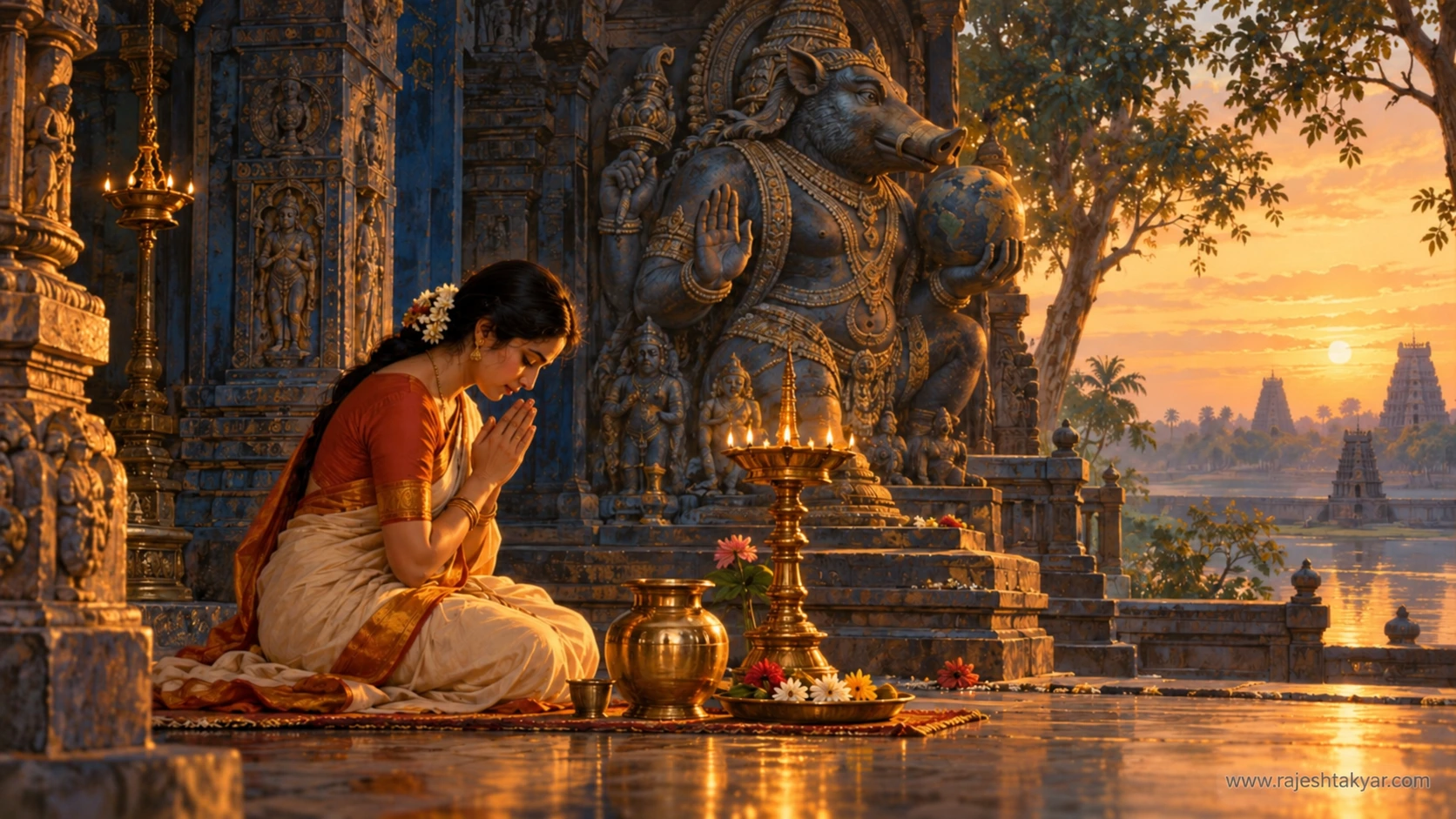
Discover the 32 types of sins and their atonement in this insightful blog post. Explore the spiritual journey towards redemption and self-discovery.
Read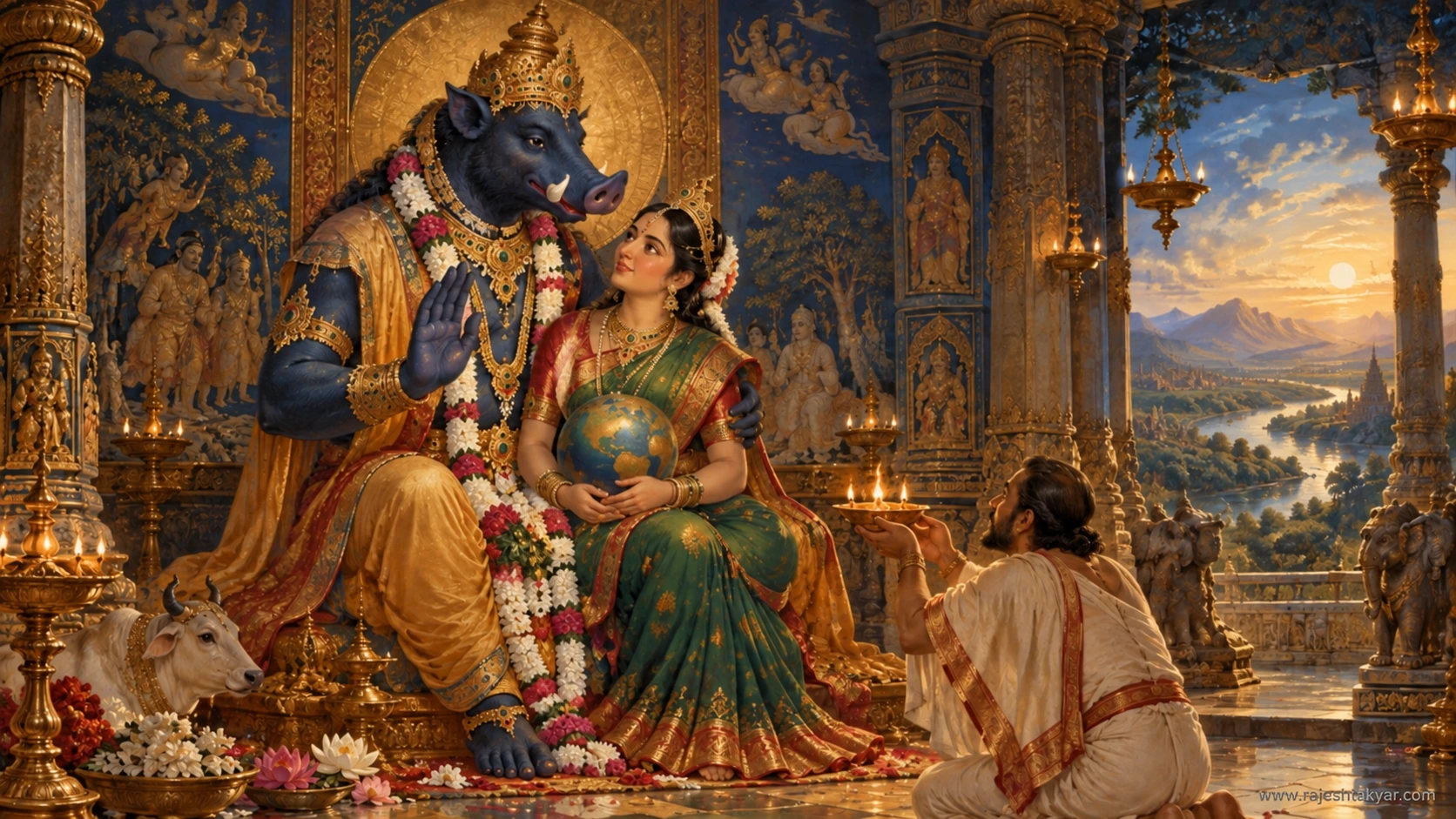
Explore the 32 types of atonement in Hindi (प्रयाश्चित्त) with our insightful blog. Discover the significance of each and delve into the world of redemption.
Read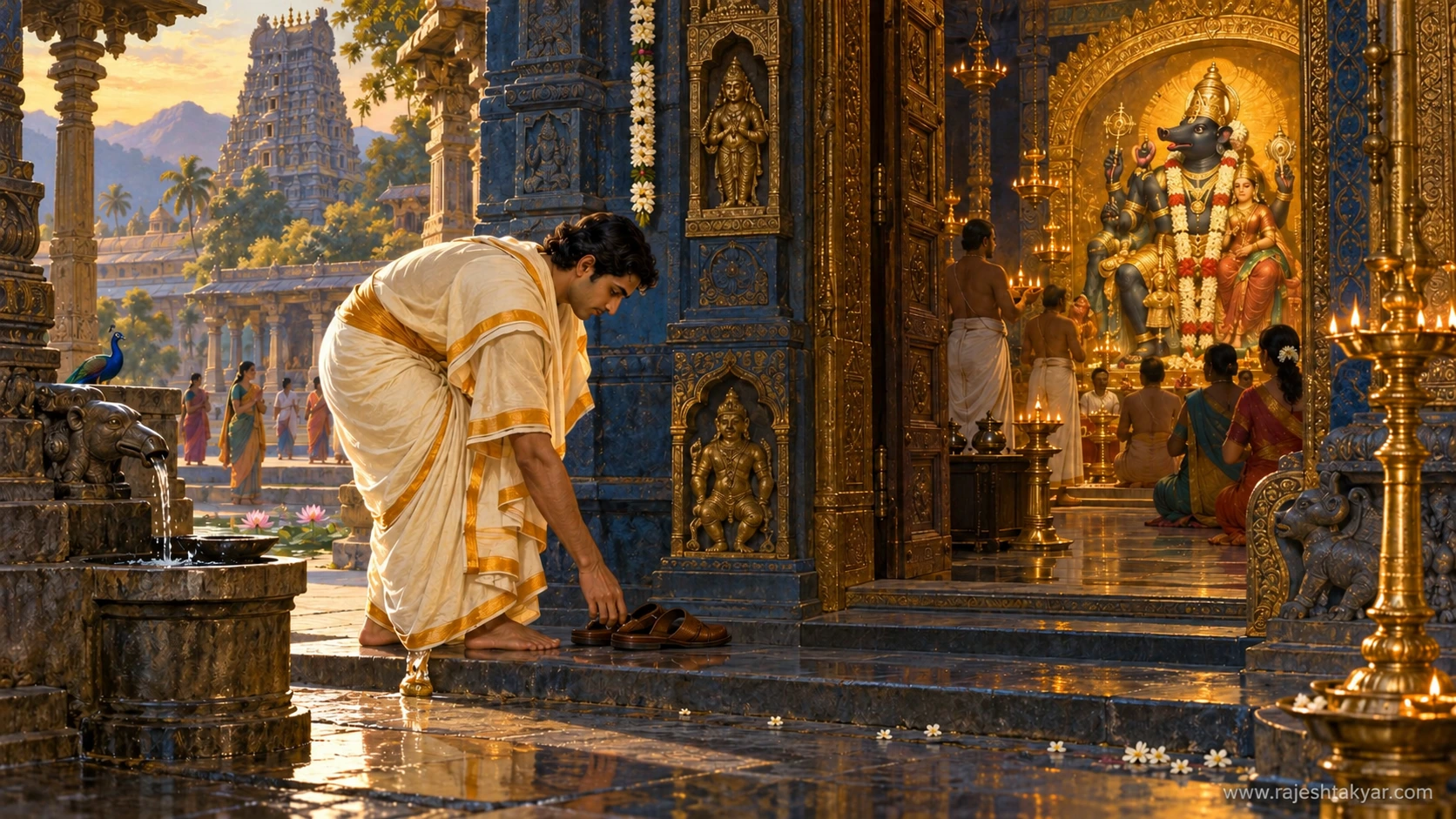

Explore the significance of 'Guru, Sakha and Rakshak' in the world of computing-apps. Discover the roles they play and their impact on technological growth.
Read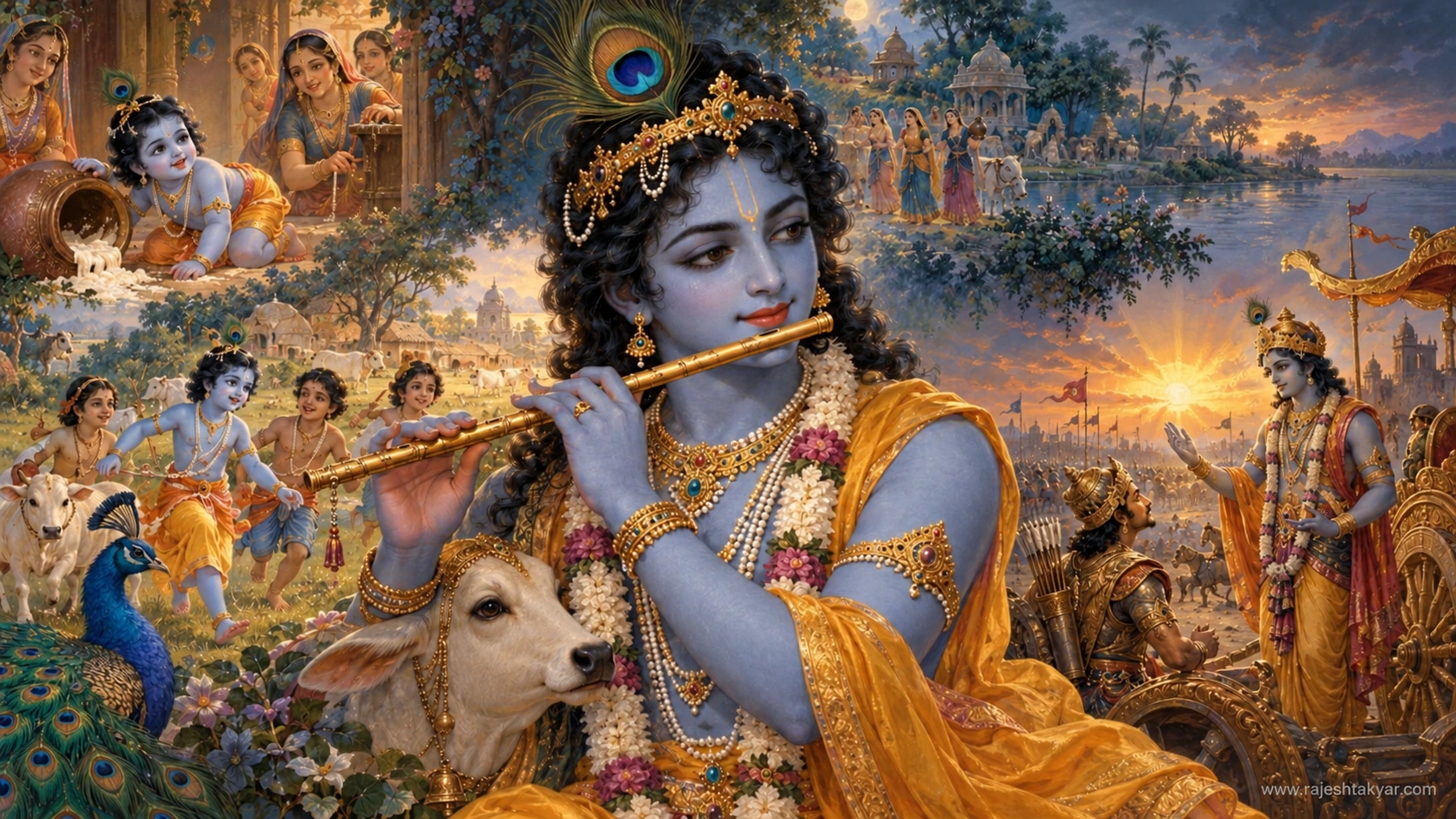
According to the Puranas, Lord Krishna descended from His celestial abode, Goloka, spanning 50 crore yojanas, to relieve the Earth of its suffering.
Read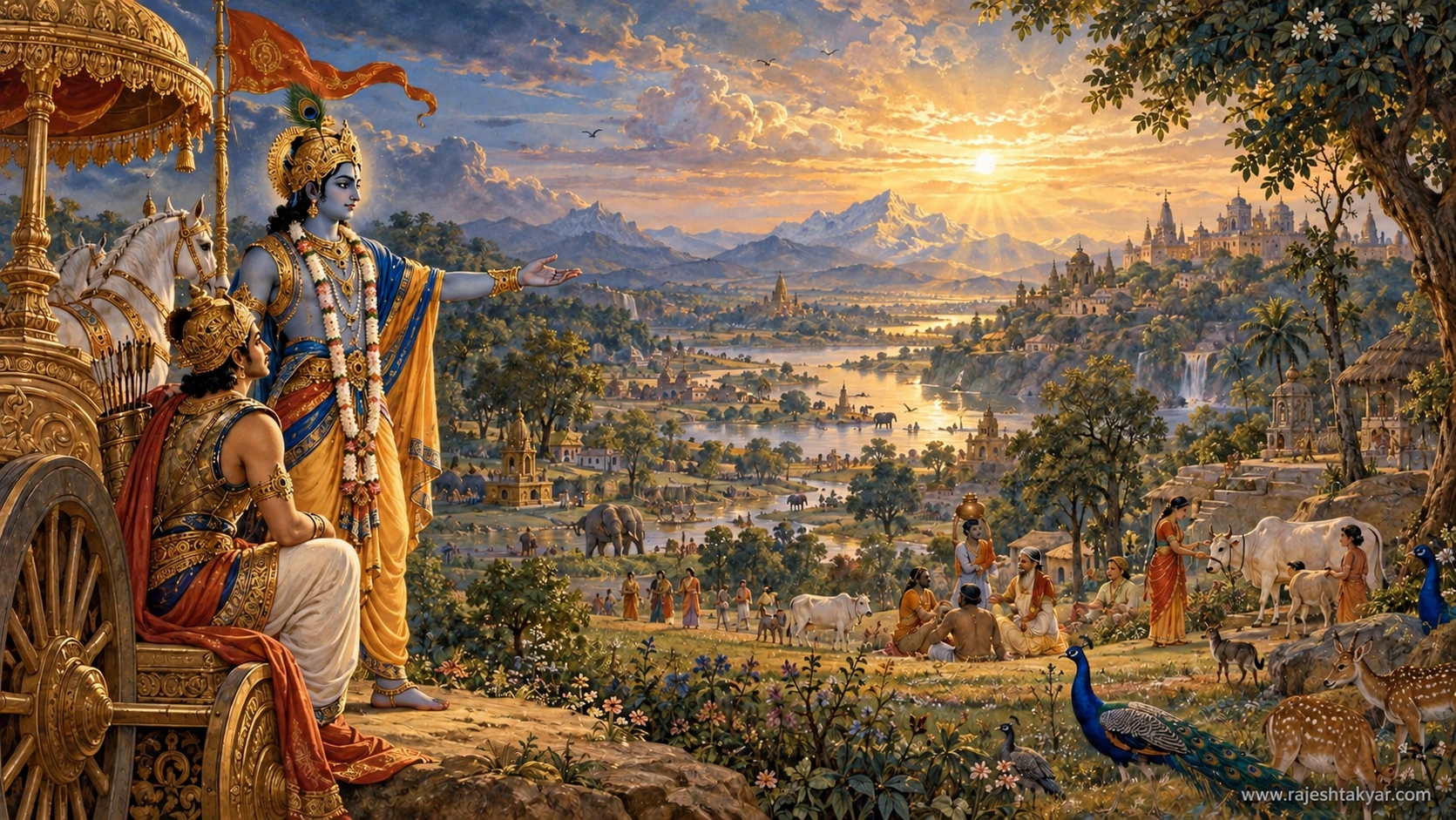
Discover the divine wisdom of Hindu scriptures as we explore the eternal love of Krishan and Radha, and the pursuit of Gyan in the Bhagavad Gita. Where is God?
Read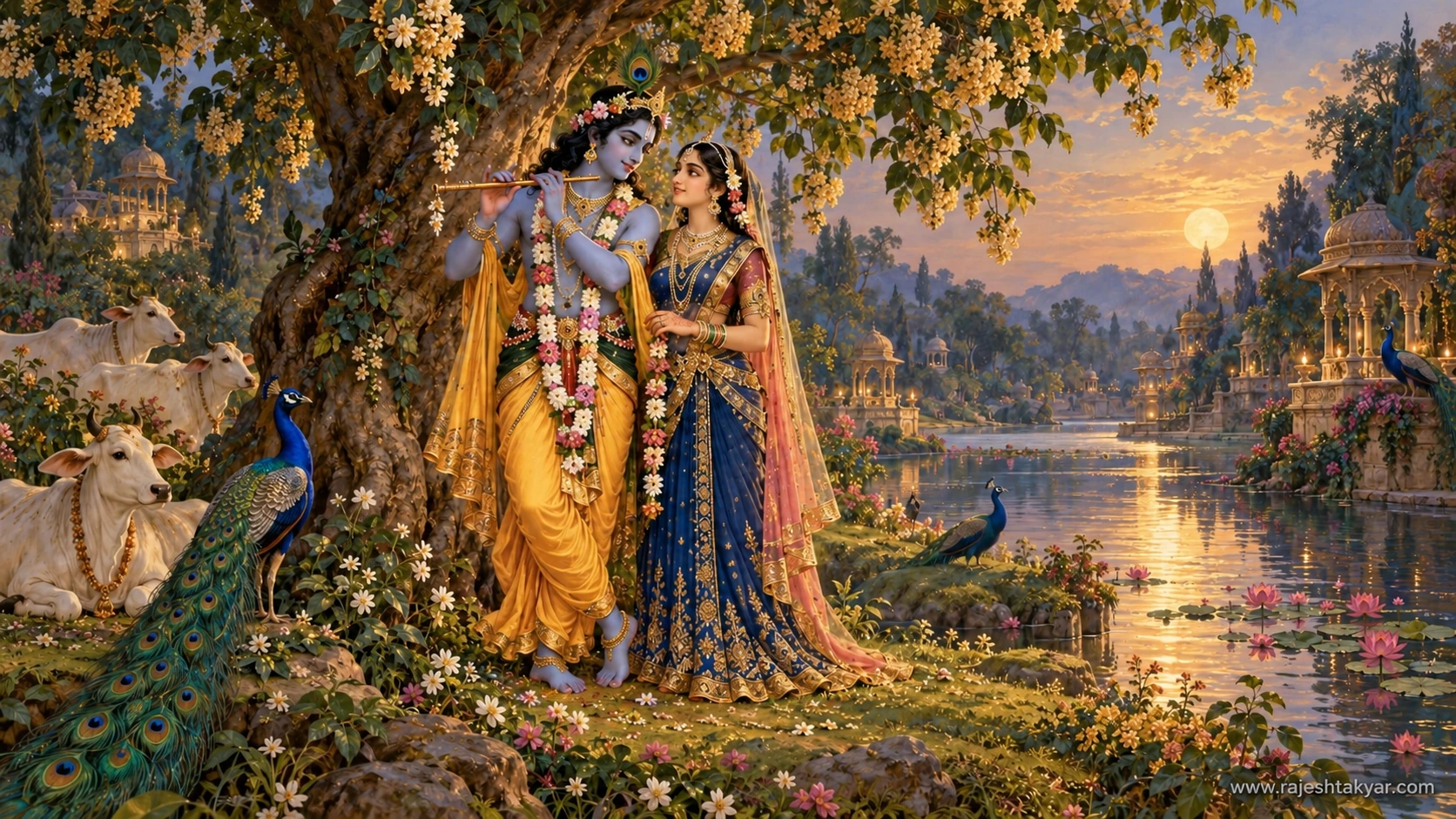
He vanquished demons, protected His devotees, and ultimately delivered the Bhagavad Gita to Arjuna on the battlefield of Kurukshetra, guiding the path of righteousne
Read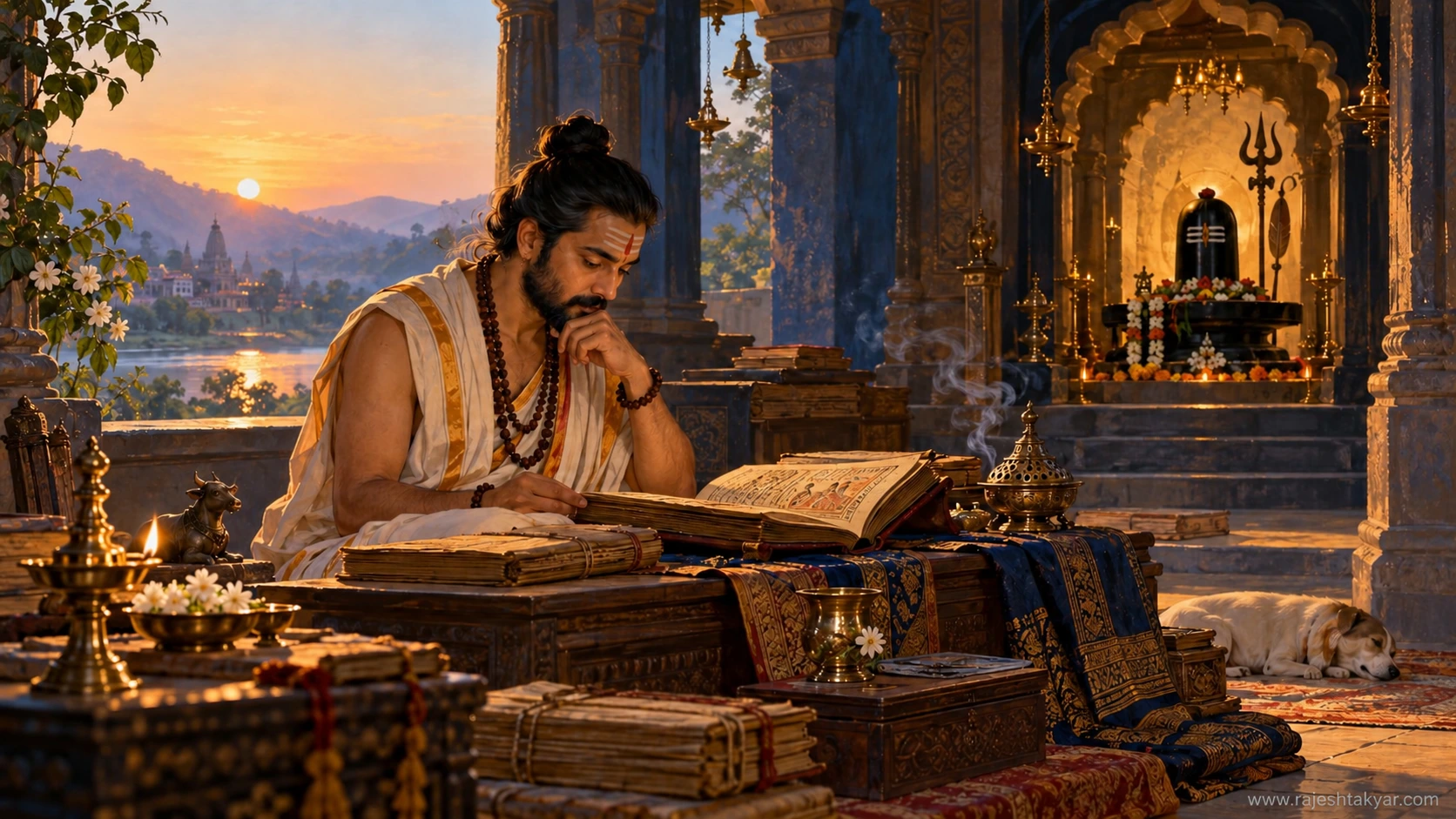
I believe that our Vedas and Puranas should be introduced to us from childhood. If we do this, we will never feel lost in the darkness, wander aimlessly, or see anyt
Read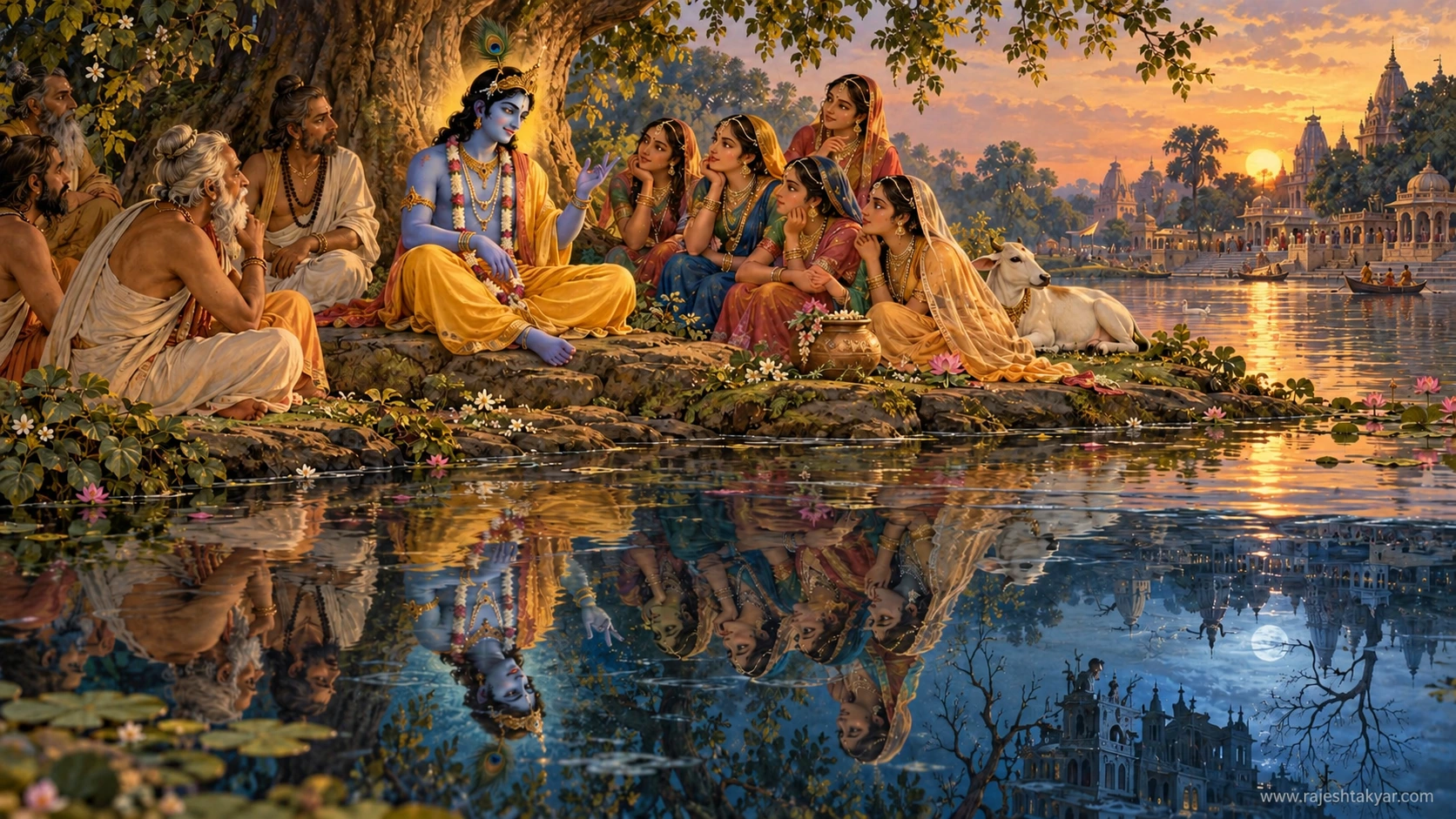
In this world, there is nothing as pure as knowledge. Once one attains true knowledge, all desires fade, and there is no need for anything else. A yogi, through spir
Read
A wise person should perform the ritual of Nyasa by placing the sacred syllables of the Gayatri mantra at twenty-four points of their body, from feet to head. This p
Read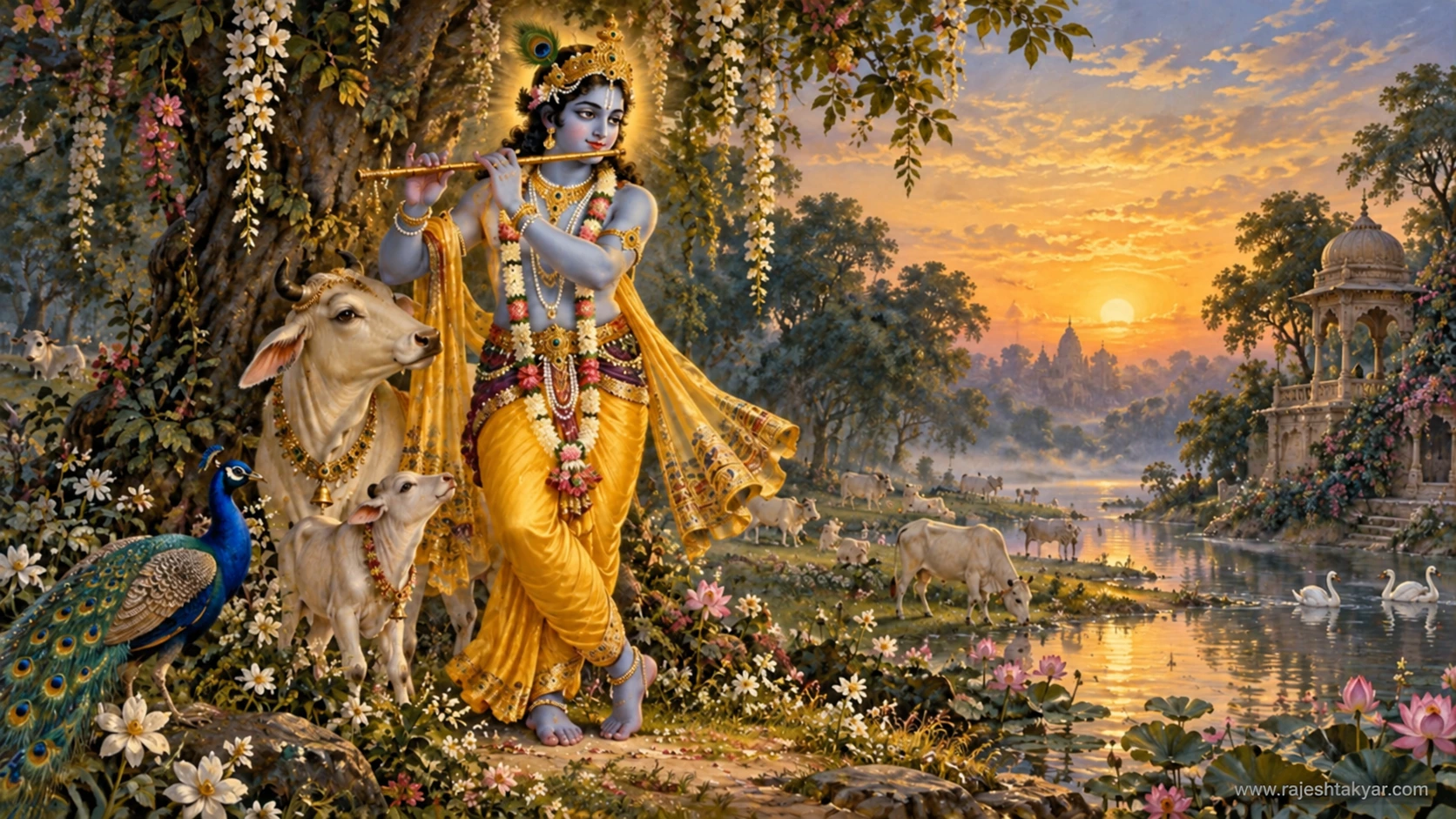
Adorned with a peacock feather, Krishna's playful and mischievous acts, like lifting Govardhan to humble Indra and engaging in divine pastimes with Radha, concealed
Read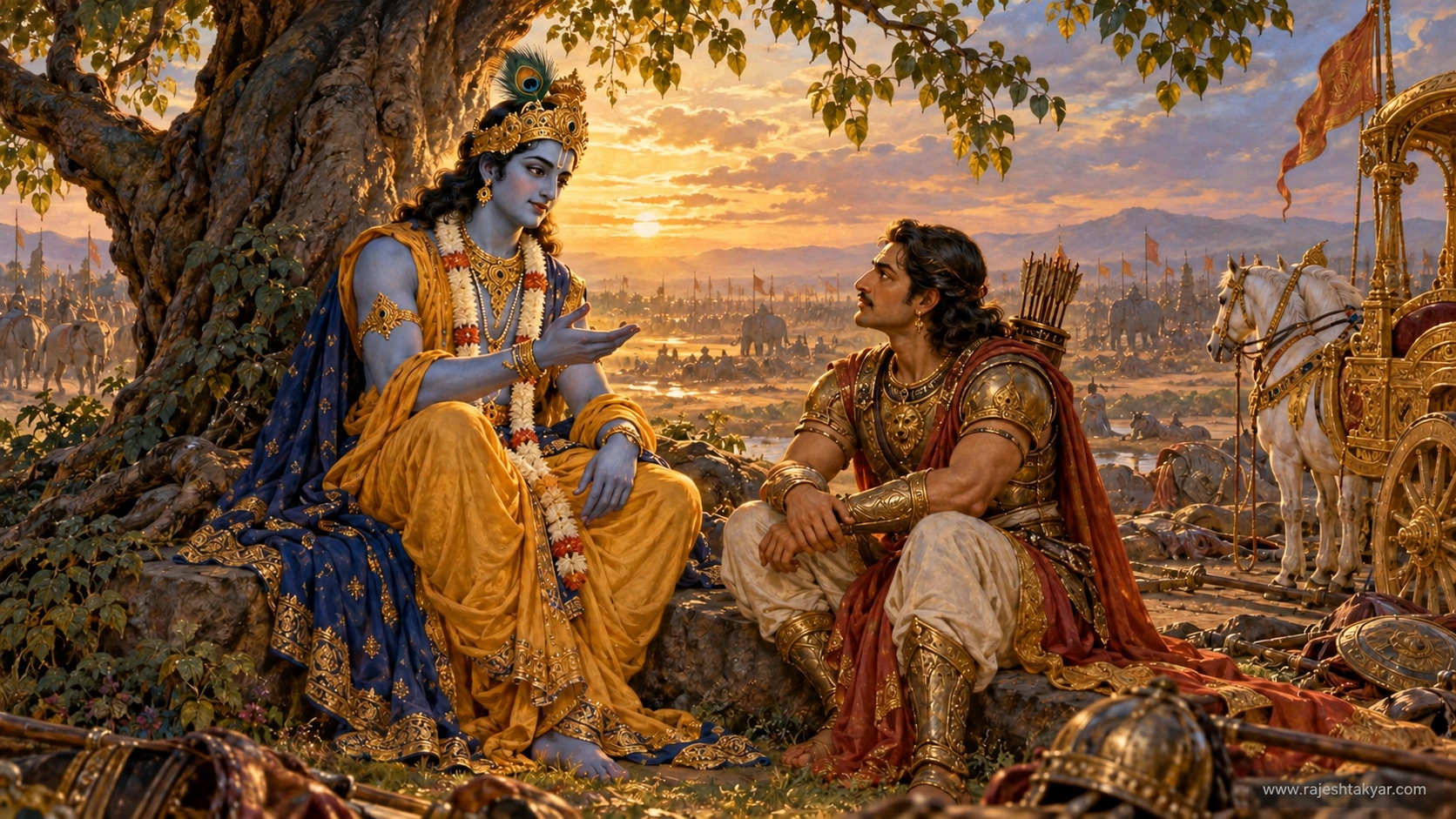
According to the Puranas, Lord Krishna descended from His celestial abode, Goloka, spanning 50 crore yojanas, to relieve the Earth of its suffering.
Read
Born as a divine child to Devaki and raised in Nanda's village, He astonished all by revealing the entire universe within His mouth while playing in Yashoda's lap.
Read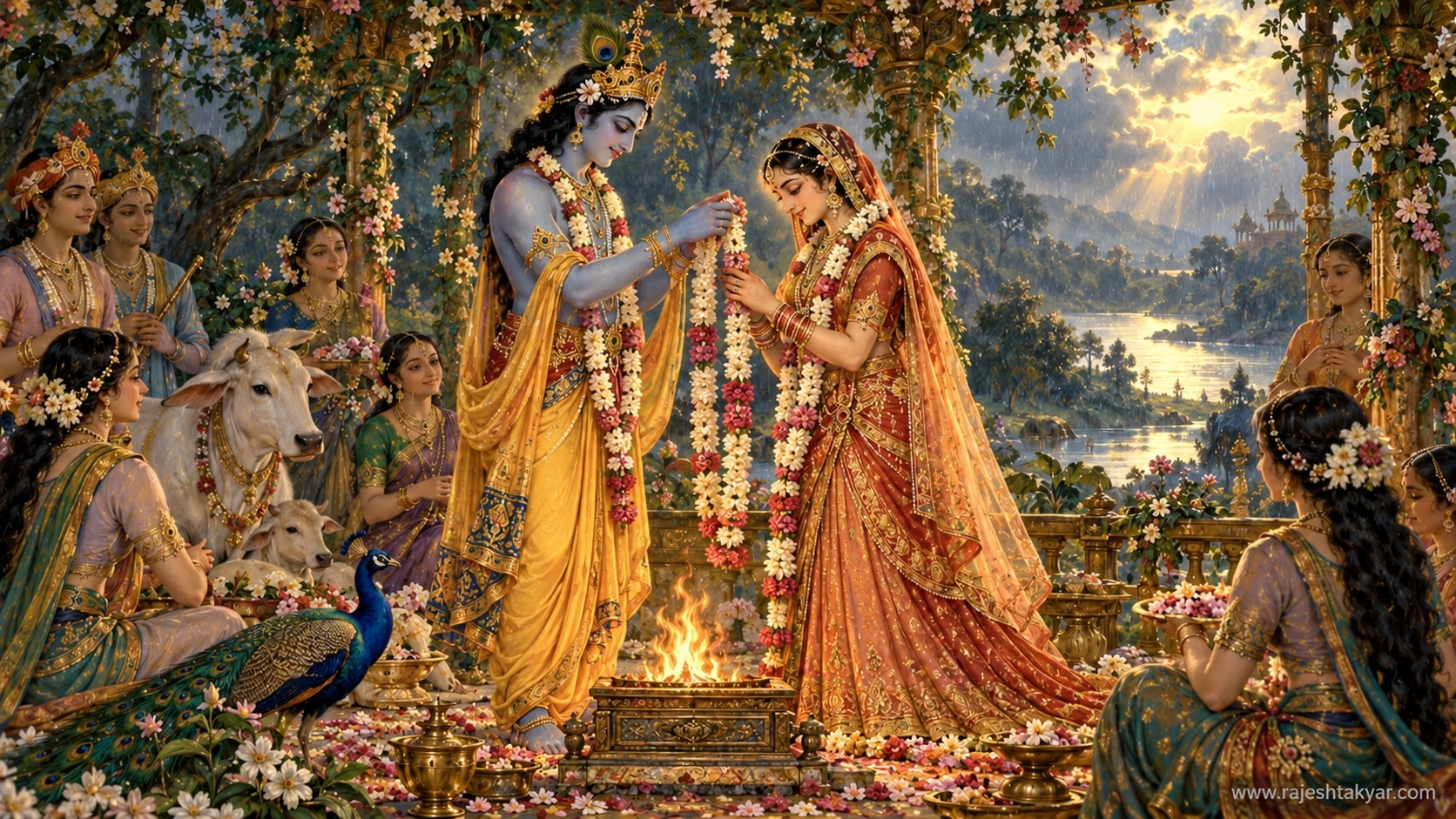
According to the Puranas, Lord Krishna descended from His celestial abode, Goloka, spanning 50 crore yojanas, to relieve the Earth of its suffering.
ReadNo Blog match. Try another word or clear your search.