Even after working hard, we sometimes feel that we are standing in the same place. The day has been busy and we are tired, yet the work that matters h
Read essay →5 October 2026 · Dr. Rajesh Takyar
Action and Worry About Results

As soon as we begin a task, we start imagining its outcome. Will we be praised or criticised? Will we succeed or fail? Sometimes these worries occupy more of our attention than the work itself. The Gita's teaching of karma yoga helps us understand our responsibility for our effort. We can keep a goal before us while ensuring that anxiety about the result does not leave today's necessary work unfinished.
Action and Our Responsibility
Krishna teaches that every person should fulfil their duty through action, without making a desired reward the condition for doing it. Yet we human beings begin expecting returns almost immediately. When a son is born, we may think that support for our old age has arrived. When we help someone in difficulty, we may expect that person to help us one day. At a daughter's birth, we may imagine gaining religious merit through the traditional ceremony of giving her hand in marriage. When wealth arrives, we think that we have become important, that we will gain recognition and that all our desires can now be fulfilled. The desire for a reward arises readily in human nature. Krishna asks Arjuna to examine and move beyond this tendency.
Krishna says that every human being comes into this world to act. Our right and responsibility lie in doing the work; the result is not ours to command. A reward should not be the only reason for acting. We should recognise the work as our duty. The sun does not sustain life because someone will offer it water, perform a ritual or worship it. Giving light and sustaining the world are its work. There is no selfish expectation in that service. The author invites us to bring a similar spirit to our own actions.
Duty Amid Worry
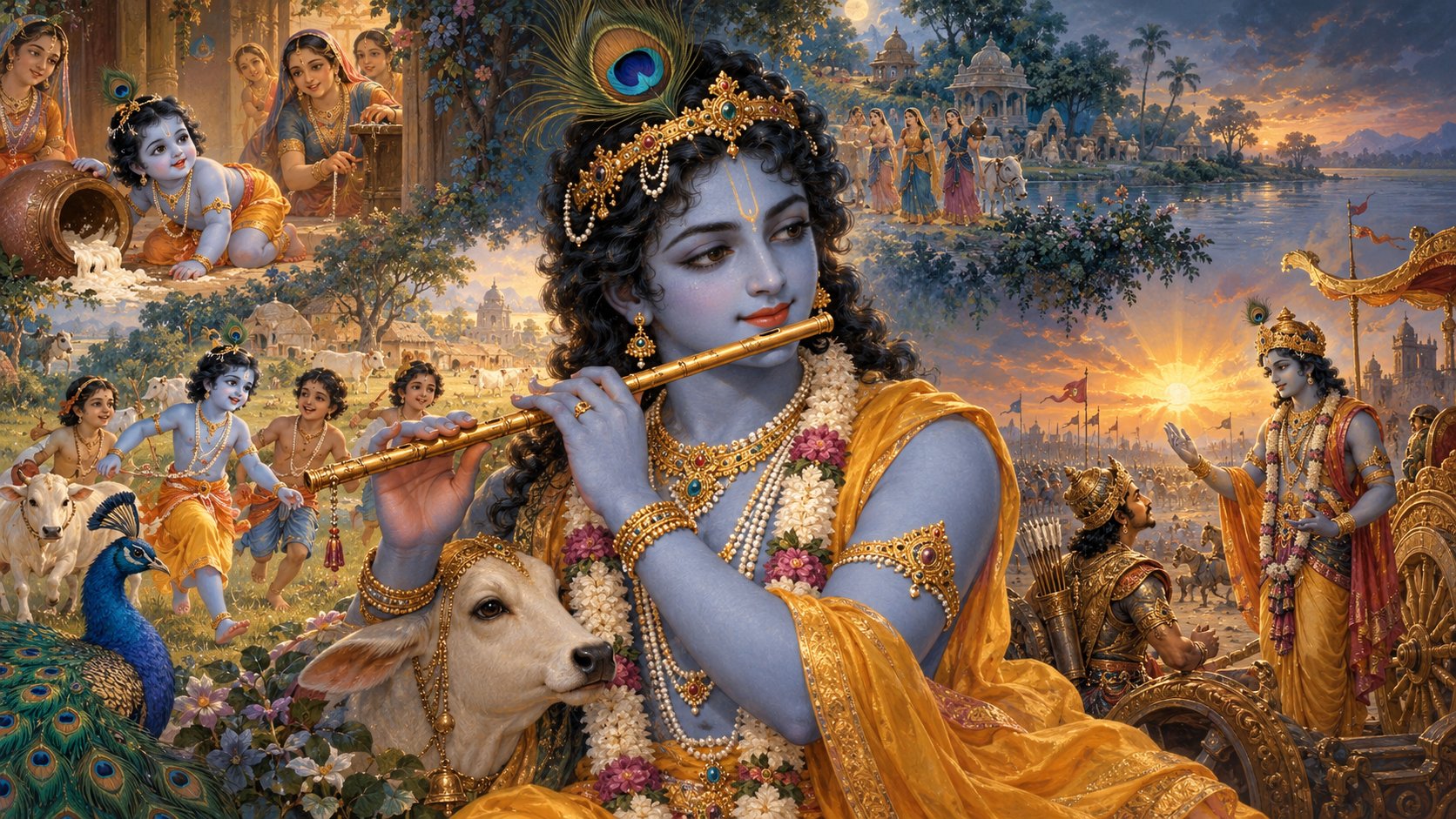
Consider another example. If people acted only after calculating a possible loss or gain, some necessary tasks might never be done, while everyone might pursue only the same kinds of rewards. Arjuna is a warrior whose duty is to stand against injustice and bring it to an end. If he turns away because he fears death, or because the battle means facing his own relatives, he is already allowing an anticipated result to determine his response. Meanwhile, he is overlooking the injustice being suffered by others. This is what Krishna is explaining to him. When we act solely for the result, our purpose becomes distorted. Attachment to the reward can also disturb the mind and judgment, preventing us from giving ourselves fully to the task.
Krishna tells Arjuna that work which ought to be done should be undertaken, however deeply it involves his emotions. Krishna also warns against attachment to inaction. Choosing not to act has consequences too. We should therefore avoid running away from our responsibilities. Escape and postponement can become their own forms of attachment. Action is necessary, but it should be undertaken with integrity and a selfless intention. We must accept responsibility for our work without being consumed by expectation or worry over its rewards. If the desire for a reward drives everything, our judgment becomes unsettled and we become more entangled in worldly attachments. Possessiveness about our actions can bind us in the same way. The author connects freedom from this attachment with the spiritual understanding of non-binding action, or akarma.
This principle of karma yoga is among the central teachings of the Shrimad Bhagavad Gita. In Krishna's teaching, the yogi acts with an understanding of duty, a clear intention and freedom from dependence on reward. The work is outwardly performed, while the mind remains directed towards spiritual growth. We have the responsibility to act, but cannot command the outcome. Our actions contribute to results, while, in the devotional understanding of this passage, final control rests with God. Excessive preoccupation with the result can bring stress and unrest. The right spirit of action is selfless dedication to God, without making a desired reward its purpose. We are invited to see work through the lens of duty and dharma.
Dedication and the Spirit of Work
We need to understand what Krishna means by working without anxiety about the result. As soon as someone begins a task, many desires may arise. Krishna is addressing those desires. While working, we should avoid thinking only of our personal gain. We should work selflessly and remind ourselves: I must give this task my wholehearted attention. Success or failure rests with the Lord. My duty is to complete the work with dedication and effort, leaving no avoidable shortcoming in what I do. If I keep worrying about the reward, I may increase the chance of mistakes because my mind cannot stay focused. The passage emphasises concentration as a foundation for effective work. Effort becomes more attentive when the mind is steady, although the outcome is shaped by many circumstances.
The purpose of karma yoga is to dedicate our actions to God without expectation. The author presents this way of working as a path towards balance, peace of mind, self-understanding and a sense of oneness with the Divine. Before sleeping, he suggests offering the day in prayer: O Lord, everything I did today is offered at Your feet—whatever I did through my body, mind or heart, and whatever I could not accomplish. The book describes this practice as helping a person rest deeply and rise refreshed for the next day's work. In the author's account, surrender can ease the burden of brooding over what was done or left undone. It can also soften pride, because the inner voice reminds us that whatever was accomplished took place through God's grace and will. The author calls this a simple and effective way to loosen the desire for reward. He also sees an ethical benefit: if we have done something wrong, sincerely offering it to God makes us less willing to repeat it. The thought of offering that same wrongdoing again would trouble the heart. Such reflection can encourage our future actions to follow dharma. Acting in accordance with dharma is the practice of karma yoga.
Make Today's Effort Clear
Choose one task and write down two things. First, what can you do for it today? Second, which aspects of the outcome are outside your control? Give your time to the first list, and notice the habit of exhausting yourself by repeatedly worrying about the second. Preparation still matters. Learning, planning and correcting mistakes are themselves forms of action.
When the work is finished, look beyond the praise or profit it brings. Ask whether you were honest, used your abilities and listened to another person's reasonable concerns. If the result differs from your hopes, learn from the experience and improve your next attempt. In this way, karma yoga becomes a daily practice. We can set goals without measuring our entire worth by one result. Faithfulness to our duty can become a steadier source of inner support.
Was this essay helpful?