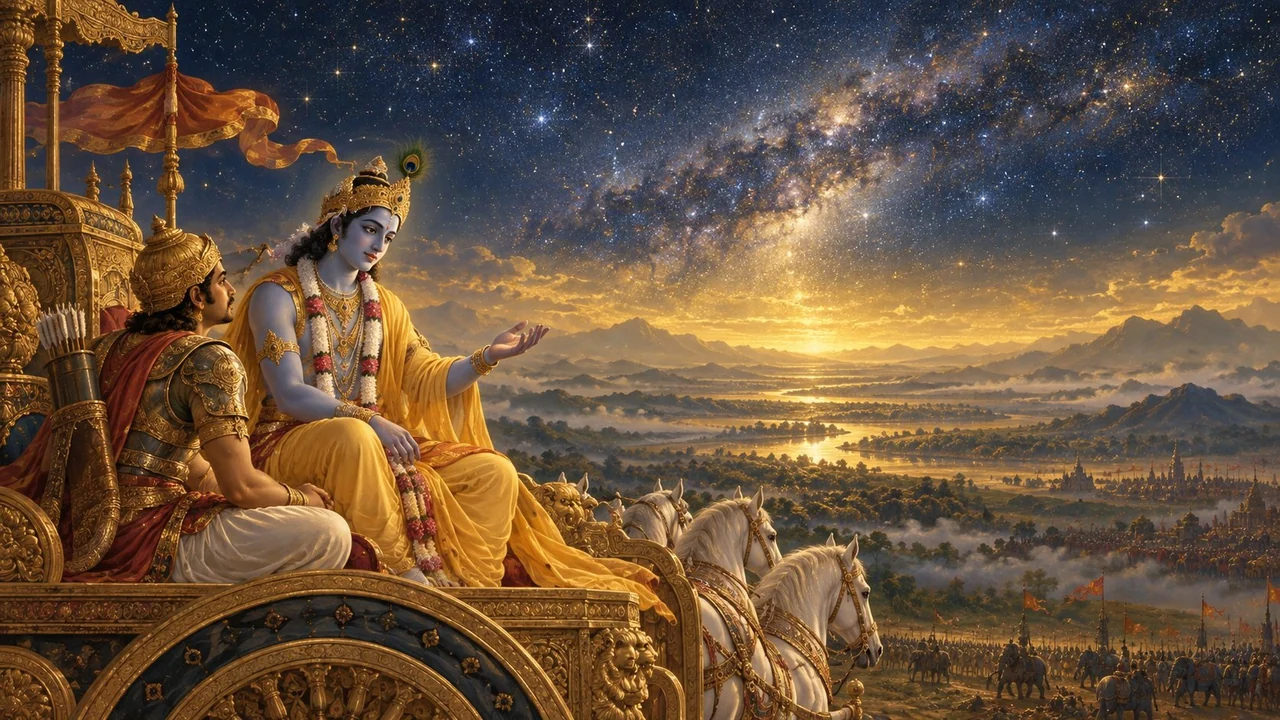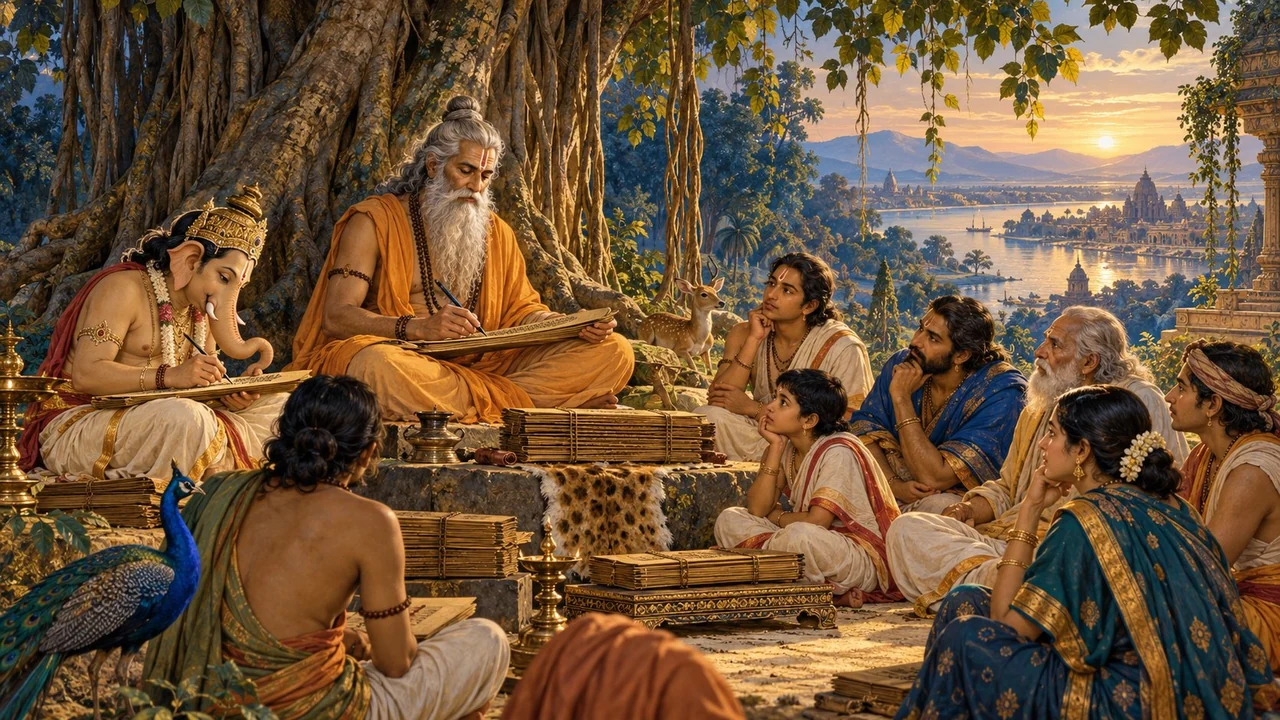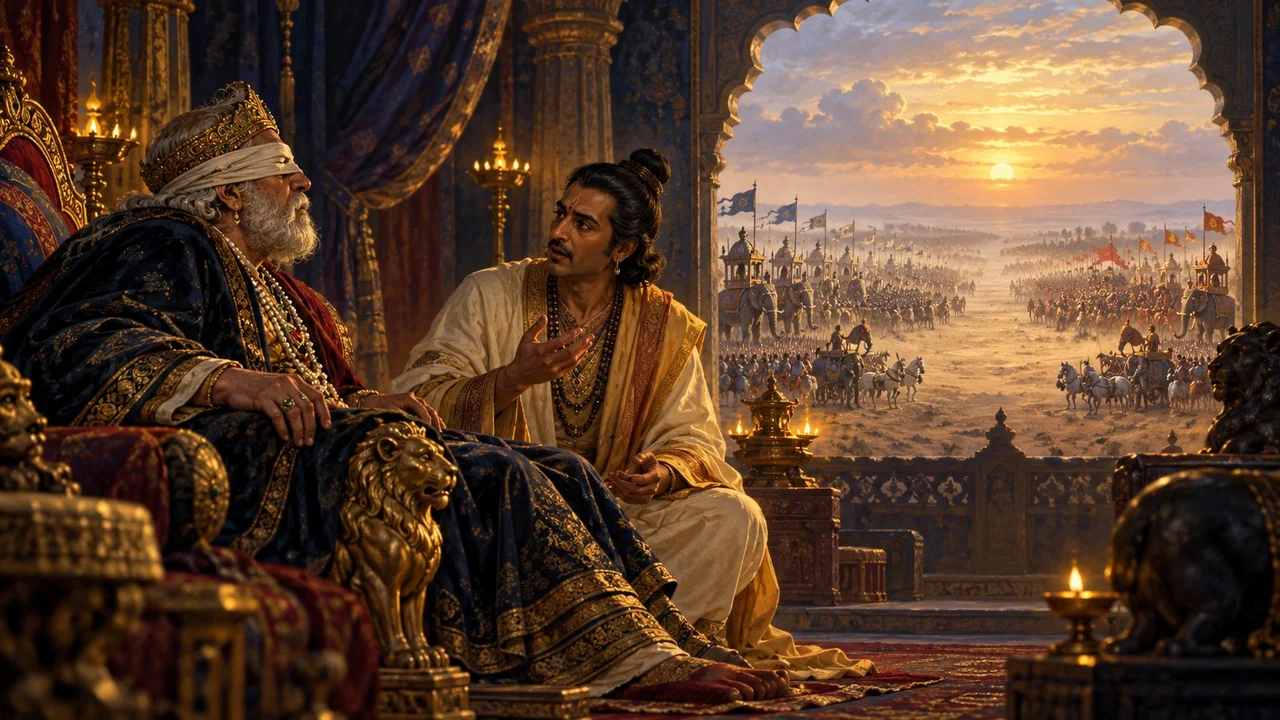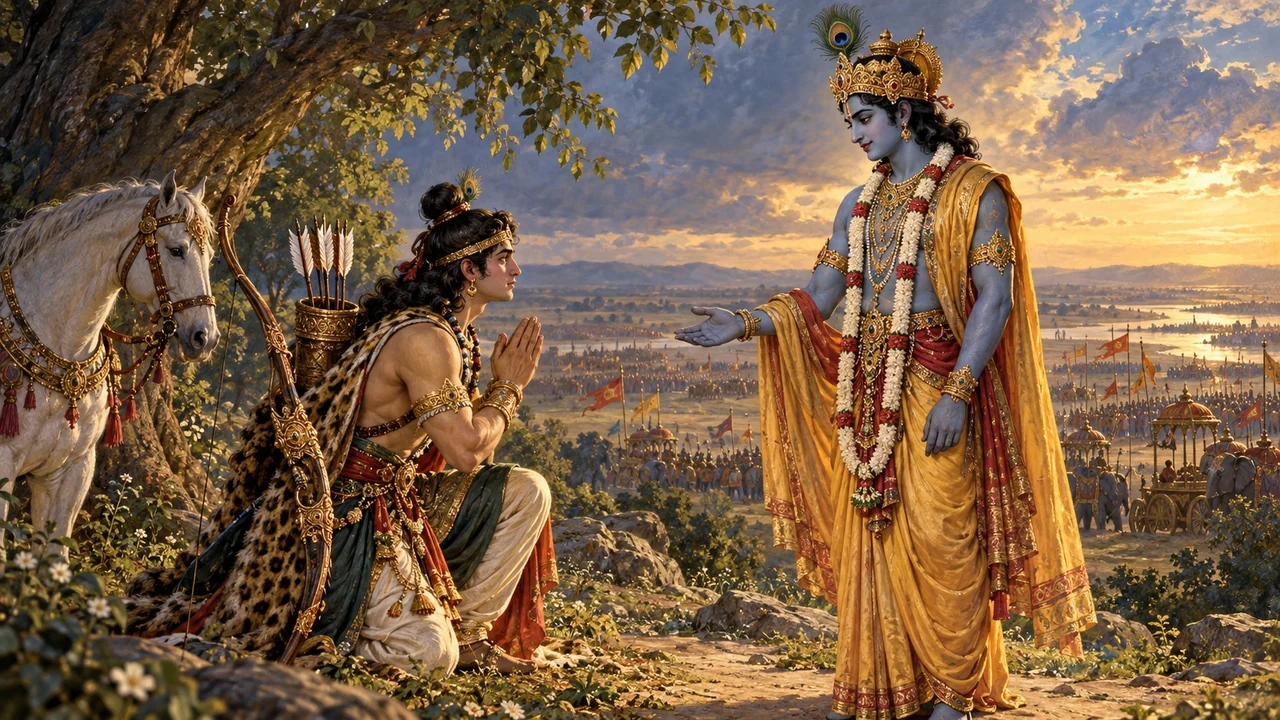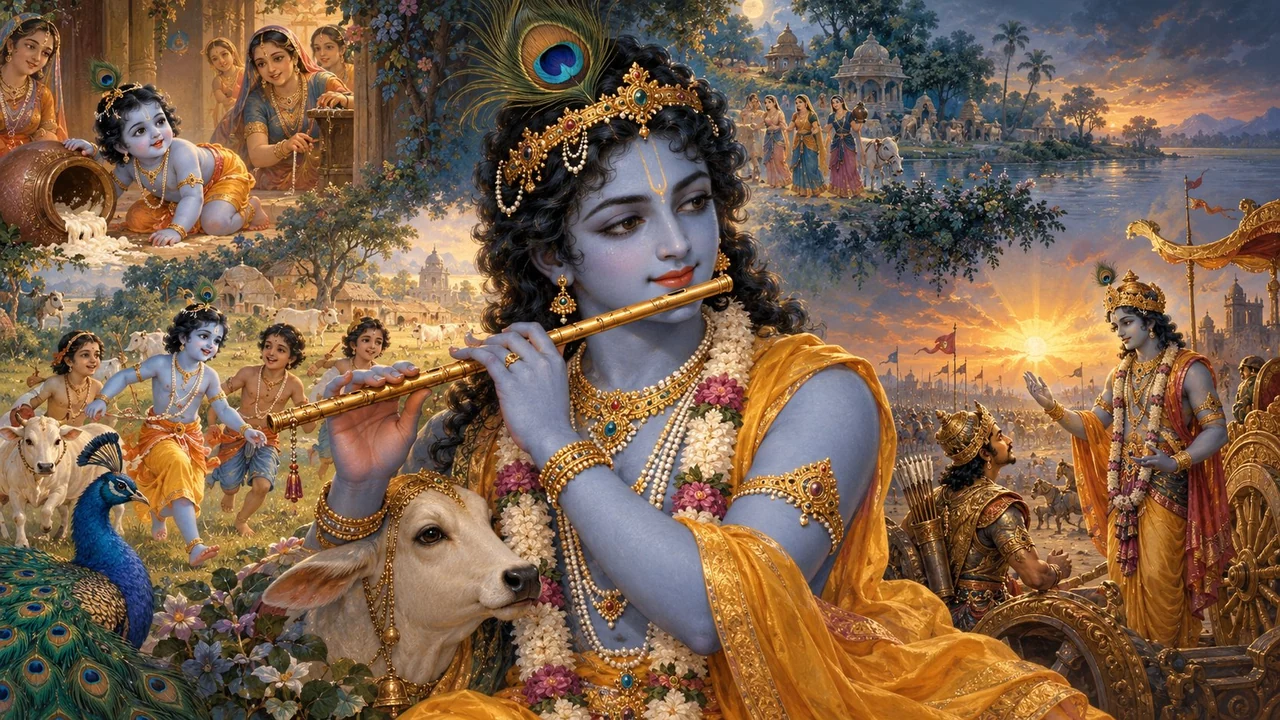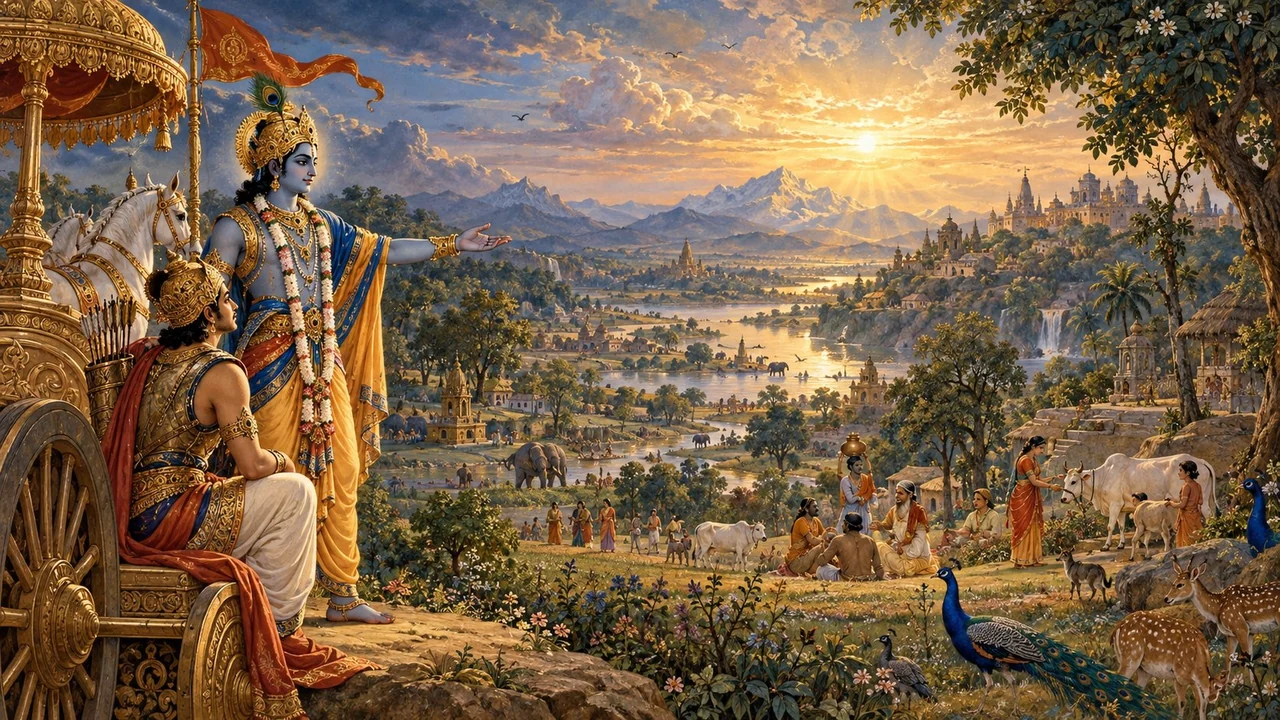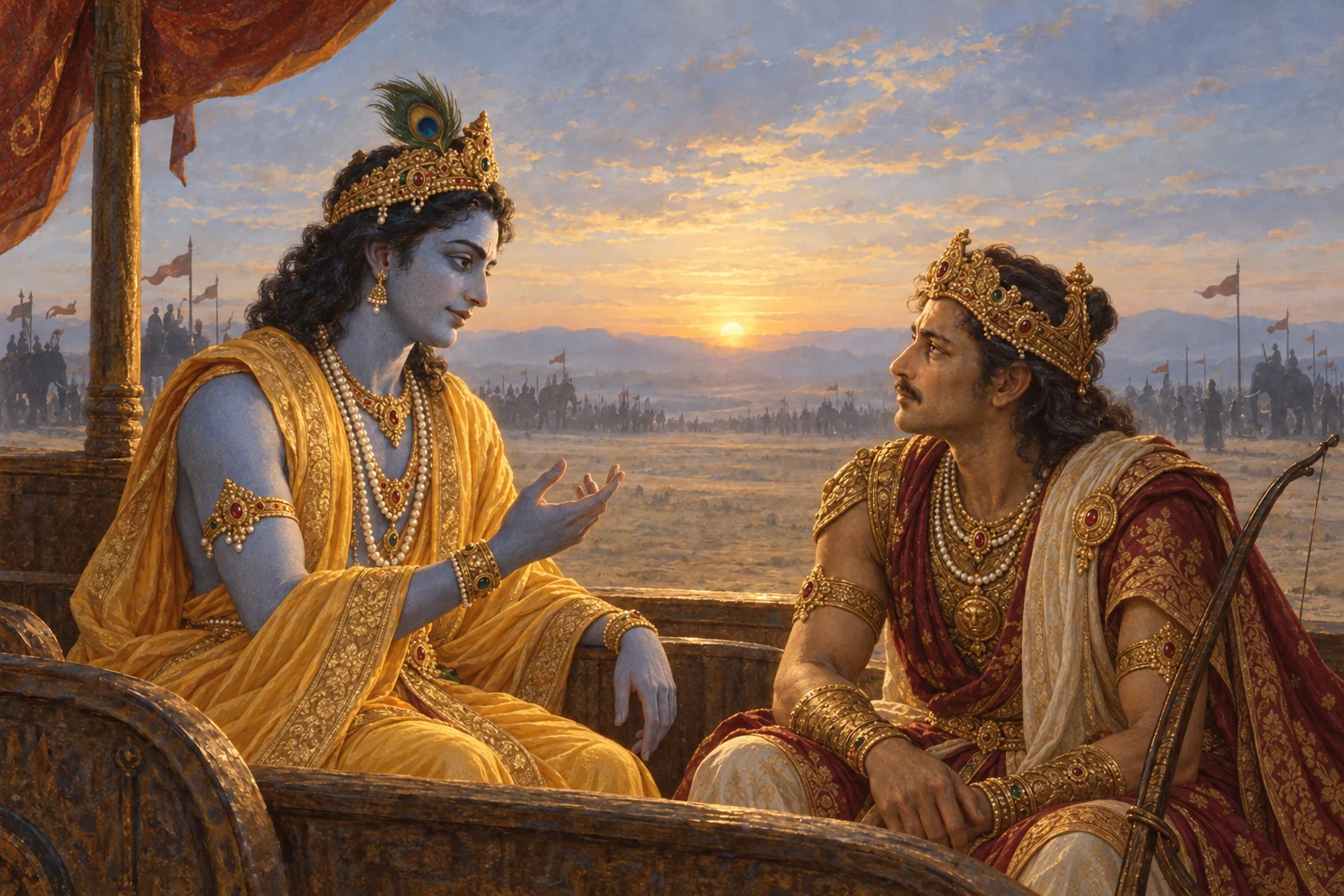
A clear introduction to the Gita’s journey from Arjuna’s dilemma through the soul, action, the mind, devotion, God, human nature and liberation.
Read essay →8 October 2026 · Dr. Rajesh Takyar
Where Fire and Soma Meet

Life must be changed, but it must also be cared for
We want change in our lives. We may need to leave an old habit, emerge from a difficult situation, or recognize the ego that has gathered within us. Often, we treat change as the whole solution. But what comes after the change? Who will fill the space that has opened? What will give lasting direction to the energy used to break an old pattern? The “Agni and Soma” chapter in Dr. Rajesh Takyar’s book Madhavshiv places these questions before a profound symbol. Fire and Soma are not opposing forces; they are principles that complete one another.
The chapter opens with a question from the sages. They want to understand why Shiva told Parvati that the world is made of Agni and Soma and united through Shiva and Shakti. Vayu Deva replies that it is not enough to understand Agni merely as a household flame or Soma merely as the moon in the sky. They are symbols of broader forces at work in creation. Agni points towards radiance, energy, heat, action, and transformation; Soma points towards coolness, essence, nectar, and nourishment.
This explanation lets us examine a simple but incomplete idea: is whatever changes valuable, while whatever sustains it is merely secondary? The chapter offers a more balanced view. Agni without Soma can burn, but it cannot provide the nourishment that sustains life. Soma can preserve life, but without Agni, where is the energy that transforms stagnation? One brings movement, the other sustains; one changes a form, the other helps life endure through that change.
The wider meaning of radiance and essence
The chapter describes two forms each of radiance and essence. Radiance may shine like the sun or burn like fire. Essence may nourish like Soma or sustain life like water. Electricity, the sun, fire, and light are expressions of radiance; water, sweetness, essence, coolness, and nourishment are forms of Soma. Agni and Soma are therefore not confined to one object. They work together, in differing proportions, throughout the subtle and tangible things of the world.
Balance here does not mean dividing everything into equal amounts. The book emphasizes that life needs both kinds of force. Sometimes radiance is needed more—like light that shows the way in darkness. At other times Soma’s work is central—like giving water to someone who is thirsty. Yet lasting life cannot rest on only one side. Energy without rest exhausts us; rest without awakening can become inertia. This everyday example does not replace the chapter’s philosophical statement; it is a small path towards understanding it.
At times, we call our inner harshness determination. We think that reaching a goal requires only more pressure, more effort, and more control. At other times, in our desire for peace, we avoid every difficult matter and postpone necessary decisions. The image of Agni and Soma invites us to consider both extremes. Where change is necessary, courage is needed; and what is changing also needs compassion, patience, and nourishment to remain healthy. Merely burning is not spiritual practice; merely preserving is not completeness either.
Sacrifice, rain, and food: a cycle of return
Vayu Deva explains the cooperation of Agni and Soma through the cycle of sacrifice and rain. Food grows on the earth. That food provides the materials for an offering in a sacrifice. The offering is placed into the fire; the sacrifice is linked with rain; and rain enables food to grow again. The sequence returns to where it began, but it is not a static circle—each stage makes the next possible.
In this example, Agni alone does not sustain creation. It needs material to receive. The act of offering is connected with rain, and rain makes the earth’s food possible. Food then becomes material for sacrifice. When we view Agni and Soma separately, we might see opposition; within this cycle, we see interdependence. What gives life returns, changes form, and becomes a foundation for life again.
Care is needed when applying this cycle to life today: the book offers a religious and philosophical explanation, not a lesson in modern meteorology. Still, its cycle teaches us a language of relationship. The value of food is connected with the field, water, labour, offering, and sharing. Treating one stage as the whole diminishes the process. What nourishes us also calls for responsibility: to return something or to care for what sustains us.
Many parts of our personal lives also develop through cycles of return. Learning requires attention; what we learn enters our actions; action brings experience; and experience improves the next act of learning. Reading alone is not enough, nor is working without pause. Maturity grows through movement between thought and practice, rest and effort, receiving and offering. This comparison comes from a reader’s experience; the book’s central statement concerns the relationship between sacrifice, rain, and food.
A rising flame, water flowing down
The chapter notes that a flame rises while Soma, or water, naturally flows downwards. Their directions differ, yet they work together in the world’s balance. Stopping at a rule about physical direction alone would leave the spiritual meaning incomplete. From this image, the book moves towards Shiva and Shakti: at times Shiva is described as the fiery principle above and Shakti as the Soma flowing below; at other times Shakti is above and Shiva below.
This reversal is not meant to create confusion. It shows that Shiva and Shakti cannot be confined to one direction, place, or role. Where Shiva is, Shakti is; where Shakti is, Shiva is. Both are above and below, outside and within. In this way, the chapter sees the world as pervaded by a reality from which nothing is entirely separate.
In understanding this idea, it would be wrong to permanently declare one side male or female, active or passive, superior or secondary. The chapter describes the relationship between these forces; it does not create a rigid social mould for them. Symbols are useful only when we do not take them beyond the source and turn them into a conclusion the source has not made. Here the source speaks directly of mutual presence and inseparability.
We also cannot know a person through only one of their roles in life. At one time someone may offer guidance; at another, they may need support themselves. Sometimes they make a decision; sometimes they listen. This everyday experience does not explain the entire philosophical mystery of Shiva and Shakti, but it may teach us to be careful: difference need not mean opposition. Two distinct qualities can coexist within a wider relationship.
Ash: the final trace of changing form
The chapter turns to the relationship between Agni and ash. When fire burns away the outer form of something, ash remains. In the Shaiva tradition, ash is not merely residue; it is a reminder of transformation and impermanence. The body, wealth, beauty, position, and ego—all that we assume to be permanent—will one day change or disappear. Ash places this transience before us.
This reminder is not meant to declare life meaningless. If every form changes, that also means we need to recognize change and live responsibly in the present. Impermanence should not become an excuse for indifference. The chapter connects ash with inner practice: the seeker understands the idea of burning ego, attachment, desire, and ignorance in the fire of knowledge, which is Shiva’s fire. But there is a delicate turning point here. If spiritual practice is understood only as a process of burning, it can produce harshness. The chapter says that ash produced by Agni is then sprinkled with the nectar of Soma. After renunciation comes the nourishment of the Goddess’s grace, compassion, and nectar-like power. First the ending of ego, then the expansion of consciousness; recognizing old limits and then filling life with a new foundation—this is the movement.
Self-improvement, therefore, does not mean hating ourselves. Clearly seeing a mistake may burn away an old illusion like Agni, but after that we need Soma-like nourishment to learn, apologize, make amends, and form a healthy habit. Remaining immersed in guilt does not complete a change. Nor does comforting ourselves while ignoring a mistake. Responsible change needs both the heat of truth and the coolness of compassion.
This is an example from modern life, not a literal rule given by the chapter. It rests on the sequence the book states explicitly: burn ego and bondage in the fire of knowledge, and then fill consciousness with the Goddess’s grace and nectar. In this movement, harshness is not the goal; purification and new life are.
The meaning of nectar and the question of death
Discussing Shiva as Mrityunjaya, the chapter also explains the meaning of immortality. It does not mean that the body never dies, because the body belongs to nature and is subject to change. True immortality lies in knowing the Self, which is held to be beyond the body’s birth and death. This is a religious and spiritual statement; it should not be read as a claim that the physical body can live forever.
The mystery of Agni and Soma comes together again here. The destruction of outer form is not the final truth, and clinging to form is not liberation either. The seeker burns the identity of a limited ego in the fire of Shiva’s knowledge, then fills consciousness with the nectar of Shakti. The chapter connects this process with recognizing the true Self and moving towards liberation from the cycle of rebirth.
Some readers may readily accept this idea; others may not. It should be presented honestly in the form in which the source gives it. It would not be right to call it a conclusion of modern psychology. Still, a reader can take a question from this spiritual view: can the identities I treat as my entire existence change? If they do change, does the meaning of my life depend only on them? The book’s answer concerns the relationship between the Self and the Supreme; a reader may first take time to consider the question calmly.
Recognizing Agni and Soma in an ordinary day
Even small daily experiences can give this image room for thought. The courage to begin a task may resemble Agni; resting body and mind afterwards may resemble Soma. Setting a clear boundary against improper behaviour is a force for change; speaking while preserving another person’s dignity is the nourishing side. Leaving an old habit is one step; making room for a healthy practice in its place is another. These are everyday interpretations of the symbols, not the complete meaning of the Shiva–Shakti principle.
It may help to ask ourselves three questions. First: what kind of change is necessary now—what should I see clearly or leave behind? Second: what nourishment, patience, or support will be needed after the change? Third: am I limiting a symbol or experience to just one meaning and overlooking its complementary side? These questions do not promise instant spiritual attainment; they may only help us develop a more careful way of seeing.
The “Agni and Soma” chapter of Madhavshiv is memorable because it does not place transformation and nourishment in separate camps. Radiance and essence, burning and coolness, an upward flame and water flowing down all work together in a wider balance. Agni changes form; Soma sustains life. When Agni leaves ash, Soma sprinkles it with nectar. The chapter also sees Shiva and Shakti in this mutual presence.
So, when life needs change, do not ask only what must be left behind. Ask also what needs to be nourished afterwards. And when you wish to preserve something, examine whether an old form is now asking to change. Between these two questions, the balance of Agni and Soma begins to appear—a balance that sustains the world and gives the seeker an opportunity to reflect on inner practice.
Was this essay helpful?