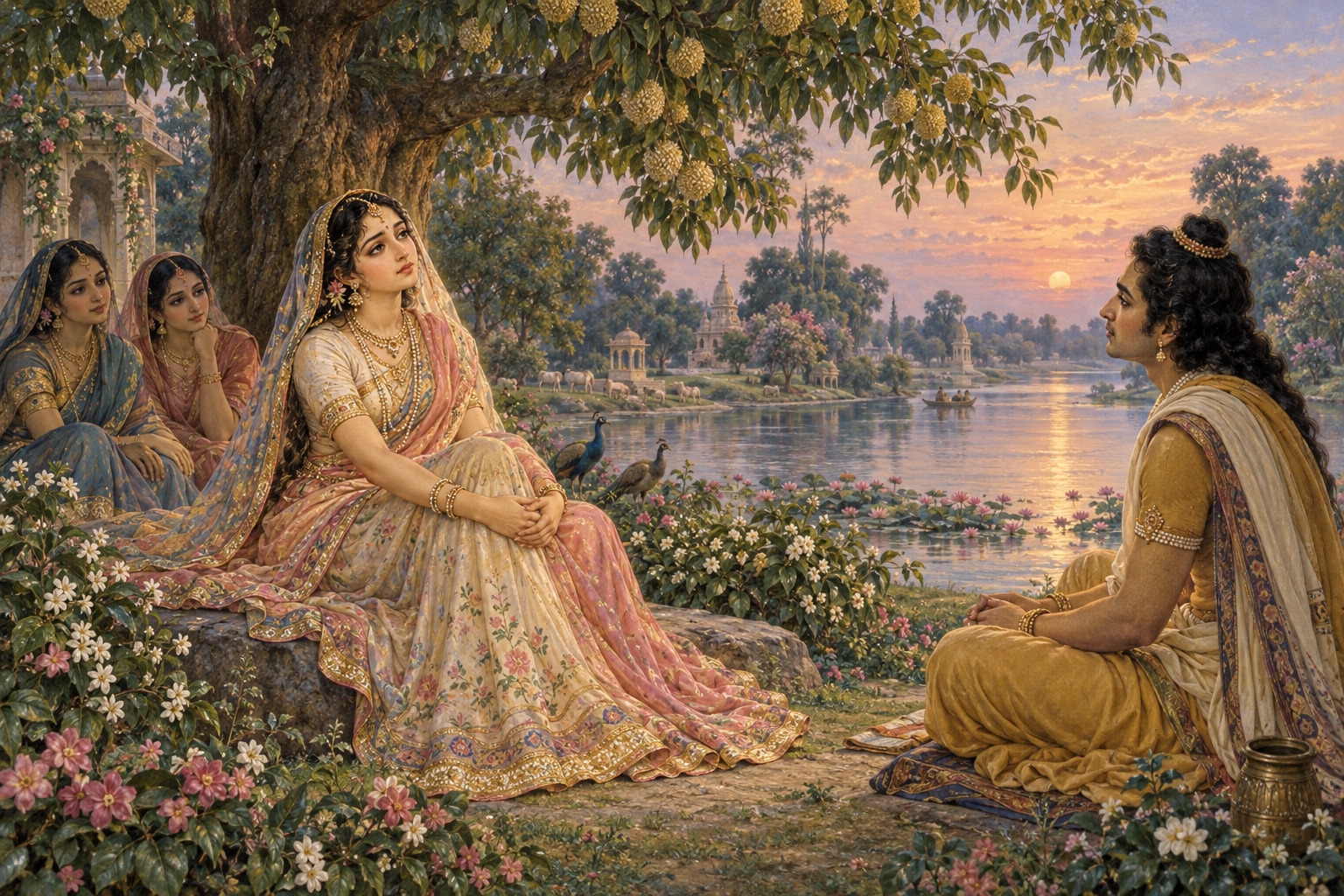
Sometimes even the most beautiful scenes in life cannot comfort the heart. The river continues to flow, flowers bloom on the trees, and the moon scatt
Read essay →5 October 2026 · Dr. Rajesh Takyar
Krishna, the True Guru
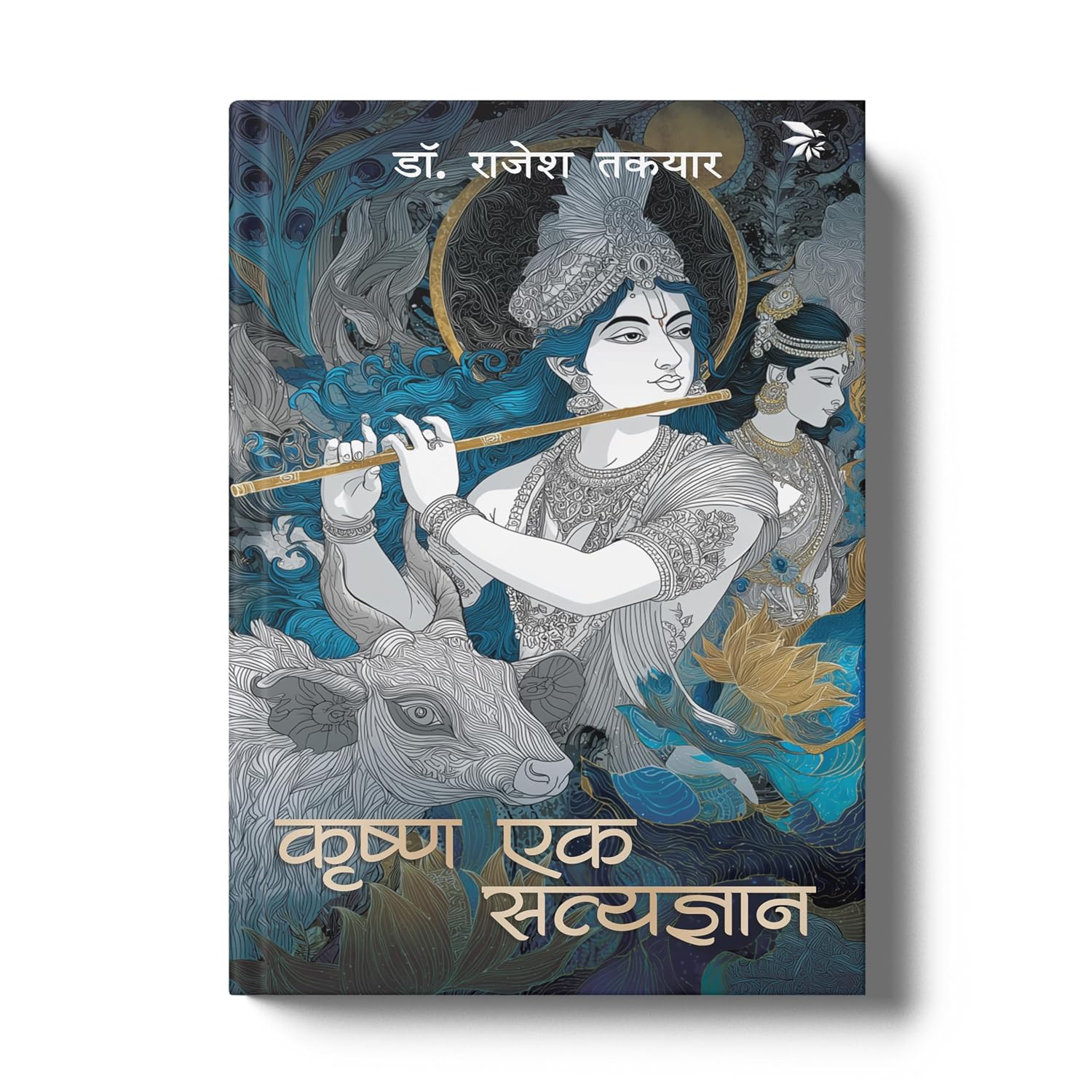
We often approach a guru looking for an answer to an immediate difficulty. But a guru also opens our way of seeing, so that we can meet future questions with greater understanding. This chapter of Krishna Ek Satyagyan presents Krishna as a teacher who encourages us to reflect on our existence, our passing experiences and the spiritual foundation of life.
What it means to learn from Krishna
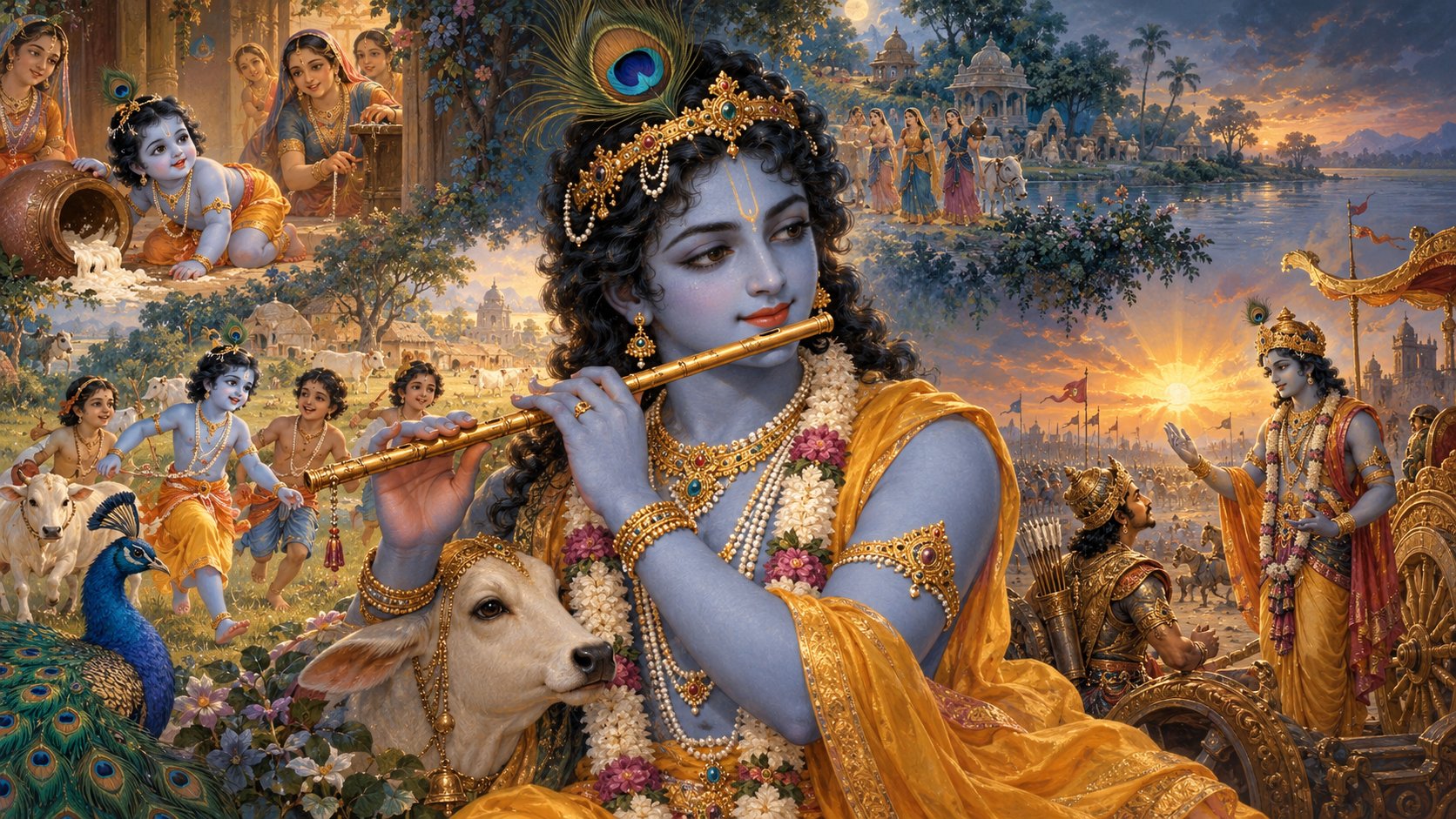
Who is Krishna? It is very difficult to answer this in words. He is infinite; to call him only God does not fully express who he is. If that were all, the unborn one, the self of all beings, would not need to appear on earth again and again. Besides being God, he is the highest of teachers. Someone who has truly learnt from him may scarcely need any further instruction, in this life or another. Every word he speaks and every action he performs offers sacred wisdom and a doorway to liberation, not only for human beings but also for the gods and sages. Yet he is the lord of divine play. Apart from the teaching of the Shrimad Bhagavad Gita, his words cannot be separated from that play. We cannot predict what he will do in the very next moment. He has taught humanity the knowledge of truth. By understanding it, we can guide not only our own families but also the generations to come. He seeks nothing from us; he wishes only to give. But we must understand what he gives. For that, we must continue looking for the teaching of true knowledge in his own words. Only then can we find liberation. What, then, is this knowledge of truth that he offers?
Changing experiences and the eternal
True knowledge means knowledge grounded in reality, truth and what is eternal. It is beyond illusion or maya and helps us understand the highest truth of life. It is a path towards spiritual freedom, liberation and self-realisation. It teaches that what we see in this world is momentary and temporary, while the Supreme Self, the atman understood as Brahman, is the enduring reality. It alone is eternal: it always was and always will be. Krishna explains this in simple words in the Shrimad Bhagavad Gita: the soul does not age or die, while this body of flesh and bone is perishable and must one day come to an end. Whatever is born will die, whether immediately after birth, in childhood, in youth, in middle age or in old age. This ultimate truth underlies the lives of all beings. Everything else belonging to maya or the material world is temporary and is not the final reality. This knowledge inspires us to rise above the cycle of birth and death. Just as a cotton seed is surrounded by fibres, a person remains surrounded by many kinds of suffering throughout life.
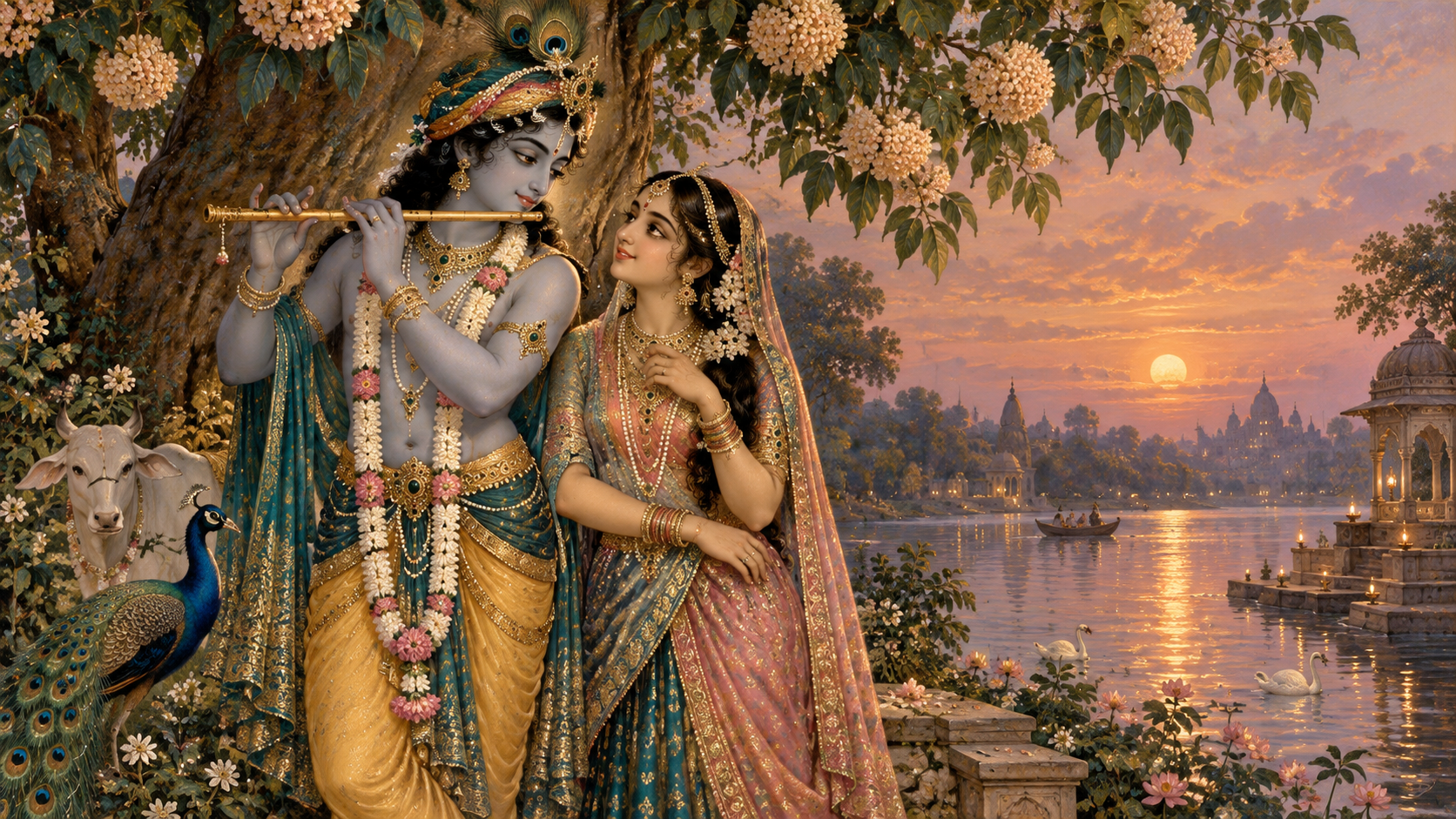
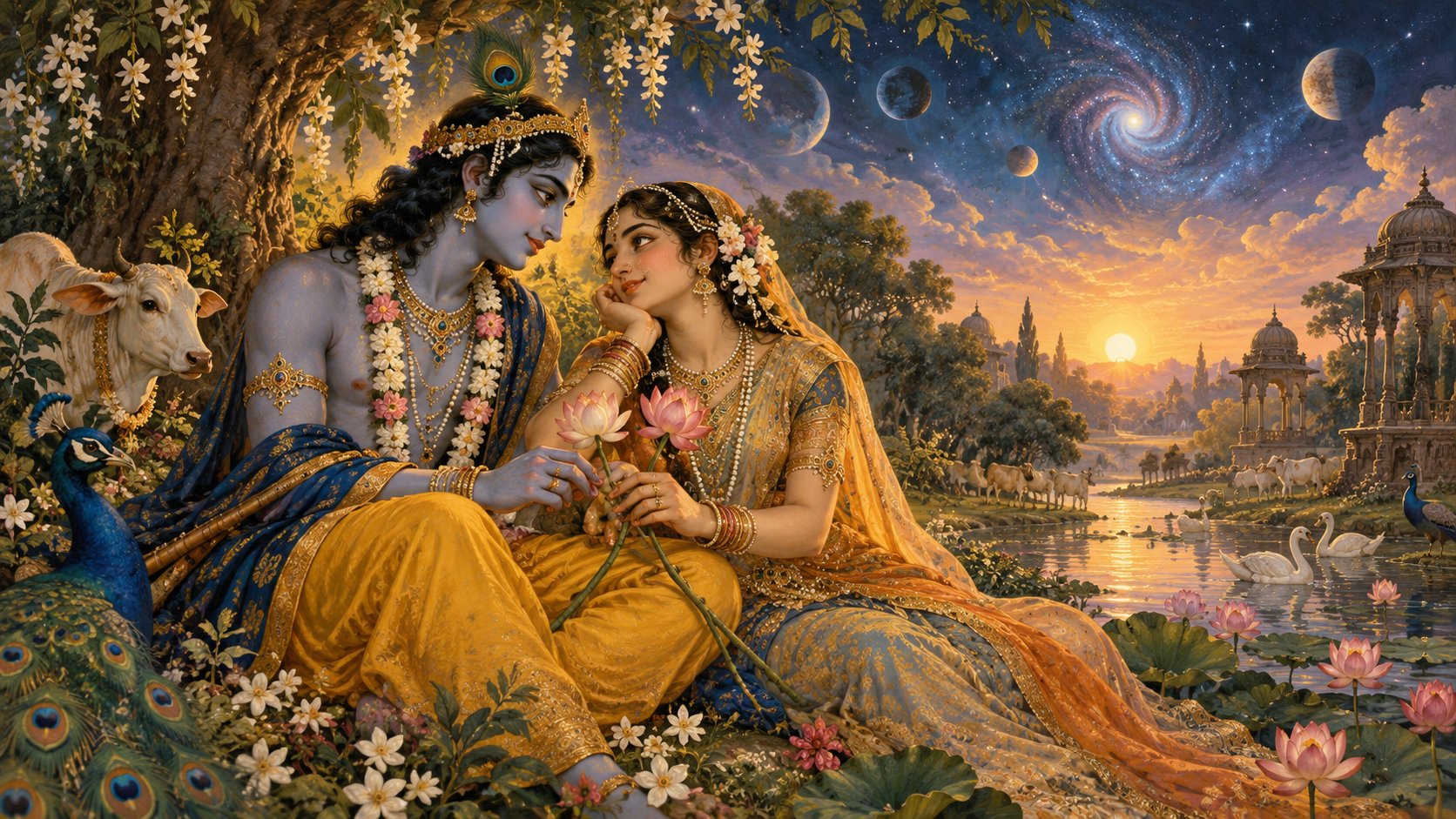
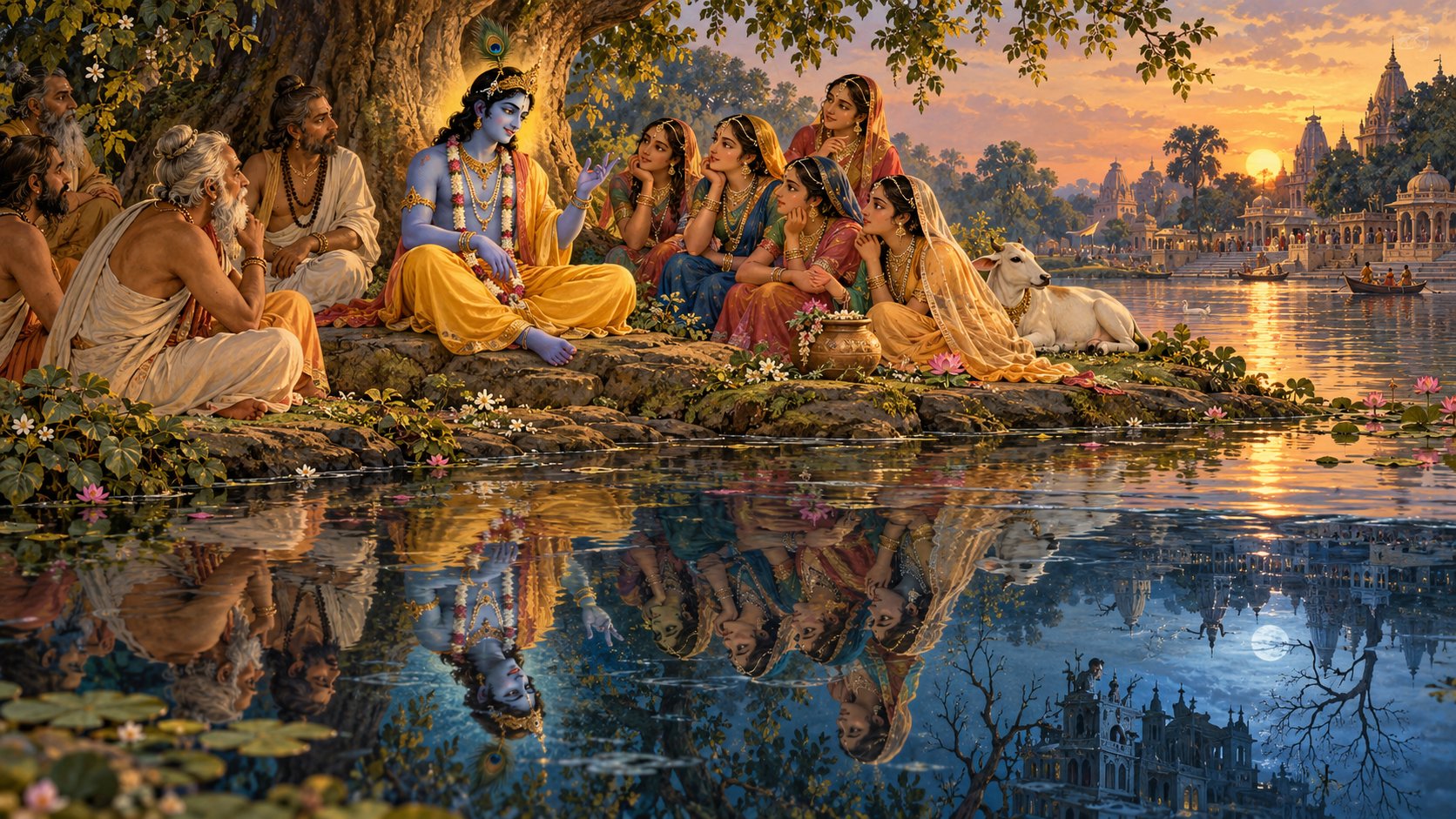
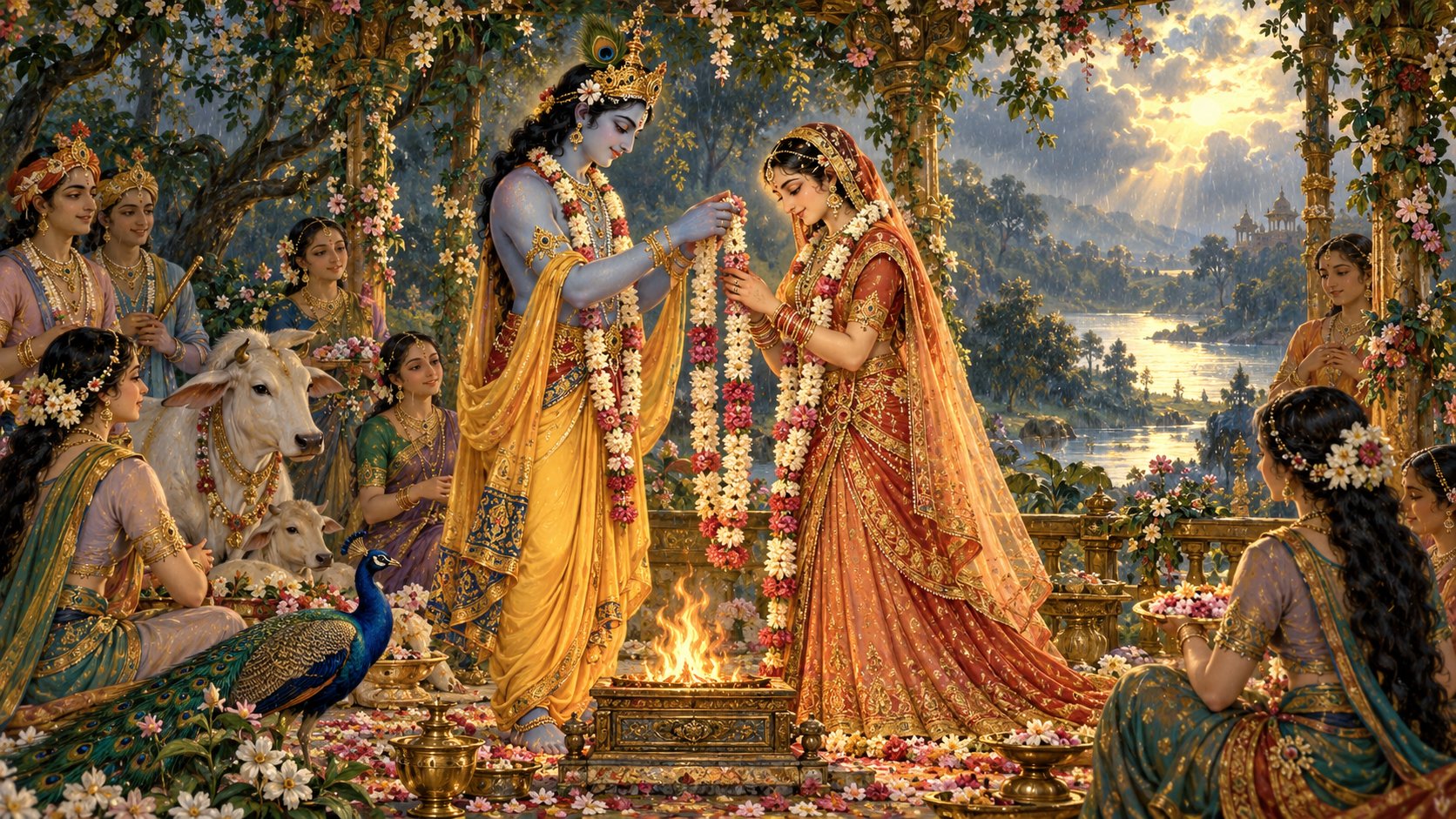
Brahman, or the Supreme Self, is the foundation of the world and pervades everything. The Upanishads teach that knowledge of Brahman brings the experience of the unity of the individual self and the Supreme Self. Through maya, the world appears as many different things, but Brahman is one and real. Ignorance traps a person in confusion, leaving them entangled in temporary happiness and sorrow, attraction and aversion. True knowledge dispels this ignorance and brings a deeper understanding of reality. In Advaita Vedanta, it means reaching a state in which no ultimate separation is seen between oneself and God. The individual self and the Supreme Self are recognised as one. The chapter interprets Krishna’s rasa-lila as a way of revealing this state. In the rasa, nothing remains between the Lord and the gopis. The body creates no barrier; there are only the Supreme Self and our own self, which are already one. This can be called true union. It is the knowledge Krishna wishes to give us. After such realisation, personal longing and the separate claims of happiness and sorrow no longer remain as before: they are dissolved or fulfilled. Having recognised oneself in the Supreme Self, no thirst or incompleteness remains. Everything has been attained.
The unity of the self and the Supreme
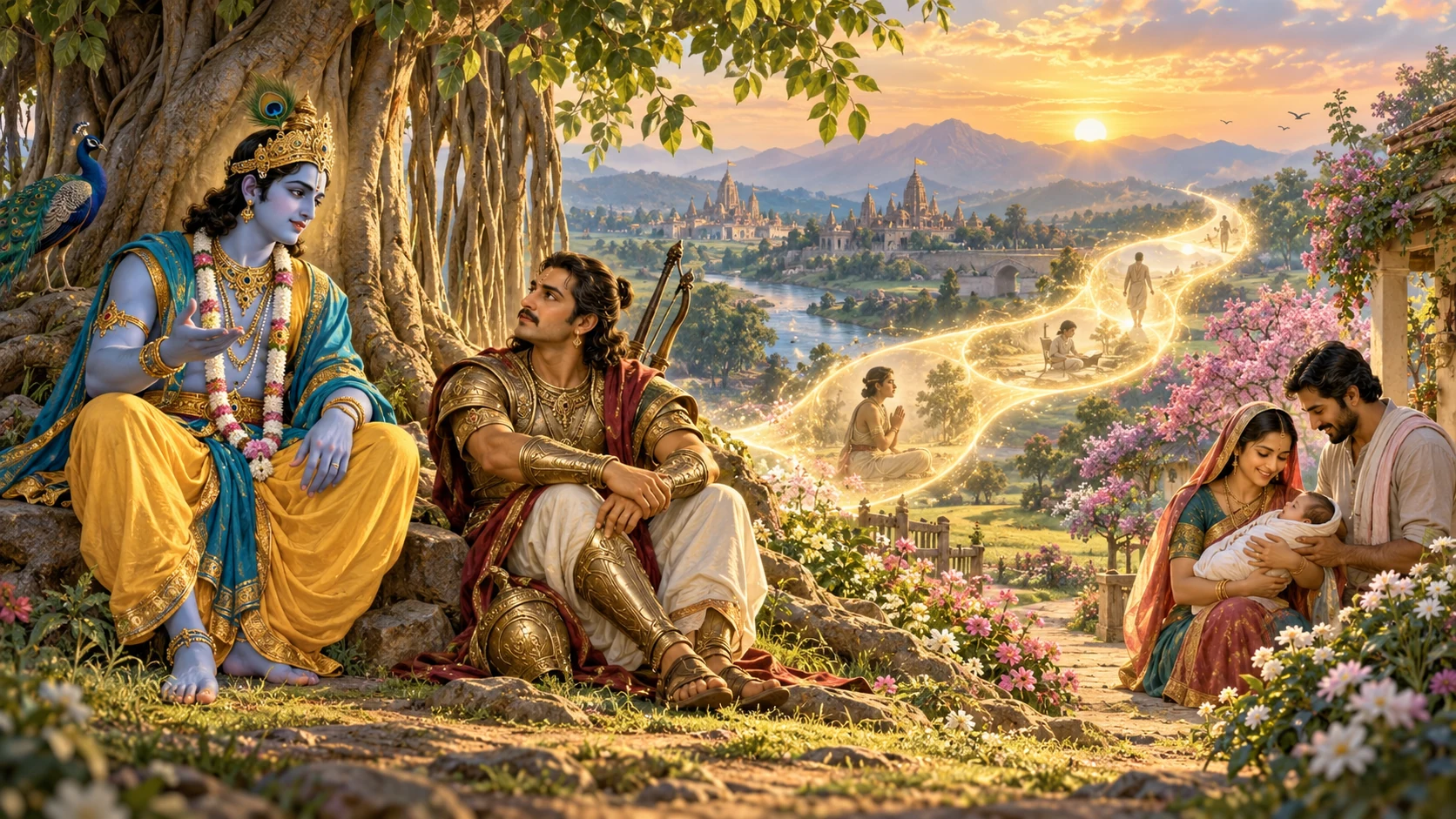
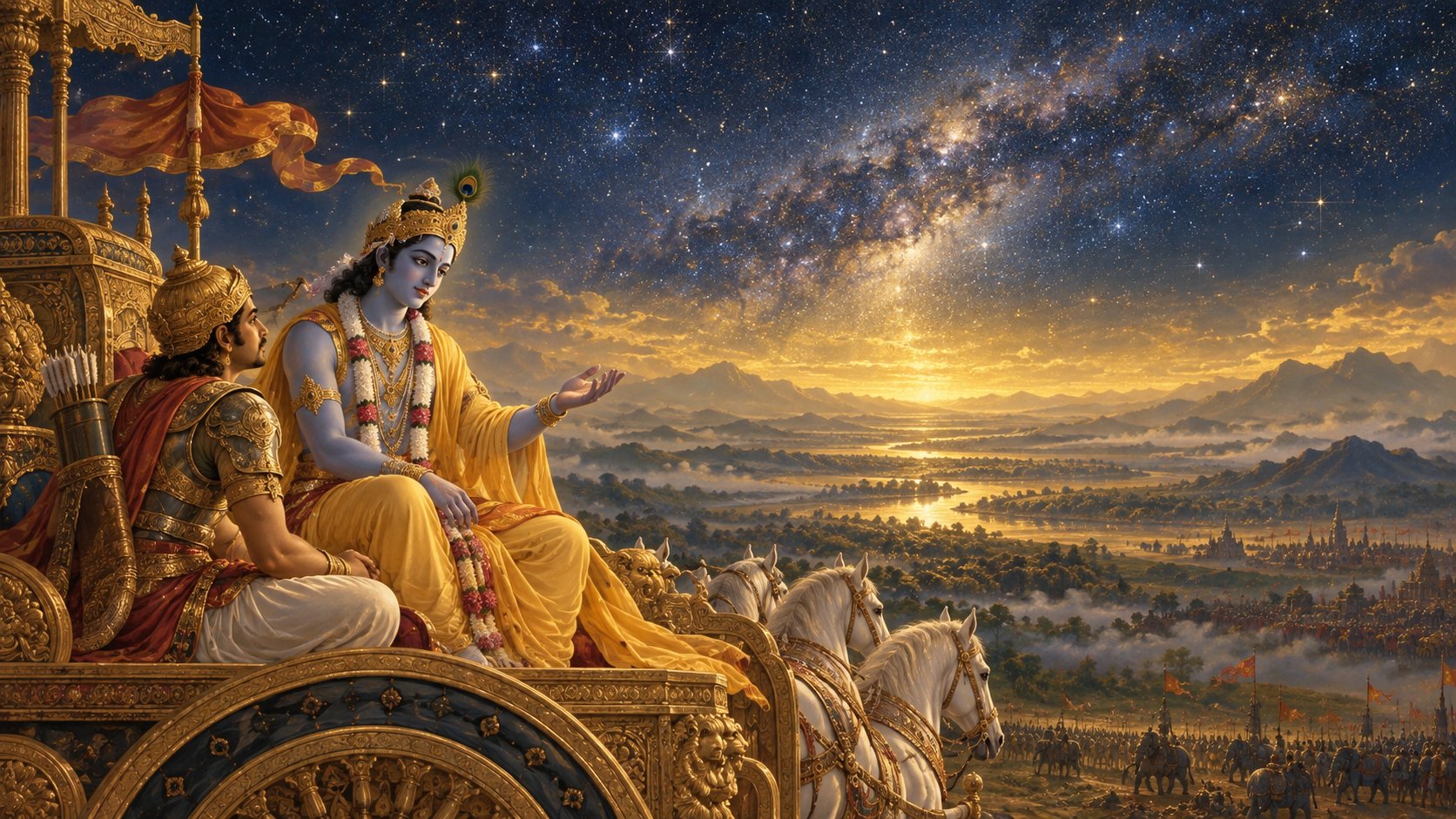
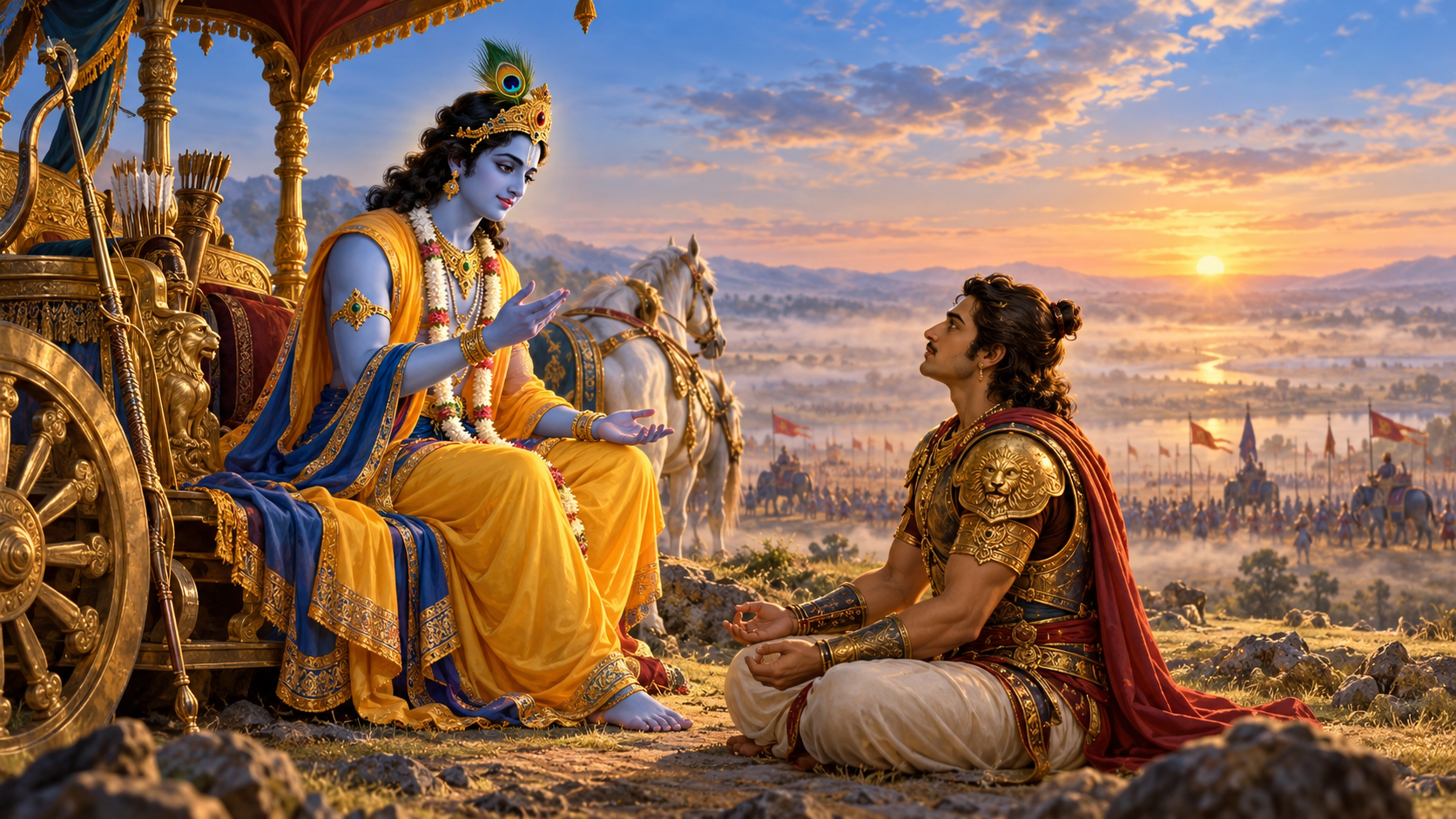
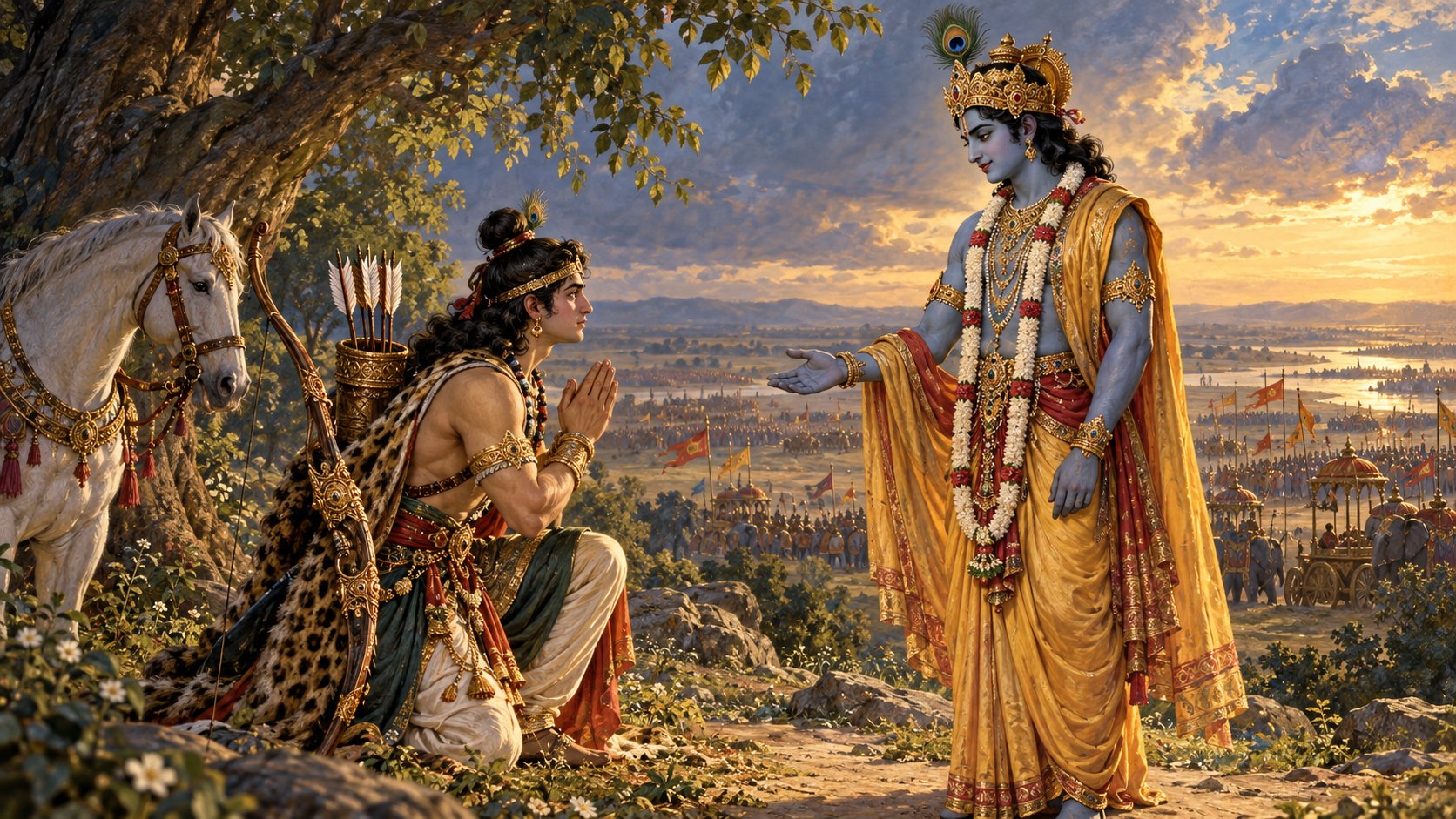
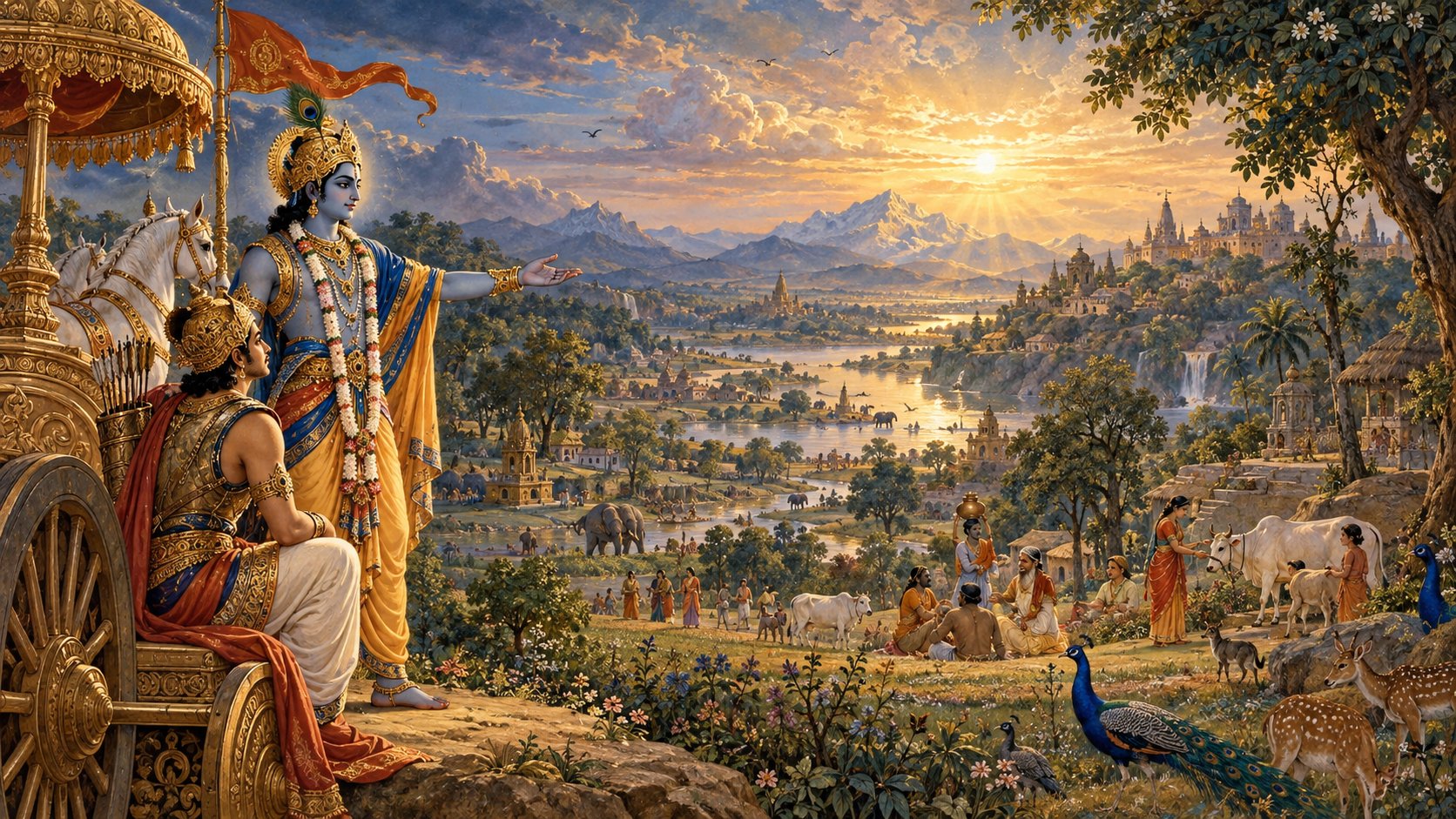
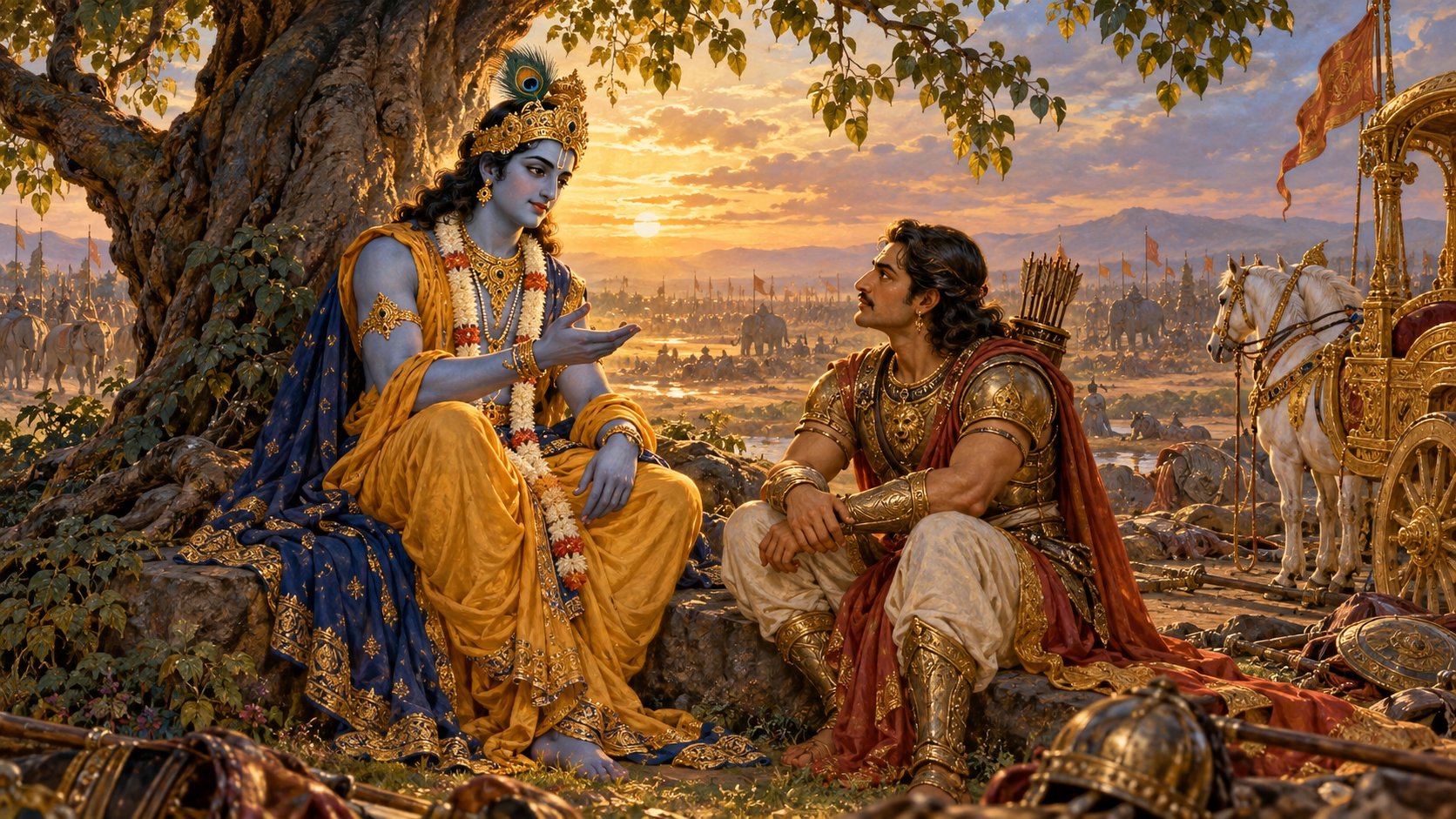
In the Shrimad Bhagavad Gita, Shri Krishna teaches Arjuna this knowledge of truth. The Upanishads call it Brahmavidya, the knowledge that leads towards liberation. The Chandogya Upanishad expresses it through the statement “Tat tvam asi”: “You are That,” or “You are Brahman.” Here too, the meaning is that the individual self and the Supreme Self are not ultimately separate. This is the central message of true knowledge. By rising above the bonds of maya and understanding truth, one attains liberation from the cycle of birth and death, together with spiritual peace and supreme bliss.
Make knowledge a question for life
The language of this chapter belongs to the spiritual perspective of Advaita. It reflects on the non-separation of the individual self and the Supreme Self. Simply remembering its words is not enough. A reader can examine what they use to define themselves. Am I only my position or profession? Is my identity limited to a success, a failure or someone else’s opinion? These questions invite an inward examination.
Our experience keeps changing. Childhood preferences change, relationships pass through different circumstances, and new responsibilities enter our lives. If we treat one stage as permanent, its passing can frighten us. The chapter encourages us to observe change while looking for a spiritual foundation. This search does not excuse carelessness towards the world. Precisely because life is temporary, our responsibility and sensitivity towards it become valuable.
Suppose you receive praise for something you have done. Feeling pleased is natural. But if you make that praise the whole measure of your worth, the next criticism can wound you deeply. Similarly, treating failure as your final identity narrows your view. Turning towards true knowledge encourages us to make room between an experience and our complete understanding of ourselves. Learn from an event, but do not believe that your entire being begins and ends with it.
In practice, accepting Krishna as a guru also means being willing to examine our comfortable assumptions in the light of his teaching. Sometimes we want to accept only what already pleases us. Learning begins when an idea questions a habit. Am I calling my fear good judgement? Am I mistaking my attachment for truth? Such questions can be difficult, but they belong to honest study.
A vision of love and unity
The chapter also describes the relationship between the devotee and the Lord. Its central feeling is one of closeness, love and surrender. Seeing this relationship only as an exchange narrows it. If prayer becomes merely a way to obtain what we want, inner preparation can be neglected. Devotion gives us an opportunity to examine our intentions, our behaviour and our attitude towards others.
Reflection on unity remains incomplete if it lives only in discussion. Listening carefully during a disagreement at home, refusing to humiliate someone vulnerable, and avoiding deceit for our own convenience can be practical expressions of it. The feeling that a spiritual foundation exists in everyone makes us more attentive to human dignity. Respect can remain even when opinions differ. This is a capacity that develops through practice in daily life.
Pause after reading
You do not need to draw many immediate conclusions after reading this chapter. Keep one question with you and observe it through the day’s experiences. What disturbed me most today? What can I learn from that experience? Which attachment narrowed my view? Even when the answer is incomplete, the question remains useful.
Reflecting on Krishna as a guru offers us alert curiosity as well as guidance. When study, self-examination and sensitive action come together, knowledge begins to connect with life. This is a reason to return to the chapter: the continuing effort to bring greater clarity within ourselves, greater respect into our relationships and greater responsibility into our actions.
Learning need not begin with an extraordinary experience. Speaking honestly, recognising pride as it arises within us, and listening openly to a worthwhile question are also forms of preparation. For the guru’s message to enter our lives, our own participation remains necessary. That participation connects study with spiritual practice.
Was this essay helpful?