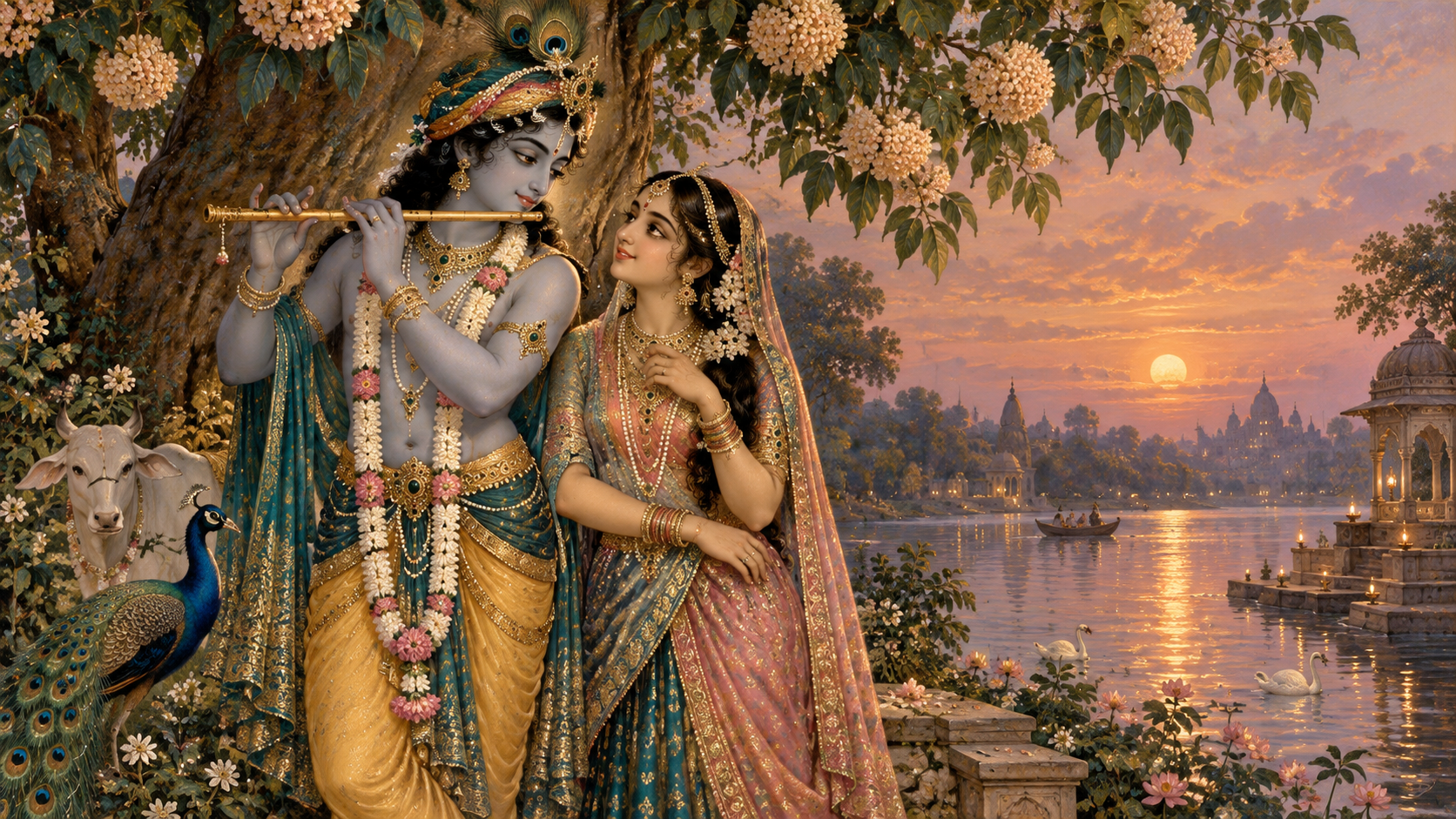
Sometimes even the most beautiful scenes in life cannot comfort the heart. The river continues to flow, flowers bloom on the trees, and the moon scatt
Read essay →27 April 2026 · Dr. Rajesh Takyar
Brahman
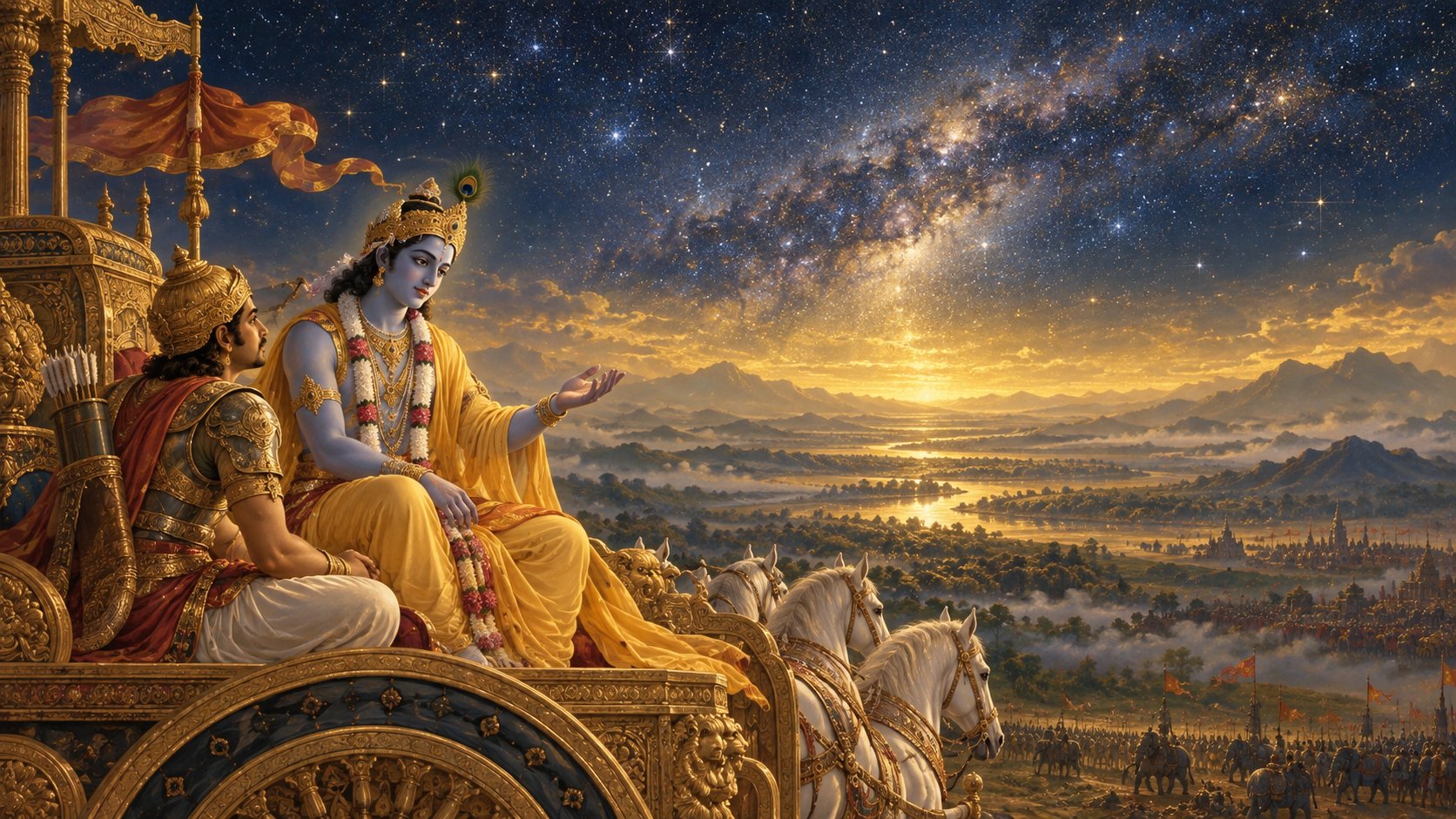
ज्ञेयं यत् element Pravakshyaami yajnyatvamritmashnute. Anadimat Param brahma na sattannasduchyate॥ 12 ॥
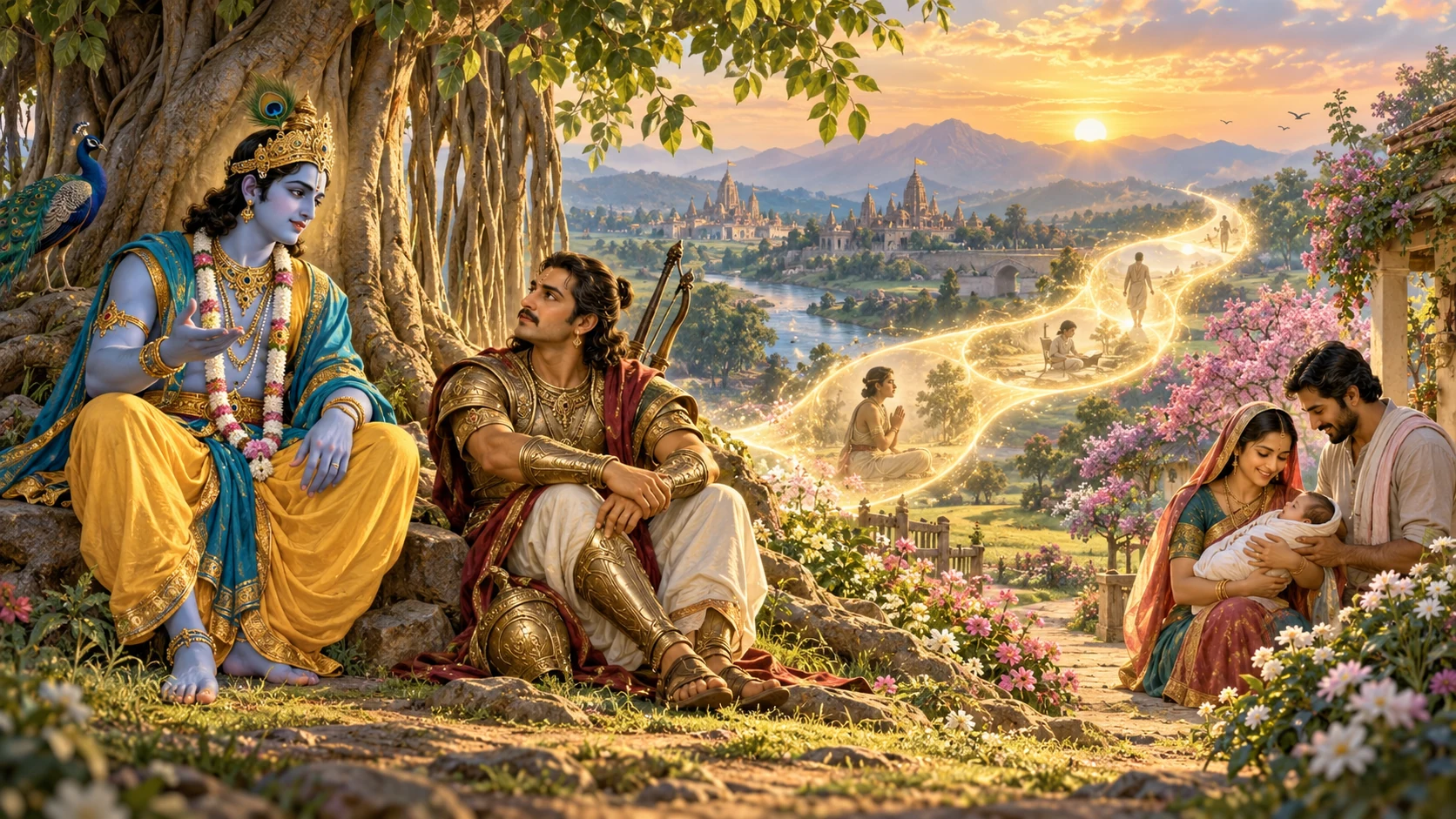
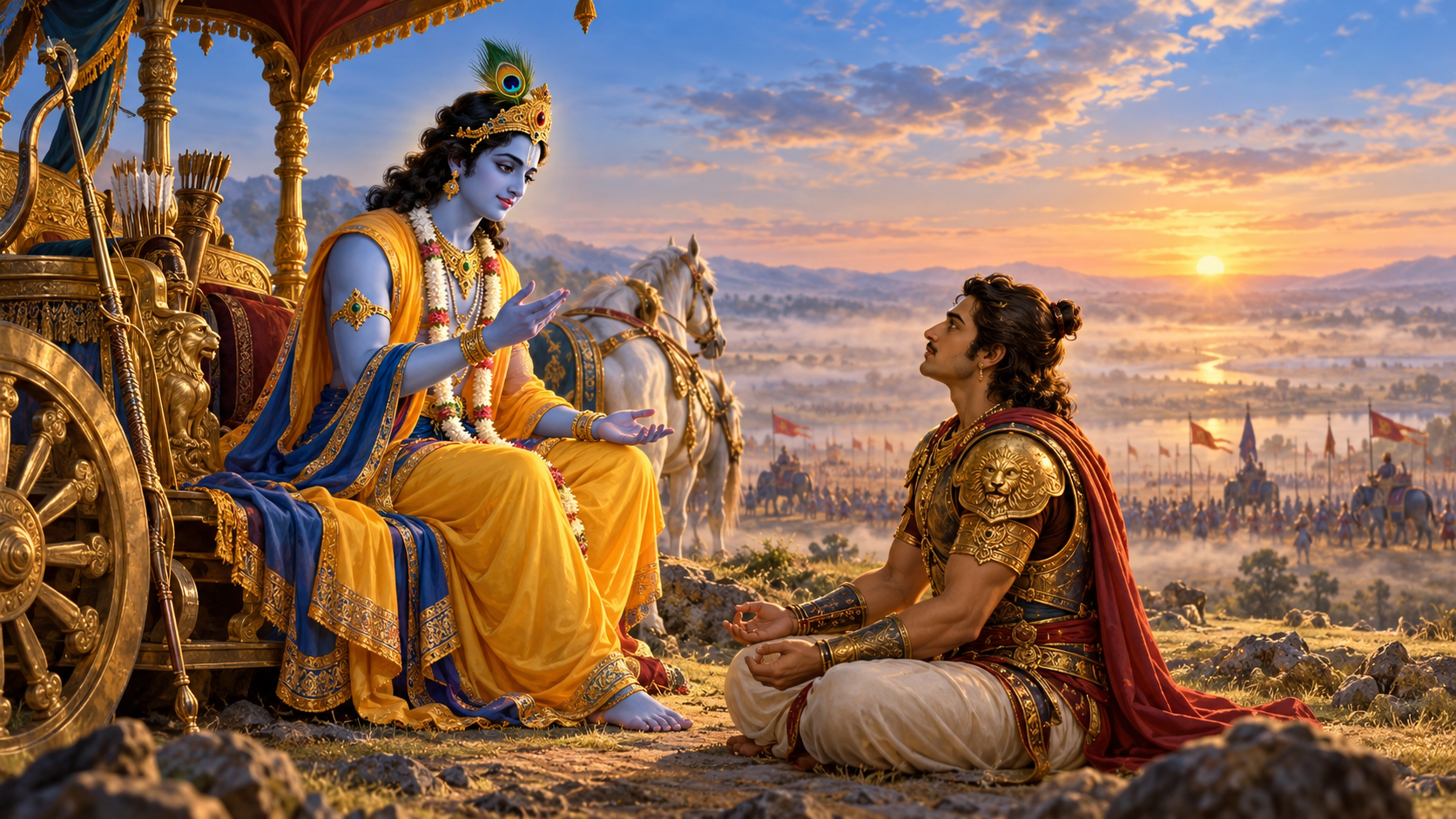
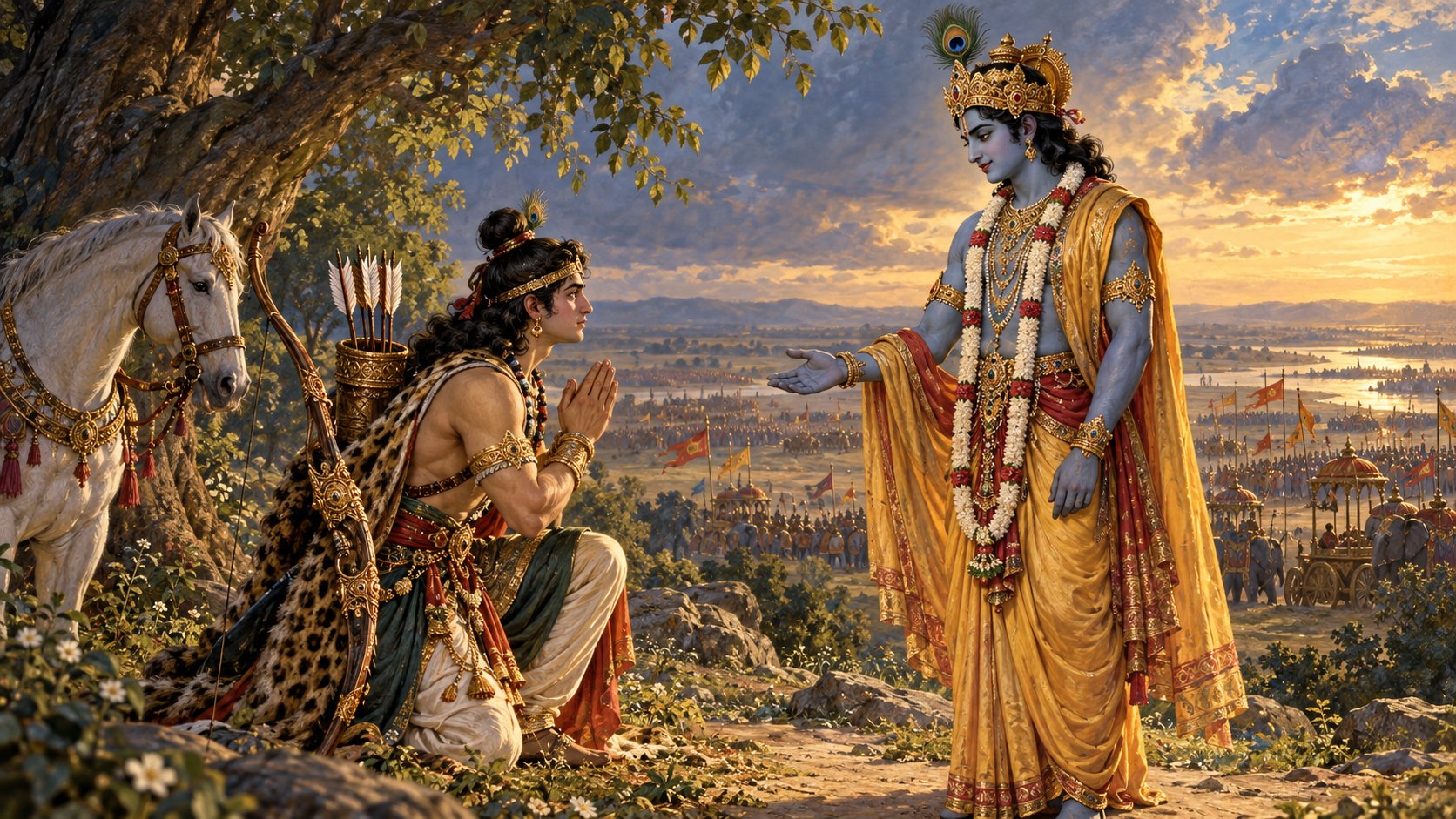
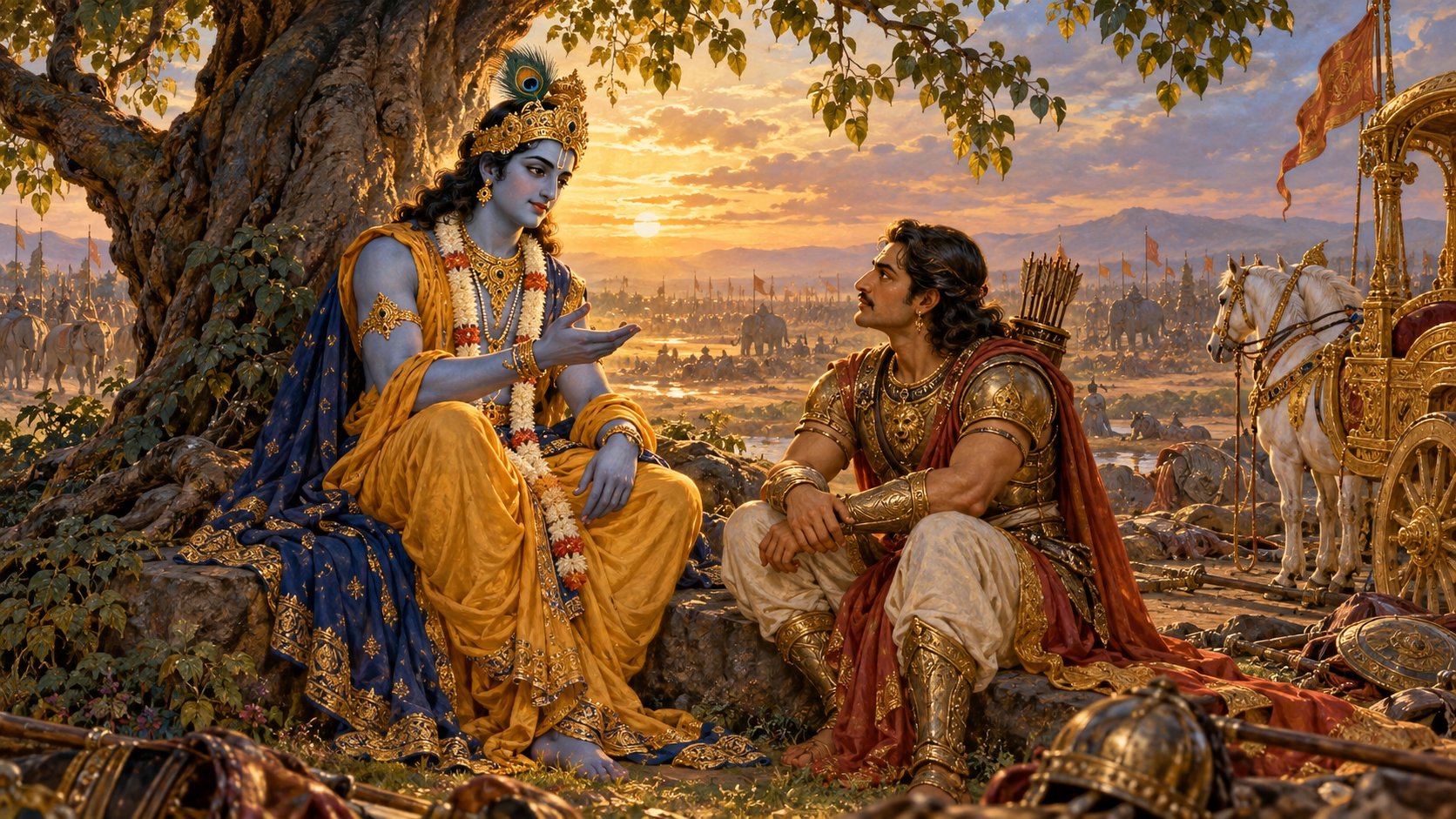
In this verse of Part Thirteen of Srimad Bhagavad Gita, Lord Shri Krishna, along with Arjun, is 'entering the deepest level of knowledge'‘Entering the deepest level of knowledge-chapter’. Till now he has explained what the field is, who is the expert, and what are the qualities of knowledge. Now he is telling that 'what is ultimately to know'‘Ultimately what is knowing?’. This verse is indicating the ultimate limit of knowledge.
‘Gneyam Yat’ i.e. that which is truly worth knowing. There seems to be a lot worth knowing in the world such as objects, relationships, science, ideas. But Lord Madhusudan is making it clear that beyond all this there is an element, which once known, there is nothing left to know. The same element provides There is an element beyond all this, which once known, nothing remains to be known. the same element to humans'Amrit' to humans i.e. frees them from the bondage of death.
The world is full of infinite subjects of knowledge. The devotee remains engaged in knowing something or the other from birth till death. He learns languages, understands relationships, studies science, experiences many forms of society, history, art, politics, nature and life itself. Yet the more he knows, the more he also realizes that the things worth knowing do not end. When one question is answered, another arises. When one mystery is revealed, many more mysteries appear behind it. Thus the field of external knowledge is infinitely expanding. But the truth is that beyond this infinite variety there is a fundamental element, which when known, becomes the basis of everything. It is not only the cause of the world, but it is also the basis of the consciousness through which the devotee knows everything. This is why knowing it is different from all other information. Knowledge of other things in the world is subject-knowledge; There the knower is different and the thing known is different. But the knowledge of this supreme element is such that
itelements Not an ordinary object which can be grasped by the senses. It is not only the cause of the world, but it is also the basis of the consciousness through which the devotee knows everything. This is why knowing it is different from all other information. Knowledge of other things in the world is subject-knowledge; There the knower is different and the thing known is different. But the knowledge of this supreme element is such thatThe knower himself recognizes his true nature.There the search turns from outside to within.
As long as the devotee knows only changeable objects, his knowledge also remains within the limits of change. He knows the body, but the body changes; He knows the mind, but the mind is fickle; He knows the world, but the world is transitory; Therefore, knowledge of all this is useful, but not final. The ultimate knowledge is that which recognizes the unchanging amidst change; One who sees that element between birth and death which neither takes birth nor dies; One who recognizes that witness amidst the rising and falling of experiences Who sees everyone but does not change himself.
I just told you Arjun that after knowing that essence, there is nothing left to know. I am not saying that by knowing this one suddenly gets all the information of the world, but the meaning is that the basic truth is understood. Just as after knowing the root, the branches, leaves, flowers and fruits of a tree begin to be understood as a comprehensive unity, in the same way, after knowing the ultimate essence, the diversity of life becomes visible in its right place. Then knowledge is no longer a burden; He becomes a vision. Then the devotee does not get entangled in things, but recognizes their basis.
This element provides the devotee with 'Amrit'. Amrit does not merely mean the body's escape from death. The body is a part of nature and its destruction is certain. The real meaning of immortality is; The realization of that self-existence, which is not the subject of death. Death applies only to that which is born. The one who is born will die. But the one who is pure consciousness, who is the witness, who is immovable amidst all changes, is not subject to death. To know Him is to be free from the bondage of death.
The bondage of death is not just the event of leaving the body, but the state of being bound by fear, attachment, insecurity and mortality every moment. One who considers himself only a body is afraid of every change. One who sees himself in position, relationships, wealth or name, breaks from within as soon as they move. But one who has got the touch of that supreme element, a new stability is born within him. He knows that things that change will change, but My true nature is beyond them; This is the nectar of enlightenment.
Therefore, all the knowledge of the world is important in its place, but its ultimate value is only when it leads the devotee to the discovery of this basic principle. That is the pinnacle of knowledge, that is the liberation of the soul, that is the supreme basis of peace. The one who came to know this did not just know some facts; He has found the center of life. From there the fear of death disappears, the ego collapses, and the devotee becomes truly free for the first time. 'Amrit' does not just mean immortality of the body. It means 'freedom from the fear of birth and death', freedom from temporary identity and attainment of permanent peace. When the devotee realizes this principle, he begins to experience himself beyond the limitations of body and mind.
'Nectar'It does not only mean immortality of the body. It means,‘Freedom from the fear of birth and death’, freedom from temporary identity and attainment of permanent peace. When the devotee knows this principle, then he begins to experience himself beyond the limitations of body and mind.
The word 'Amrit' is generally understood by devotees to mean the immortality of the body, as if the goal of spiritual life is that the devotee never dies. But this understanding is very limited from the point of view of truth. The body is made of nature, and that which is made of nature is bound by the law of change and destruction. The body that is born will grow, change, undergo disease, age and eventually die. Therefore, if the meaning of Amrit is taken to mean only the immortality of the body, then it will shorten the original meaning of the truth. When the scriptures talk about nectar, they are referring to the consciousness that does not change with the body, does not waver with the mind, and is not destroyed by the touch of death.
This is why the real meaning of 'Amrit''Nectar' is said to be freedom from the fear of birth and death because this consciousness, this soul, this expert does not die. The deepest fear of a devotee is the fear of death, but this fear is not just the fear of the body coming to an end. It's more subtle than that. The devotee is afraid of losing everything by which he has established his identity. He is afraid of his body being spoiled, afraid of his relationships being broken, afraid of losing his position, afraid of his respect being diminished, afraid of his ideas being rejected. The root cause of all these fears is that he did not know his true nature.He considered the temporary ‘I’ is accepted, and then as soon as that temporary being shakes, his entire being starts shaking.
When the devotee receives Amrit, it means that he has started waking up from this original mistake. He sees that the body is his instrument, but I am not just the body. The mind is the field of my experiences, but I am not just the mind. Thoughts come and go, but I am not a thought. Emotions rise and fall, but I am not emotions either. My real form is as the witness who sees all this. This witness himself is not the subject of change, but the spectator of change. This is the self-essence, and its identity is the beginning of nectar. This is also the meaning of freedom from temporary identity. The devotee defines himself in many layers; I am this body, I am a member of this family, I am in this position in this society, I am so successful, I am so unsuccessful, I am loved, I am neglected, I am knowledgeable, I am ignorant. Recognize all these, these layers, can be useful in the practical world, but if the devotee accepts these as his final form, then he will remain continuously bound. Because all these identities depend on circumstances. Body will change, position will change, relationships will change, society's perspective will change, success and failure will change.
This is also the meaning of freedom from temporary identity. The devotee defines himself in many layers; I am this body, I am a member of this family, I am in this position in this society, I am so successful, I am so unsuccessful, I am loved, I am neglected, I am knowledgeable, I am ignorant. Recognize all these, these layers, can be useful in the practical world, but if the devotee accepts these as his final form, then he will remain continuously bound. Because all these identities depend on circumstances. Body will change, position will change, relationships will change, society's perspective will change, success and failure will change.If the 'I' depends on these, then I am in trouble every moment. That is why a life based on temporary identities will inevitably be full of fear, insecurity and unrest.
When the devotee begins to see in the light of philosophy, he does not deny these identities, but learns to see beyond them. He knows that I am father, son, friend, devotee, Karmayogi, householder; Whatever I am, is true at the level of behavior; But my final form is greater than all these limitations. I am the consciousness that plays all these roles, but is not confined to any one role.This understanding brings great peace within the devotee. Now relationships remain, but ownership diminishes; Karmas are done, but ego is reduced; Success comes, but the excitement does not rise; Failure comes, but the spirit does not break; This is the direction of nectar.
Attainment of lasting peace is also linked to this realization. Generally the devotee searches for peace in external favourability. He thinks that if everyone else is according to me, if circumstances are as per my wish, if health is good, money is secure, relationships are cordial, and the future is under control, then I will be at peace. This ‘if’ remains its basis; But this is never possible permanently. The world is changeable, hence the peace built on external foundations will also be changeable. This is the reason that even when external facilities increase, the devotee remains restless from within. Even if he gets everything, there will still be some fear, some emptiness, some insecurity.
Permanent peace comes when the devotee changes his base. He comes in from outside. He realizes that peace is not a result of circumstances, but a state of being close to the soul. When the 'I' begins to recognize itself as a witness separate from the restlessness of the body and mind, then peace slowly begins to burst from within. This peace is not excitement, nor is it indifference; This is a deep stillness. In this, life continues, work continues, relationships continue, joy and sorrow also come, but there remains a center within which does not break; This is spiritual peace.
So when I am saying that the devotee begins to experience himself beyond the limitations of body and mind, it does not mean any imagination or mere philosophical thought. It is a living experience. Earlier he considered every emotion as his own form; When angry 'I am angry'; If sadness comes 'I am sad'; When fear comes 'I am afraid.' But now he starts seeing that anger has arisen in the mind, I am its witness; Sorrow is a shadow on the mind, I am its witness; Fear is running in the body and mind, I am a witness to it. In this subtle difference lies its liberation. As long as the experience and the experiencer are considered one and the same, there is bondage. When the witness awakens, then freedom begins.
This freedom is the basis of freedom from the bondage of death. Who considers himself only 'Body'i.e.Area Believes, for him death is the end of everything; For someone who considers himself to be a combination of mind, relationships and personality, death is terrifying, because it seems as if his entire known world is snatched away from him. but who'Soul' i.e. 'Kshetragya', starts to understand that death is a change, not the end. As clothes change, the body also changes. Here this thing is no longer just a verbal consolation, but starts becoming a direct understanding of consciousness. Then it is not necessary that the fear of death disappear completely immediately; But its roots definitely start becoming weak. The devotee understands for the first time that his truth is greater than his mortal form.
Here the importance of devotion increases further. This experience is not stabilized by mere intellectual thought. The intellect understands, but old habits still make the devotee fall into body consciousness. Therefore the devotee does not merely think; He surrenders. He considers God as his ultimate support. This dedication becomes a bridge for him. When he remembers in every situation that his truth lies in God, then his self-remembering becomes stronger. Bhakti gives softness to knowledge, and knowledge gives stability to devotion; Both together lead the devotee to the experience of Amrit.
Hence 'Amrit' does not mean any miraculous bodily immortality, but deep spiritual awakening. This is the stage where the devotee begins to become free from the fear of death, the grip of temporary identity begins to loosen, and permanent peace is born within. Then even though life appears to be the same, it is no longer the same. The world is the same, the people are the same, the happiness and sorrow are the same, but the observer has changed. Now, despite being in the body, he is not limited to the body, despite using the mind, he is not lost in the mind, despite maintaining relationships, he is not bound by them. This is the meaning of nectar; Waking up from the limited to the infinite, moving from fear to peace, and indestructible amidst impermanence Soul i.e. Kshetrajya.
Lord Trivikram Gopinath takes the name of that element and says; ‘Param Brahma’. This Brahman is not limited to any body, object or form. He is eternal i.e. He has no beginning. That which has no beginning cannot be destroyed. Whom speech cannot express, but by whose power speech speaks.Therefore He is eternal. After this the Lord says a very subtle thing:
'Na Sattannasaduchyate' That is, this Brahman can neither be called 'Sat' nor 'Asat'. That is, you should understand the deeper meaning of this. ‘Reality’ is that which is clearly present in experience such as body, object, thought. ‘False’ is that which is not at all. But Brahman is beyond both of these. He is both there and also not; But not according to the common understanding of the devotee. This is the understanding which breaks the common sense of the devotee. As I said earlier, a devotee understands everything in the world by dividing it into two categories, either ‘is’, or ‘is not’. Whatever is visible in front, whatever is accepted by the senses, whatever the mind captures in thought, he starts calling that as 'truth''Sat'. And that which does not exist at all, which has no existence, is called 'Asat'. But in the context of 'Brahm' this simple division becomes inadequate. Brahm is neither true nor false is. This does not mean that Brahman is a contradiction, or that its existence is doubtful; Rather, it means that Brahma is such an element which cannot be understood by binding it to the categories of ordinary experience.
First it is necessary to understand'Sat'. In general view‘Sat’is that which is present in experience, such as thisbody, thisearth, thissky, this Thoughts, thishappiness, thissorrow, thisworld. The devotee often says that this is all, because this comes into his experience. But if seen from the point of view of truth, all this is constantly changing. The body is changing every moment, the mind is changing every moment, thoughts come and go, relationships develop and deteriorate, circumstances arise and change. What is there today will not be the same tomorrow. In this sense, the world's 'this' or 'it'everything is because'it'Comes in his experience. But if seen from the point of view of truth, all this is constantly changing. The body is changing every moment, the mind is changing every moment, thoughts come and go, relationships develop and deteriorate, circumstances arise and change. What is there today will not be the same tomorrow. In this sense the world'it'Or'being' is not stable but changing. This is true at the practical level, but not the ultimate truth. Arjun, now you understand 'false'. It is not stable, it is changeable. This is true at the practical level, but not the ultimate truth.
Arjun now you‘false’ Understand.Asat is that which has no existence; Like the sky-flower, the rabbit's horn, only a thing of imagination. It neither comes into experience, nor is its existence proven at any level. That is why it is called false. But false It is said. But‘Brahm’cannot be called unreal either, because ‘Brahm’ is not an empty imagination. He is the fundamental basis of existence. He alone holds everything, He is the truth hidden behind everything. If 'Brahm' does not exist, then neither experience is possible, neither the experiencer is possible, nor the world is possible. Therefore, it is impossible to say that Brahman does not exist. This is where the depth begins. ‘Brahma’To'Not there' It is impossible to even say.
This is where the depth begins.Brahm is known as 'Sat' Cannot be said in the sense that it is not present in front like an object; It is not visible like the body, not graspable like thought, not changeable like emotion; It is not even an object of the senses; It cannot be completely included in the concept of mind; Therefore, if someone says that Brahma is like the objects of this world, then it would be an incomplete understanding. And if someone says that that which cannot be grasped in this way does not exist, then this will also be a mistake. ‘Brahma’like the things of this world'Is', then this would be an incomplete understanding. And if someone says that the one who cannot be caught in this way,'Not there', then this would also be a mistake.‘Brahman’ is neither as the ‘being’ of the object world is, nor as it is as the ‘non-being’ of the void.
That is why I said that He It is there and it is not there; But it is not according to the common understanding of the devotee. ‘Is’ Because it is the basis, it is the consciousness, it is the truth, it is the supreme being. ‘No’ Because it cannot be shown in a limited form like objects; It is not limited to any one shape; He is not located in any one place; He is not defined by any one quality; If someone completely binds it to some form, some name, some thought, some concept, then 'Brahm'‘Brahma’ will appear small. The greatness of Brahma lies in the fact that despite appearing in all forms, He is not limited to any one form.
Look at the ocean and the waves; is a wave; It can be seen, counted, its size can be told. But what is the truth of the wave? Water. Now water is in waves, but not just waves. Waves will rise, fall, break, disappear; But water will remain. If someone just looks at the wave and says that this is the ultimate truth, then he is seeing incompletely. And if someone says that the water behind the wave is not there because it does not look different like the wave; So that is also wrong. Similarly, this world is like waves, and 'Brahm' is like the basis which is in everything, but does not end in any one form.
'Brahm'WhoSat and not False actually makes one realize the limits of language. Language operates in duality; This or that, is or is not, one or many. But ‘Brahm’ is Advaita. This division does not last there. That is why the Upanishads repeatedly adopt the language of symbols. They say; 'Neti-Neti', not this, not that. Its purpose is not to deny Brahman, but to show that 'Brahman' is greater than what you limitedly understand. He cannot be captured in any definition.
It has a special meaning for the devotee. The common devotee sometimes wants to capture God only in an idol, form, story or feeling. This is good for the beginning, because the mind needs support. But if he stops here, he will be deprived of the infinity of 'Brahman'. He has to gradually understand that God is both in the form and in the formless; There are near and beyond; Both in experience and beyond experience. They are not just in the temple, not just in thought, not just in feeling; They are at the base of everything. This understanding frees devotion from narrowness. In truth, Brahman is the element that makes all experiences possible, but is not limited to any particular experience. It is the basis of existence, but not the object. It is the light of consciousness, but not thought. He pervades everything, but is not bound by any limit. That is why it can be called neither true nor true, nor false. He is the basis of both, is beyond both, gives meaning to both.‘Brahma’Will be deprived of infinity. He must gradually understand that GodForm I am also there andformless Me too; There are near and beyond; Both in experience and beyond experience. They are not just in the temple, not just in thought, not just in feeling; They are at the base of everything. This understanding frees devotion from narrow-mindedness.
truthfully,Brahma It is the element that makes all experiences possible, but is not limited to any particular experience. It is the basis of existence, but not the object. It is the light of consciousness, but not thought. He pervades everything, but is not bound by any limit. that's why himneither true It can be said, andneither false. He is the basis of both, is beyond both, gives meaning to both.
When the devotee starts understanding this, then his vision changes. He does not despise the world by calling it false, nor does he get lost in it considering the world to be the ultimate truth. He knows that is what is visible; But not on its own basis; And what is not visible is the basis of everything.This is deep vision. This is the gateway to Brahma-thought. And this is the point where the common sense begins to become silent, and the conscience begins to hear for the first time the whisper of that indescribable truth.
That is why I am saying that 'Brahman' cannot be confined in words, concepts and arguments. When someone says 'this is', he has limited it in some way. When someone says 'it is', then he has limited him in some way. when someone says that‘It is not’, he is negating it. 'Brahm' is beyond both these limitations. It is the basis of experience, not the object. Enlightenment is not an intellectual conclusion, but the transformation of experience. When the devotee knows 'Brahman', his way of seeing changes. He doesn't leave the world, but he doesn't get tied to it either. base of experience Yes, it is not an object.
Enlightenment is not an intellectual conclusion, but transformation of experience Is. when the devotee‘Brahma’knows, then his way of seeing changes. He doesn't leave the world, but he doesn't get tied to it either.This is the state of nectar. Enlightenment is often understood by devotees as a lofty idea, a philosophical principle, or a scriptural conclusion. They think that memorizing some esoteric sentences, discussing the relationship between soul and Brahma, or saying that 'I am not the body, I am the soul', this is enlightenment. But in reality enlightenment is not so superficial. This is not just the agreement of the intellect, but a change in the direction of experience. This is such a revolution within the devotee, after which he does not see the same world the same as before. Things remain the same, others remain the same, events remain the same, but the observer changes. This is the real beginning of enlightenment.
In intellectual conclusion the devotee thinks about the truth, but in the transformation of experience he starts living according to the truth. Earlier he knew that the world is mortal, but he was devastated by the loss of mortal things. Earlier he used to hear that happiness and sorrow come and go, but he became restless at the slightest failure. Earlier he used to say that the soul is eternal, but he used to get scared by small troubles of the body. This means that the knowledge was still limited to the intellect and had not reached the life.Enlightenment occurs when this distance begins to disappear. Then what is known gradually becomes vision; And what is formed in vision is manifested in character, behavior and inner peace. When the devotee knows Brahman, he does not know anything new; He recognizes the root of existence.
when the devotee‘Brahma’ If someone knows something, then he does not know anything new; He recognizes the root of existence.Knowledge of Brahma does not give authority over anything outside, but removes the confusion within. First the devotee remains divided among many things, relationships, thoughts and identities. Sometimes he gets stuck in his body, sometimes in the desires of his mind, sometimes in the opinions of others, sometimes in his own respect. His ‘I’ is connected to some changing thing at every moment. Therefore his peace also keeps changing. But when he begins to know Brahm, then for the first time he sees that behind all this there is an unbroken being, a support, a consciousness, which is in everything and is also beyond everything. This identity changes his vision. Changing vision means that he no longer sees things only from the point of view of use, ownership or attachment. He begins to see the world as an expression of God. He does not consider people merely as an instrument of his happiness and sorrow, but starts experiencing the light of the same consciousness in them too. This experience makes him sensitive as well as independent.
Changing vision means that he no longer sees things only from the point of view of use, ownership or attachment. He begins to see the world as an expression of God. He does not consider people merely as an instrument of his happiness and sorrow, but starts experiencing the light of the same consciousness in them too. This experience makes him sensitive as well as independent.Sensitive because he now sees the unity of life more deeply. Independent because he does not base his existence on any one thing, person or situation.
This is the reason why the enlightened one does not leave the world. Leaving the world is not a condition for enlightenment. If the bondage was only in external things, then liberation would be achieved by changing the place. But the bondage is not in the things, but in the attachment, pride, fear and ignorance associated with them. Therefore, a devotee can remain bound even by going to the forest, and can be free even by being a householder. The essence of enlightenment does not lie in running away, but in changing within. The devotee maintains relations, does work, lives in the family, moves among the society, but now his center has changed. He works outside, but remains a witness inside. He loves, but does not hold. He serves, but does not own. He makes efforts, but does not get immersed in the fruits.
'Does not even get tied in the world',This sentence tells the maturity of self-knowledge. Bondage means accepting a temporary thing as a permanent basis. The body changes, so the devotee bound to the body will remain full of fear. Relationships change, so the devotee who finds his last refuge in relationships will remain in insecurity. Wealth, success, prestige, ideas; Everything is about to change; The one who gets attached to them will keep moving up and down with them. But the enlightened one knows that all these are part of the flow of life, not the ultimate truth.Therefore he does not reject them, but neither does he get lost in them. It is used, but its existence does not depend on them. This is the state of nectar. 'Amrit' does not mean immortality of the body, but being situated in the consciousness which is imperishable even amidst impermanence.When the devotee realizes that his real nature is greater than the body, mind, emotions and roles, then the fear of birth and death gradually begins to loosen. This does not mean that he turns into stone or remains untouched by the experiences of life. He experiences happiness as well as sadness; He knows the joy of meeting and also the pain of separation. But now he is not broken by these, because he has recognized an unshakable center within himself beyond them. In the state of nectar
Nectar life becomes not running away, but becoming awake. There peace is not passivity, but deep balance. There renunciation is not hardness, but freedom from clinging. There devotion is not blind sentimentality, but humble dedication to the truth.Enlightenment is therefore ultimately a transformation of experience, because it does not simply tell us what is true; This makes the devotee such that he starts seeing, living and living according to the truth. Then the world, despite appearing the same, is no longer the same. The same life no longer becomes a bondage but becomes devotion. The same world is no longer the cause of illusion, but becomes a glimpse of Brahm. And the same devotee, who once trembled with every change, now starts to settle in the peace of nectar even amidst the changes. This form of Brahma is repeatedly described in the Upanishads. The mantra of the seventh anuvaka of the second valli of Brahmanandavalli of Taittiriya Upanishad is:peace of nectar Seems to be situated in.
in the upanishads‘Brahma’Description of this form is found again and again. The mantra of the seventh Anuvaka of the second Valli of Brahmanandavalli of Taittiriya Upanishad is:
Asadva idamgra asit. Tato va sadjayat. Tadatmanam swayamkurut. Tasmattatsukritmuchyat iti. Yadvai tatesukritam raso vaisasah. Rasam hyevayaam labdhwaaananndi bhavati. Ko hyevanyatkah pranyad yadesh akaash anando na syat. एश ह्यवानंद्याति.
That is, in the beginning this world was not in the same manifest form as it is seen today. There were neither trees, nor mountains, nor humans, nor animals, nor these different names and forms. Everything was in a latent state. Here ‘Asat’ does not mean absolutely zero or nothing. Meaning, that which is not yet visible, that which is hidden, that which has not been revealed. Just as the entire tree is hidden in the seed, but is not visible to anyone from outside, similarly this world was earlier in an unmanifested form.
Then from that 'Sat' was born, that is, the same world became visible. What was hidden earlier became visible later. It means that the world was not created from a complete void, but emerged from a deeper truth. This world is an expression of that basic truth. 'Tadatmanam swayamkurut', that is, that ultimate truth revealed itself in many forms. No artisan sitting outside was creating this world; Rather, the same supreme element itself appeared in the form of this multifaceted world. Therefore the world and its fundamental basis are not completely separate. Just as a pot is made from clay, the pot is a new form, but its base is still clay. Similarly, this world appears in many forms, but its origin is only one. 'Tasmattatsukritmuchyate', that is, this creation is His beautiful, good and meaningful creation. There is sorrow, difficulty, and change in the world, yet at its core it is not bad. The original truth is good, complete. 'Raso vaisa sa', these are the most beautiful words. That is, it is the ultimate truth‘Rasa’. Juice does not mean taste. Rasa means essence, sweetness, real satisfaction of life, the joy with which life seems alive. Whatever the devotee wants in life like love, respect, success, family, wealth, beauty; There is only one quest hidden behind them all; The pursuit of happiness. The devotee does every work to attain happiness in the end.
'Rasam Hyevayam Labdhwaऽnandi Bhavati', that is, when the devotee attains that supreme rasa, then he becomes truly happy. Real happiness is not found permanently in external things. External things may give happiness for a while, but then the mind becomes empty. When one desire is fulfilled, another one arises. But when the devotee connects with the joy of his inner Supreme Truth, God, Brahm or Soul, he finds deep peace and lasting contentment. 'Ko hyevanyatkah pranyad yadesh akaash anando na syat' That is, if there is not this all-pervading joy, then who will be able to live? Who will be able to breathe? The feeling is that the real basis of life is not just food, air and body; There is also a deep element of happiness within which is sustaining everything. The devotee lives because somewhere within him there is a possibility of happiness, hope, light.
‘Esh Hayavanandayati’, that is, that is what truly gives happiness. This means that the source of real happiness is the Absolute Truth, and not just external things. External things may be the medium, but the original source of happiness lies within. This world has emerged from a deeper truth, the same truth is the basis of everything, it is the embodiment of bliss, and after attaining it the devotee becomes truly happy. Therefore, the purpose of life is not just to collect external things, but to recognize the source of ultimate happiness, which is hidden within itself and in the entire world. And that is ‘Brahm’.
I have said earlier also:
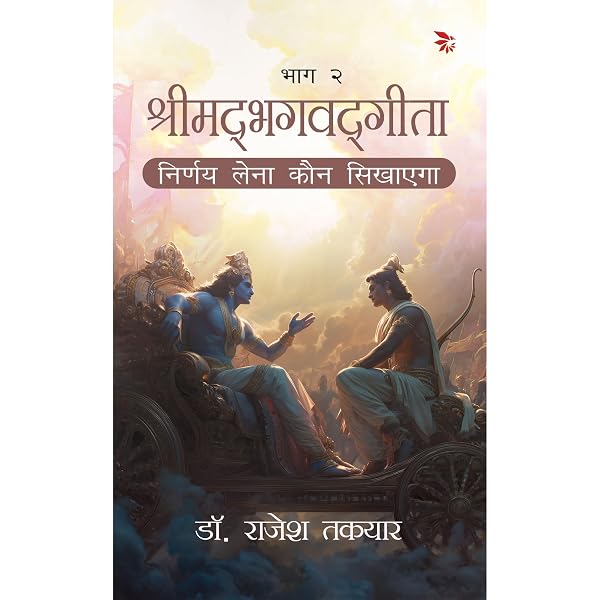
Nasato vidyate bhavo nabhavo vidyate satah. (Shrimad Bhagavad Gita, Part Two (Shrimad Bhagavad Gita, Part Two'Who will teach to take decisions')
That is, that which is actually false, which rests only on momentary, changeable and borrowed existence, does not have a permanent form. And that which is true, never has an absence. It neither fades away with time, nor is destroyed by change. Body, circumstances, happiness and sorrow, These are true in practice, but in the ultimate sense they are never destroyed. That which is unreal is not the absence of that which is true. Sat Is. What is unreal does not exist; There is no absence of what is real.
devotee to god free from limited imaginationThe devotee often captures God in some form, name or feeling. He is not only 'Are'but the 'to be' The true devotee does not long for God, but prepares to merge with God. When the devotee understands that Brahma is neither real nor unreal, he does not say, 'I know God', but he realizes that preparation to merge Does. When the devotee understands that Brahma is neither real nor unreal, then his ego starts falling. He doesn't say that'I know God', rather it experiences that'Without God I am nothing' The greatest truth of lifeBeyond definitions When the devotee accepts that it is not necessary to understand everything, then he begins to feel peaceful from within. True knowledge is not knowing anything, but recognizing the foundation on which everything rests.
True knowledge is not knowing anything, but knowing the foundation on which everything rests.Brahm is not some distant entity, but the origin of every experience. Liberation comes not from adding new experiences, but from letting go of false identities. When the devotee understands that he is not the body, the mind or the thoughts, but a part of the consciousness that knows all, then he experiences nectar. from giving up mistaken identity Is available. When the devotee understands that he is not the body, the mind or the thoughts, but a part of the consciousness that knows all, then he experiences nectar.This nectar is not available after death, but during life itself. Fear diminishes, the grip loosens and peace becomes stable. This state is Brahmagyan.
What is worth knowing is not a thing; He is the One without whom nothing can be known. (Excerpts from the book Where is the biosphere?, author Dr. Rajesh Takyar)
Was this essay helpful?