Even after working hard, we sometimes feel that we are standing in the same place. The day has been busy and we are tired, yet the work that matters h
Read essay →5 October 2026 · Dr. Rajesh Takyar
Radha’s Longing: The Depth of Love
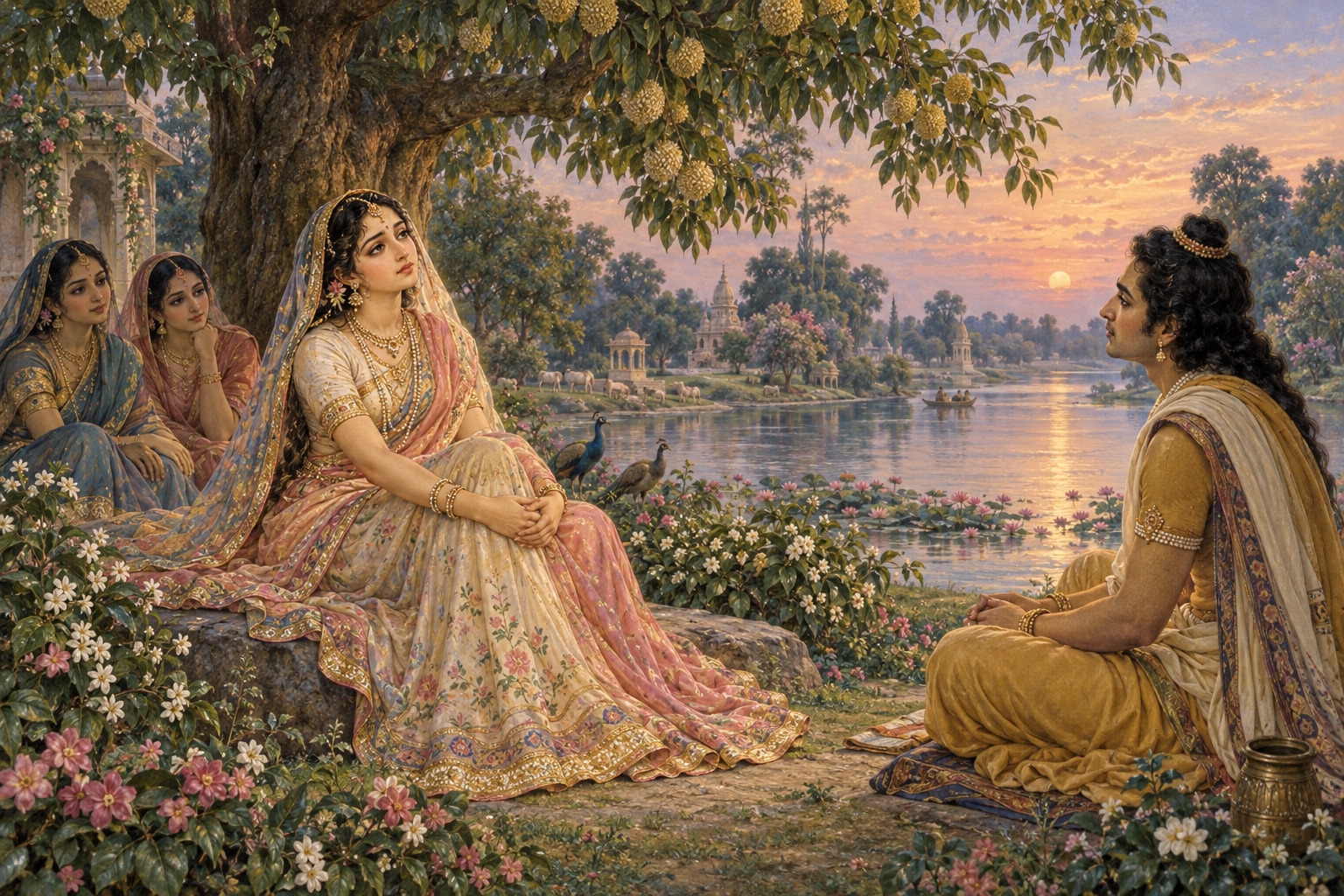
Sometimes even the most beautiful scenes in life cannot comfort the heart. The river continues to flow, flowers bloom on the trees, and the moon scatters its light, yet the heart searches for one particular presence. Without that presence, everything feels incomplete. In the chapter ‘Radha’s Lament Before Uddhav’ from Dr. Rajesh Takyar’s book ‘Krishna Ki Radha’, we encounter just such a state of love. Shri Radha has the memories of Vrindavan before her, the affection of her companions, and abundant splendour. Within her, she waits for Krishna to return.
Reading this passage, the mind repeatedly pauses over a question: how can the absence of someone beloved become so profound that the meaning of the world changes? Remembrance, service, generosity, and a longing for truth flow together in Radha’s lament. Her heart is distressed as she waits for Krishna, yet she offers affection to Uddhav, who has brought his message.
Waiting Has Its Own Time
At the beginning of the chapter, Shri Radha lies upon the ground, unaware of her surroundings. The book connects this state with her meditation on Krishna’s feet. For her, waiting has moved beyond the ordinary succession of day and night. The clock continues to advance, but the heart’s time pauses over news of the beloved. Every passing moment deepens the same longing. When Krishna returns, the memories in which she is immersed will be touched by life once again.
When we await someone’s arrival, we seek more than their physical presence. We also seek the affection, conversation, and trust associated with them. In Shri Radha’s experience, Krishna is the centre of her life, the light through which everything acquires meaning. Her separation therefore touches the whole world. The Yamuna, the kadamba trees, the flowers, and the moon all become companions to her remembrance.
A line in the book expresses Shri Radha’s feelings with particular beauty: “The final name of love is not union, but living through remembrance.” Here, remembrance is the direction in which the heart remains continually awake. The hope of reunion sustains that direction. Krishna is not present before her eyes, yet his name and the contemplation of his feet remain within Radha. This continuing relationship gives her longing the depth of devotion.
Affection Within the News
Hearing Uddhav’s praise, Shri Radha regains awareness. Seeing before her someone whose appearance resembles Krishna’s, she asks who he is and why he has come. Her questions then turn to the well-being of Krishna, Baladev, and Nand Baba. Even amid her own pain, she wants to know how those dear to her are faring. This small detail reveals the breadth of Radha’s love. Every relationship connected with Krishna is an object of her affection and respect.
Uddhav introduces himself and explains that Krishna has sent him with good news. Simply hearing this matters greatly to her troubled heart. When speaking to someone in sorrow, we sometimes want to offer advice immediately. In this passage, news comes first, and conversation opens afterwards. Knowing that the beloved is well gives the mind a foundation from which to listen. Our first responsibility in the presence of sorrow often begins with attentive presence and trustworthy words.
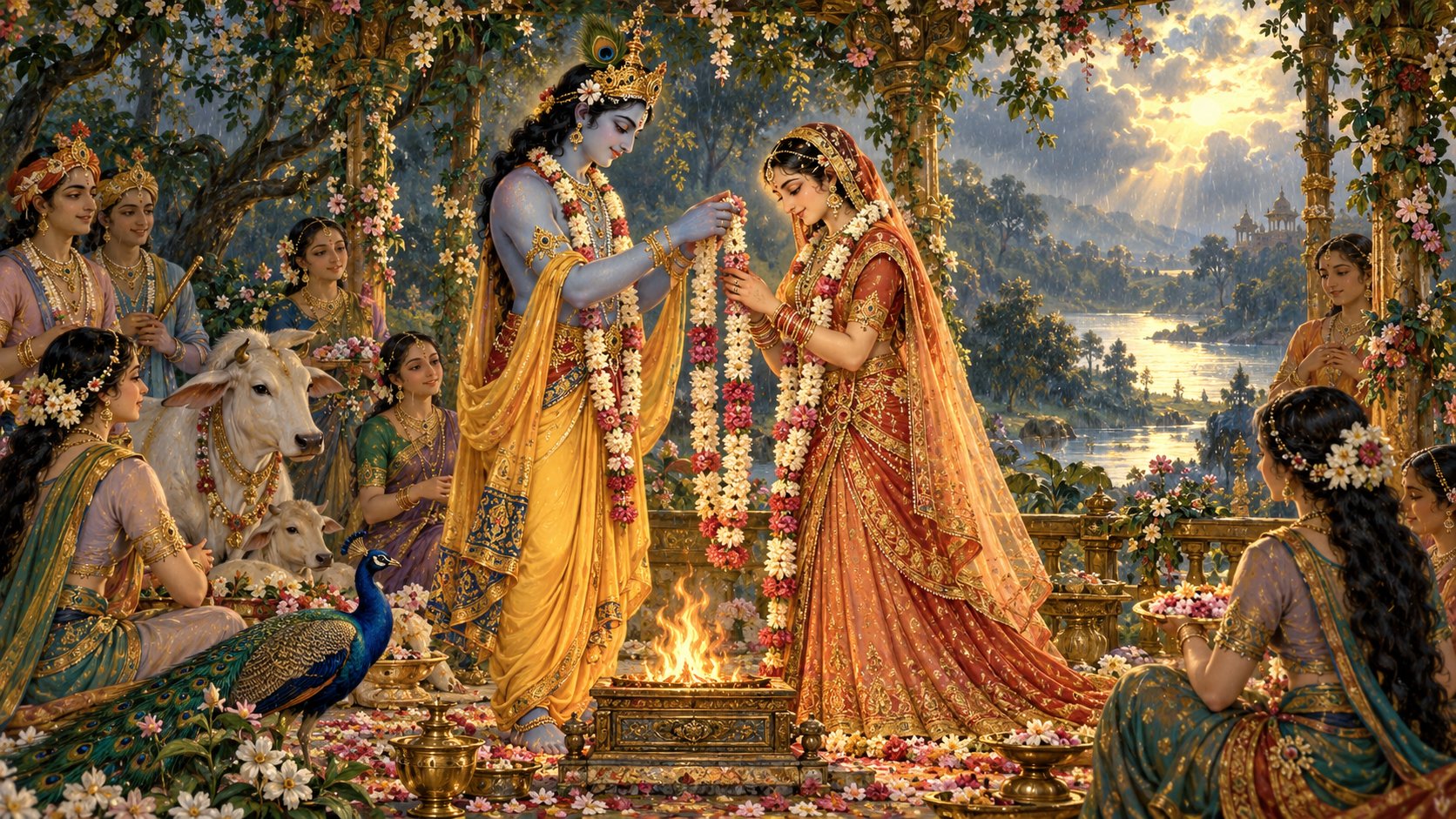
Radha’s next question is the most intimate question of her waiting: will Govind return to Vrindavan? Will she see his face again? She remembers the moments they shared and recalls her acts of service. Applying sandalwood, placing a garland around him, and beholding her beloved are occasions of joy in her life. These memories carry both her happiness and her wish to serve him. The language of her love becomes the language of care and surrender.
Every Part of Vrindavan Holds a Memory
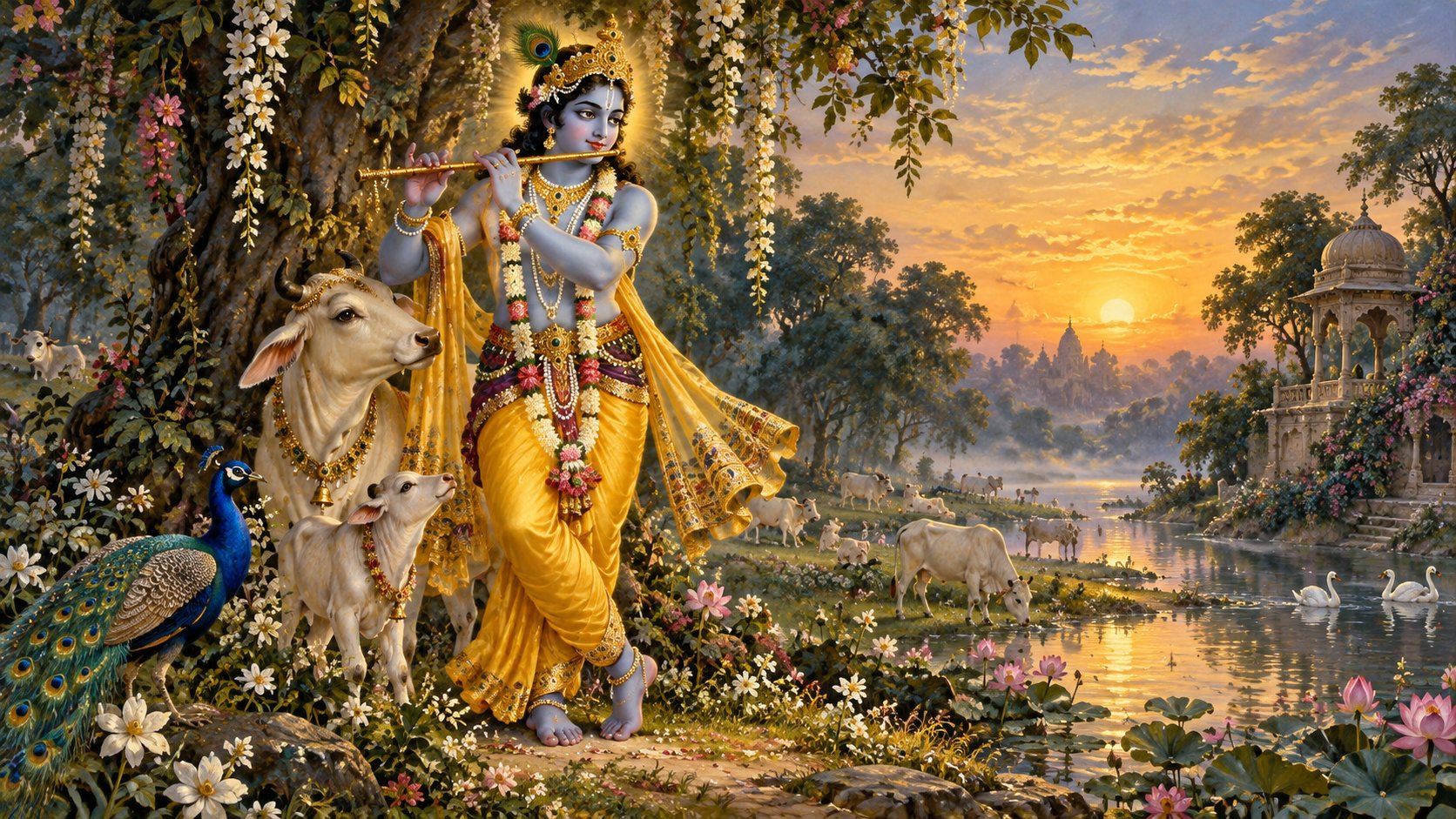
Shri Radha asks about the bank of the Yamuna. The fragrant breeze, the kadamba trees, the voices of the cuckoos, and the land of Vrindavan enter her questions. The reader senses that places where time has been spent with someone beloved remain alive within the mind. For Shri Radha, every part of Vrindavan is filled with experiences shared with Krishna. Her gaze longs to touch those experiences once more.
Asking about these things thus becomes another way of asking about the beloved. The fragrance of flowers holds moments spent with Krishna. Moonlight carries the memory of union. His companionship lives in the shade of the kadamba. The outer world joins the relationship within the heart and becomes a landscape of feeling. The book’s description shows how deeply love can change the way we see. Even a familiar scene can carry the presence of another life.
Then Shri Radha’s question draws all these descriptions to a single point: if all this splendour remains, where is the lord of her heart? In this question, we hear the heart of her longing. The world’s beauty is before her, but its beloved centre is far from sight. We too may sometimes be surrounded by comforts and still feel the absence of a relationship. Such an experience gives us an opportunity to recognise the different values of possessions and closeness in our own lives.
The Limits of Consolation, the Power of Listening
Uddhav asks Shri Radha to be patient. He reminds her of beautiful garments, ornaments, sandalwood, flowers, and rest. His words express a wish to care for her. He wants her distress to ease and her body to be tended. Yet the conversation also reveals that deep sorrow cannot be fully met through outward arrangements alone. Offering someone comfort may be necessary; listening to their experience is equally necessary.
Before Shri Radha’s suffering, Uddhav falls silent and bows at her feet. This silence contains a humble acknowledgement. Even a knowledgeable person cannot immediately grasp the full depth of another’s experience. When we recognise the limits of our understanding, listening can become more truthful. Uddhav’s pause teaches a simple practice of compassion: slow the urge to answer and allow the person before you to express what is in their heart.
The book suggests that Uddhav’s own understanding of consolation is changing before Radha’s love. He arrived with a message; he has now become a witness to an experience. To understand Radha’s distress, he must listen both to her words and to her waiting. Sometimes the pause between words reveals a truth that a lengthy teaching cannot reveal.
Generosity Amid Sorrow
A particularly beautiful turn in the chapter comes when Shri Radha begins to give Uddhav gifts. Ornaments, garments, jewels, and many precious objects become expressions of her affection. With an open heart, she gives even things associated with memories of Krishna. The book sees both generosity and the sorrow of separation in these gifts. Radha’s suffering does not dry up the spring of affection within her. Krishna’s messenger becomes a recipient of her respect and grace.
She feeds Uddhav, honours him, and offers auspicious blessings. Here we see a remarkable quality of love: the ability to make room for another even within one’s own sorrow. Radha’s heart is filled with waiting, yet it still has space to welcome a guest. Small acts of compassion may also be possible during our own difficult moments. Listening to someone, inviting them to sit with respect, or making time for them can keep the warmth of relationships alive.
Beyond material gifts, the passage describes blessings of devotion and knowledge. Shri Radha grants Uddhav unwavering devotion to Krishna and the spirit of service. This deepens the spiritual meaning of the chapter. The highest spirit of giving awakens a wholesome direction within another. When faith, humility, and love are nurtured in someone’s life, a new meaning of abundance opens. Radha’s grace turns our attention towards this inner wealth.
Love Needs Truth
After offering honour and gifts, Shri Radha returns to her essential question: will Krishna truly come? She wants an answer free of deception. Her distress is so deep that gentle words might cover it for a while, but her heart seeks a real assurance. That is why she speaks of the greatness of truth. Her insistence in the book is clear: “There is no dharma greater than truth, and no sin greater than falsehood.”
This insistence carries the dignity of love. Radha expresses her pain with complete honesty and wants to hear the same honesty in return. Trust in relationships rests on this foundation. When someone shares their sorrow with us, promises without a basis may condemn them to an even longer wait. Affection also means taking responsibility for what we say. We should state clearly what we know and remain humble where we lack confirmation. This attentiveness to truth gives compassion a lasting foundation.
Uddhav replies that Krishna will come and that he will go to Mathura and tell him everything. Within the narrative, this assurance answers Radha’s question. Yet the reader notices that Radha asks Uddhav to remain and listen. She wants her condition to be remembered. Conveying a message faithfully requires more than remembering words. It also requires understanding the seriousness of the heart from which those words have come.
The Flame of Service Within Remembrance
Radha tells Uddhav that moments spent serving Krishna’s feet, describing his qualities, meditating on him, and worshipping him were the foundation of her joy and well-being. Remembrance and action meet in this statement. Her love for the beloved entered her conduct. Her hands offered service, her words described his qualities, and her mind rested in contemplation. In this way, devotion connects the various activities of life through a single direction.
In separation from Krishna, those same memories awaken pain. Shri Radha recalls the groves, lakes, and places of their meetings. Behind each name lies an experience; within each experience is Krishna. Her speech repeatedly reaches towards the same beloved. The chapter reveals the concentration of her love. Our minds are often divided among many desires; Radha’s mind is steady in her beloved. In a devotional reading, this constant remembrance expresses the depth of her surrender.
When drawing inspiration for our lives from this divine passage, we should preserve its dignity. The book presents Radha’s absorption as the culmination of devotion. The everyday inspiration it offers is to live love, truth, and service with awareness. We can remember someone we await, wish them well, and make our conduct gentler. It is possible to keep the flame of faith alive in the heart while attending to our responsibilities.
Longing Reveals the Depth of Love
After reading ‘Radha’s Lament Before Uddhav’, one call from Radha remains in the mind: will my Kanha return? This call holds all the beauty of memory, all the distress of waiting, and all the tenderness of trust. She awakens through news of Krishna, remembers the world connected with him, and offers grace to his messenger.
The chapter makes us humble in the presence of love. Listen to sorrow with your full attention. Offer assurance on the foundation of truth. Let affection enter your conduct when you honour someone. This journey through Shri Radha’s longing reveals the relationship between compassion, generosity, and devotion. The call from her heart leaves a quiet question within the reader: how sincere are my remembrance, my truth, and my service towards what is most dear in my life?
Was this essay helpful?