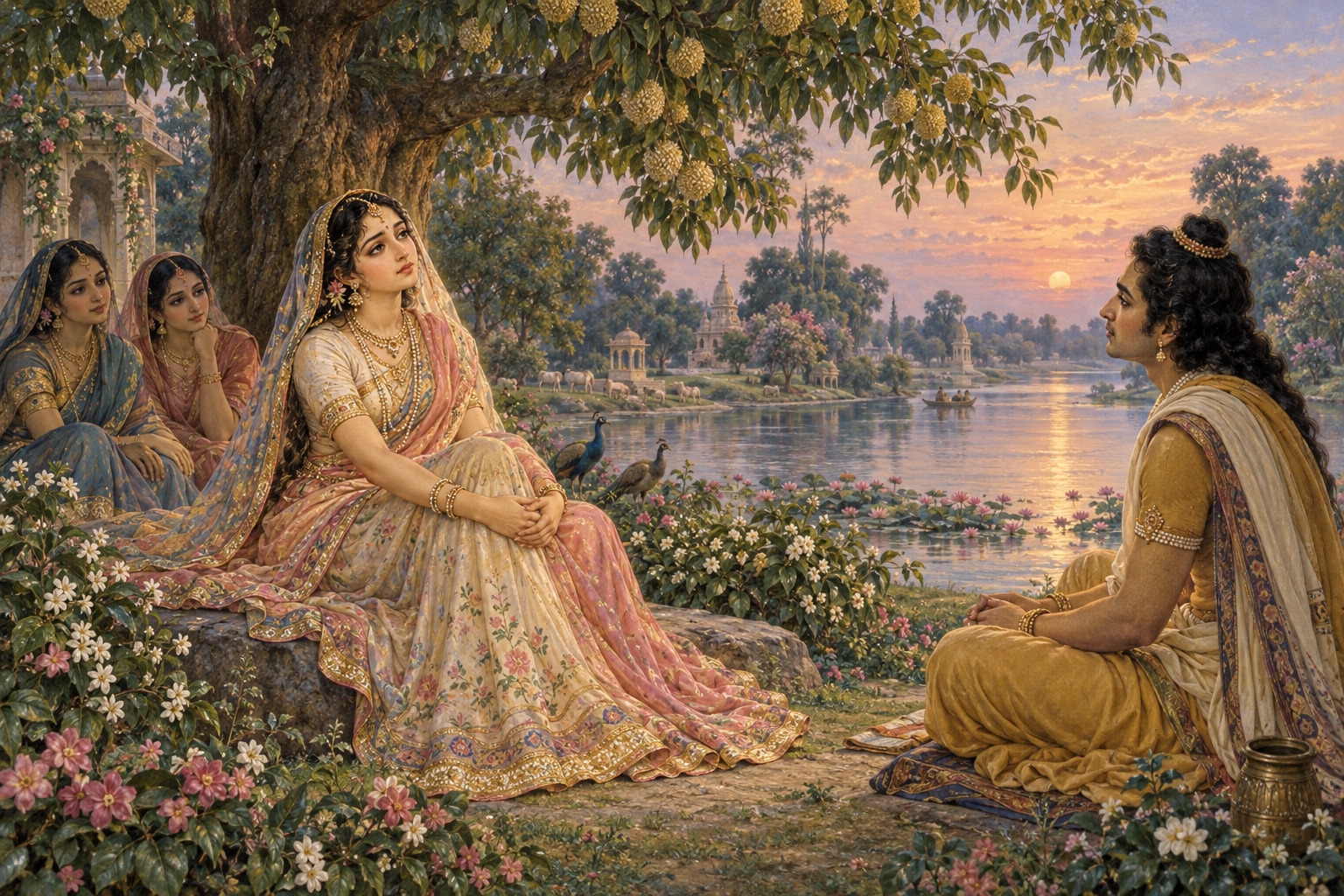
Sometimes even the most beautiful scenes in life cannot comfort the heart. The river continues to flow, flowers bloom on the trees, and the moon scatt
Read essay →5 October 2026 · Dr. Rajesh Takyar
Arjuna's Dilemma
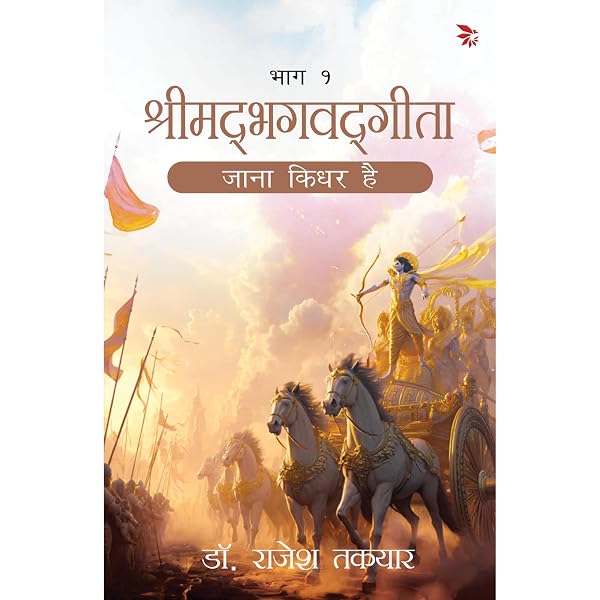
Some decisions are difficult to act on even when we think we know the answer. What stands before us is not merely a task, but people we love, old memories and fears about our relationships. Arjuna's distress brings us close to this deeply human situation. The battlefield episode also gives us an opportunity to recognise our feelings and prepare ourselves to make a decision.
A Question Among Our Own People
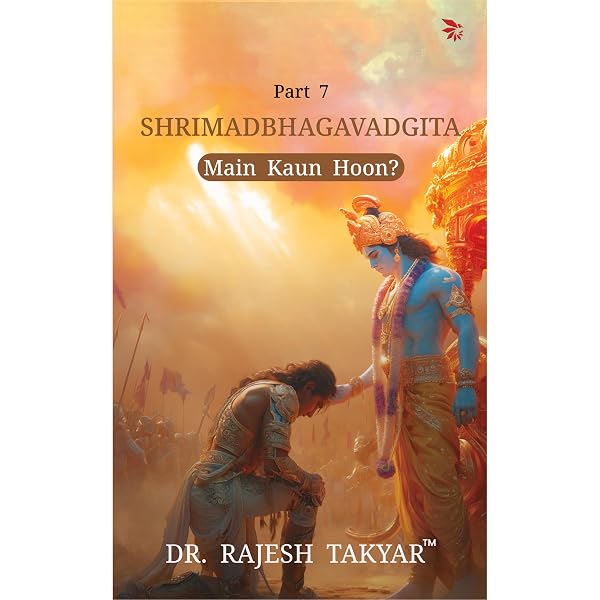
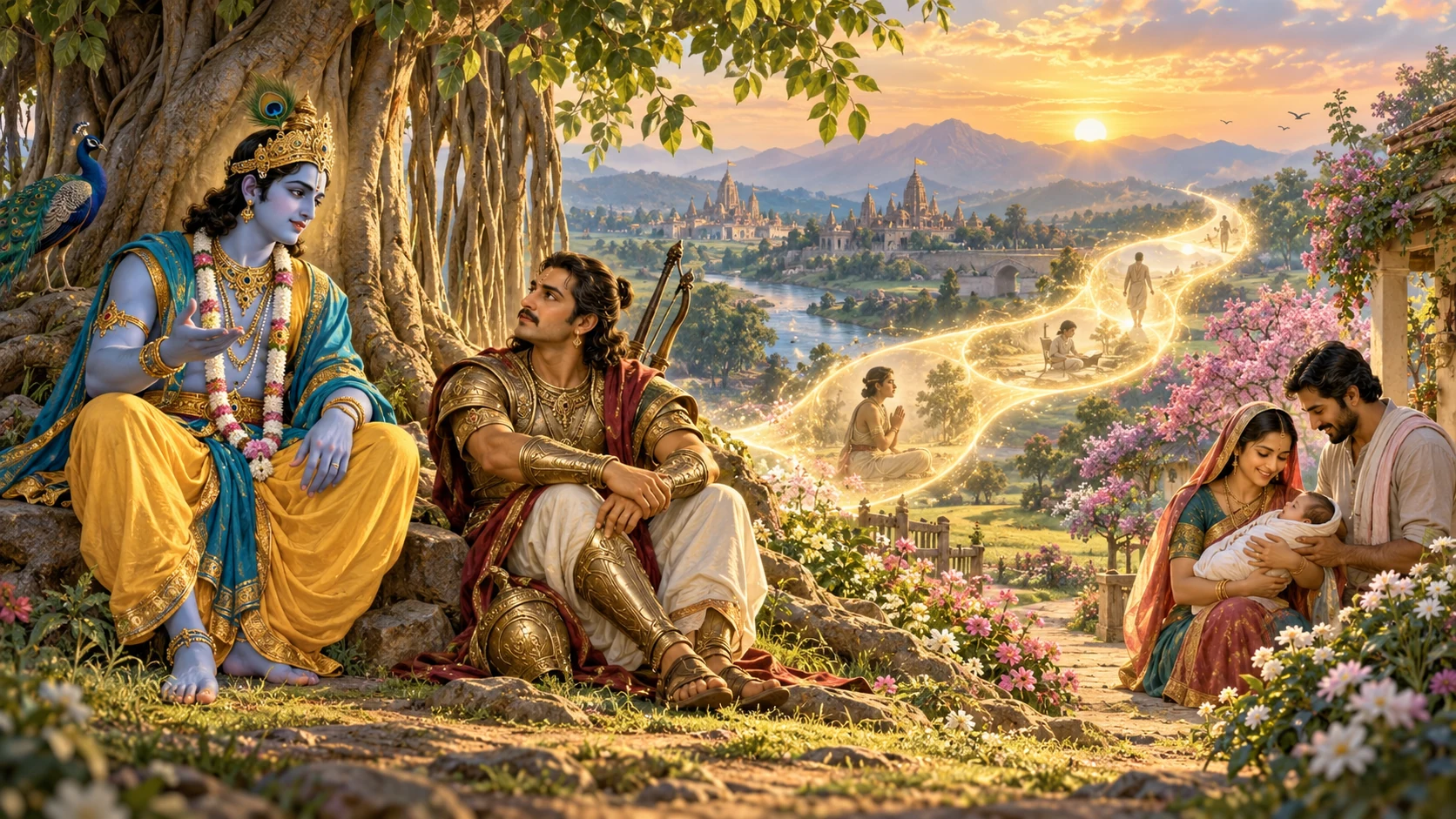
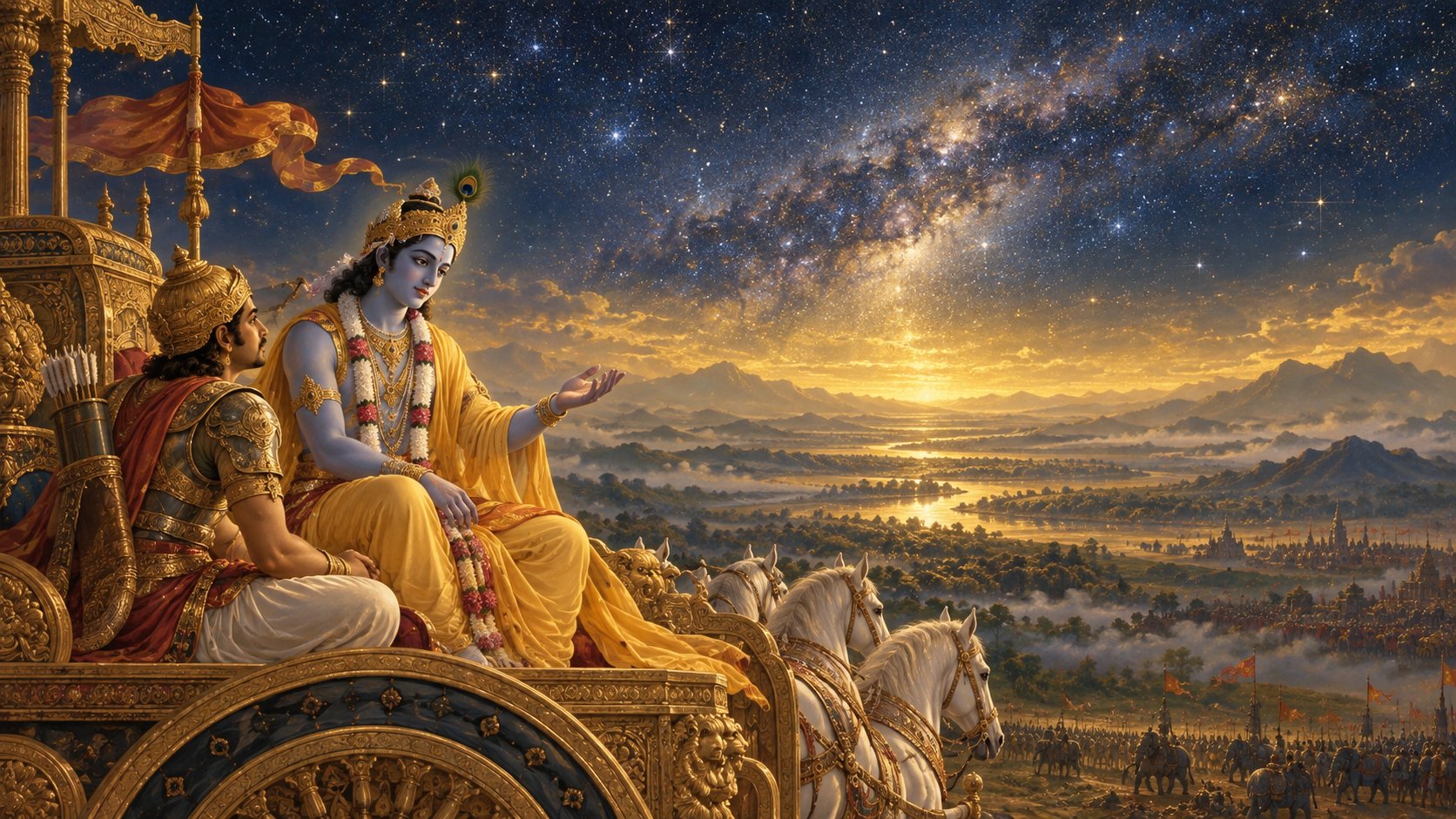
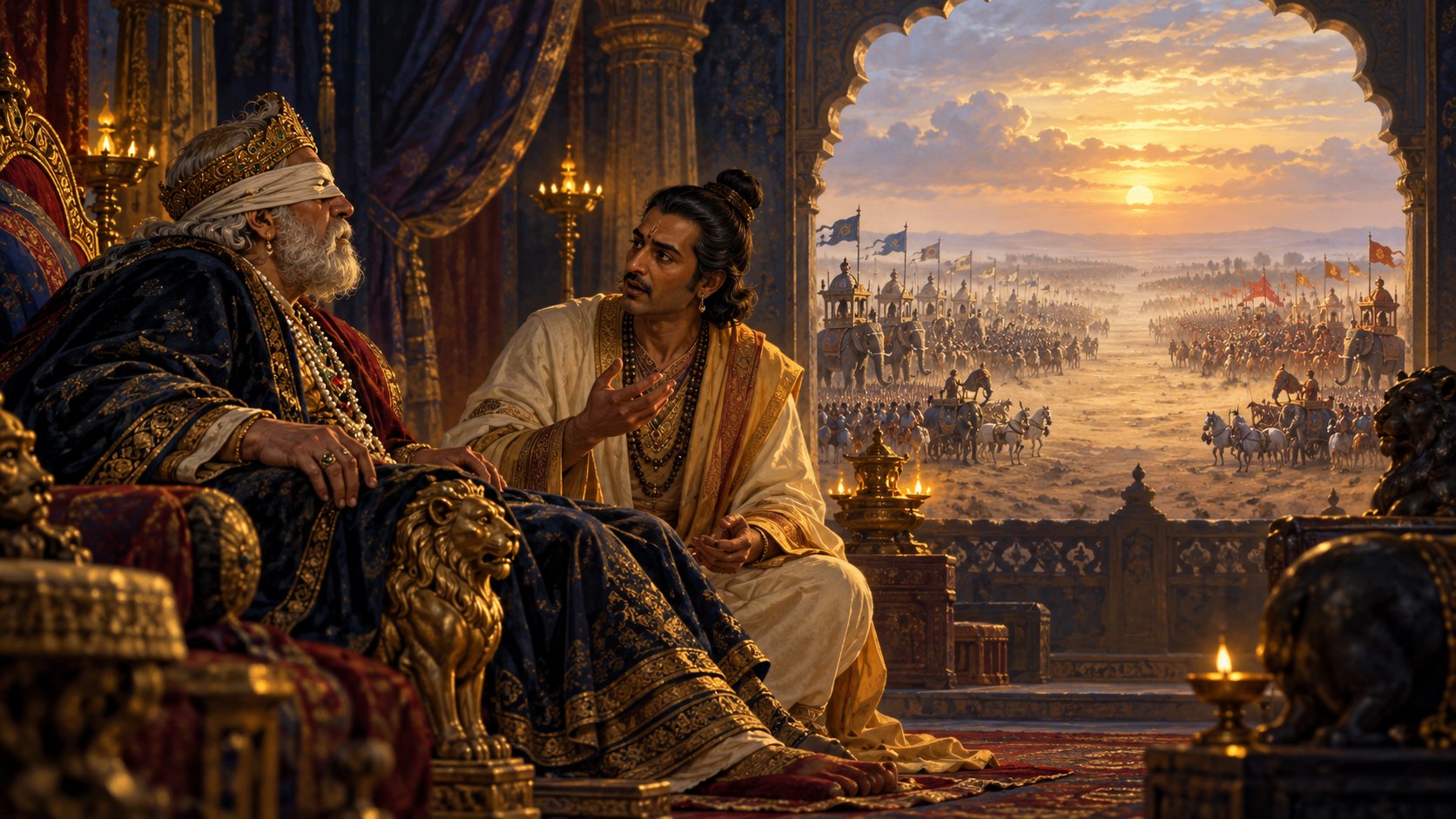
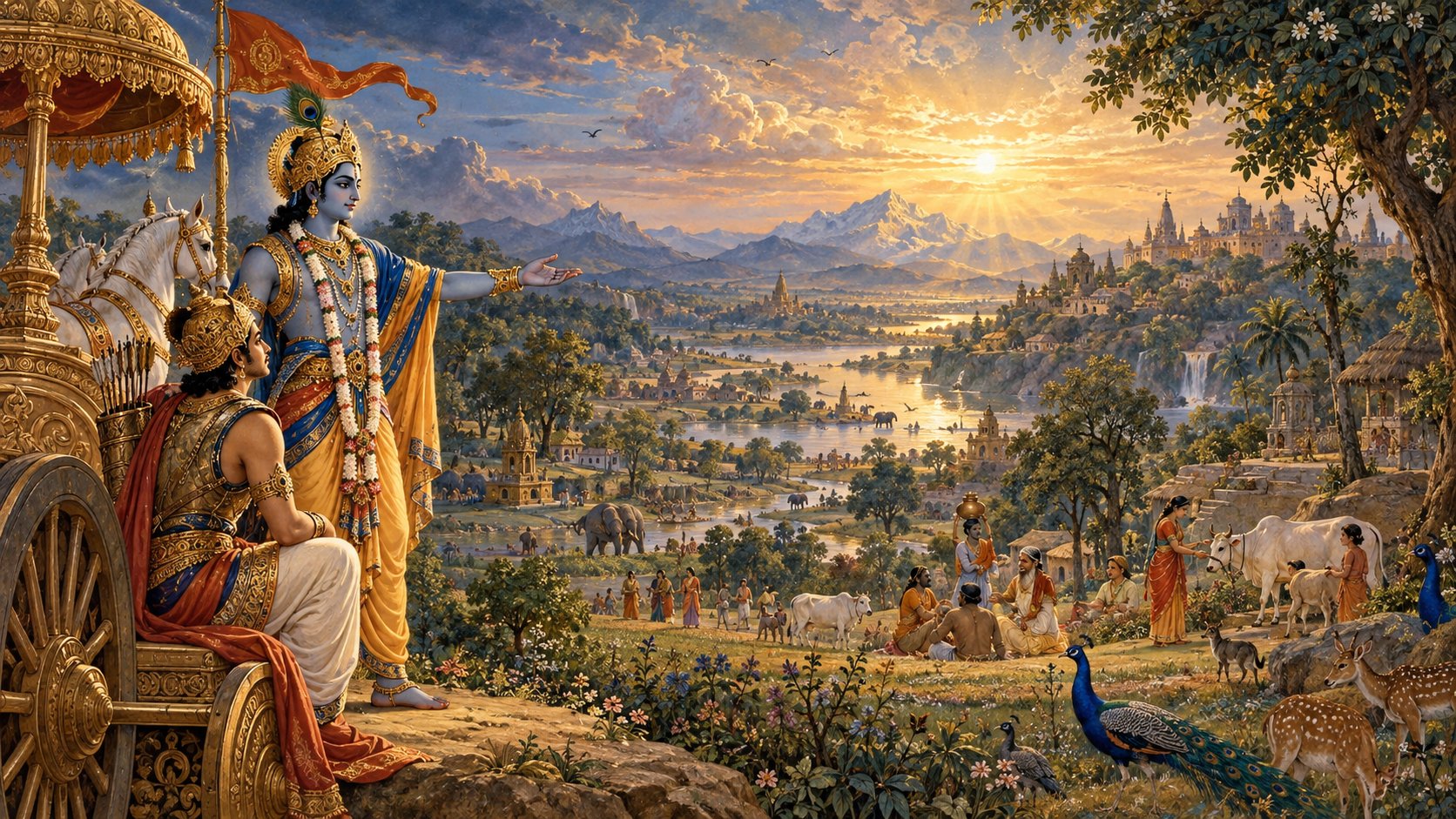
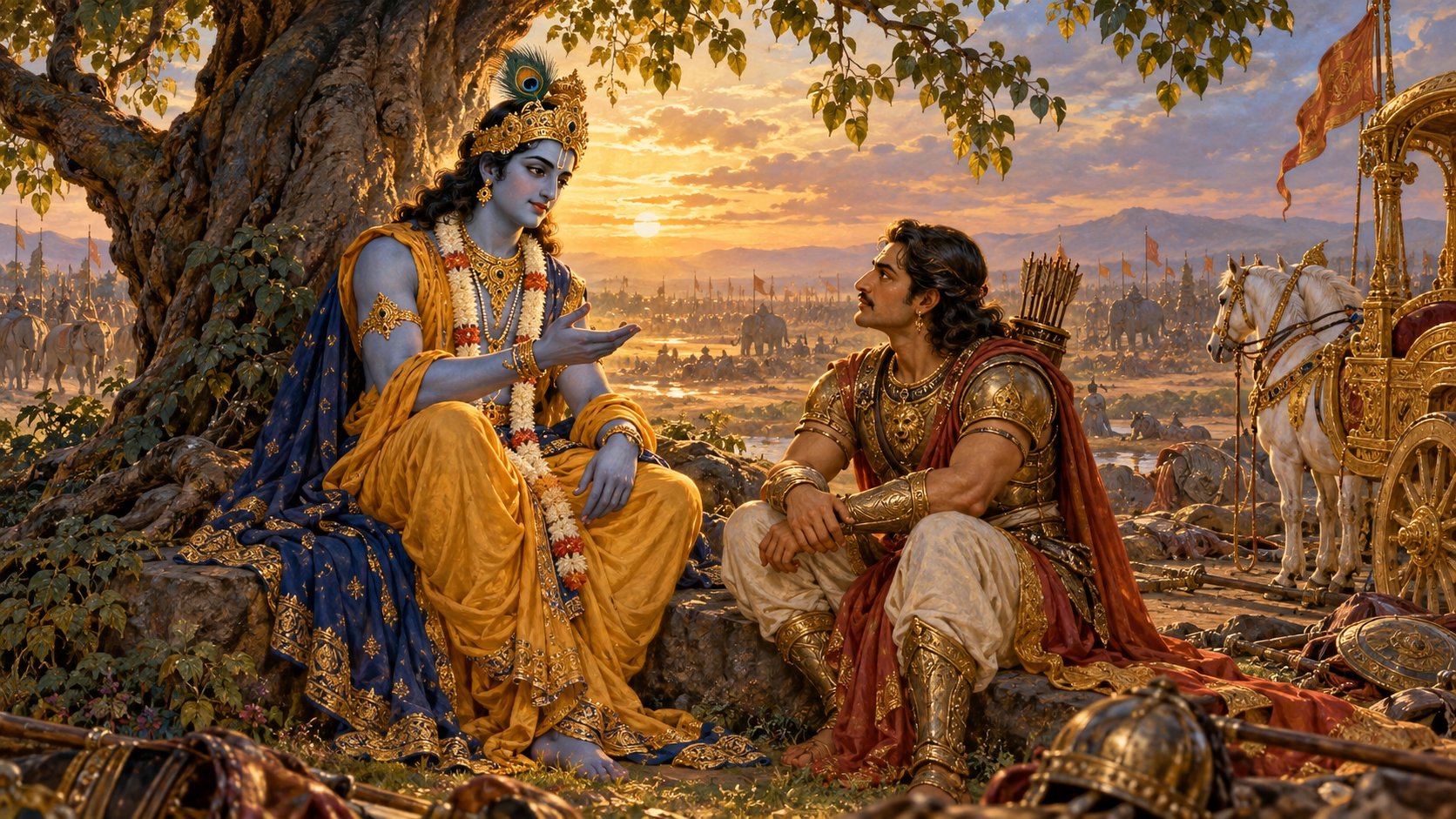
In this passage, Sanjaya very thoughtfully reminds King Dhritarashtra that Arjuna is the son of Pritha, the wife of the king's elder brother. Before the battle begins, Arjuna is looking at all his relatives on the battlefield. Those standing before him, ready for war, are his own people. Some are maternal uncles, some are like brothers or sons, some are grandfathers and elders, and others are teachers, friends, fathers-in-law or well-wishers. There is no stranger here. Facing the king's sons is Arjuna, the son of Pritha, the widowed wife of the king's brother. The person standing opposite them is a member of their family.
What Arjuna encountered was exactly what had been anticipated. He saw fatherly elders, Grandfather Bhishma and his teacher Dronacharya standing on the battlefield. This was a profound emotional shock. He felt that he was about to raise his weapons against his own guides. He saw his uncle Shalya, his cousins Duryodhana and Dushasana, his nephews, and many others who were like sons and grandsons to him. Then he looked at the warriors on his own side. The people on both sides were familiar to him. It was as though he had awakened from sleep: this was more than an external conflict; an entire family stood divided against itself. In the author's reading of Krishna's perspective, Arjuna should have awakened to this much earlier, when he went into the forest to practise austerities and acquire powers.
We sometimes close our eyes even to our own actions. We say that something happened unknowingly, that someone asked us to do it, that we did it for another person, or that particular circumstances made us act. There are countless explanations. But look carefully: are they reasons, or excuses? Drona and Bhishma too, the author suggests, had become caught in this sweetness of self-justification. Lord Krishna does not take someone's hand and make that person act. Each of us performs our own actions. Without understanding, however, we may misunderstand what action and responsibility mean. Through the words of the Shrimad Bhagavad Gita, Krishna explains this to us. We must learn, understand and put that understanding into practice. The question is whether we will use this lifetime fully. Within the spiritual outlook of the book, learning to live with this awareness opens the way beyond repeated birth and death.
Sanjaya's underlying appeal is easy to understand: O King, if you can still stop this war, stop it. He is more than Dhritarashtra's minister, servant or charioteer; he is also one of his greatest well-wishers. He is trying in every possible way to prevent the battle. Whether he says “Arjuna,” “the son of Kunti” or “the son of Pritha,” his purpose is to protect the kingdom. By awakening the king's feelings, he hopes to avert war. He can see the consequences clearly: the destruction of the Kaurava family and the deaths of the friends, relatives and allies standing with them. He is trying to save them from that outcome.
Recognising Our Feelings
Sometimes compassion arises when the suffering that lies ahead becomes visible before us.
Seeing his own people standing ready for battle, Arjuna's state of mind has certainly become unsettled. He realises that he has come to this battlefield to fight those who belong to him. The people facing him are his own relatives and companions.
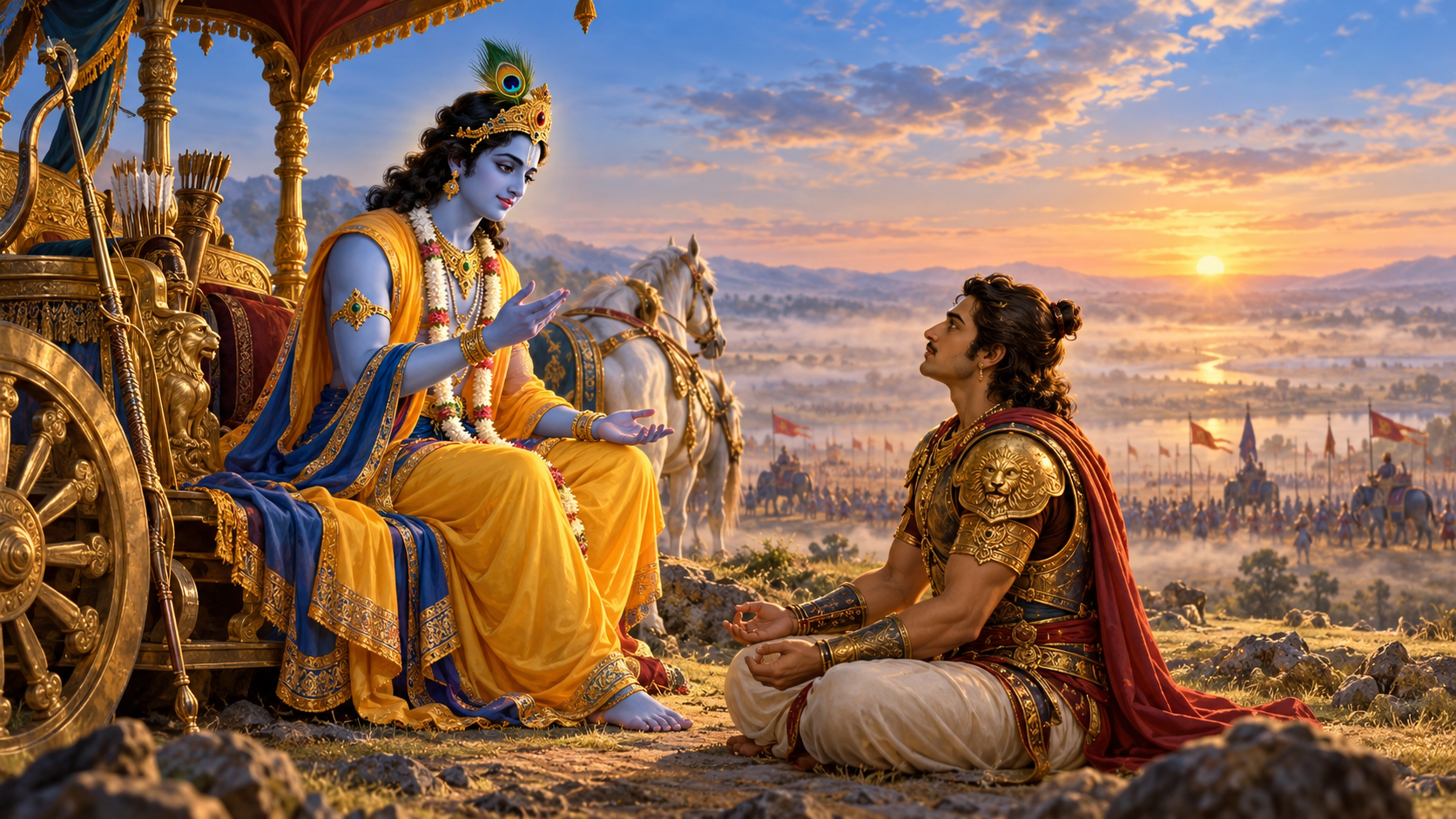
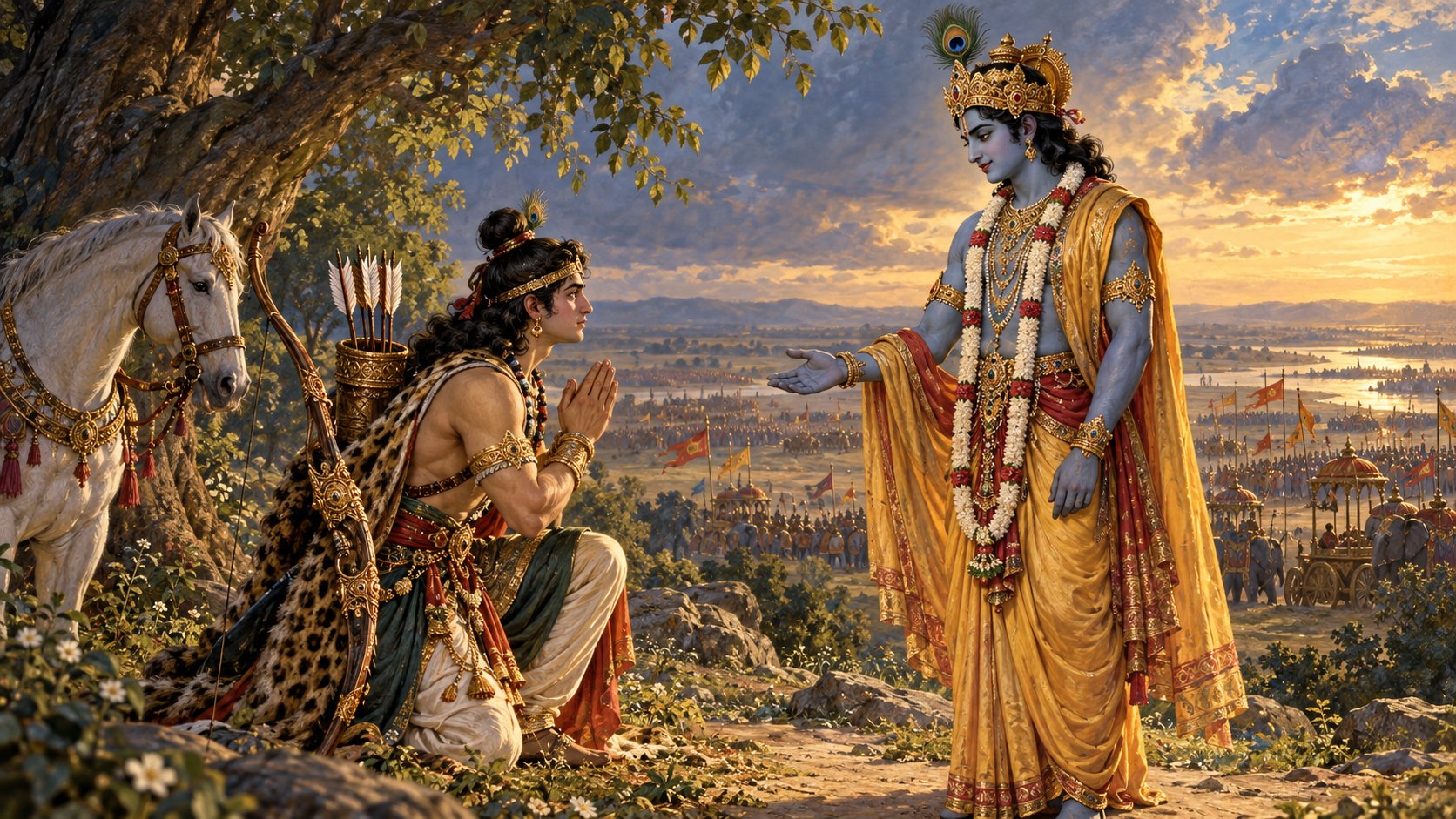
For the first time, the sight of all these friends and relatives makes the full meaning of the war clear to Arjuna: it will take place among his own people. Looking at all his kinsmen, the son of the righteous Kunti is filled with deep compassion. Overcome by sorrow, he speaks to Krishna.
Is what appears before our eyes the whole truth? When the sun visible today disappears as night falls, will we say that it no longer exists, or that it will rise again tomorrow? The author asks us to extend this question to our understanding of people. If the grandfather standing before us appeared tomorrow in another form or another body, would we recognise him? We lack the vision that would allow such recognition. In this spiritual interpretation, the Bhagavad Gita offers a way of developing a wider vision. The people we call mother and father are not the only human beings deserving our care. The author uses the belief in rebirth to ask us to imagine that a stranger who stood before us asking for help might once have been our father. Yet we may have turned that person away. When we recognise someone, we say, “my mother” or “my father”; when we do not, we may treat the person as though they have no life or feeling. How, then, are we to recognise everyone? We need not identify anyone's past. We can simply hold the feeling that everyone belongs to us and we belong to everyone. The passage presents this expansive sense of belonging as a path towards happiness and freedom from the grief tied to narrow attachment.
Looking Within Before Deciding
The brave and fearless Arjuna now becomes overwhelmed as he looks at his own people standing before him, eager for battle. He tells Krishna that his body is trembling at the thought of fighting them. His hair stands on end when he imagines having to kill his relatives. His mouth is drying up, and his limbs are losing their strength.
Earlier, Arjuna had been full of confidence. Now, seeing his loved ones on the battlefield, his heart fills with compassion. He feels emotionally weakened, and that distress becomes visible in his body. He is deeply shaken by the thought of fighting his teacher, grandfather, brothers, nephews, relatives by marriage and friends. Compassion, attachment and inner conflict arise together. The author describes how emotional pain can be accompanied by bodily responses. In Arjuna's case, a great conflict has begun within him, and his strength seems to drain away. As his confidence falters, his body no longer feels dependable. His hair stands on end. In this account, that reaction expresses his agitation and shows how the body can respond when someone is passing through intense inner conflict.
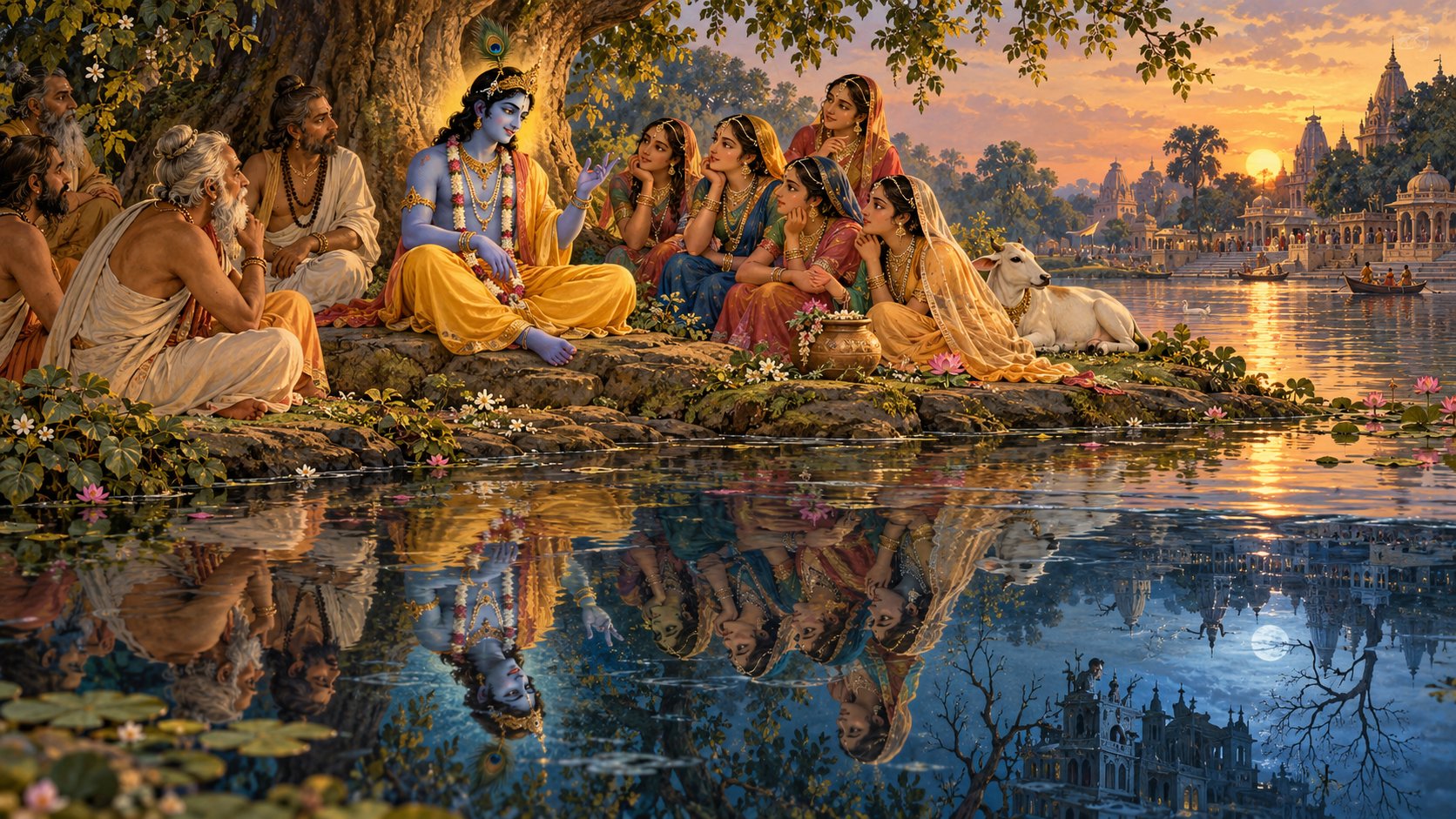
Krishna knew that human beings would face times of great uncertainty. Again and again, they would encounter situations in daily life that felt like battles. At every step they would need wise guidance. The Bhagavad Gita would offer them that direction. By reading it, understanding it and learning from it, they could find a way forward without wandering aimlessly. The author sees this as the purpose of the teaching that Krishna is about to give.
The Shrimad Bhagavad Gita is also a milestone on the journey of human life, showing the destination towards which we can travel. By reading and understanding it, we can learn how to move towards our goal with greater clarity.
A Conversation With Yourself
To bring this episode into your own life, recall a decision that has left you confused. First, write down your actual responsibility in that situation. Then consider which fears, attachments or feelings of guilt are influencing your judgment. Recognising an emotion does not require you to suppress it. Speaking honestly about your state of mind to someone trustworthy and discerning can also help you prepare.
Arjuna's situation teaches us that capable people can become uncertain too. Admitting confusion is not a weakness. What follows should be honest questioning, patience and sound guidance. As our feelings become clearer, we can reflect on our duty while respecting the dignity of our relationships. This is the beginning of the learning that the episode invites.
Was this essay helpful?