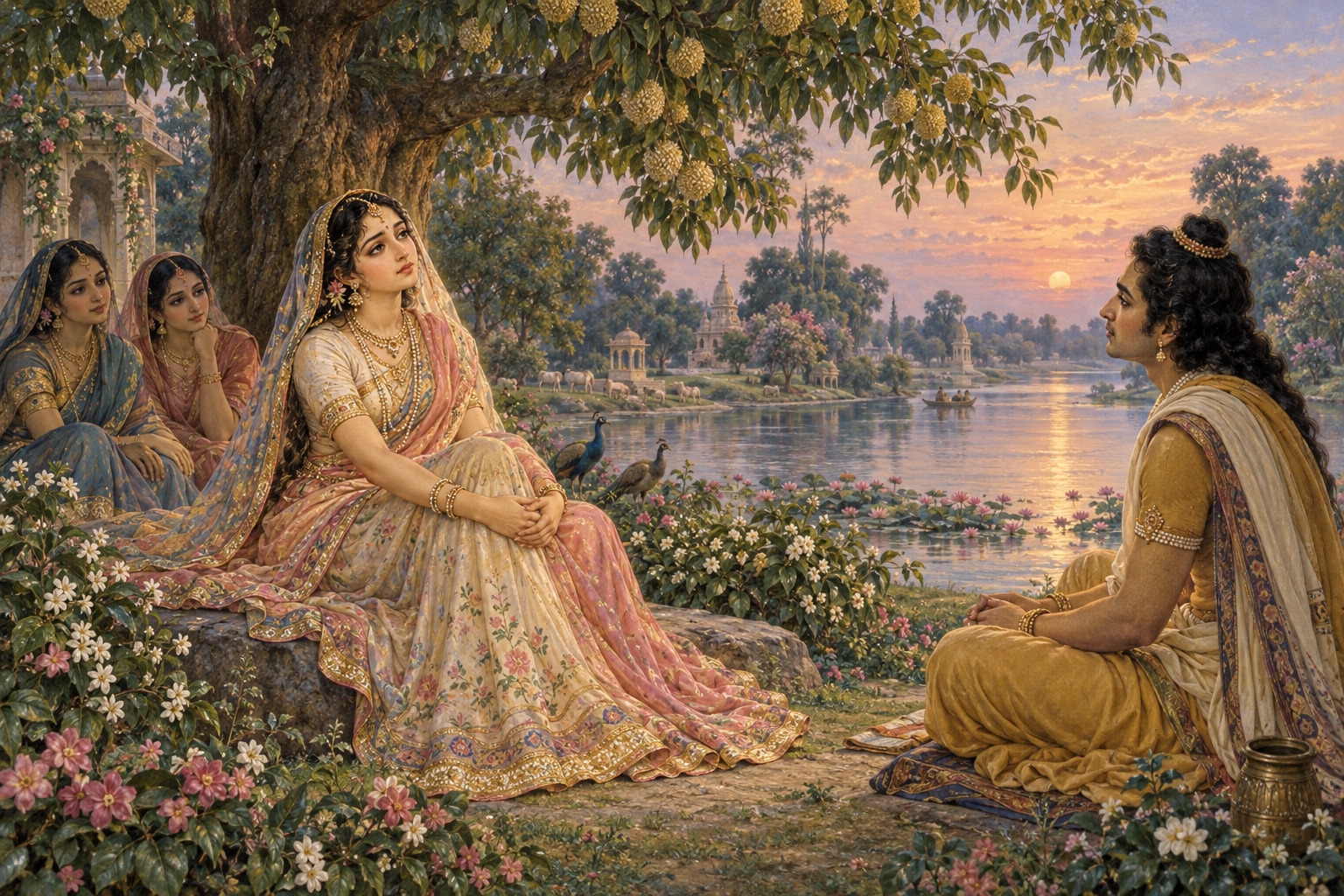
Sometimes even the most beautiful scenes in life cannot comfort the heart. The river continues to flow, flowers bloom on the trees, and the moon scatt
Read essay →5 October 2026 · Dr. Rajesh Takyar
Unity in Diversity
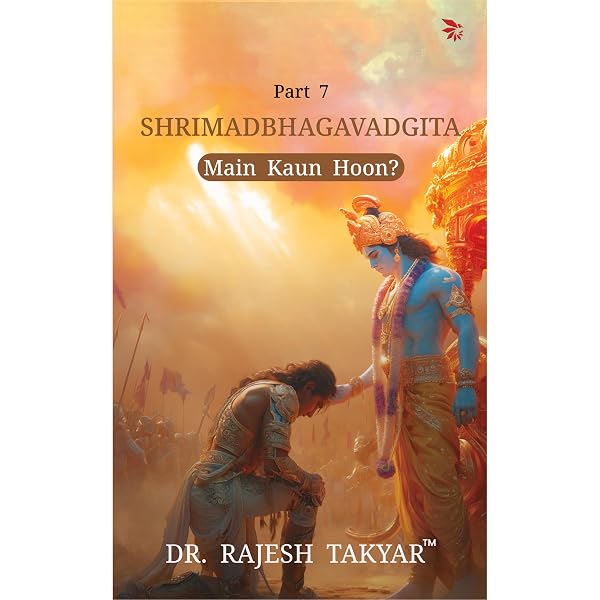
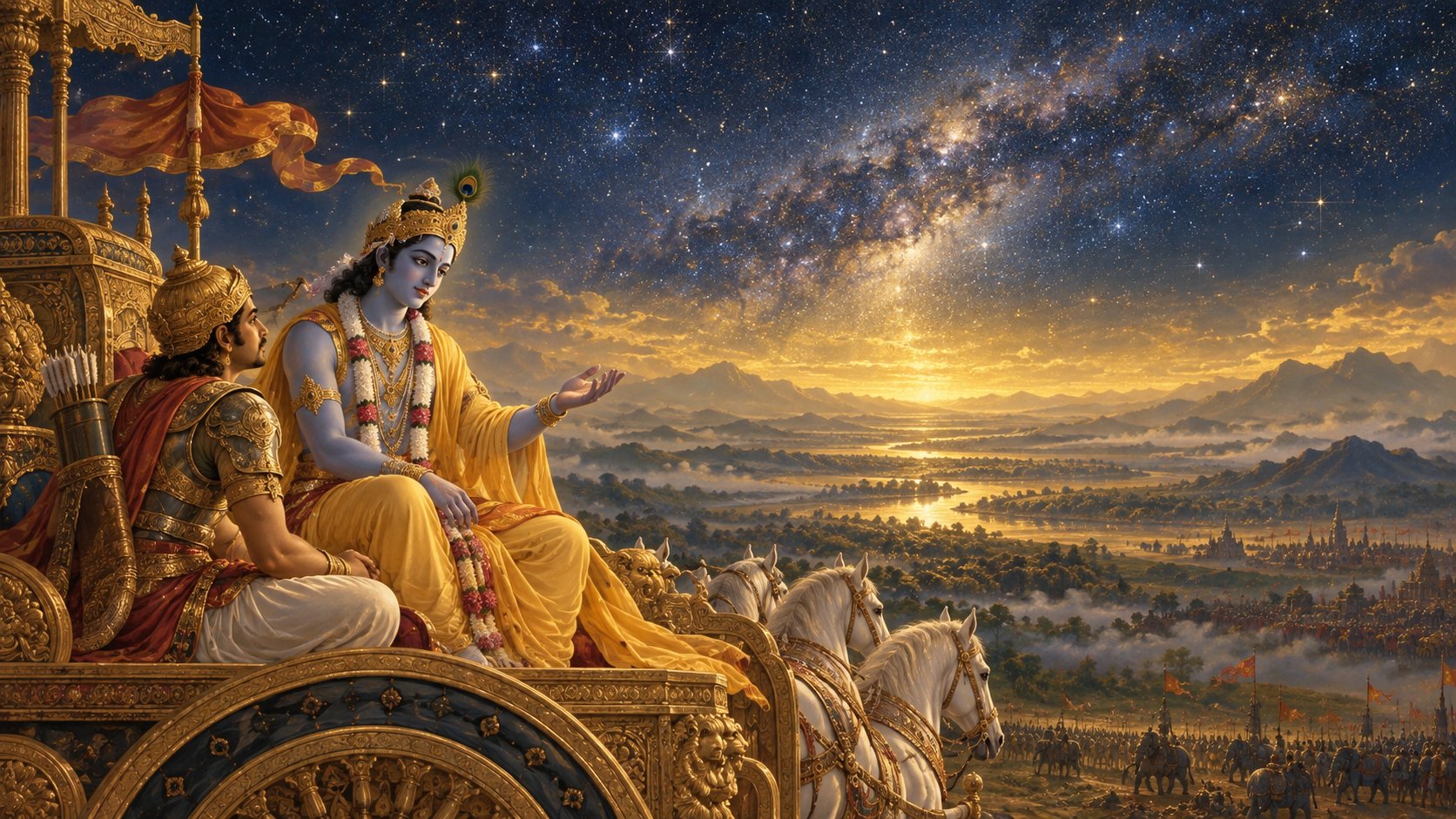
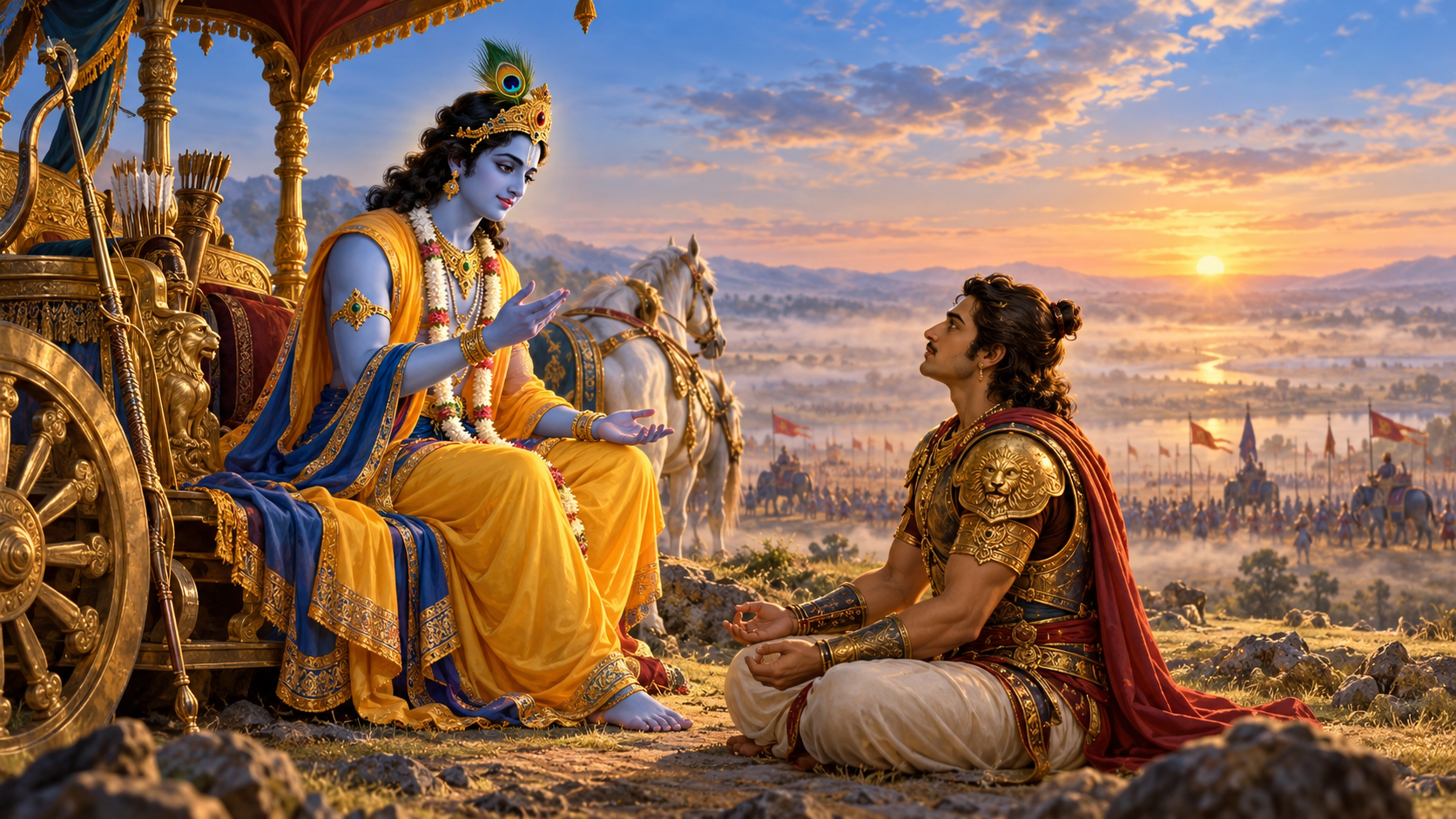
When we look at a necklace, we first notice its beads. The thread holding them together often remains unseen. In Part 7, Krishna uses this simple image to explain the relationship between the world and its spiritual foundation. This reflection asks us to pause and consider the relationships, cooperation and wider existence underlying lives that appear to be independent.
Visible Forms and Their Foundation
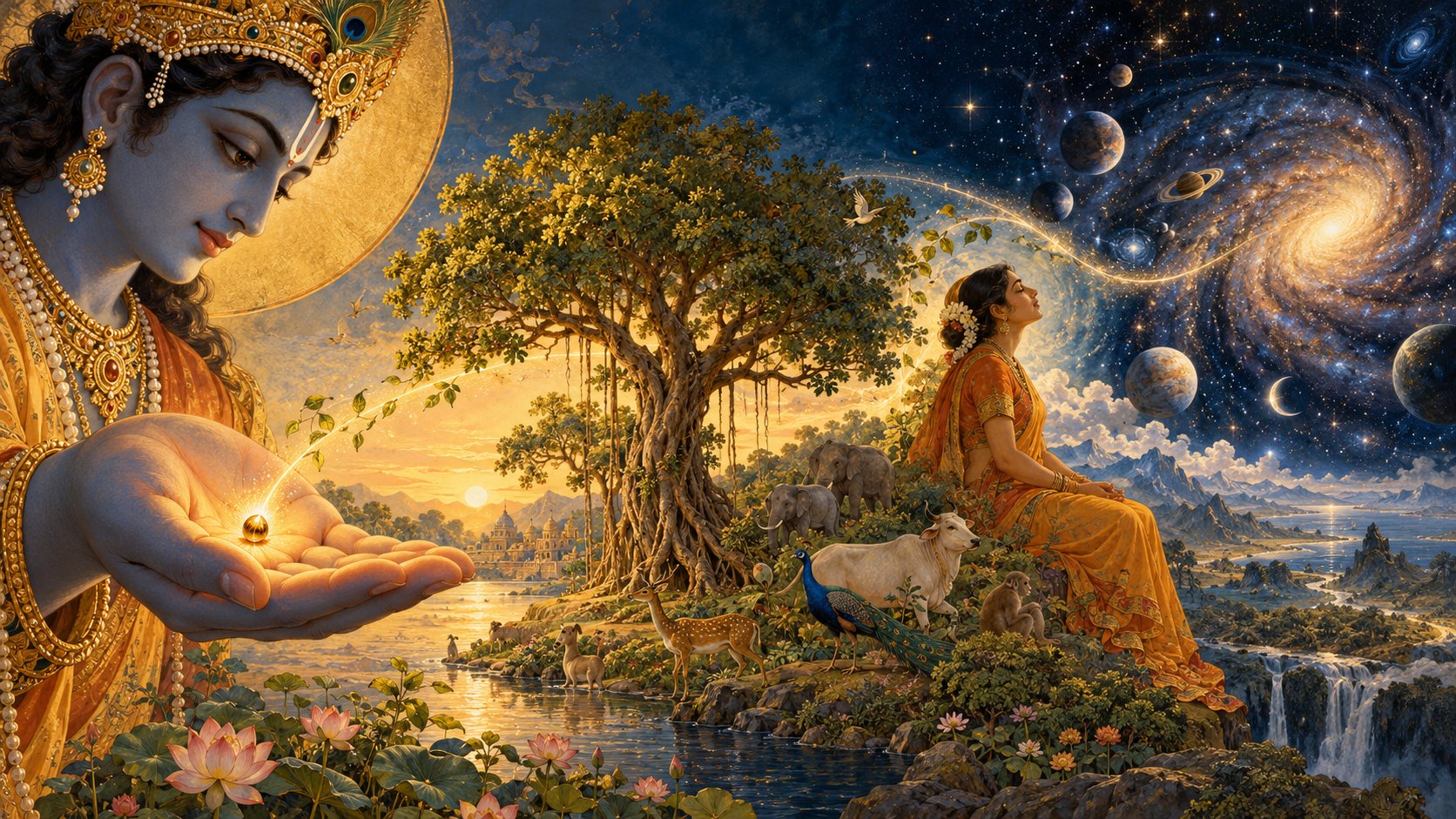
The book's commentary raises a question: if the world is an expression of God's powers, is God separate from those powers, or present within them? It explains Krishna's teaching in this way: I am within all these forms, and I am also beyond them. I am like the ocean, and these elements are waves within Me. Waves arise in the ocean and are inseparable from it, yet the ocean is not limited to its waves. Likewise, I appear in the world through the eight aspects of material nature, while My true being transcends them. I pervade the world and also exist beyond it. Understand, then, that nothing is insignificant, because everything reflects the Divine. From the ant walking on the earth to the greatest star in the universe, everything belongs to Me. God is one, while the forms of divine expression are countless. Think of the whole world as a necklace whose beads are strung on a thread. The beads appear separate, but the thread connecting them remains hidden. In the same way, the beings and objects of creation seem independent, while God is the unseen thread and the consciousness connecting them. We generally see only the beads: forms, names, things and relationships. We fail to notice the thread. The practitioner of karma yoga who recognises that thread comes to understand God. Nothing in the world is meaningless or entirely alone; everything is connected. When someone experiences the presence of God in every being and element, compassion, humility and a sense of equality arise naturally. That person no longer looks at others through divisive distinctions, because the same divine thread becomes visible everywhere.
Through this understanding, we can recognise that nothing is greater than God. Whatever exists comes from God, and even what is unmanifest rests within the Divine. God is the cause of creation and its essence: cause and consequence, seed and tree, beginning and end. Someone who understands this does not become proud, because they recognise every strength and success as a gift of divine grace. They also understand that nothing in the visible world is permanent. The world is God's play, and change is part of its nature. With this knowledge, a person can live and work in the world without becoming entangled in it. They act without clinging to the outcome, trusting that everything unfolds within God's will. The commentary then explains the two levels of divine energy, para and apara. Apara is the material energy active in the world. Para is the higher energy associated with consciousness, the soul and life. One is visible; the other is unseen. Apara is the nature we can perceive, while para gives it life. Though they appear different, they belong to one reality, like water and its waves. Water can exist without waves, but waves cannot exist without water. In this account, God is para as consciousness and apara as material nature. When we see only material forms, the world looks divided. When we recognise the higher reality, we begin to see the same God in everything. The author describes the spiritual culmination of this vision as the unity of the observer and what is observed.
Bringing Unity Into Daily Life
The knowledge explained here offers a direction for living. In the commentary's presentation of Krishna's teaching, the entire universe is a necklace belonging to the Divine. Understanding this can bring humility and peace. Hostility can begin to fall away as we recognise the presence of the Supreme everywhere. We are invited to release envy, fear and resentment. Just as the beads depend on the thread that holds them together, our existence rests on God. This understanding brings gratitude, and a person's actions can become worship. There is no need to keep searching for an extraordinary outward miracle: the Divine is present and attentive in every breath, every sight and every action. The passage expresses its highest truth as God being all, with all existing in God. The assertion that all forms of nature, all powers and all life are expressions of the Divine belongs to the spiritual vision presented in this chapter. A person who looks attentively may begin to experience God within and beyond themselves at the same time. The same presence is in the earth that forms the body, the light of the soul, the rays of the sun and the fragrance of a flower. This is why the commentary emphasises experience. Nothing is greater than the Divine, because everything rests within it.
The author presents this teaching of Lord Vasudeva as a living insight. Whenever we experience beauty, truth, love or light, we are, in this understanding, touching the presence of God. Krishna therefore asks us to understand the world as an expression of the Divine, to make our actions a form of service, and to free our lives from ego so that the divinity present throughout creation can shine through them. Every power, every particle and every soul in the universe is strung upon the necklace of the one Supreme Being. Nothing is greater than that thread or higher than that divine reality.
From Pride to Gratitude
A practitioner of karma yoga should recognise that everything is connected with God. This calls for releasing pride and accepting God as the foundation of life. God is the supreme reality. The world appears to be made up of separate things, yet everything is connected through the Divine. Seeing the world as joined by God's energy is the spiritual perspective of this passage. Just as beads are connected by a thread, we are connected with God and with one another. As this understanding deepens, devotion can become natural. We should recognise a divine presence in others as well. The chapter points to one unity behind the world's diversity: everything rests within God and is connected with God.
Just as the thread of a necklace is hidden from view, God, who holds the whole of creation, may remain unseen. We tend to notice only the outward forms.
Practising a Wider Vision
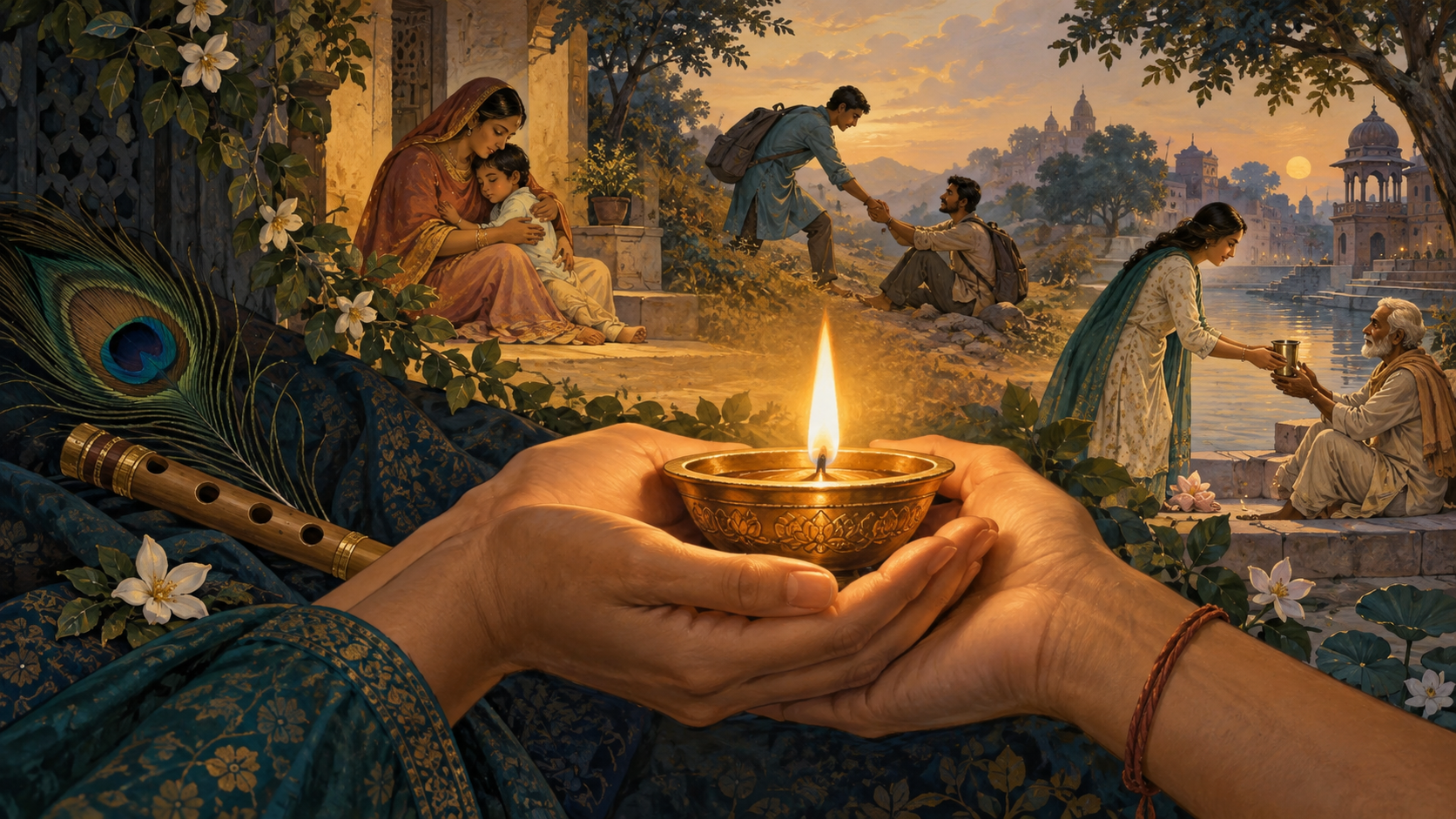
While reflecting on the necklace, consider an ordinary part of your day. How much do farmers, workers, transporters and the people at home contribute to the food on your plate? When a book reaches our hands, its journey includes writing, editing, printing and the interest of readers. Recognising these connections does not diminish our own contribution. It makes us more attentive to the work of others.
A spiritual sense of unity can take practical form as humility and gratitude. Remembering those who helped us succeed, caring for nature while using its resources, and respecting work that is sometimes considered insignificant are all steps in this direction.
Disagreements will still arise. Seeing everyone as connected to a common foundation does not mean accepting every idea as true or every action as right. Discernment remains necessary. What can change is our ability to remember another person's dignity even in disagreement. Reflection on the invisible thread can nurture this sensitivity: my life exists among relationships, and the effects of my behaviour reach beyond me. It is therefore meaningful to act carefully and keep the heart open. Remembering unity becomes worthwhile when it appears as respect in the way we treat others.
Was this essay helpful?