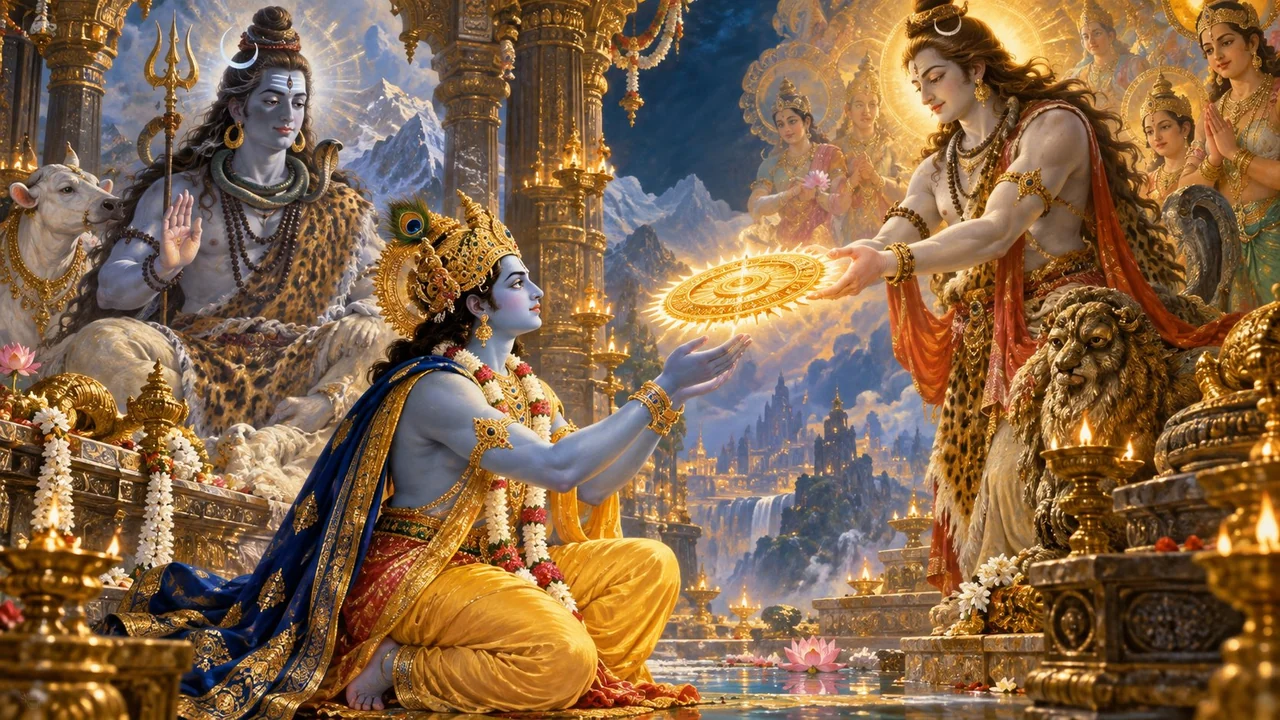
In Madhavshiv’s “Agni and Soma” chapter, fire represents transformation and radiance, while Soma represents coolness and nourishment. Their balance sustains the worl
Read essay →8 October 2026 · Dr. Rajesh Takyar
What the Shrimad Bhagavad Gita Says
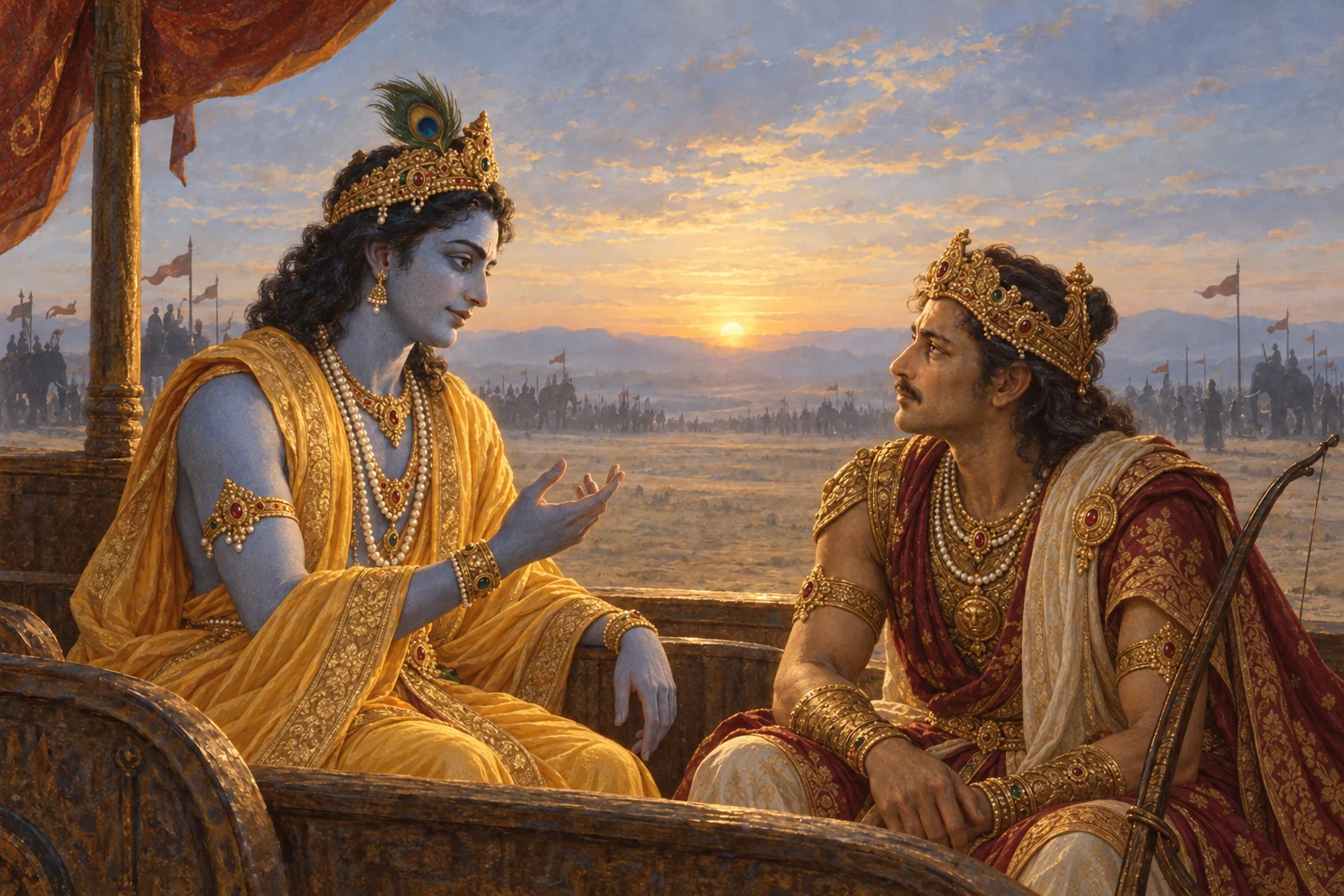
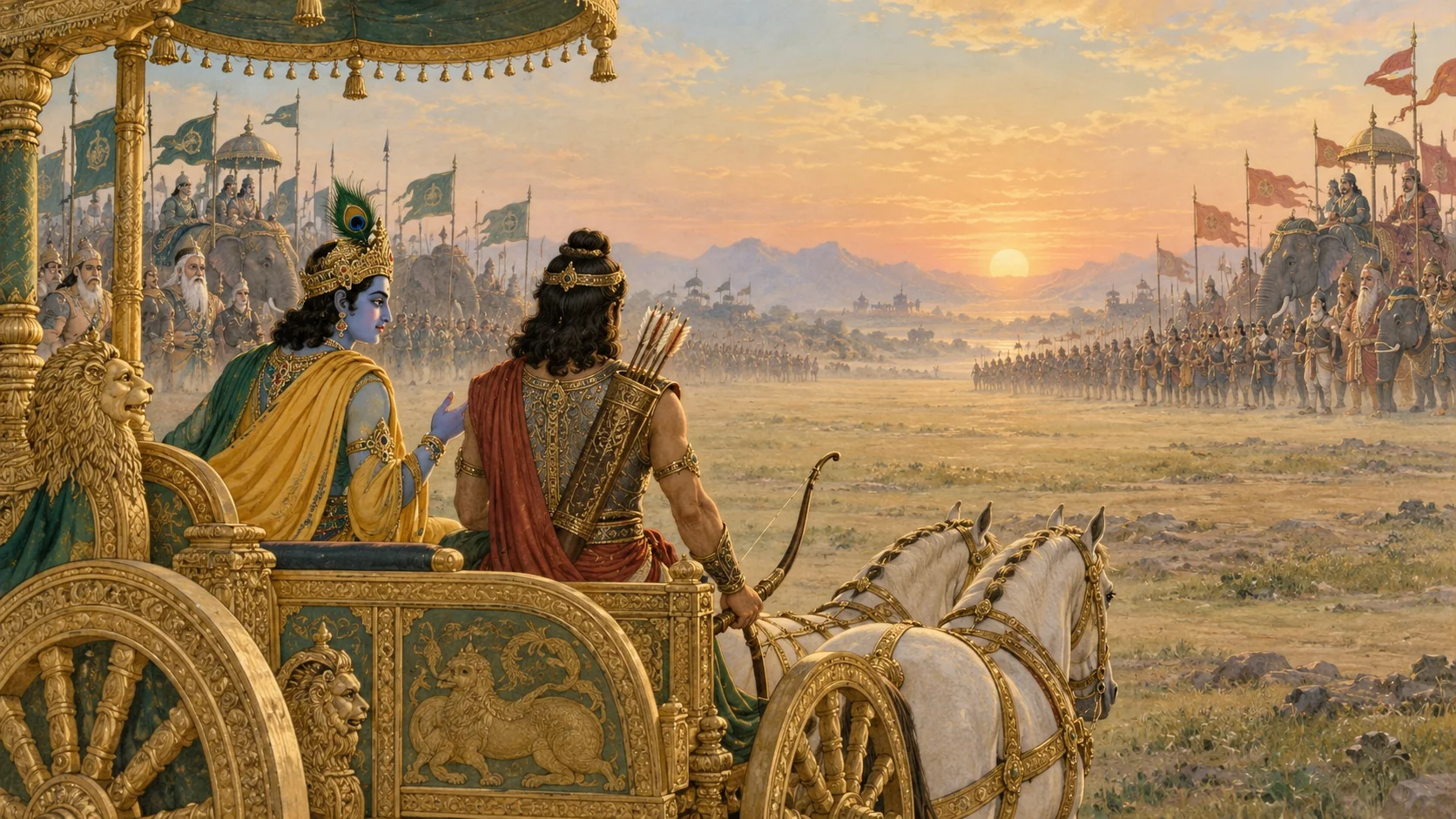
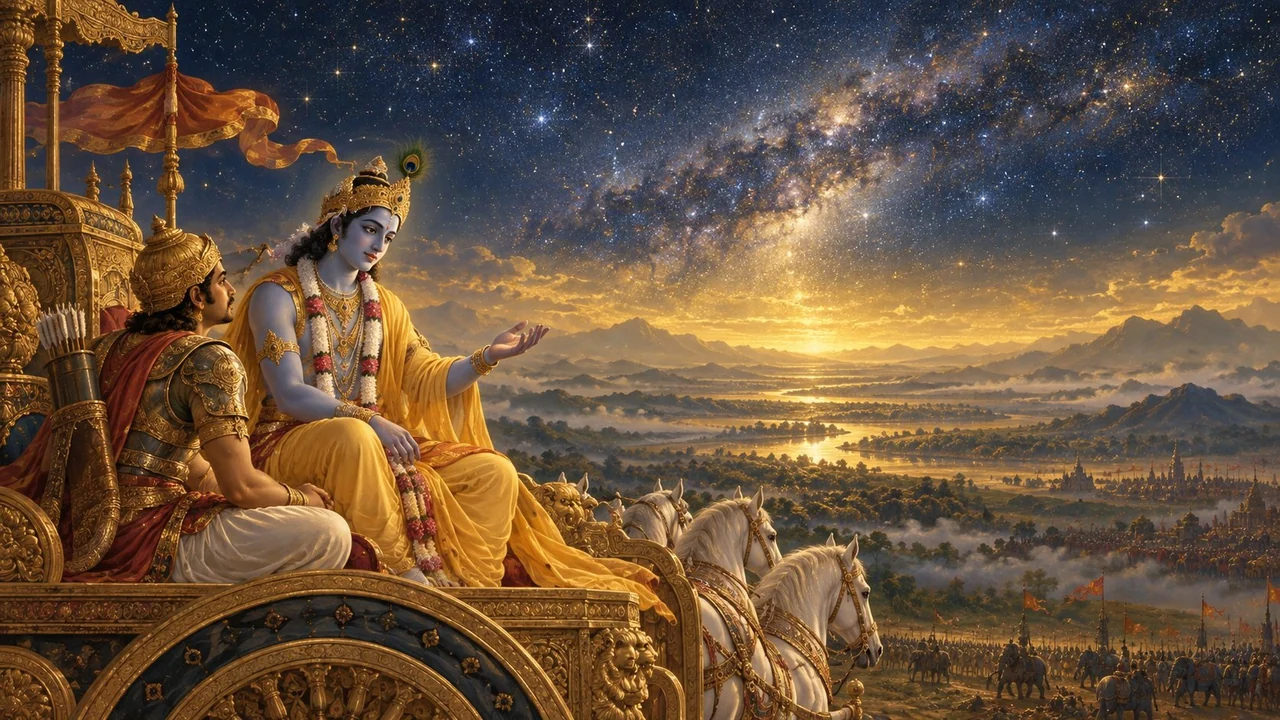
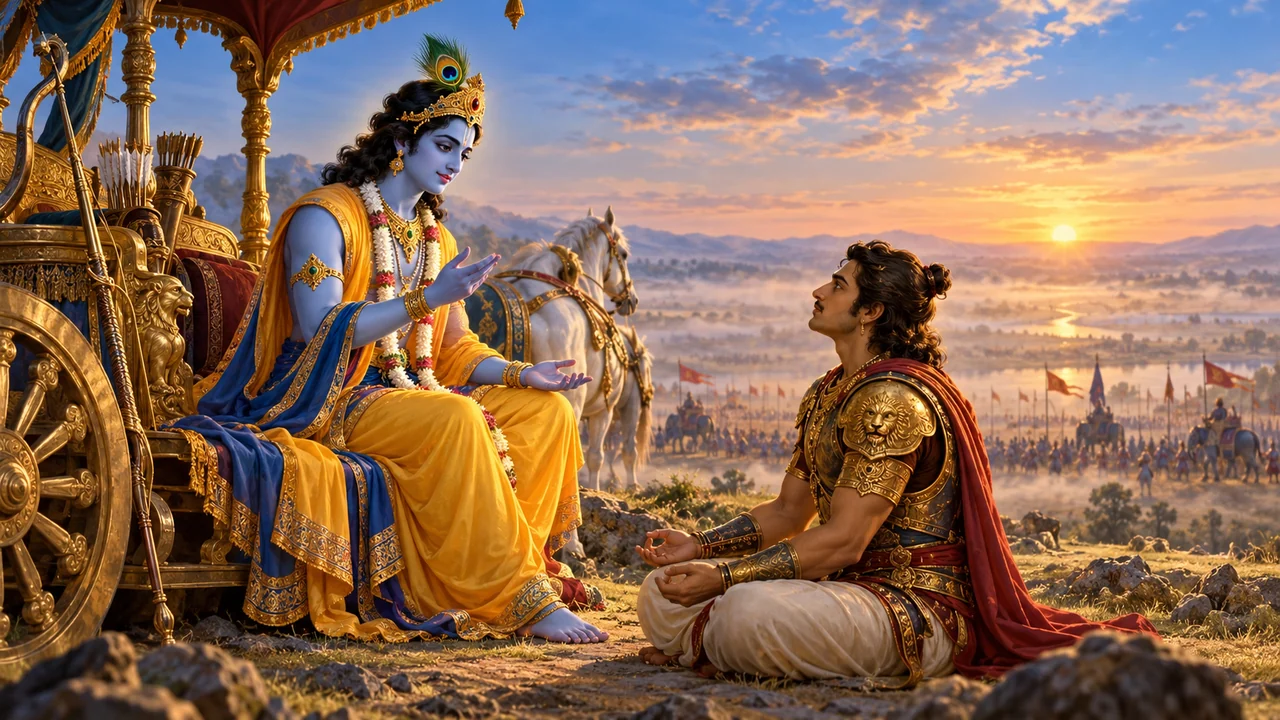
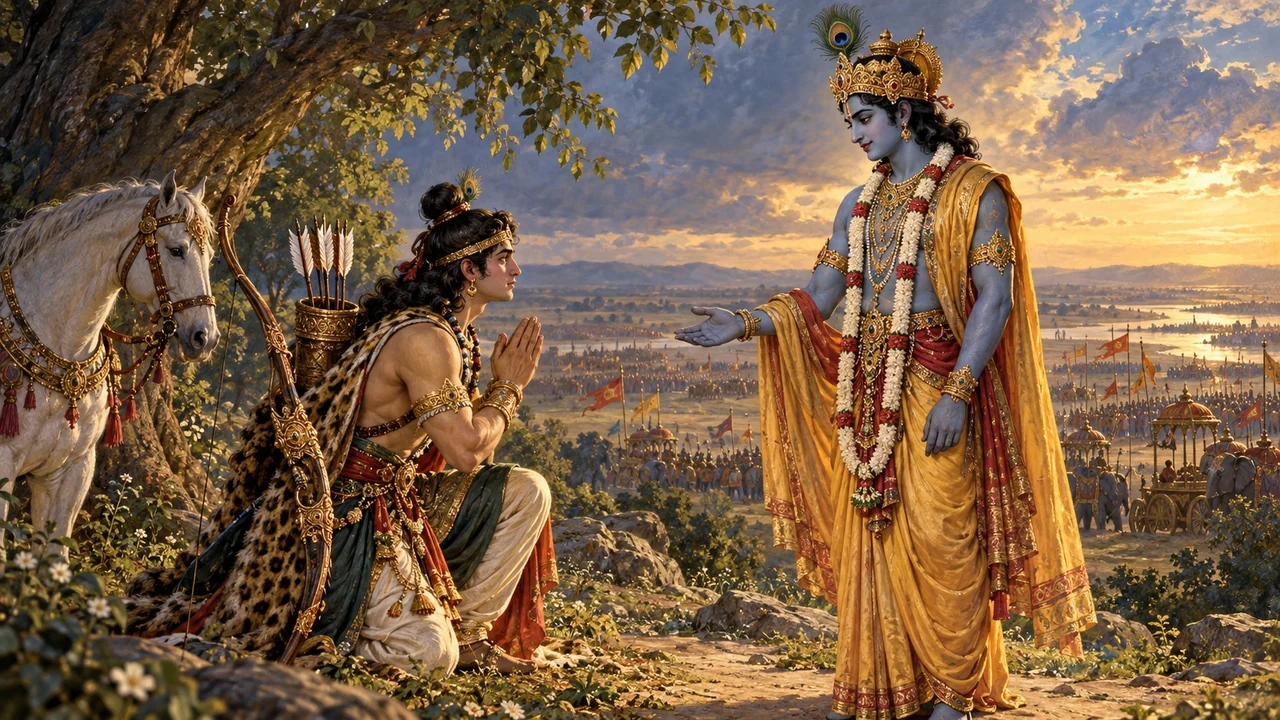
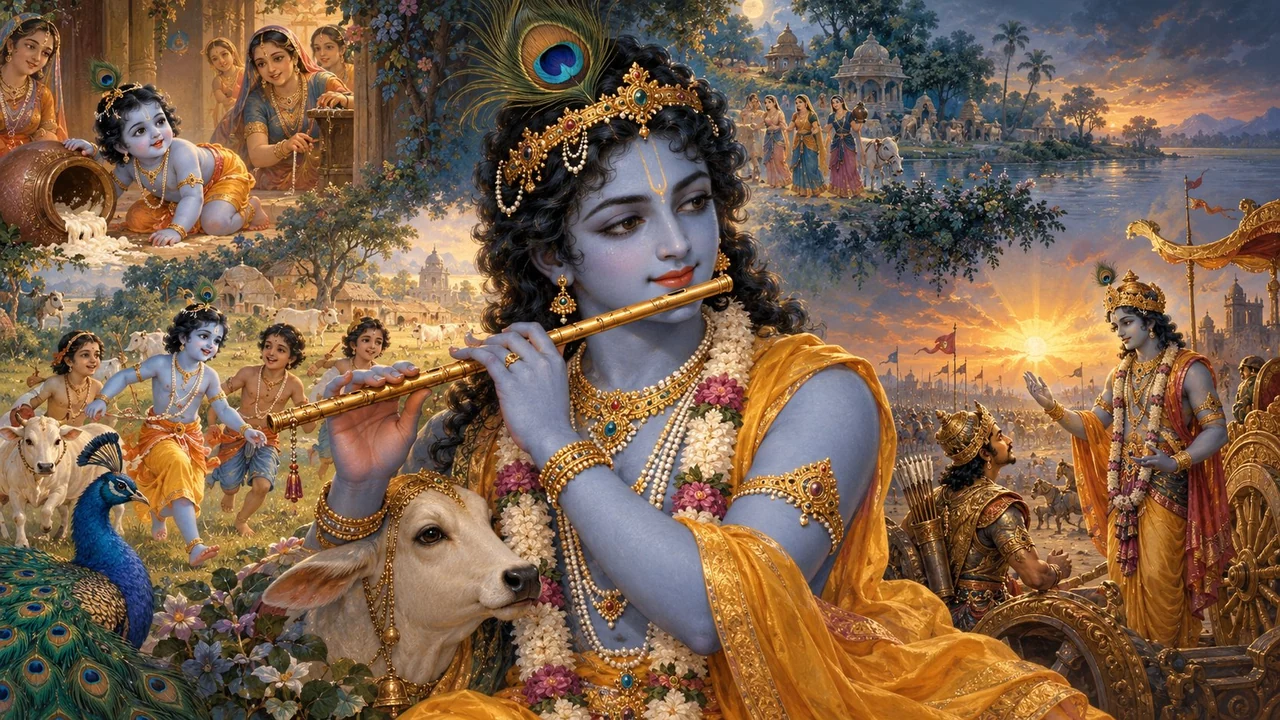
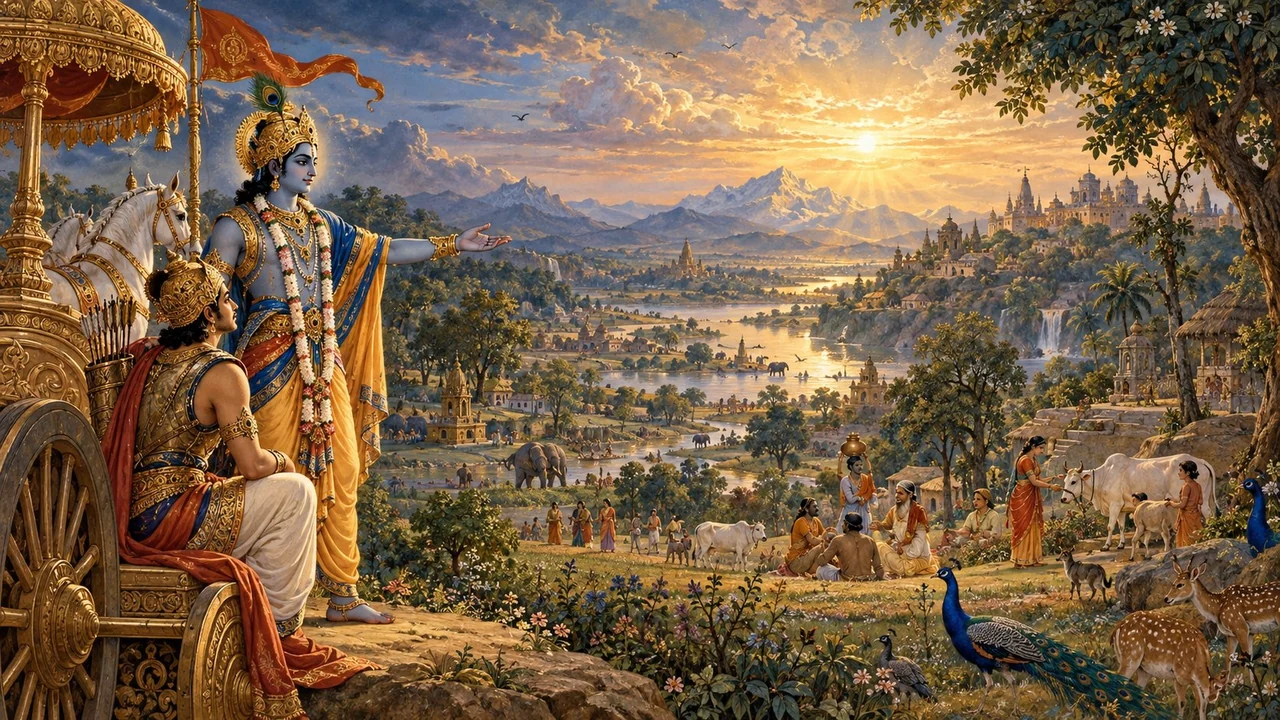
There are times in life when we know the right path yet cannot take a step forward. Love for our own people, fear of the future and the difficulty of duty surround us. Arjuna faced a similar dilemma. On the battlefield, he wondered what victory would mean when he stood against those he loved. Krishna begins the dialogue with this human distress and gradually opens life's deepest questions. The eighteen parts are stages in this journey.
The soul and steadiness in life
The first part reveals Arjuna's inner conflict. In the second, Krishna explains that the body changes while the soul is imperishable. Is what we regard as our entire existence merely the body? This question offers a new way of understanding grief, death and fear.
Alongside this, Krishna teaches balance in pleasure and pain, gain and loss, victory and defeat. A person of steady understanding is not swept away by desire and anger. The Gita explains the entire sequence through which desire leads to anger, anger to delusion, and delusion to the loss of discernment. Restraint of the senses is necessary for inner peace.
The spirit of action and the light of knowledge
In the third part, Krishna explains the necessity of action. We cannot escape work while living in the world. The question is whether our actions serve only our own gain or also the welfare of others. The spirit of yajna means mutual cooperation, service and maintaining balance in society. The conduct of an exemplary person becomes a model for others. Even after gaining knowledge, responsibility for the common good remains.
The fourth part unfolds the relationship between action and knowledge. Krishna describes the ancient tradition of this yoga. He explains divine manifestation when dharma declines, divine birth and action, and the purifying power of knowledge. Faith, service to a teacher and humble questions open the path to knowledge. Doubt must be resolved through discernment.
The fifth part brings renunciation and karma yoga together. True relinquishment releases ego and attachment to results. A person acts without attributing every achievement solely to their own greatness. Seeing one consciousness in everyone brings equal regard. Beyond the fleeting pleasures of the senses lies the happiness of inner peace. Knowing the Supreme as the friend of all deepens this peace.
Educating the restless mind
In the sixth part, meditation is connected with discipline in daily life. Balance in food, rest and routine, a suitable posture and practice help steady the mind. Arjuna acknowledges the mind's restlessness. Krishna offers practice and detachment as the remedy. Bringing the wandering mind back to the right direction, again and again, is spiritual practice. Effort made in yoga is never wasted. Understanding others' pleasure and pain as our own also allows meditation to become compassion.
The Supreme and life's ultimate direction
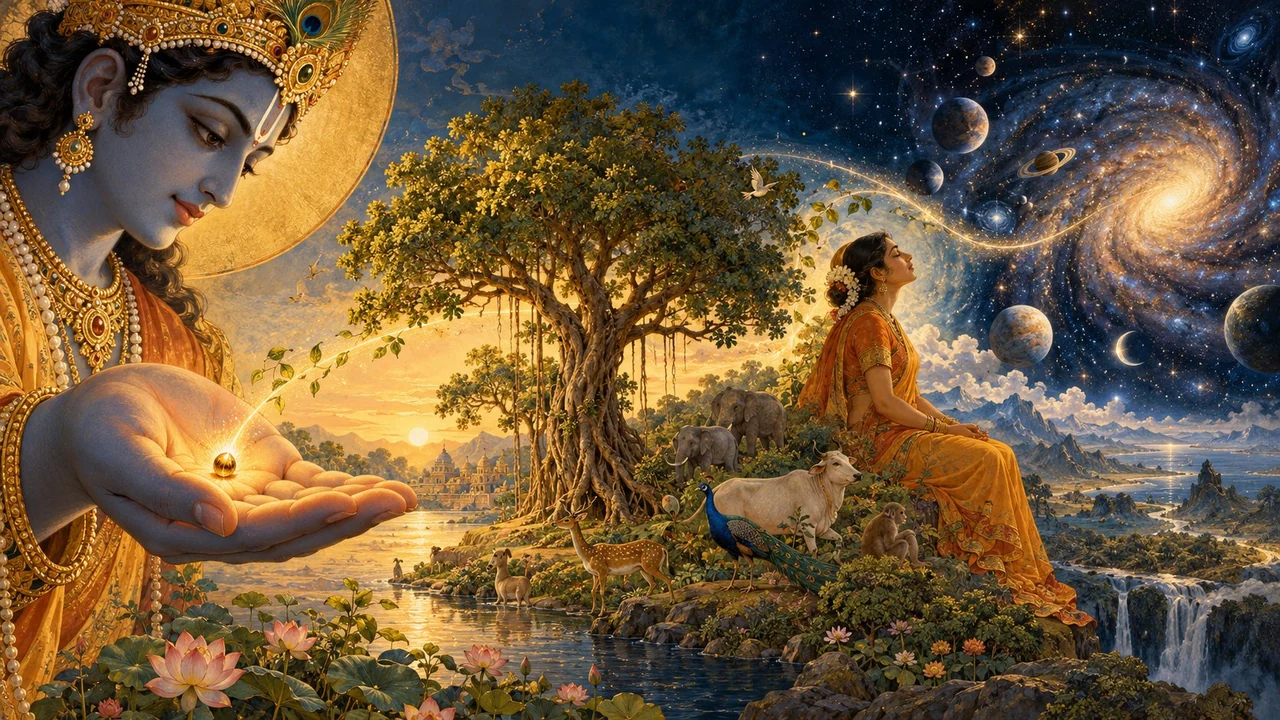
In the seventh part, Krishna explains nature and the consciousness behind it. One supreme reality is the source of the world's power, beauty and strength. The delusion of maya, attachment and ego obscure our vision. Those in distress, seekers of understanding, those seeking gain and the wise approach God for different reasons. Amid the limited fruits of different forms of worship, it is essential to recognise the imperishable goal.
In the eighth part, Krishna unfolds the relationship between life and death. He offers reflections on the meanings of Brahman, the spiritual self and action, remembrance at the final moment, cycles of time and the course beyond death. The direction of that final moment is shaped by lifelong practice. Remembrance of the Supreme must therefore enter everyday life.
In the ninth part, devotion becomes simple and intimate. The world rests within God's reality. Krishna accepts an offering made with sincerity. Inner commitment matters more than outward qualifications. Devotion gives even someone who has taken a wrong path the strength to change. Love and surrender make a new beginning possible within.
God's vastness and the devotee's character
In the tenth part, Krishna describes his divine manifestations. Recognising a glimpse of supreme power in excellence, radiance, beauty and beneficent strength expands our vision. In the eleventh, this vastness appears as the universal form. Arjuna is filled with wonder as he beholds existence and the movement of time. Ego becomes small. A person understands their duty as participation in God's order.
In the twelfth part, Krishna discusses worship of God in a manifested form and of the unmanifest. In devotion to a manifested form, its support helps steady the mind. Krishna describes ways of practising devotion: directing the mind towards God, practising, offering one's actions and relinquishing their fruits. A devotee is recognised through conduct. Giving up hatred, showing compassion, forgiving, remaining content and causing no distress to others are themselves expressions of devotion.
Understanding the body and one's nature
In the thirteenth part, Krishna describes the body, mind and experiences as the field, and the consciousness that knows them as the knower of the field. In explaining the relationship between nature and consciousness, Krishna connects humility, nonviolence, purity and self-restraint with knowledge. Seeing one Supreme in all beings diminishes violence and ego.
The fourteenth part introduces the three qualities. Sattva increases clarity and peace, rajas desire and restlessness, and tamas laziness and confusion. Even sattva can bind through attachment to happiness and knowledge. The goal is to recognise the hold of these qualities and rise beyond them through equanimity and devotion.
The inverted ashvattha tree in the fifteenth part portrays the expanding bonds of worldly existence. Detachment loosens their hold. The living being is a part of the Supreme. The same power works from the sun's light to digestion in the body. Krishna describes changing existence as kshara, the imperishable as akshara, and the supreme foundation beyond both as Purushottama.
Conduct shaped by faith
In the sixteenth part, divine and destructive tendencies come into view. Truth, fearlessness, compassion and forgiveness lead towards growth. Pretence, anger, harshness and ego lead towards decline. It is necessary to avoid desire, anger and greed and to discern the appropriate action wisely.
In the seventeenth, Krishna explains the sattvic, rajasic and tamasic forms of faith, food, yajna, austerity and charity. A peaceful mind and truthful, gentle speech are also forms of austerity. The worth of charity is connected with its intention, timing and recipient. The expressions Om, Tat and Sat connect action with a sacred purpose.
From one's own duty to surrender
The eighteenth part brings these teachings together. The five causes of action diminish the ego of being its sole agent. Distinctions in knowledge, action, the agent, understanding, perseverance and happiness teach self-examination. Fulfilling the duty that accords with one's nature is svadharma. We must continue the purifying practices of yajna, charity and austerity while relinquishing attachment to results. Knowledge, action and devotion meet in surrender. Taking refuge in the Supreme, a person moves towards supreme peace through restraint, detachment and equanimity. Arjuna's delusion dissolves, and he becomes ready to fulfil his duty.
The journey of the Gita brings us back within ourselves. Who are we, in what spirit do we act, what binds us, and in which direction are we moving? Recognising these questions is the beginning of knowing more. Each part opens a new doorway into them. As we read Krishna's dialogue, we begin to see our own confusion in Arjuna's. Then the next page of the Gita opens with the wish to understand the direction of our own lives.
Was this essay helpful?