Twenty questions about reading the Shrimad Bhagavad Gita: action, decisions, anxiety, relationships, life’s purpose and applying its teachings in everyday life.
Read essay →4 October 2026 · Dr. Rajesh Takyar
Serving Vraj
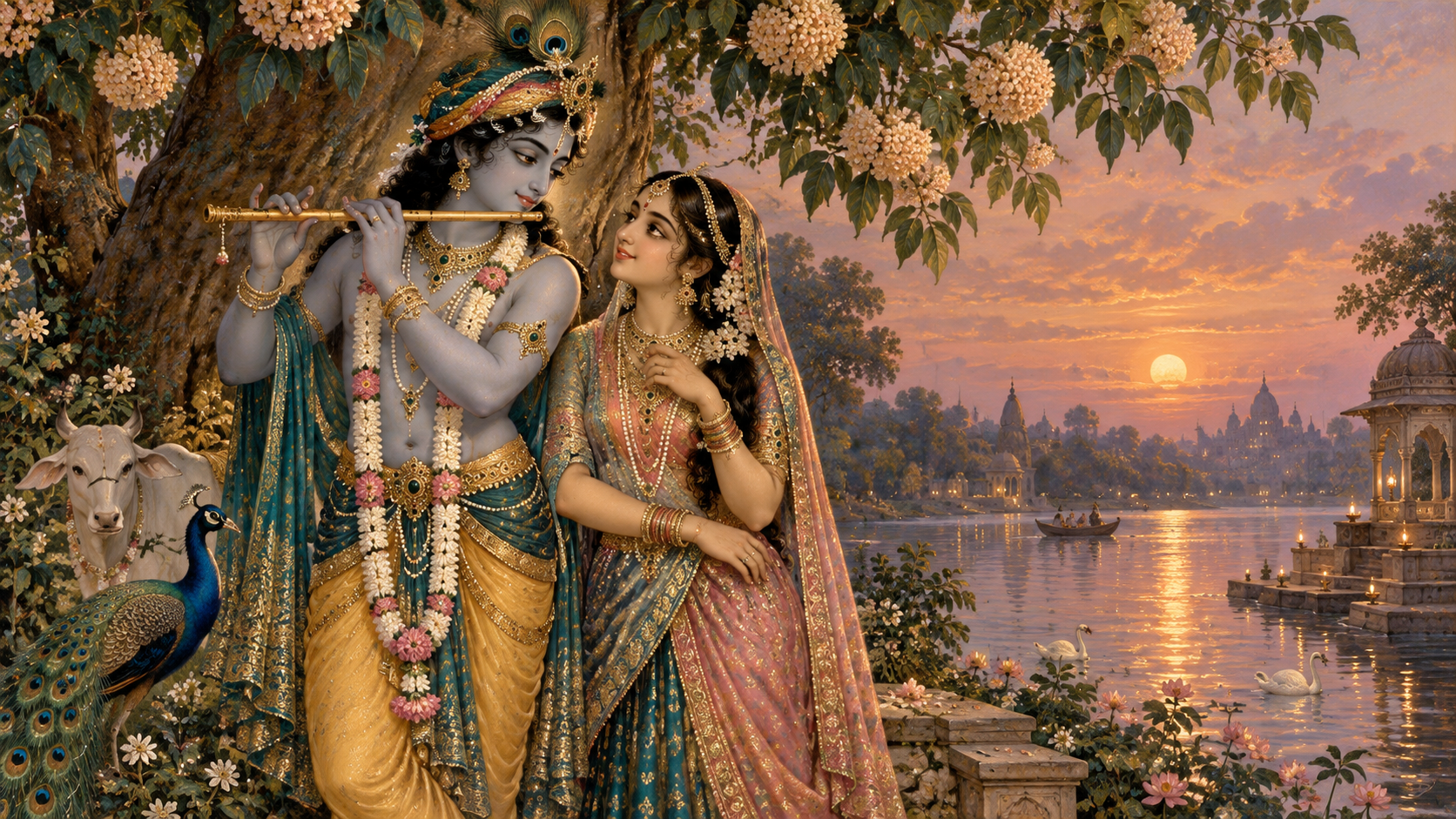
Book reference: This essay is based on the chapter “Vraj and the Significance of Shri Radha’s Name” in my book Krishna Ki Radha.
Loving a sacred place means more than simply visiting it. Caring for its memories, its people and its natural surroundings can also be part of that love. This chapter of Krishna Ki Radha explores the mystery of Vraj through a sacred narrative and the perspective of devotion. One beautiful insight in the story connects service to the land with the nurturing of life.
A question about an empty land
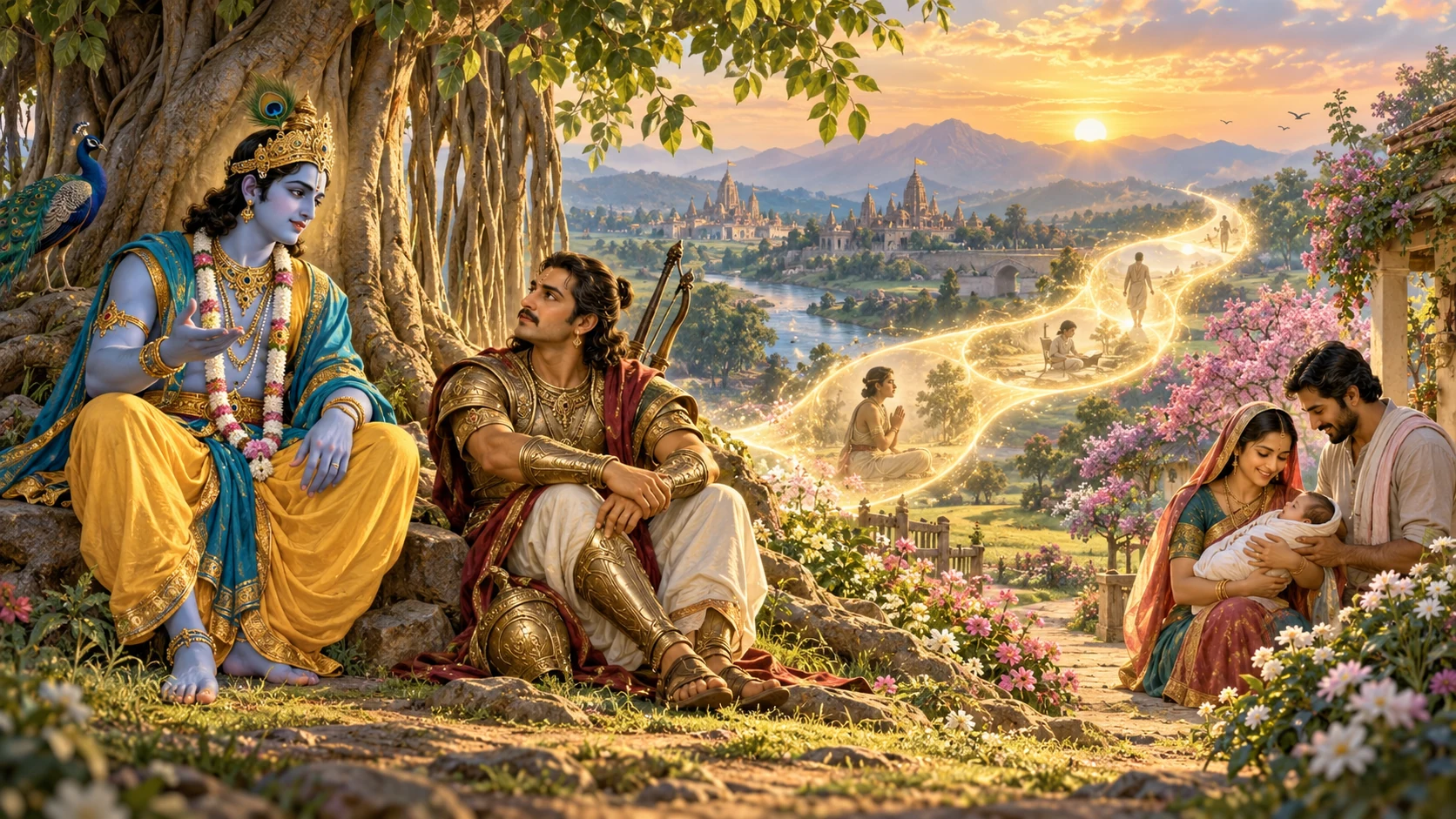
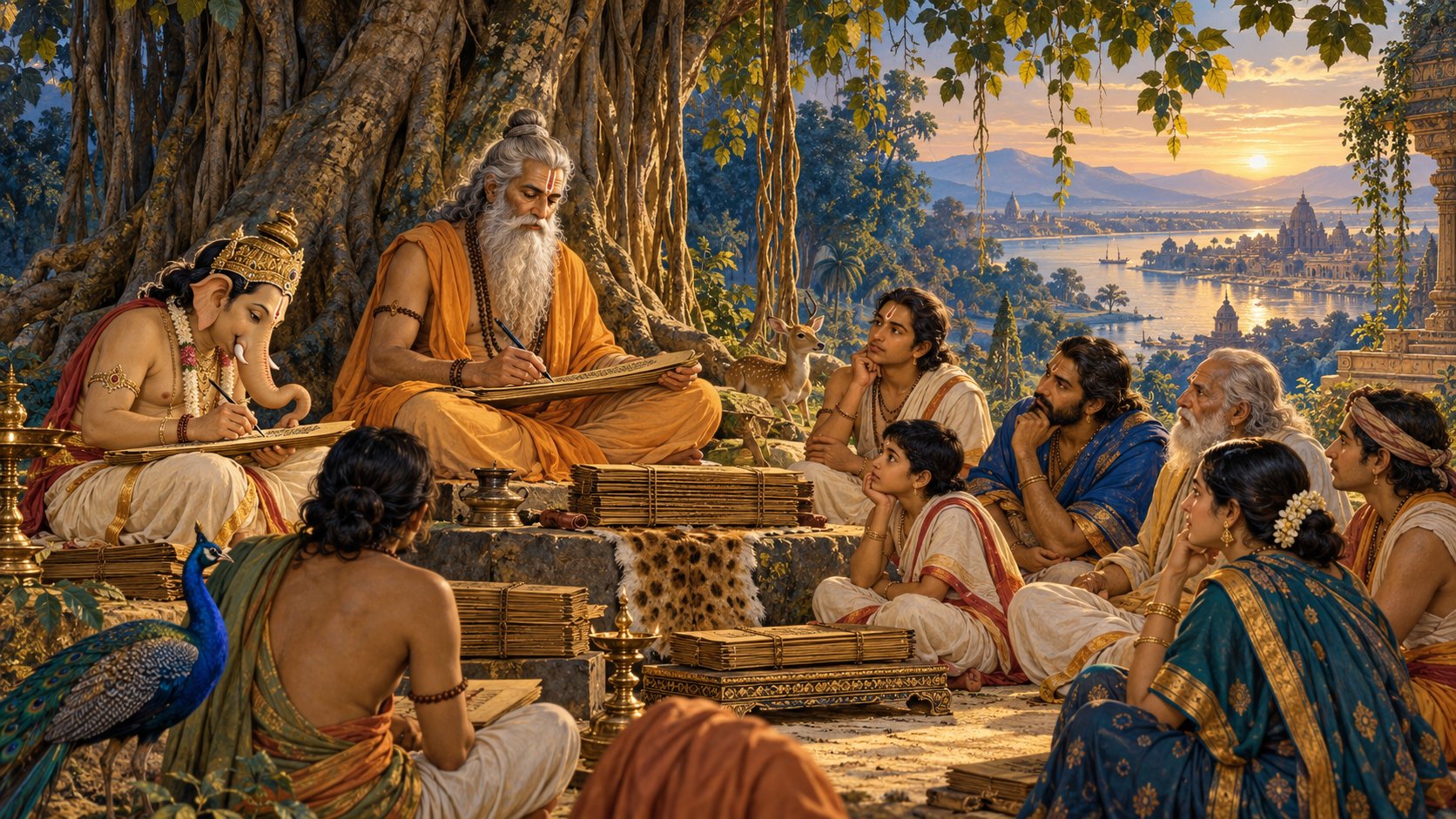
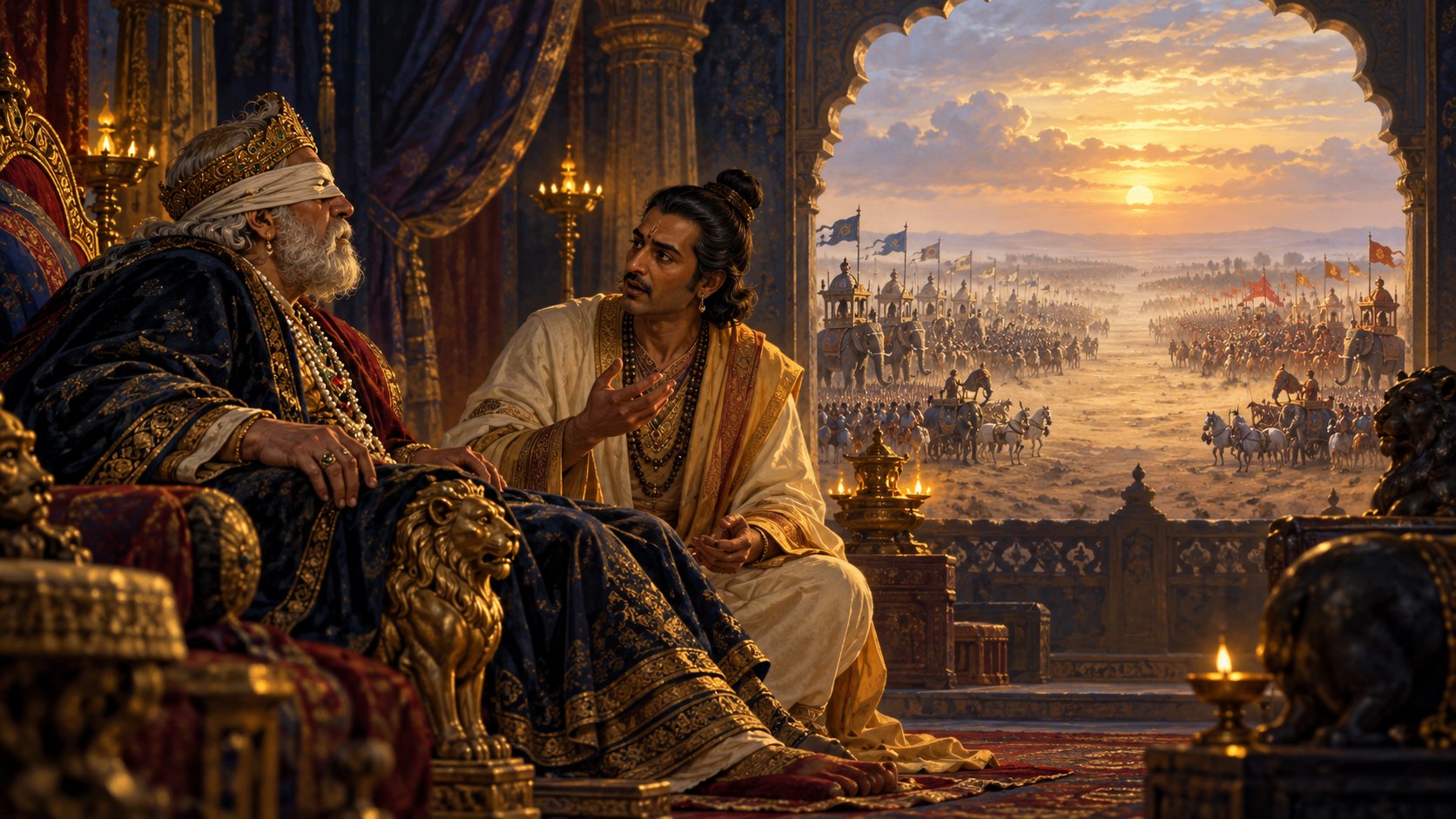
In Chapter One of the second section of the Skanda Purana, the sages are speaking with Vyasa at Naimisharanya. In response to their questions, he tells them that King Parikshit came to Mathura to meet Vajranabh. Vajranabh welcomed him with great respect.
After resting and sitting comfortably, Parikshit said to Vajranabh, “My dear one, your forefathers undoubtedly rescued our fathers and grandfathers from great suffering, and they protected me as well. I cannot fully repay their kindness. I therefore ask you to govern your kingdom happily. Do not allow anxiety to burden you.”
Vajranabh was delighted to hear this and replied, “O King, these words befit you. The kindness you have shown us is also very great. Although I have been installed as ruler in Mathura, I feel as though I am living in a deserted forest. Where have the people gone? Without its people, how can a kingdom truly flourish?”
To resolve his uncertainty, Parikshit immediately sent for Sage Shandilya, the priest of Nanda and his companions.
Shandilya soon arrived from his ashram. Vajranabh received him with the customary honours, and the sage took a suitable seat.
The spiritual meaning of Vraj
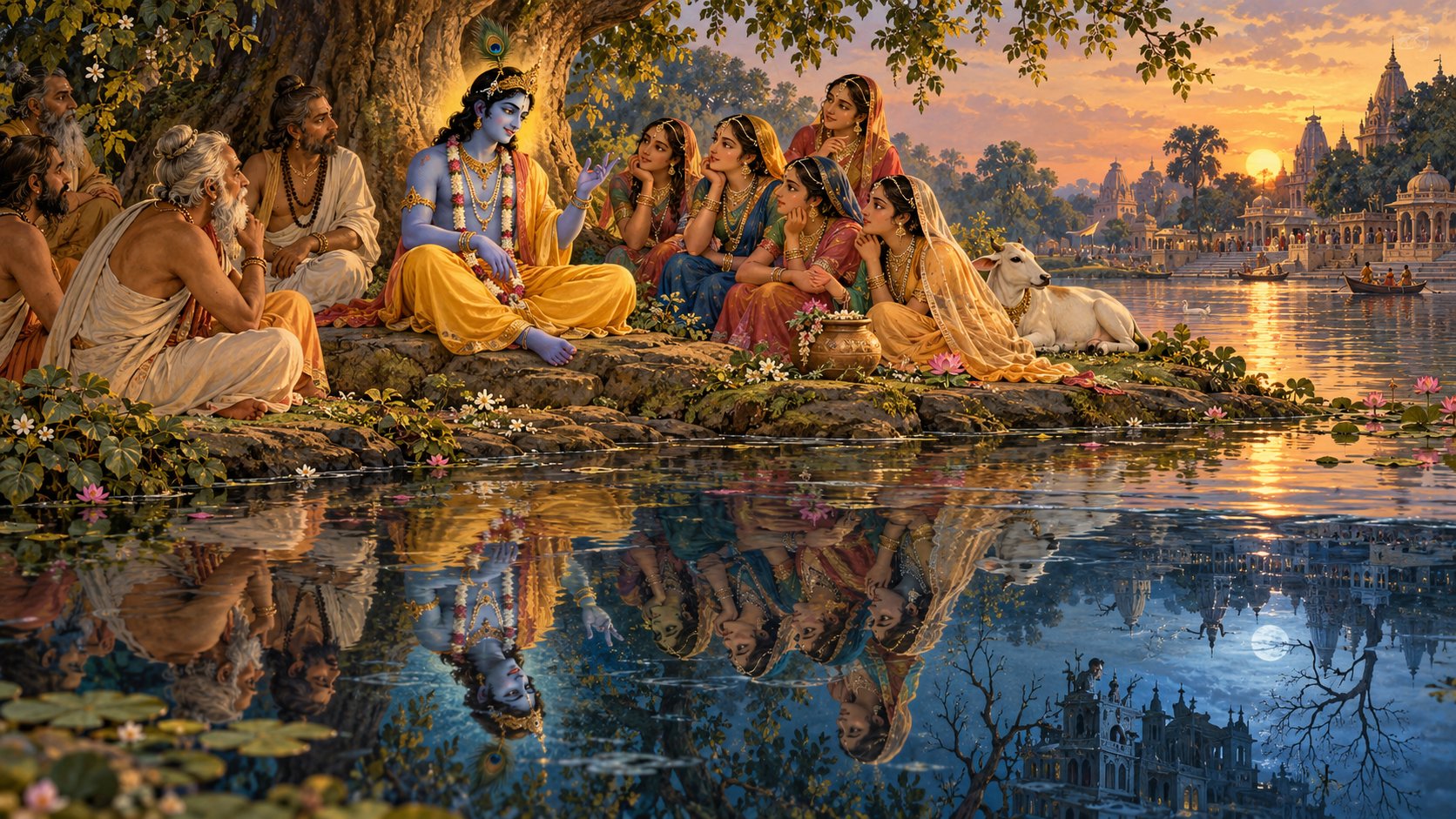
Pleased with their welcome, Shandilya reassured them both: “Listen with undivided attention as I explain the mystery of Vraj. The word ‘Vraj’ is understood here in the sense of pervasiveness: that which pervades everything is called Vraj. It is beyond the qualities of nature, the supreme Brahman, all-pervading and eternally blissful. It is the supreme light and the imperishable abode of the liberated.”
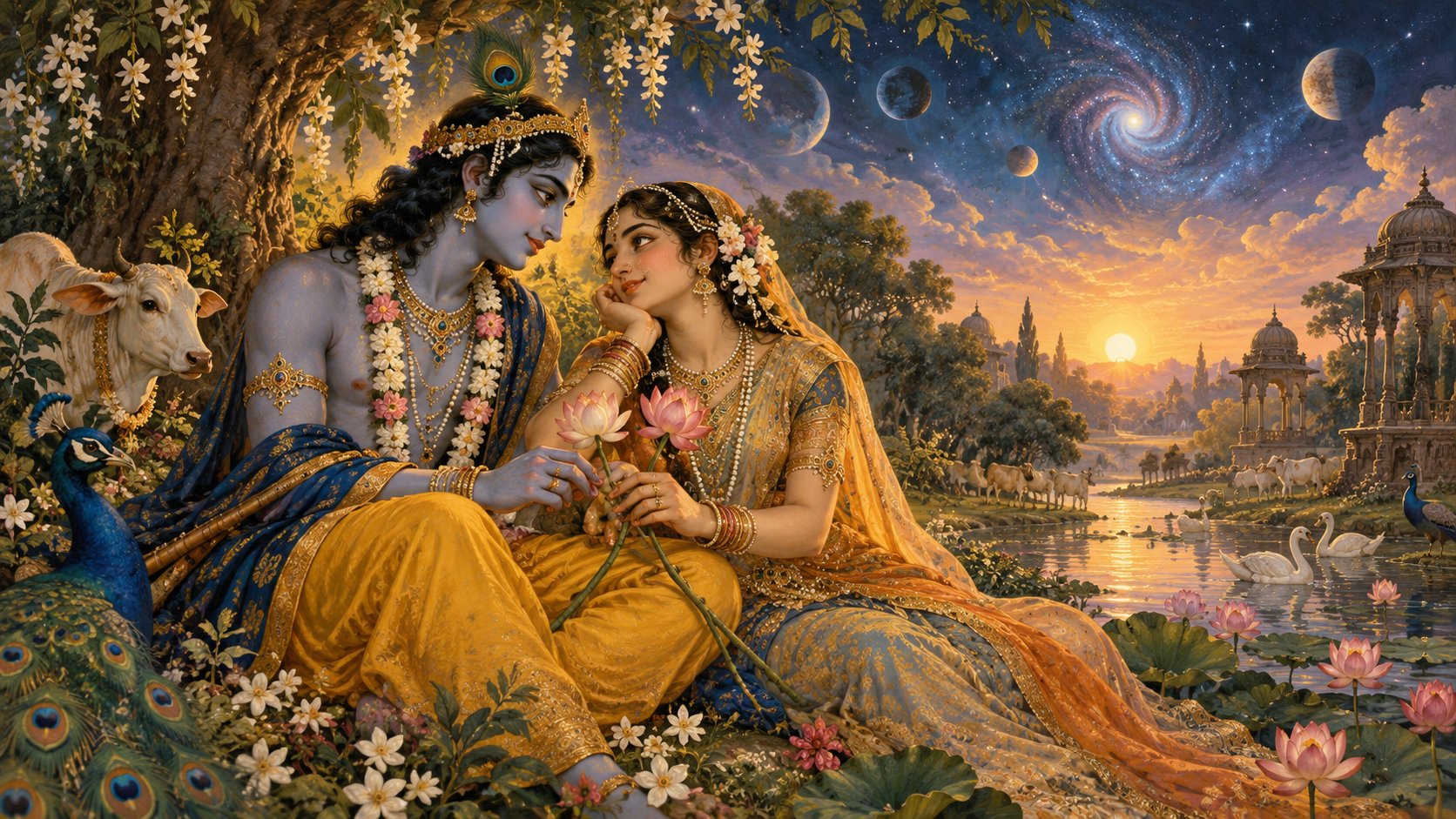
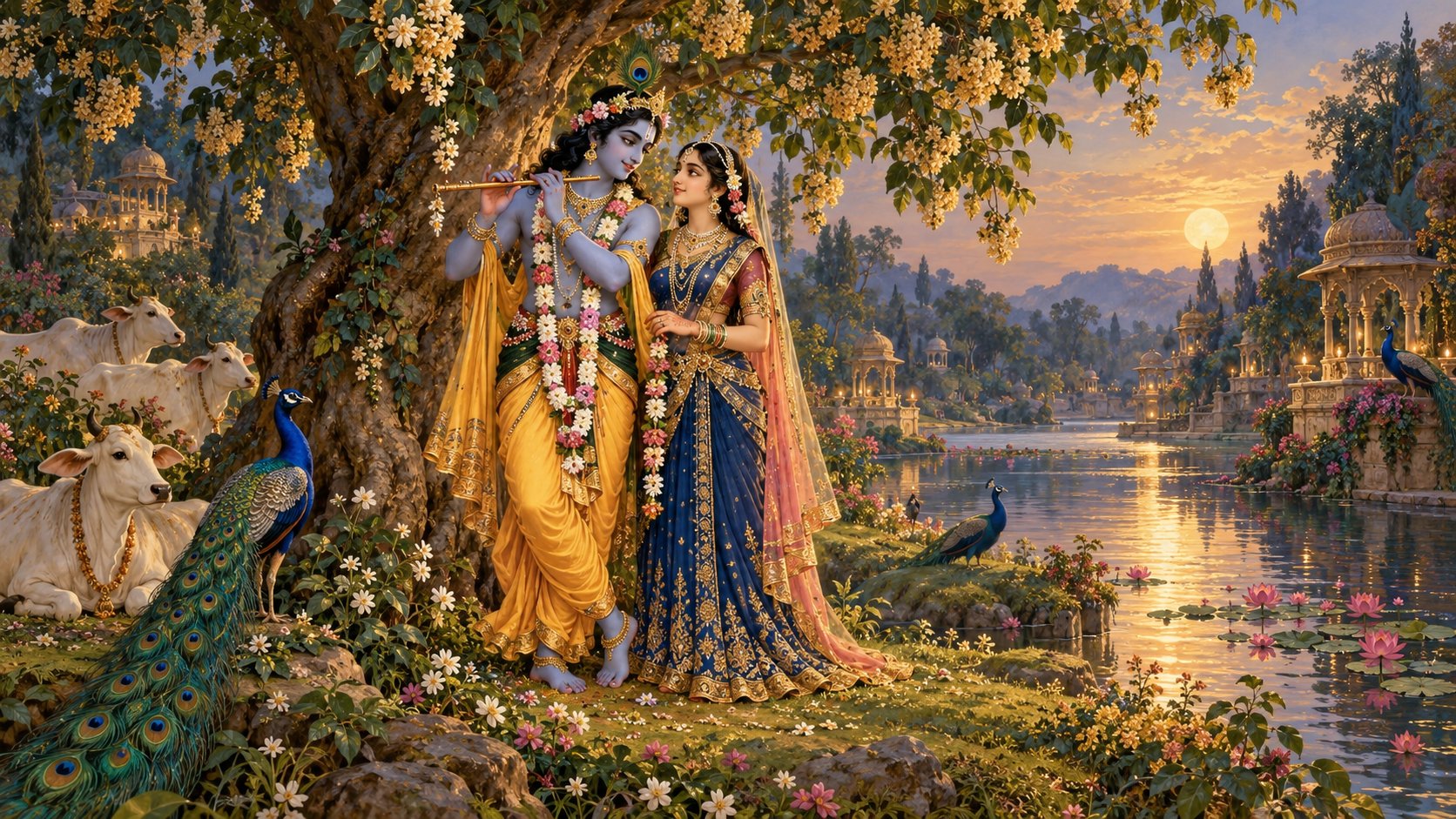
“In that abode of Vraj, Shri Krishna, the son of Nanda, is always present in a form filled with bliss. He is Atmarama: complete in the joy of his own being. He is also Aptakama: no desire in him remains unfulfilled. Yet he is experienced by devotees whose hearts are steeped in love. Radhika is his very self. Those who understand this profound truth say that he is called Atmarama because he delights in her company. The cows, cowherds and cowherd maidens are his cherished companions. They are eternal, and all his playful activities with them are eternal too. This is why he is truly Aptakama. This most secret mystery of his lies beyond material nature. When he plays with his own power, others may also experience that divine play. Where creation, preservation and dissolution take place through the three qualities of rajas, sattva and tamas, his play has two forms: vastavi, the real and eternal, and vyavahariki, the form that appears within the world of ordinary experience.”
“The eternal play is fully known only by the Lord himself. What living beings experience belongs to its worldly manifestation. The second cannot exist without the first, and it is never separate from it.”
“This is that land of Vraj, where the supreme reality is deeply concealed. It is revealed only on occasion, and through special grace, to those whose hearts are filled with love. Particularly at the end of the Dvapara age, when those fit to participate in the Lord’s mysterious play gather here, Hari descends with his companions according to his loving will. At that time, other deities also take birth in different places so that they too may take part in the divine play in their own forms.”
“After fulfilling everyone’s wishes, Shri Hari withdrew from sight. Understand clearly that three kinds of people had been present here: his eternal companions, those who wished to attain that eternal play, and the deities and others. Shri Krishna had first taken the deities to Dvaraka. Then, through the events of the Mausala episode, he restored them to their respective spheres of responsibility. Those who longed to attain the eternal play had also been welcomed into it by Shri Krishna, the embodiment of love and bliss.”
Recognising sacredness through service
“The eternal companions, too, have now become invisible to those who are not ready to see them. Those who are not qualified to experience the manifest play cannot perceive it even when they come here. That is why the place appears deserted to them. Therefore, Vajranabh, do not be anxious. Following my guidance, establish many villages here. In doing so, you will find fulfilment.”
“This land is deeply sacred and should therefore be served. Establish good governance in Govardhan, Dirghapur, Mathura, Mahavan, Nandigram and Brihatsanu. If you govern while caring for and protecting its rivers, mountains, valleys, sacred pools and groves, your people will prosper and you too will be happy. This land embodies being, consciousness and bliss, so make a wholehearted effort to serve it. Through my grace, the sacred places of Shri Krishna will continue to reveal themselves to you. O Vajra, by serving Vraj, you will meet Uddhava. Then, together with your mother, you will come to understand this mystery more deeply.”
Having said this, Shandilya departed while remembering Shri Krishna. Parikshit, also known as Vishnurata, and Vajra were filled with joy.
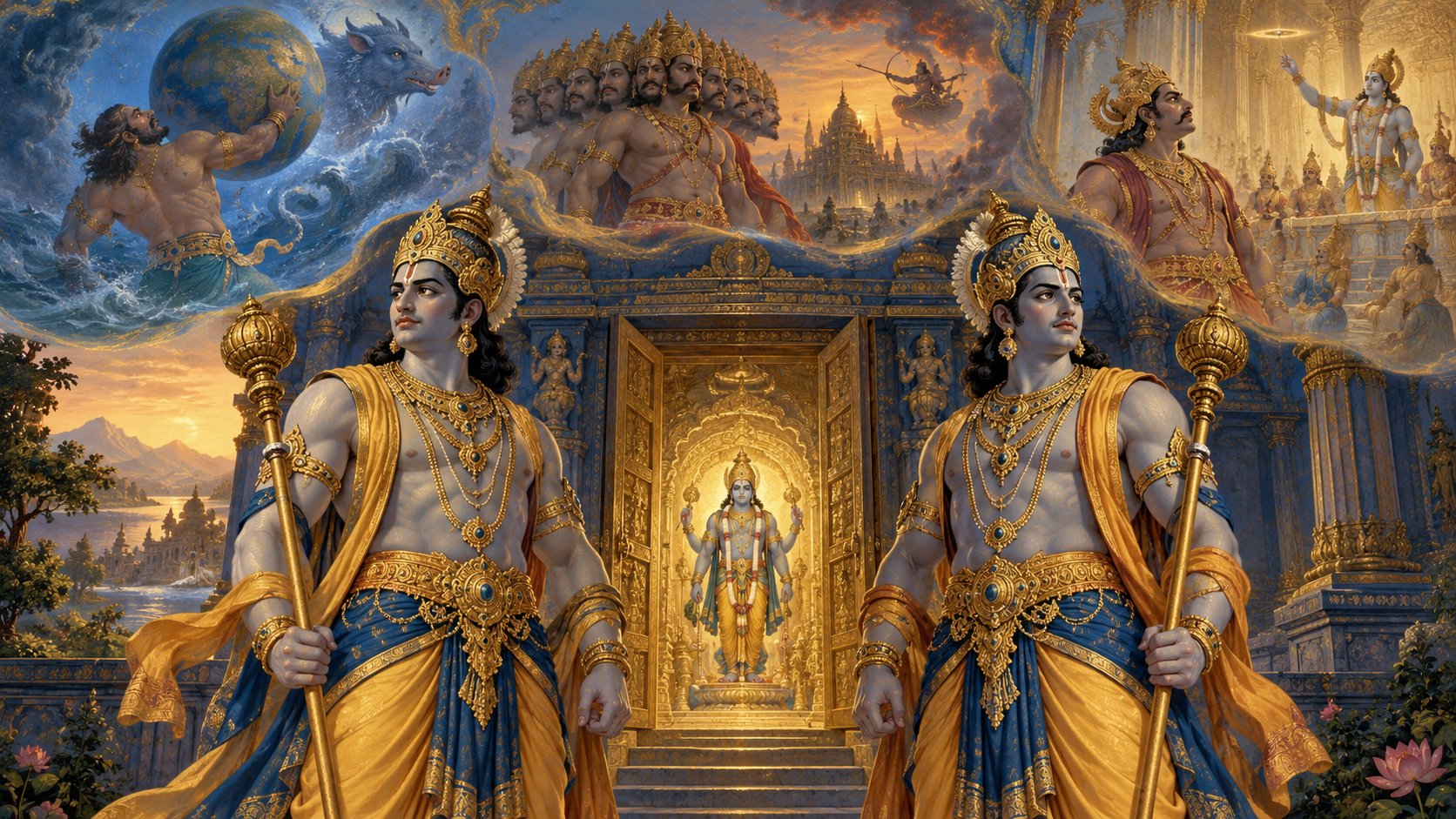
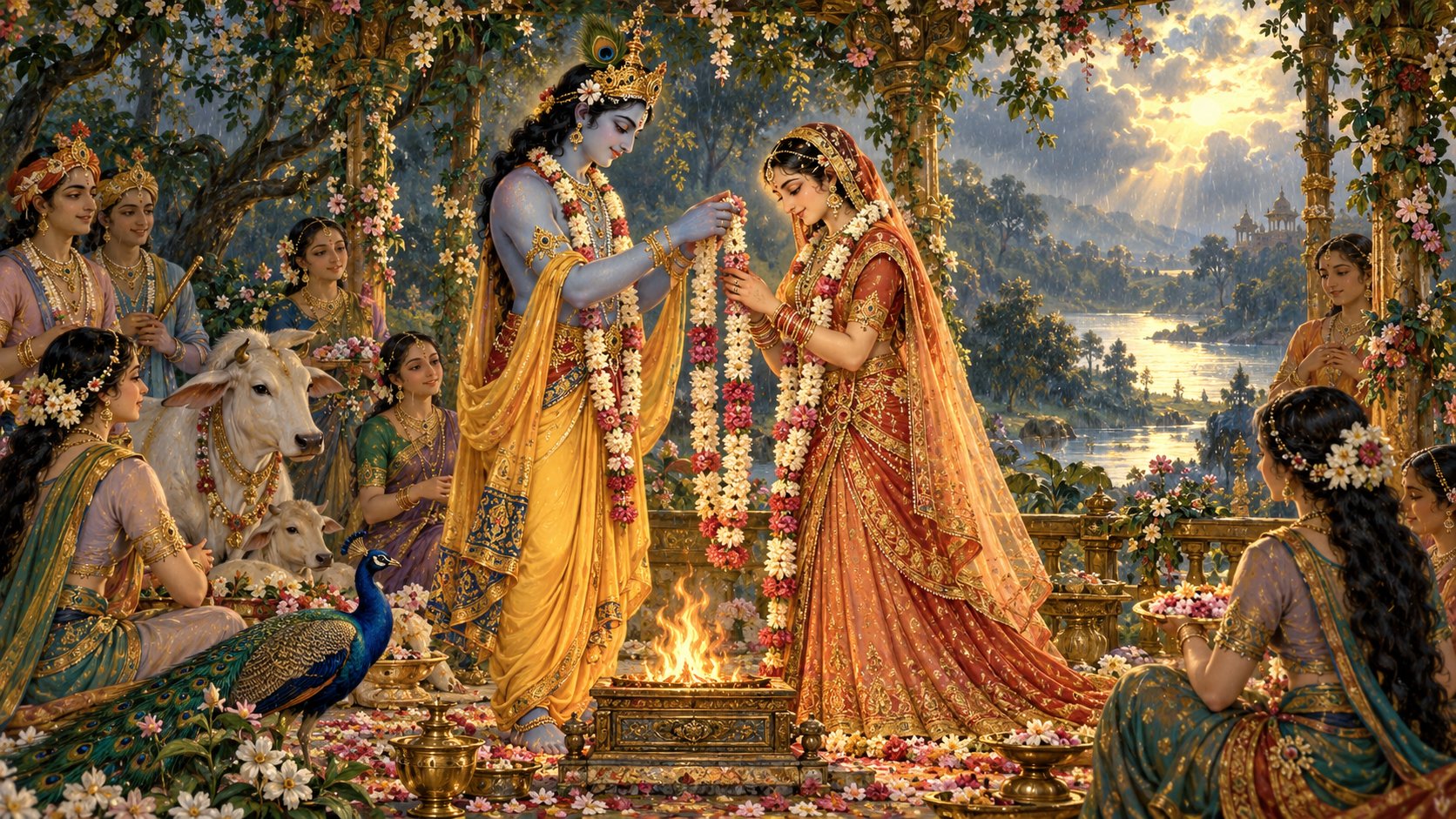
The chapter finally describes two forms of Shri Krishna: a four-armed form in Vaikuntha and a two-armed form in Goloka. Lakshmi, Saraswati and others are described as the consorts of the four-armed form, while Shri Radha is the inseparable other half of Krishna in his most beloved form. Shri Radha and Krishna are not separate. The passage warns that regarding them as fundamentally divided leads to spiritual downfall.
The central idea is that the relationship between Shri Radha and Krishna is not merely worldly; it is supremely divine and eternal. Their love, their play, and their union and separation reveal spiritual truth.
Caring for the land around us
One point in this episode deserves attention. Vajranabh is not concerned only with discovering a divine mystery. He also faces a seemingly empty land and the responsibility of helping life flourish there. Shandilya’s answer combines a spiritual vision with a practical direction for service. Caring for a place we regard as sacred can be a natural expression of our reverence for it.
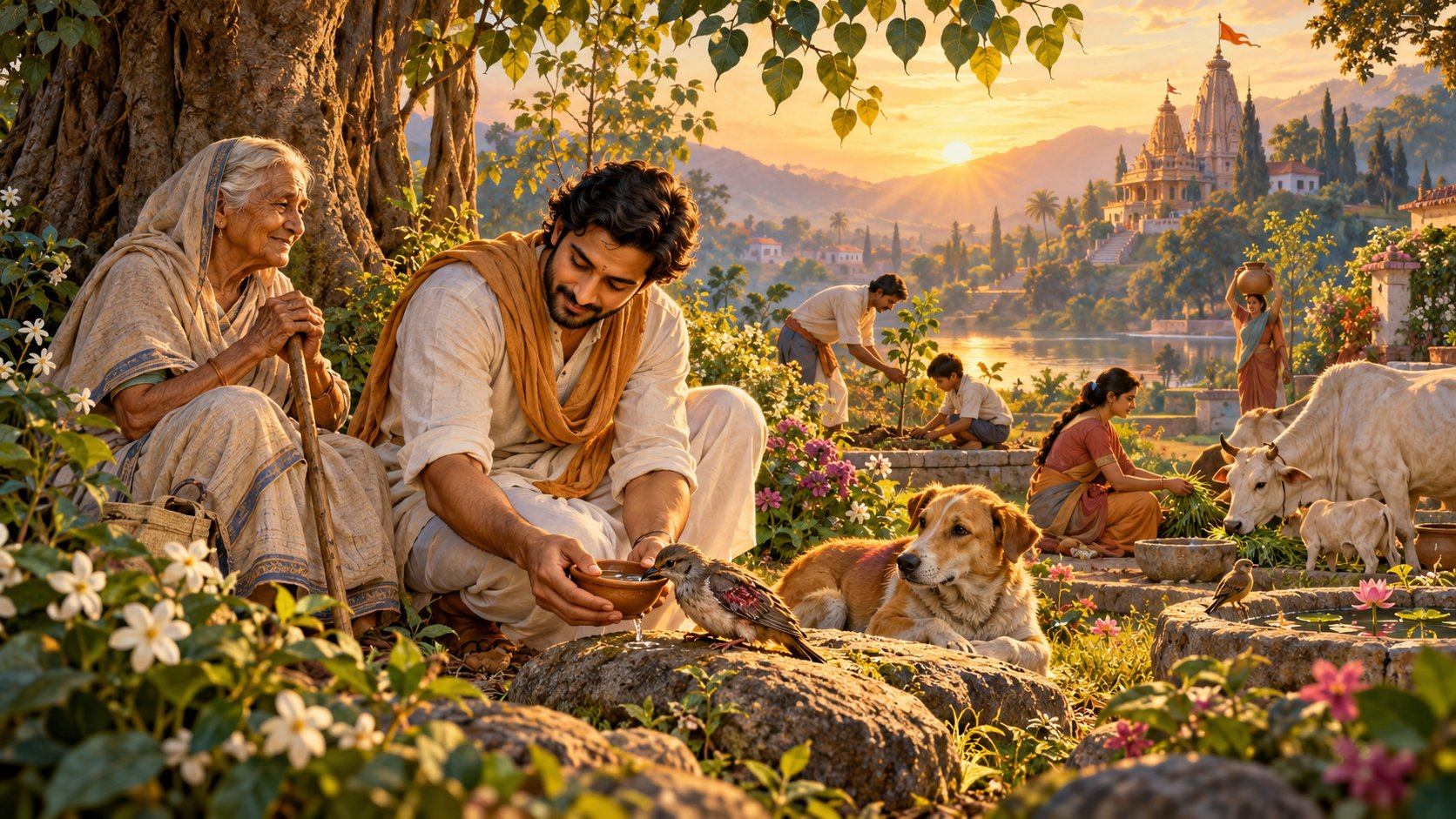
We can carry this question with us on a pilgrimage today. Is the place cleaner, more respected and better protected because of our conduct? Do we speak politely with the people who live there? Do we see a river, a sacred pool, a tree or a path only as something to use, or do we also recognise a responsibility to care for it? Small actions reveal the quality of our feelings.
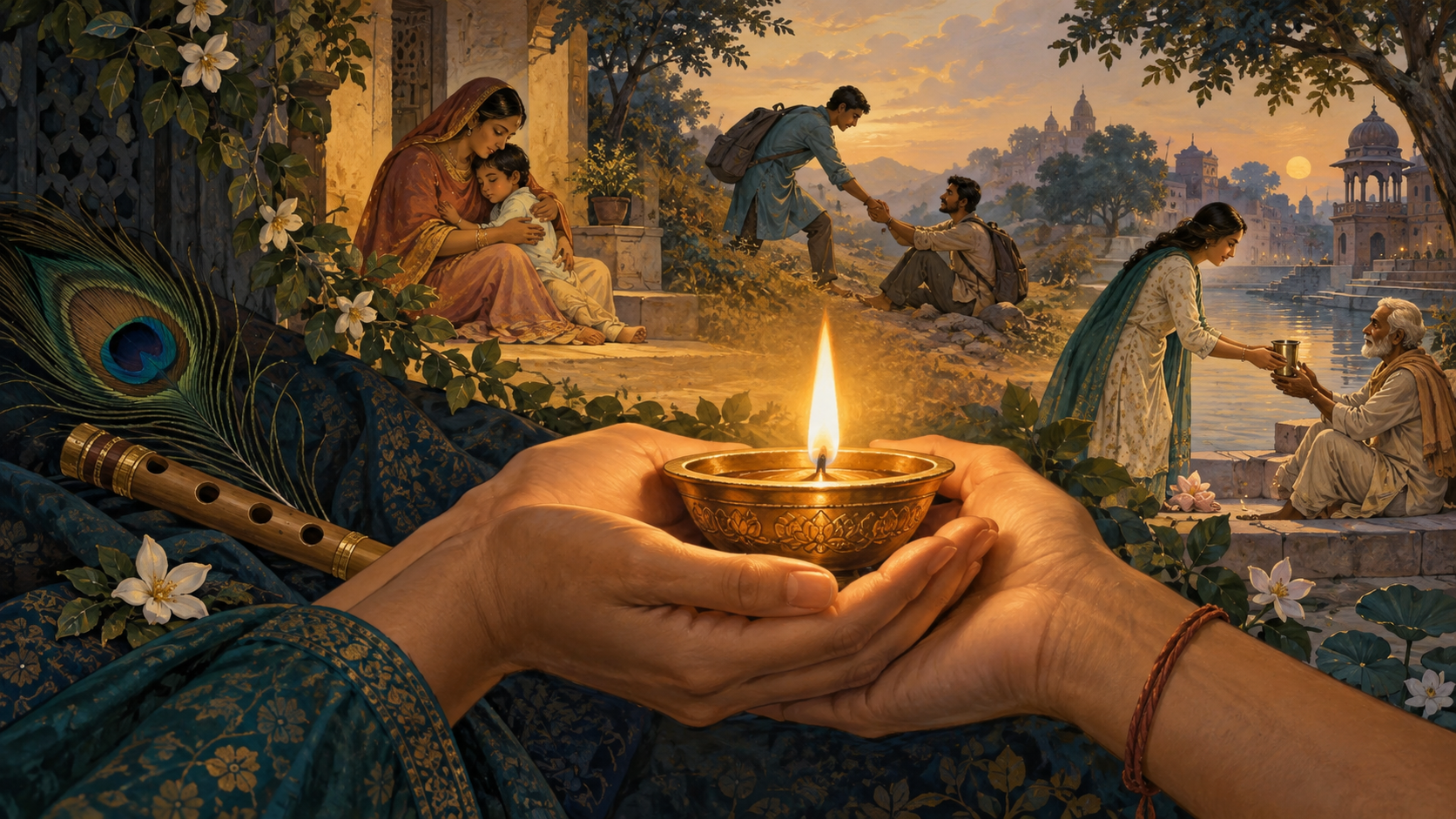
The explanation of Radha and Krishna’s inseparable love also invites us to look beyond possessiveness in our relationships. Love needs room for another person’s dignity, freedom and happiness. Making our own convenience the centre of everything can narrow its scope. The divine love described in the chapter is not a copy of ordinary human relationships, but it can inspire sensitivity, dedication and service in them.
This journey can begin at home. Helping to clean a neglected place nearby, tending a plant regularly or listening to someone in need are simple forms of service. They do not require a grand display. They require consistency and sincere care. Reflection on Vraj then becomes more than the memory of a distant pilgrimage site: it becomes connected with our own conduct. When reverence takes the form of care, the meaning of sacredness becomes more alive.
The story’s vision and our practice
The distinction between visible and invisible divine play in the chapter belongs to the language of the devotional tradition. A reader can draw from it the insight that a place’s meaning is not confined to its visible buildings. Memories, relationships, service and a shared sense of belonging also give it life. Taking a photograph and returning home does not, by itself, complete the experience of a journey. Spending a little time observing quietly and respecting the dignity of the place also matters.
If you contribute to a service activity, first take time to understand local needs. Listening to responsible people is more useful than acting only on your own preferences. When understanding accompanies devotion, help becomes more effective. This remembrance of Radha and Krishna’s love can guide us towards holding feeling and responsibility together.
Was this essay helpful?