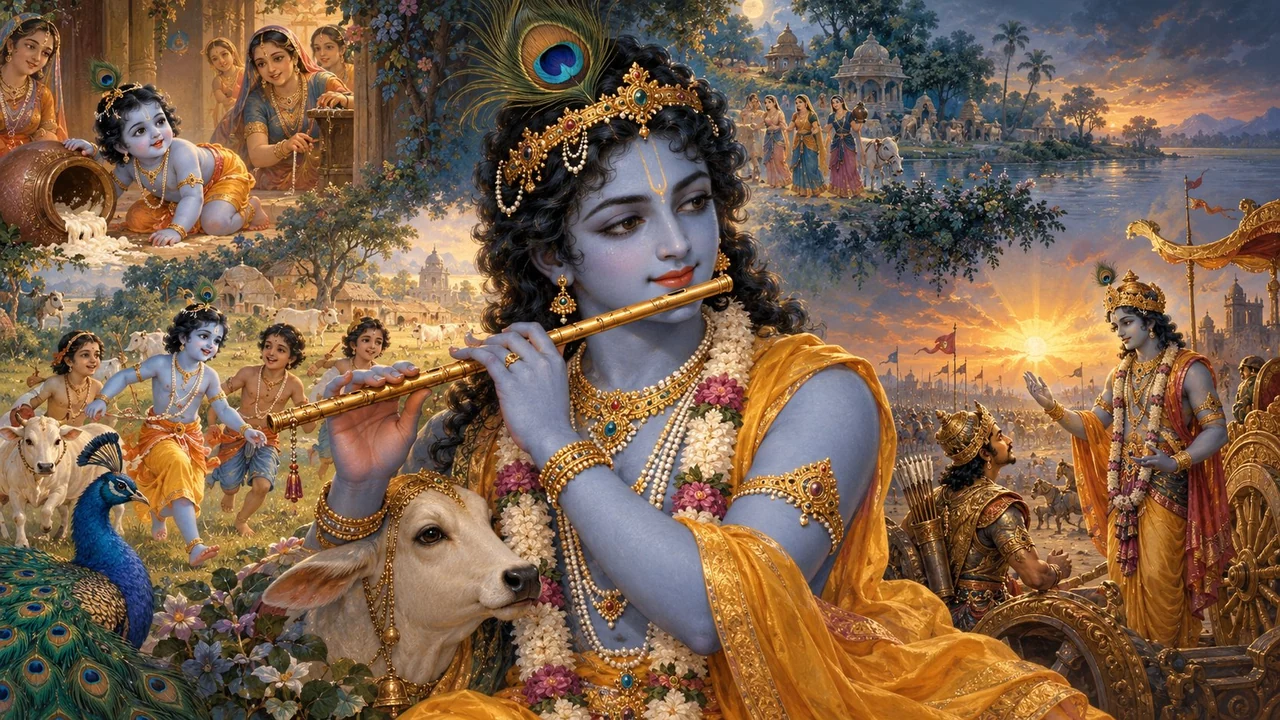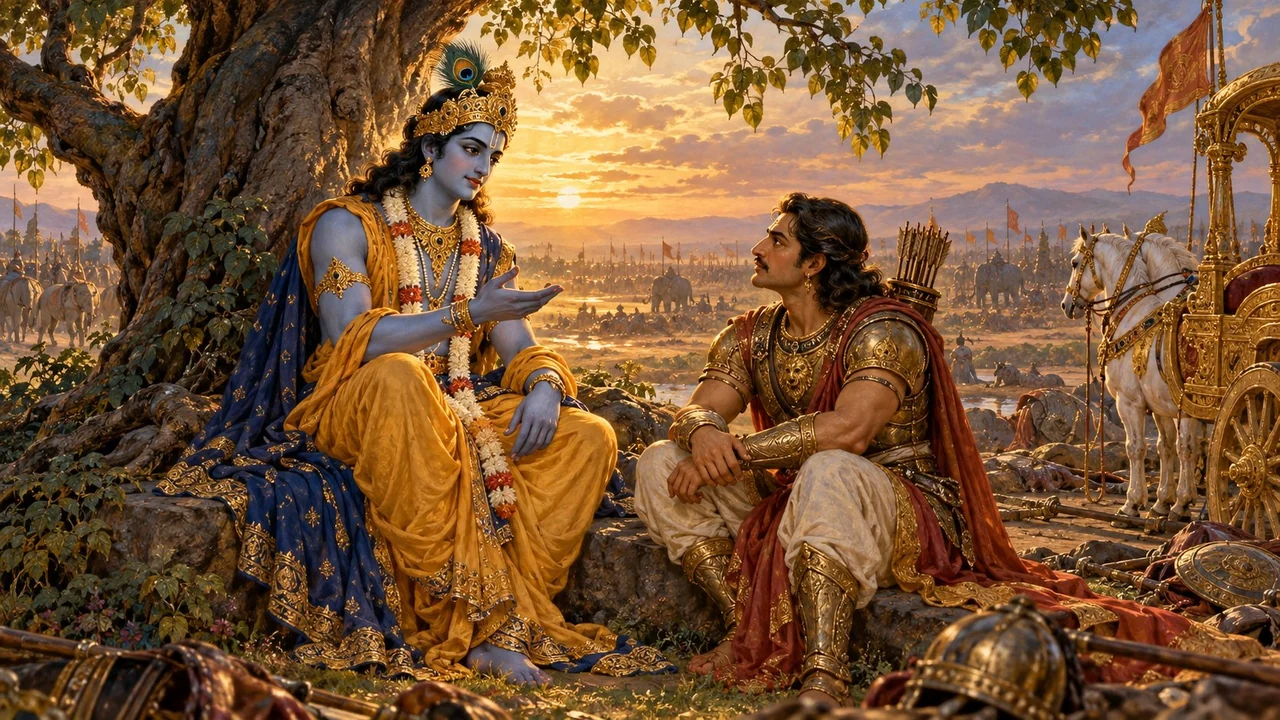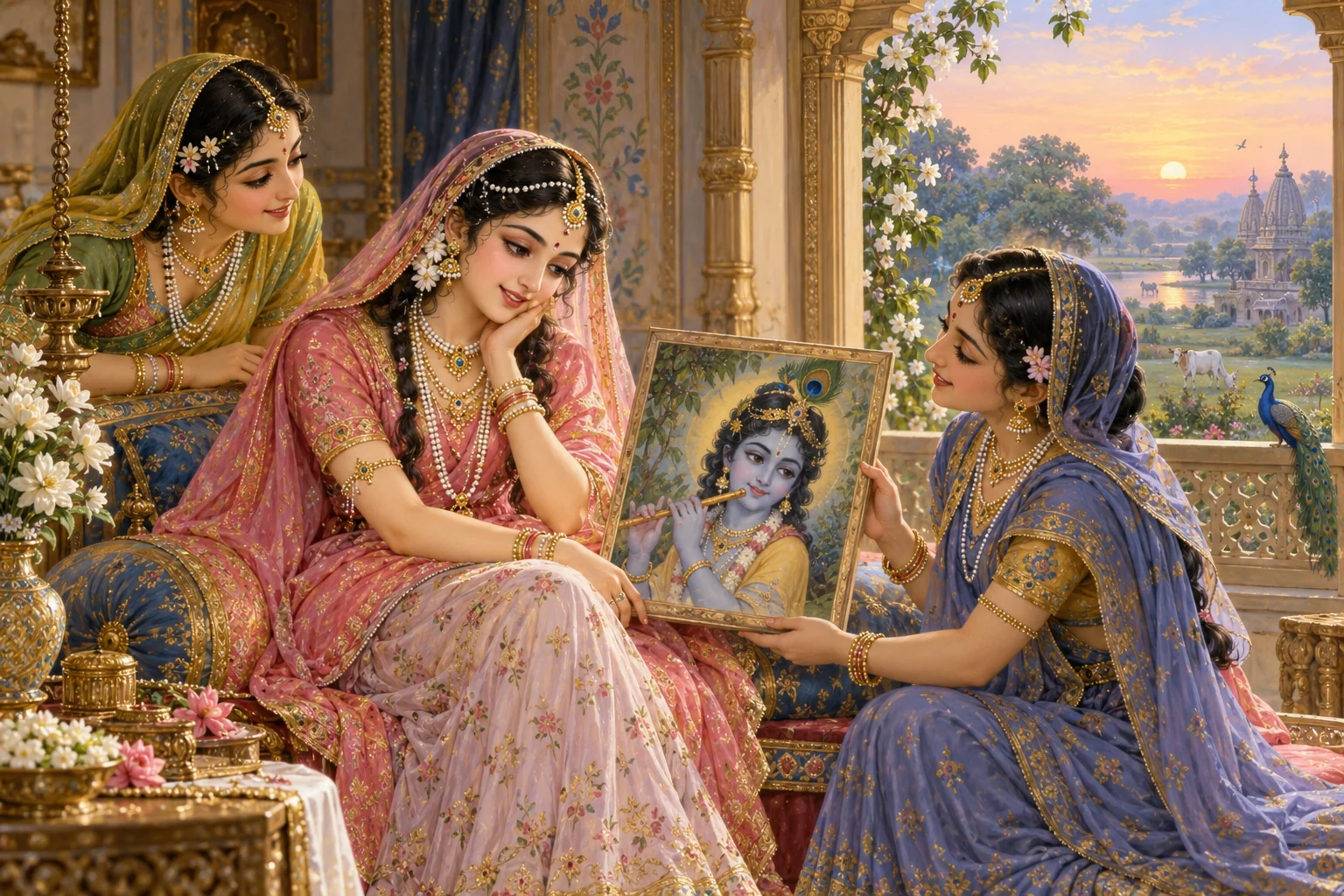
A picture of someone dear can make us happy and, at the same time, sharpen our awareness that the person is absent. A picture gives the eyes a form to
Read essay →6 October 2026 · Dr. Rajesh Takyar
Yashoda’s Love
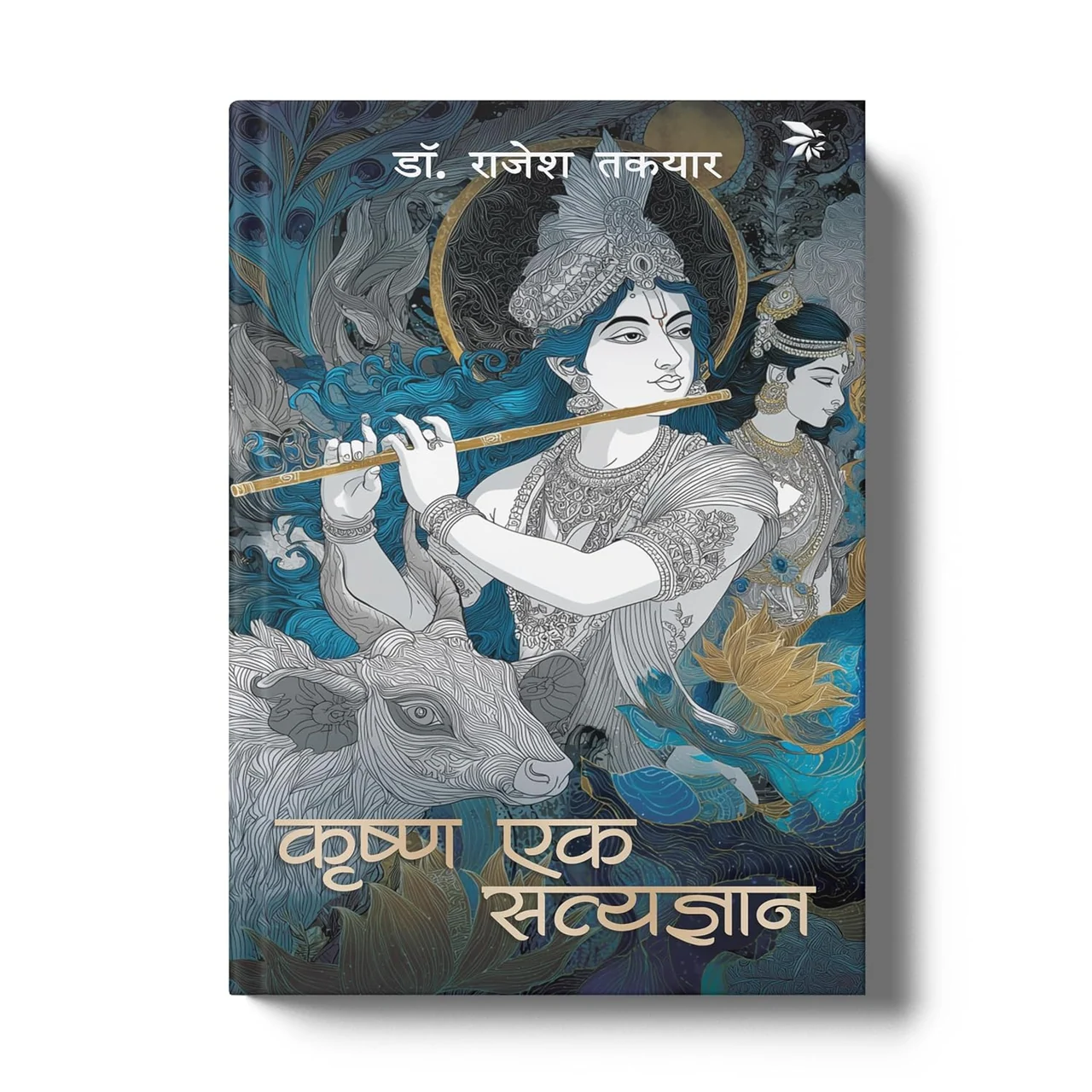
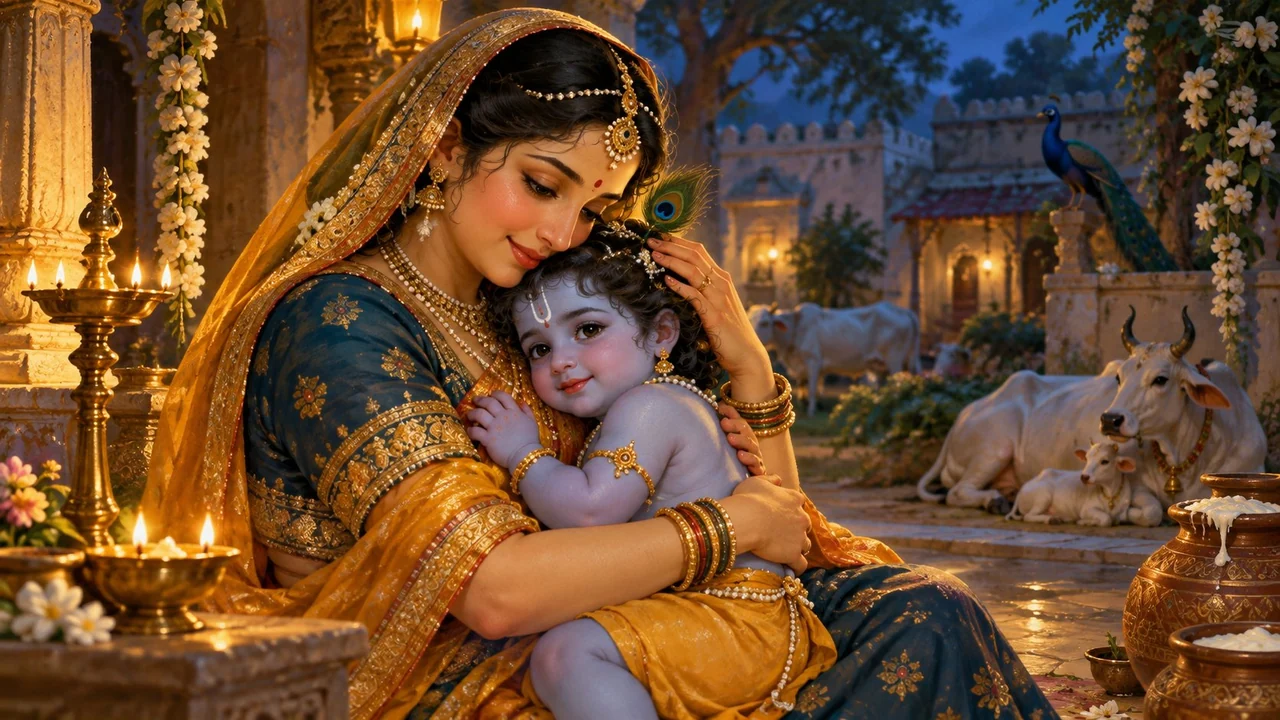
A child sits in his mother’s lap, yet he is also the divine figure in whom the mystery of creation rests. In the chapter “Yashoda Prem” of Dr. Rajesh Takyar’s original Hindi book Krishna Ek Satyagyan, these two images meet in Krishna. The reader encounters more than the familiar story of a little boy stealing butter. Yashoda’s love makes Krishna her own child, and he accepts the simplicity of that relationship. The chapter includes the mortar to which he is tied, the falling Arjuna trees, his eating earth, and the universe his mother sees in his mouth. Through these episodes one question keeps returning: whose power is greater in love—the one called infinite, or the mother standing before him?
A Small World in the Courtyard
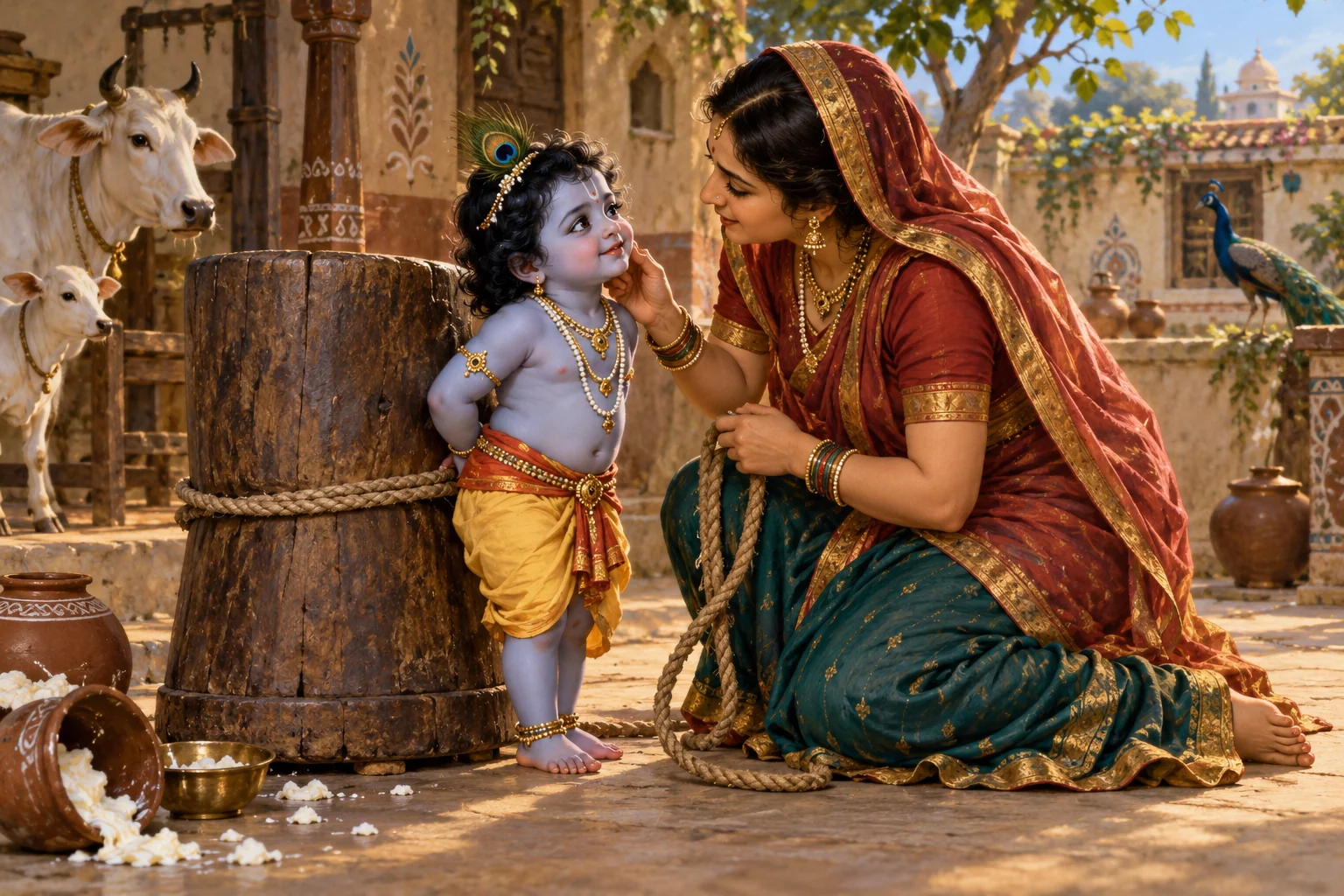
The book says that the one whom even the Vedas cannot fully contain is tied to a mortar in Yashoda’s courtyard. From outside, it looks like a child being disciplined. From within, it is a scene of maternal affection. Yashoda loves her child, so she tries to stop his mischief. Yet she is pained by his tearful face and eventually unties him. Keeping him bound is no victory for her. She wants to teach him, then bring him back into her care.
Yashoda’s love does not begin with a grand idea. It lives in waiting to see the child crawl, in the touch of his little hands, in the wish to hold him, and in looking closely at his face. The author recalls lines describing childhood in the Balkand to show the closeness between Kaushalya’s heart and Yashoda’s. This resemblance does not replace one story with another. It suggests that the language of motherhood can be tender in more than one narrative.
A mother sees a child’s growing moments as more than stages of development. His first steps, a stubborn tug at her clothes, his face held between her hands: each deepens their bond. That is why Yashoda’s joy in this chapter is bound to holding Krishna. She does not gather him close to prove a theory to the world. She wants her Kanha near her. In that closeness the divine does not disappear; it makes a home in the household.
Butter, Mischief, and Boundaries
Krishna’s habit of eating butter and sharing it with his friends is a familiar expression of childhood play. His lively nature brings laughter into the house, but a mother also needs to set limits. When Yashoda catches him taking butter, scolds him, and tries to tie him to the mortar, their relationship does not suddenly become cold. Affection and discipline are two parts of the same care. A child must learn that every wish cannot be granted at once; a mother must ensure that her discipline does not leave love behind.
The book also places a spiritual meaning in this binding. Yashoda tries, but it is through Krishna’s own divine play that the rope reaches around his waist. He whom the qualities of nature cannot bind allows himself to be bound by his mother’s rope of love. This is connected with the name Damodara. If we call this merely a miracle and move on, we miss the life of the home within the story. Its beauty also lies in Krishna’s willingness to let his mother fulfill her role.
Yashoda is not solving a philosophical puzzle at that moment. Her mischievous child stands before her, and she has something to say about his behavior. Krishna, too, remains within their relationship. The reader may later consider its wider spiritual meaning, but the mother is a mother first. Perhaps that is why this episode is so loved: affection can meet the divine without losing its own identity. Yashoda need not know the entire cosmic form of her child in order to love him.
The Child Who Went Out with the Mortar
Yashoda turns to her work, telling Krishna to free himself if he can. According to the book, he pulls the mortar out of the courtyard. It catches between two Arjuna trees standing together; when he pulls, the trees fall. The people of Vraja are astonished. They see a child who seems to have escaped death. At first, no one grasps the full meaning of the divine play. Their immediate concern is whether the child is safe.
The villagers’ response grounds the episode in human feeling. The reader knows Krishna is divine, but that knowledge cannot silence a mother’s racing heart. To Yashoda, the mortar and the falling trees are not subjects for debate; they are a danger to her child. Fear belongs to love too. When someone dear to us faces danger, our first impulse is to save them and draw them close. The chapter gives that impulse its place within a divine story.
Nanda Baba frees Krishna from the mortar and takes him into his arms. It is like finding a child thought lost. The falling trees hint at Krishna’s strength, yet to his family he remains their beloved boy. Two ways of seeing proceed together. A spiritual reader may recognize boundless power; a family sees its child return safely. We need both views to feel the full force of the scene.
The Universe in His Mouth
Another episode in the chapter takes place by the Yamuna. Other children tell Yashoda that Krishna has eaten earth. She first trusts her Kanha, then asks Balarama. Krishna is told to open his mouth. In the book’s account, the open mouth is no longer merely a child’s mouth. Yashoda sees many worlds and the whole universe within it. For a moment, the familiar world around her changes.
The power of this scene comes from its vastness and its intimacy at once. Within the face she holds in her hands, a mother glimpses the immeasurable. Yet afterward she must go home, feed the child, and look after him. A divine vision does not cancel her daily responsibilities. It adds wonder to her love. Even after seeing Krishna’s immensity, she continues to relate to him in the language of childhood.
Sometimes we assume a spiritual experience must lift us above ordinary relationships. Yashoda’s story asks the opposite question: can a glimpse of greatness make us more attentive to those nearest us? If the mystery of creation is truly present beside a child’s smile, how could seeing it make us less careful with the child? This question quietly echoes through the chapter’s domestic scenes.
A Longing Before His Birth
The author also tells of the devotion of Drona and Dhara behind Yashoda’s closeness with Krishna. They were devotees of Hari and wished for a child. With Brahma’s permission, they undertook severe austerities. Within the religious narrative, their practice expresses a long desire, a long wait, and surrender. The bond between Yashoda and Krishna is presented as more than an unexpected gift; behind it lies an old prayer of love.
We should not turn this episode into a rule for every parent’s circumstances. The story is not written to account for every family’s joy or sorrow. It belongs to a devotional tradition that gives shape to the desire to hold God in one’s arms. The longing to call someone one’s own, followed by the daily work of living that bond, finds expression in Yashoda’s actions.
What the Rope of Love Teaches
The rope helps us distinguish holding someone captive from holding a relationship together. An ordinary bond can take away freedom. Yashoda’s rope, too, serves as discipline in the story, so her responsibility as a mother still matters. Yet in the author’s reading, fear is not the deciding force; affection is. Krishna does not turn away from his mother. Their bond becomes a cherished place for his divine play. Love comes to mean making room for each other more than keeping a tight grip.
In everyday life, this story should never become an excuse to claim ownership over a child. The dignity of Yashoda’s conduct lies in the fact that his tears move her even after she has scolded him. When tenderness disappears from a teaching relationship, only control may remain. The chapter invites us to protect children, understand their playfulness, and preserve their dignity while setting boundaries.
Another lesson of maternal affection is being present. A mother waits for her child to grow, wants to hear his words, and notices his smallest movements. We often remember the grand occasions and forget the little ones. Yet most of a relationship is made of those ordinary minutes. The story of Yashoda and Krishna makes a household courtyard seem like a place of worship because love is repeatedly put into action there.
One further detail matters: Yashoda does not need complete knowledge at every moment. Sometimes she sees the child’s mischief, sometimes danger, sometimes the universe. Her view changes, while the thread of affection continues. People we love surprise us too. If we give up claiming to know them completely and continue to listen, observe, and stay with them, our relationships may become truer. Yashoda’s love is a picture of that humble closeness.
At the end, remember Krishna tied to the mortar. He whom the Vedas seek to understand looks at his mother in her courtyard. Her heart moves between correction and compassion. The world may sing of Krishna’s power; at that moment Yashoda sees his tears. Perhaps that is why love in this story announces no conquest. It unties the rope, takes the child into its arms, and walks home with him.
Was this essay helpful?