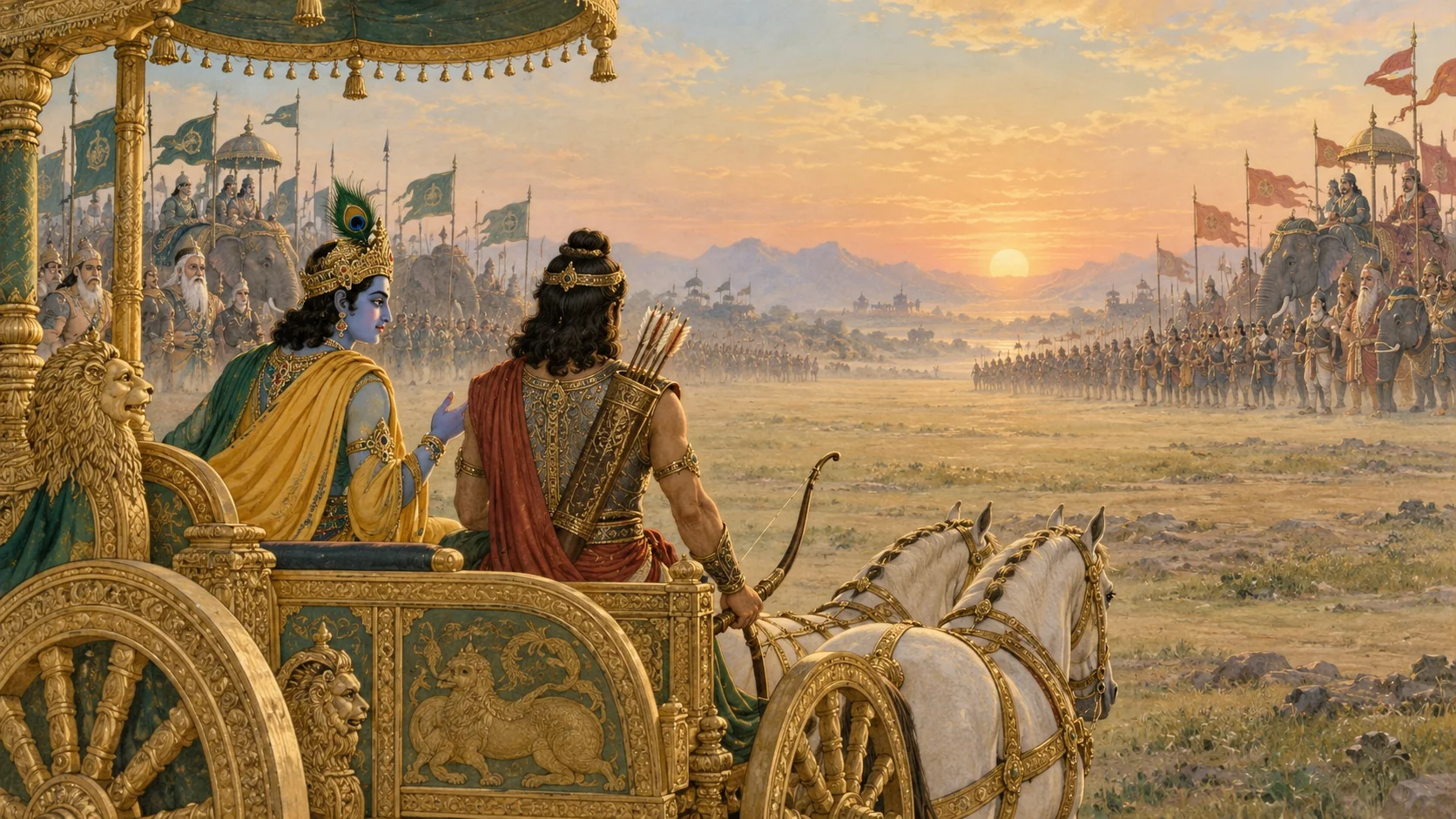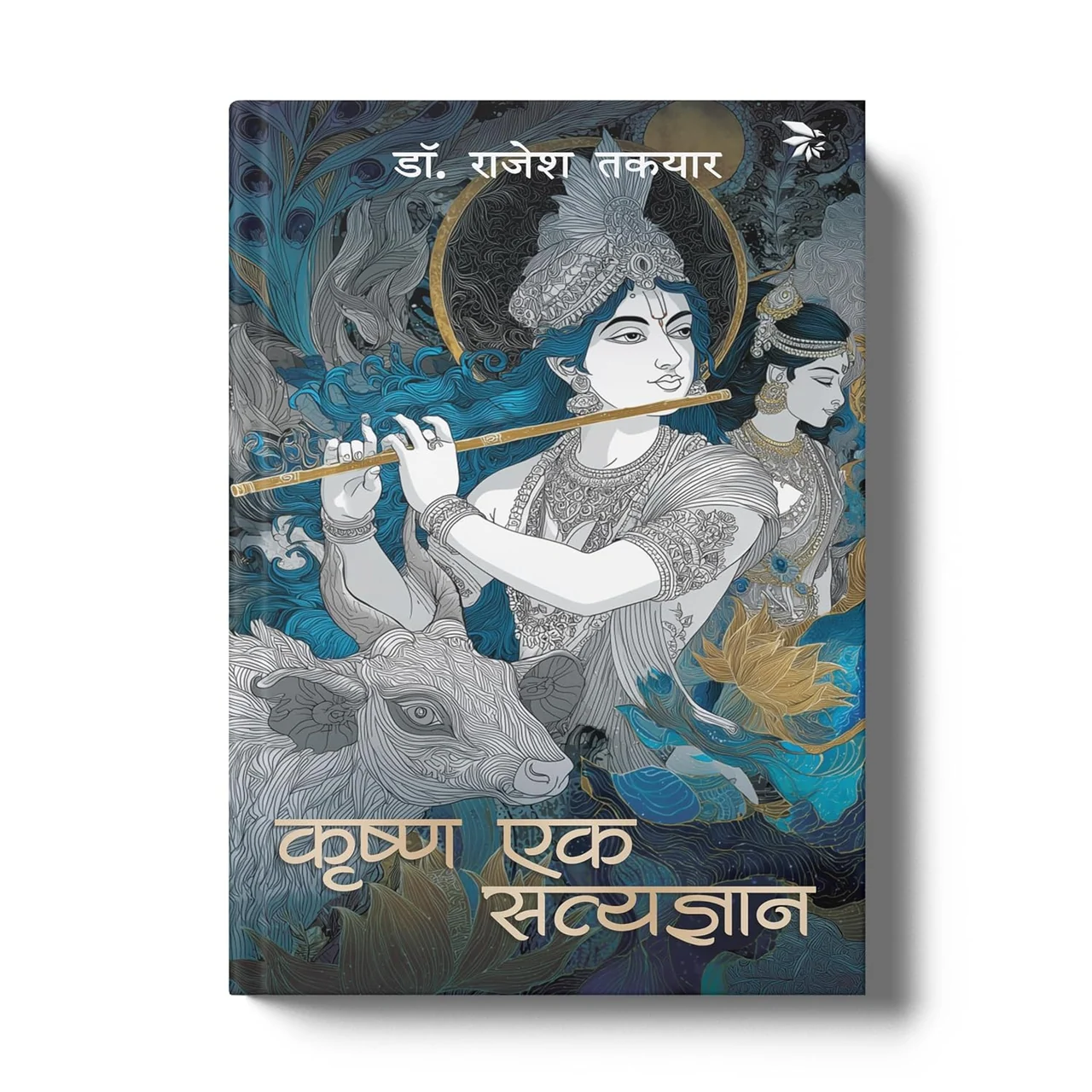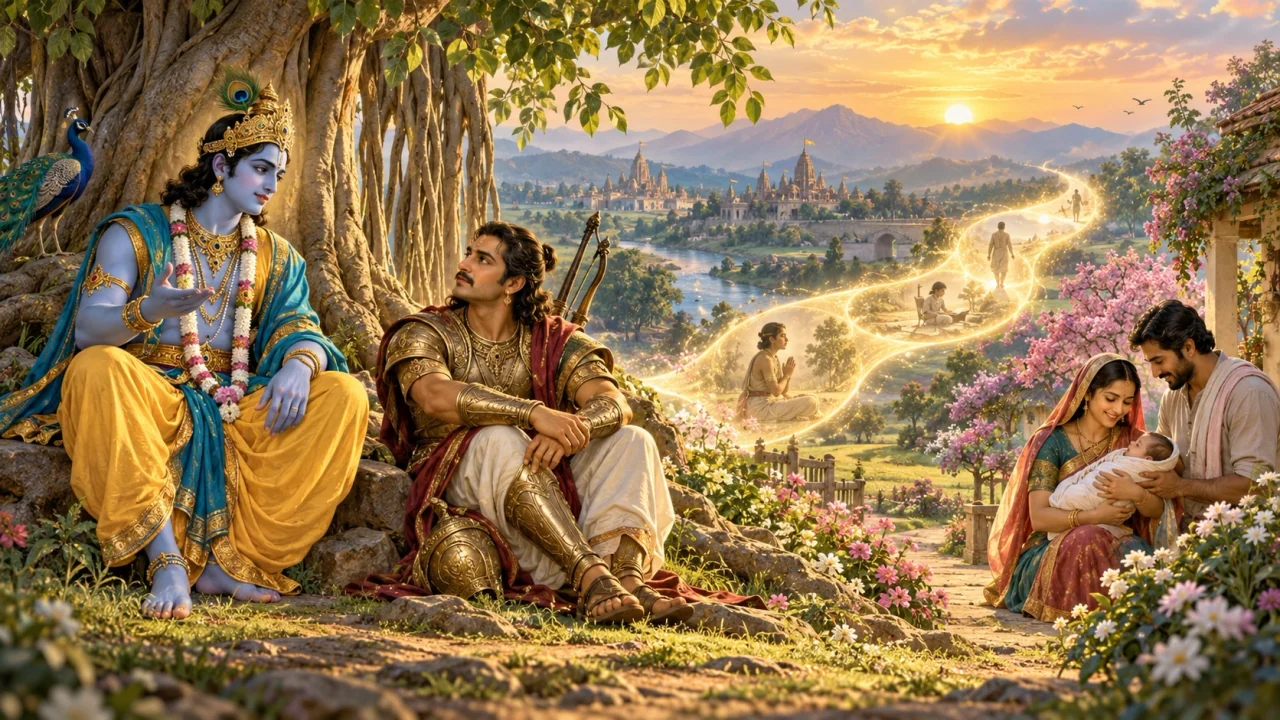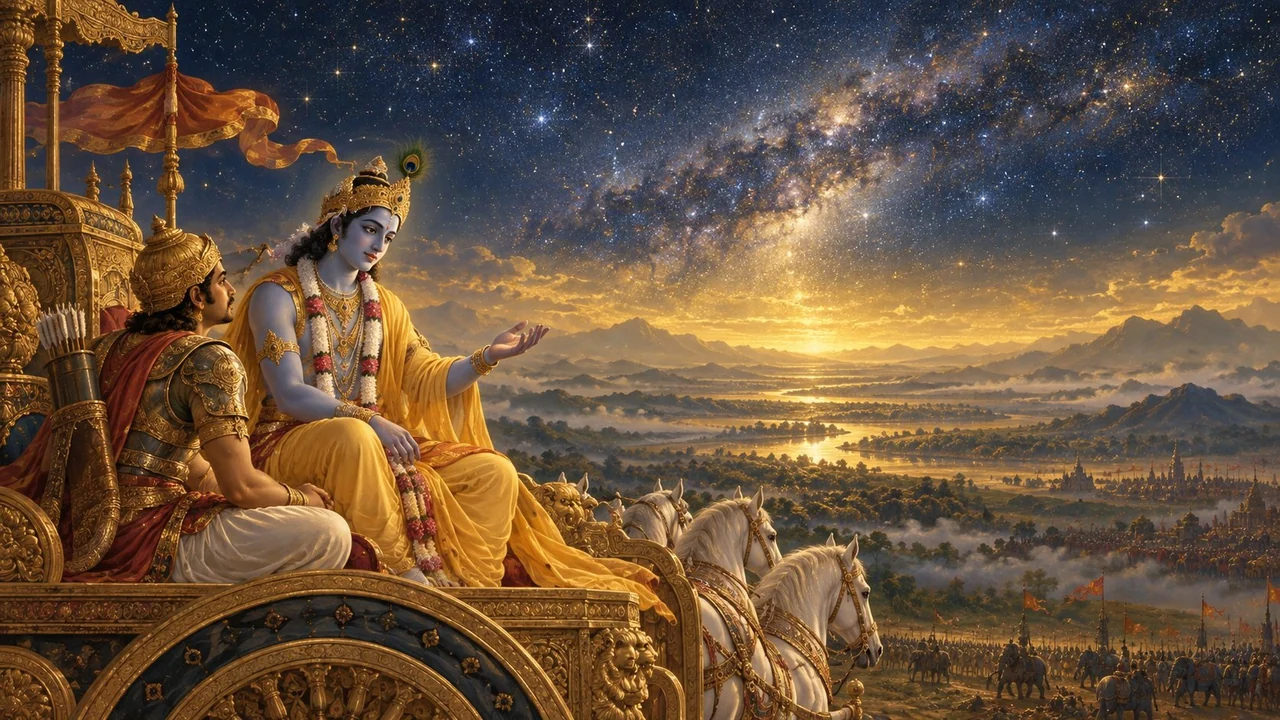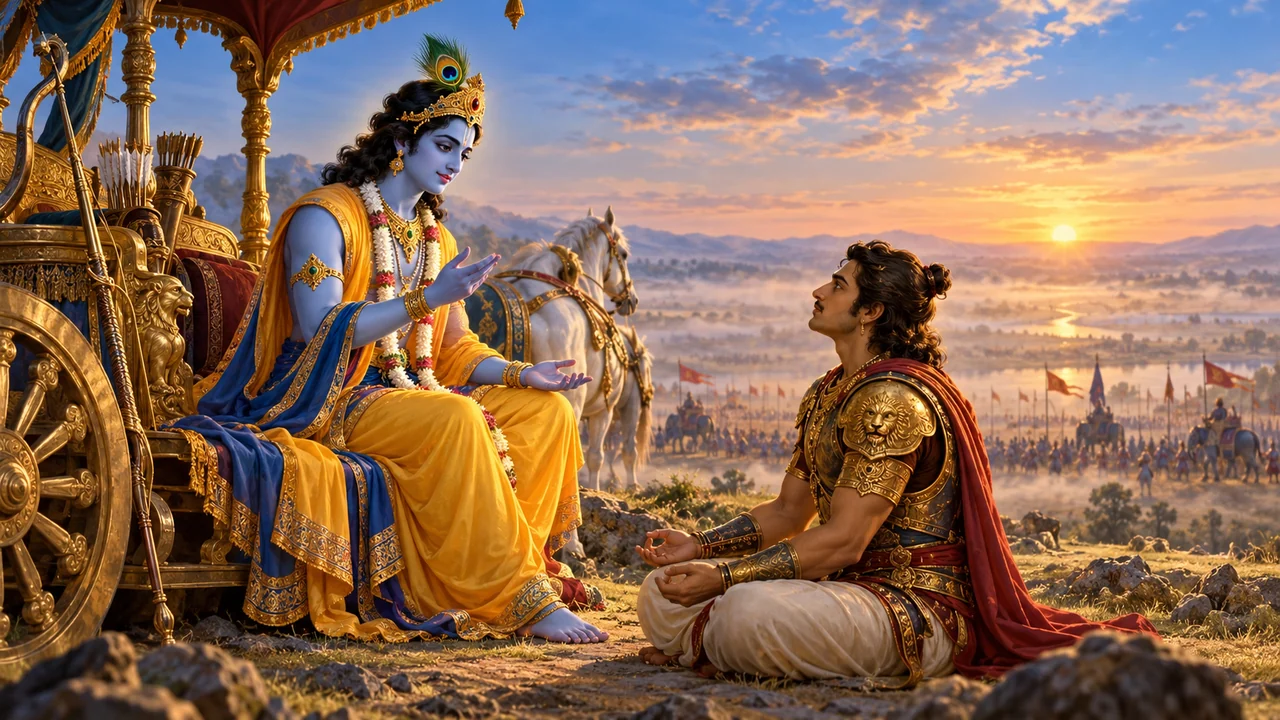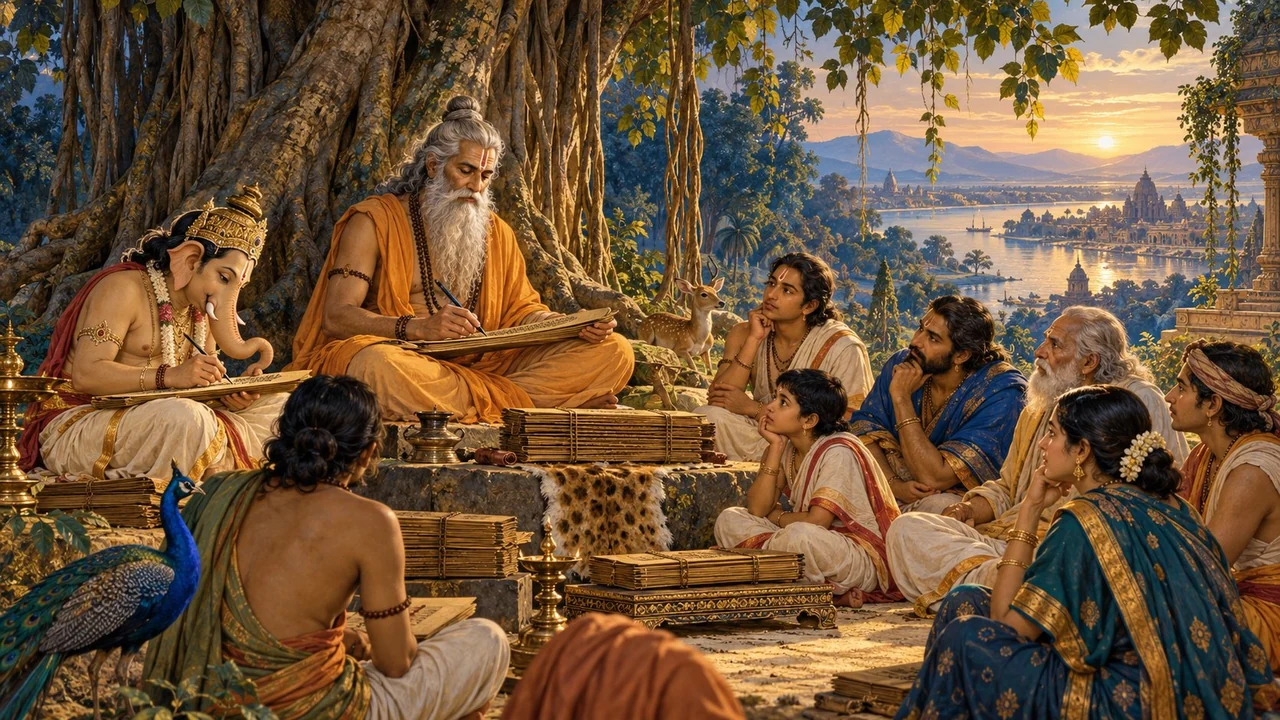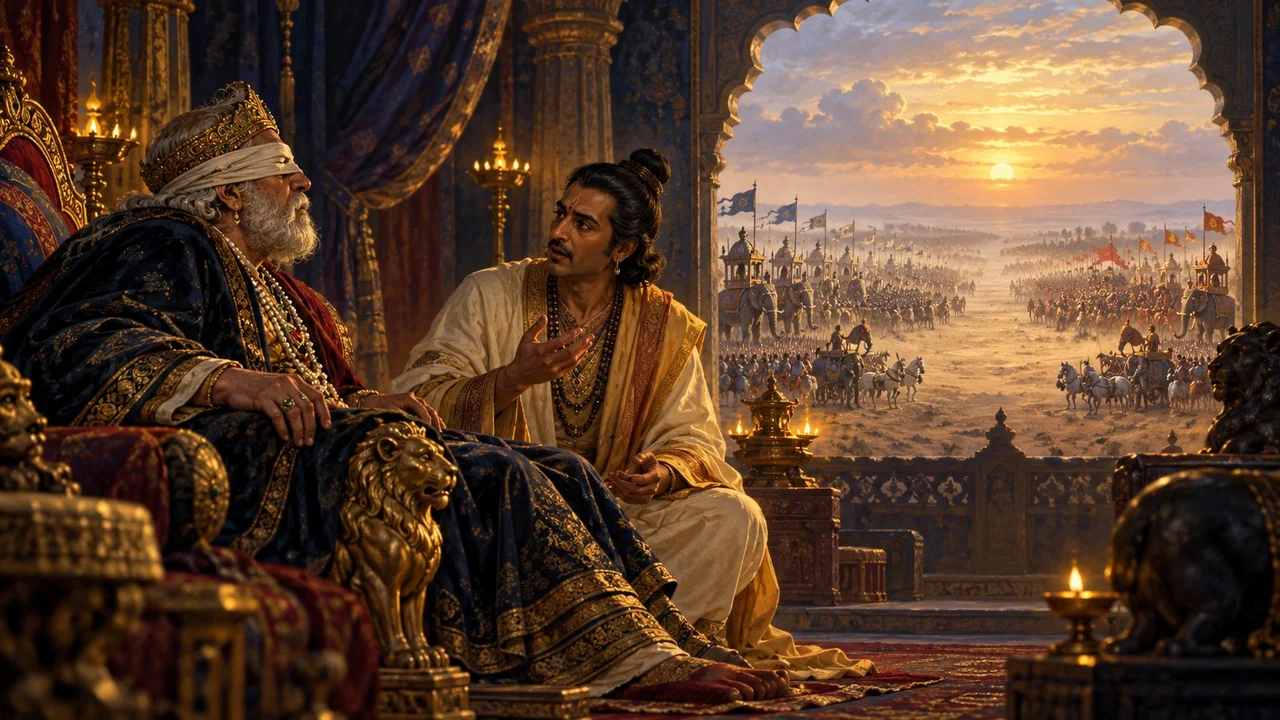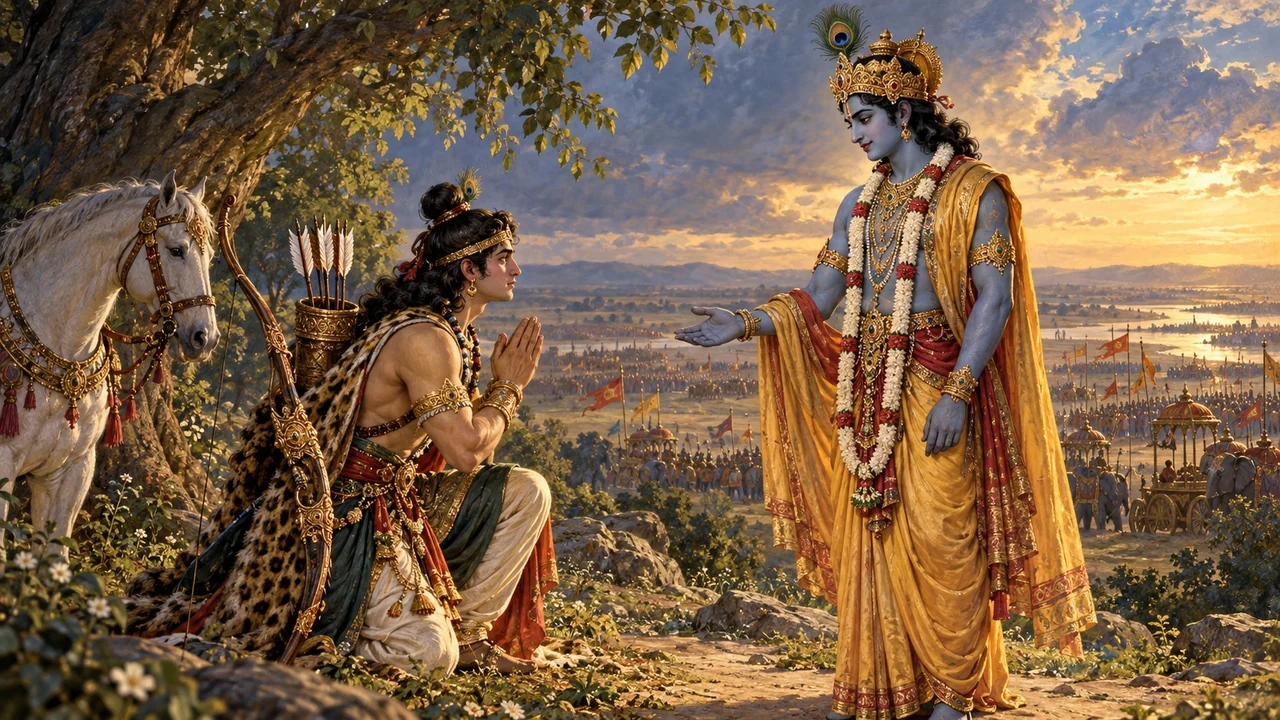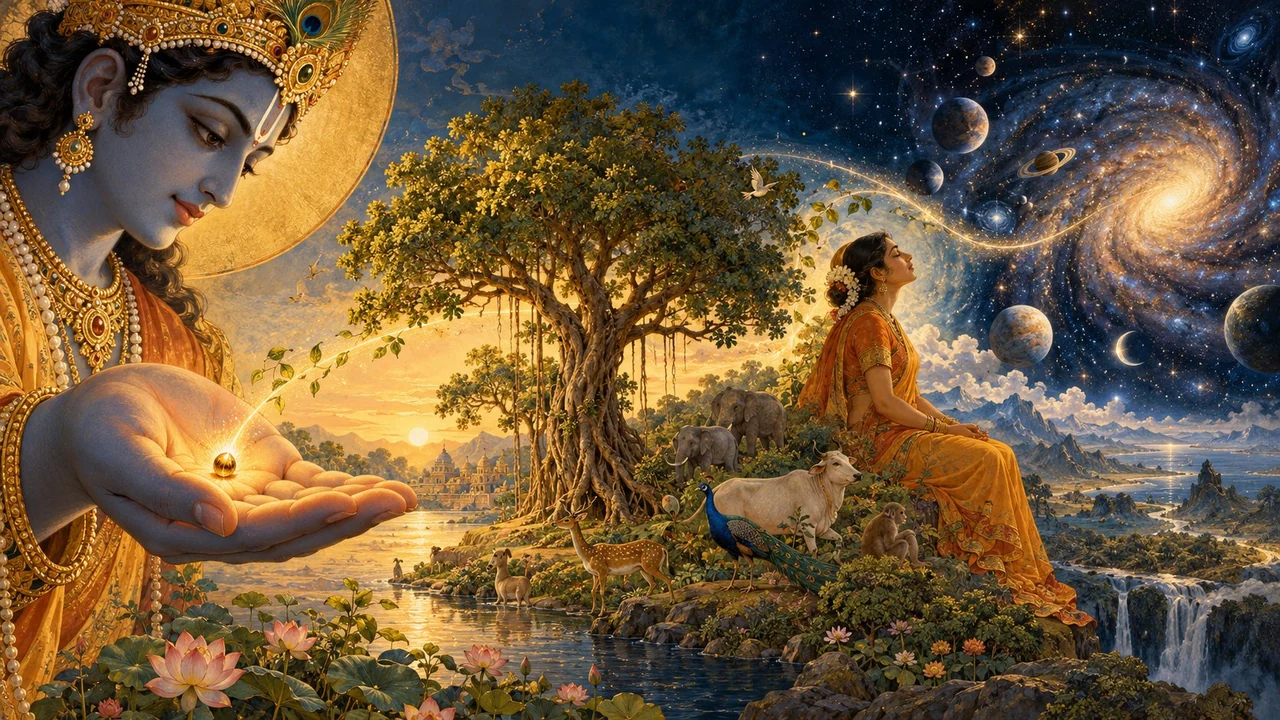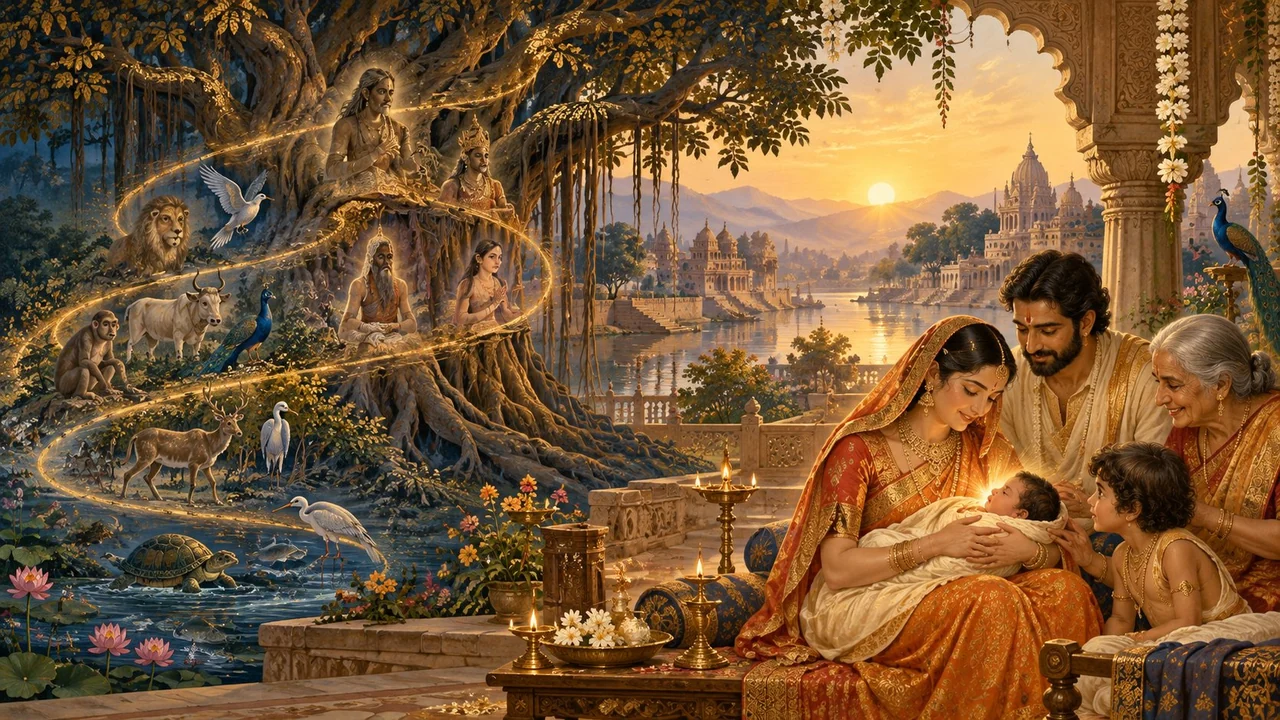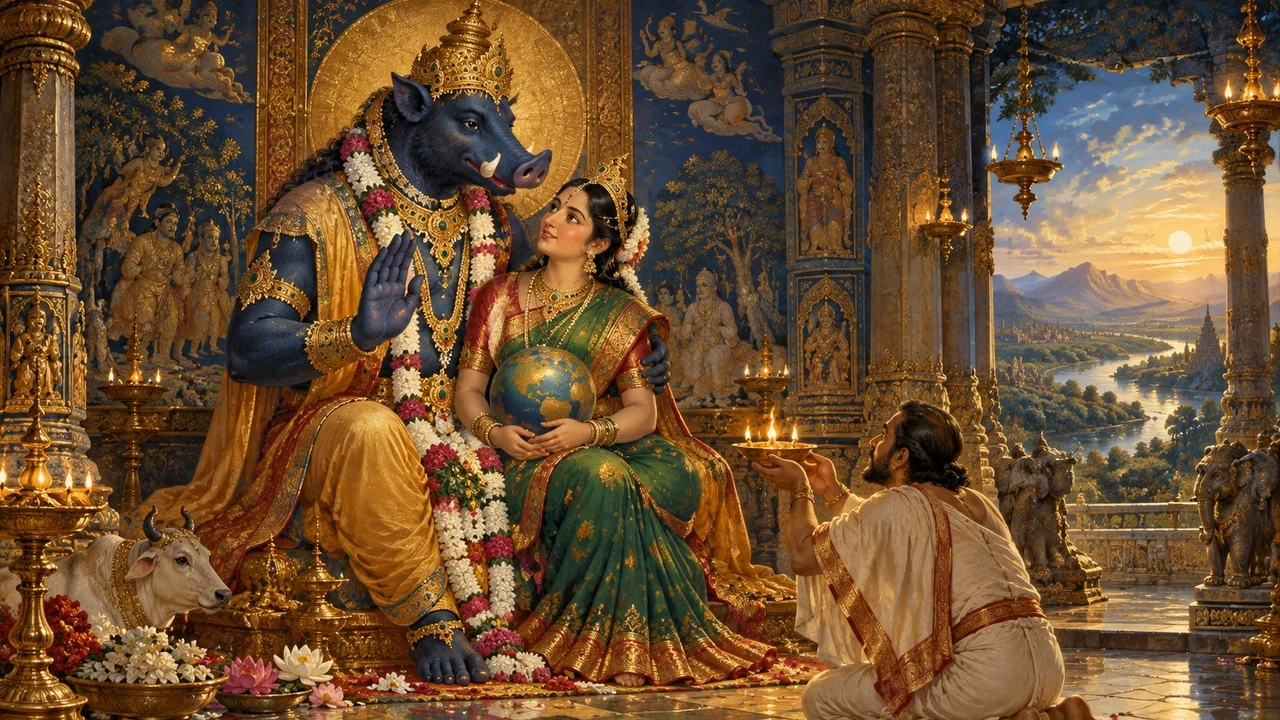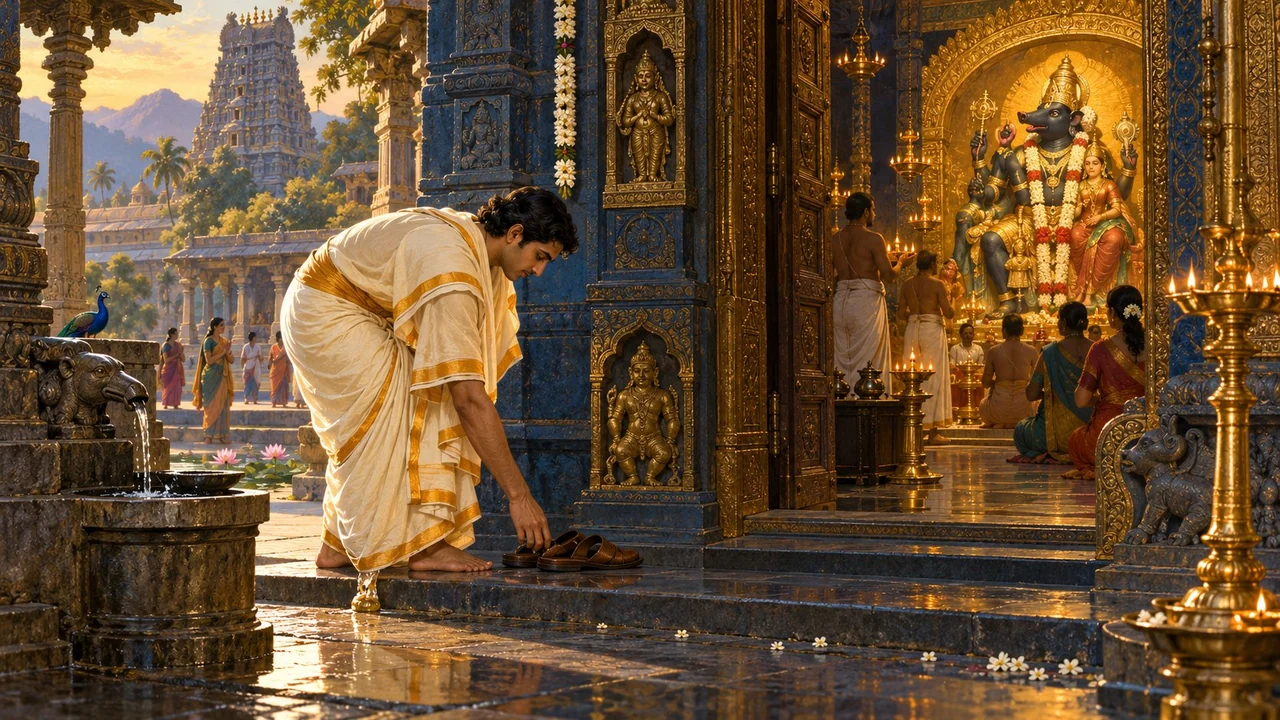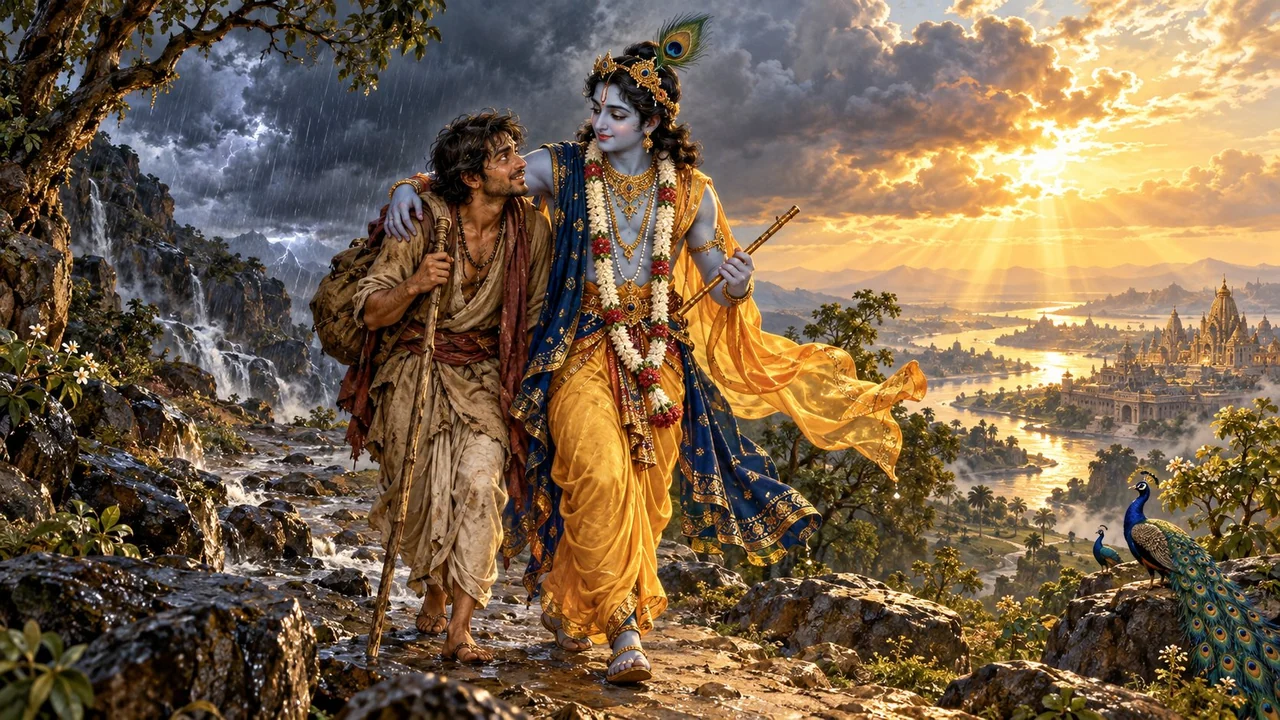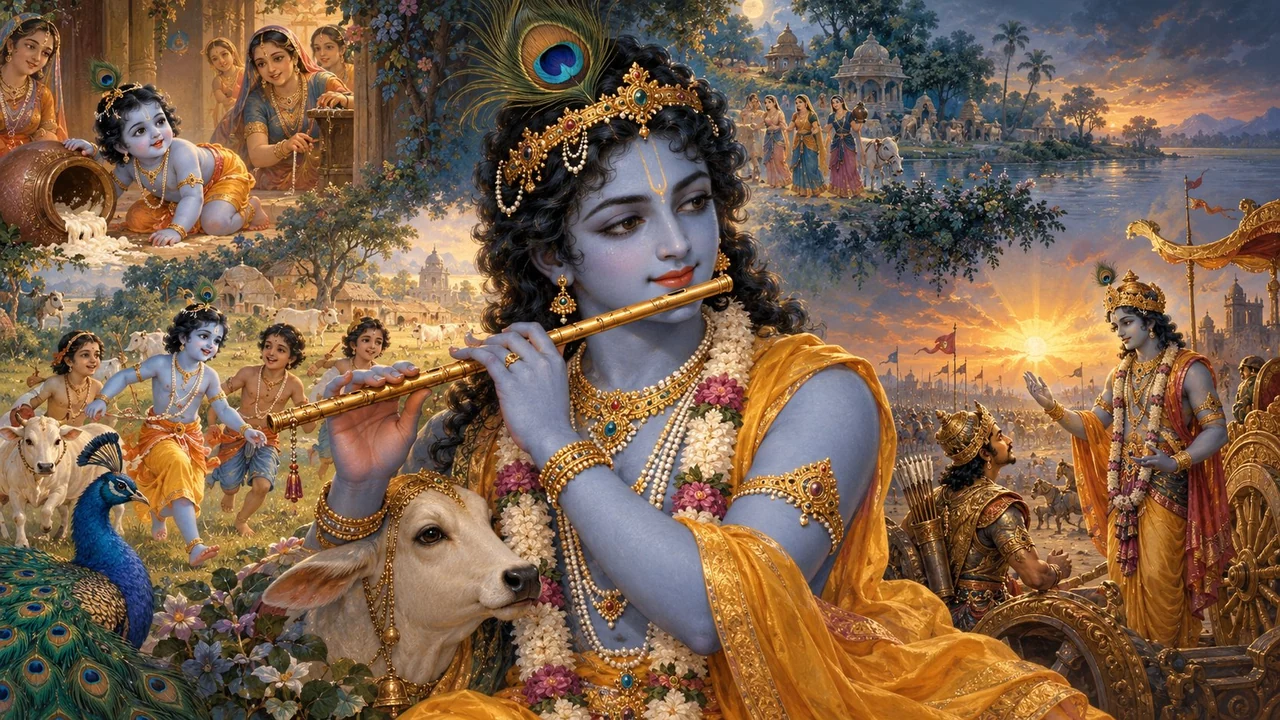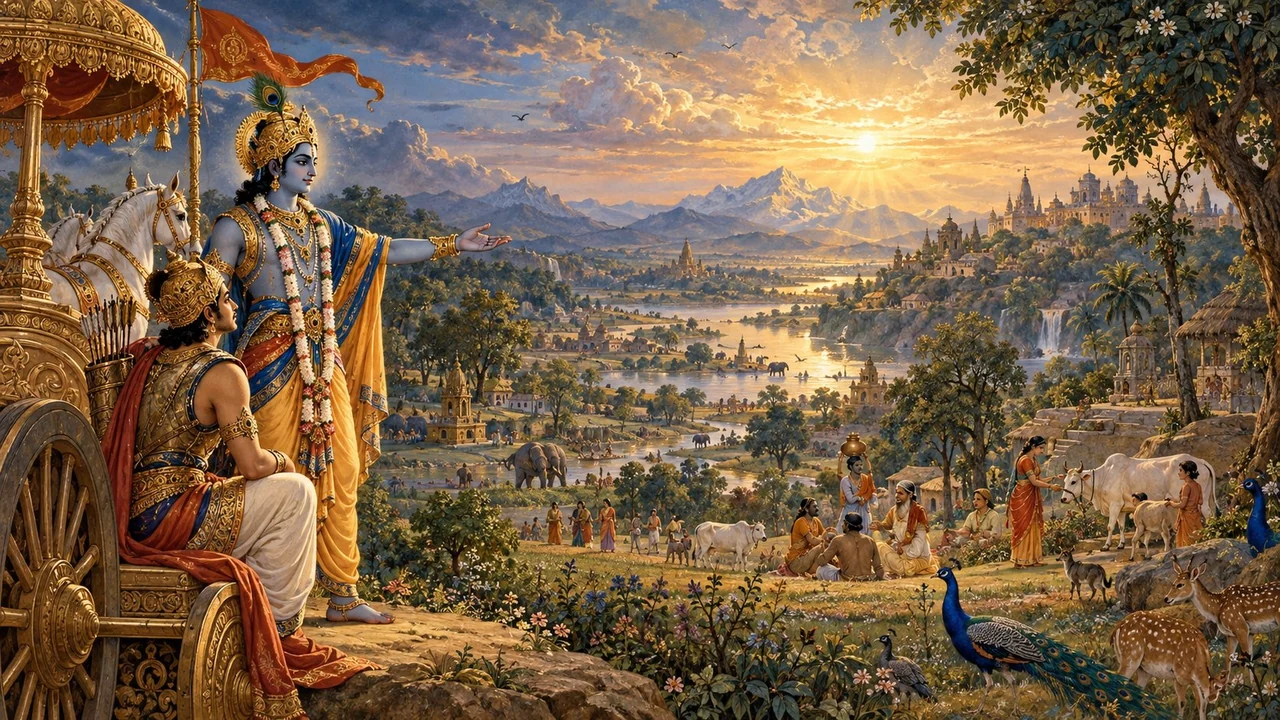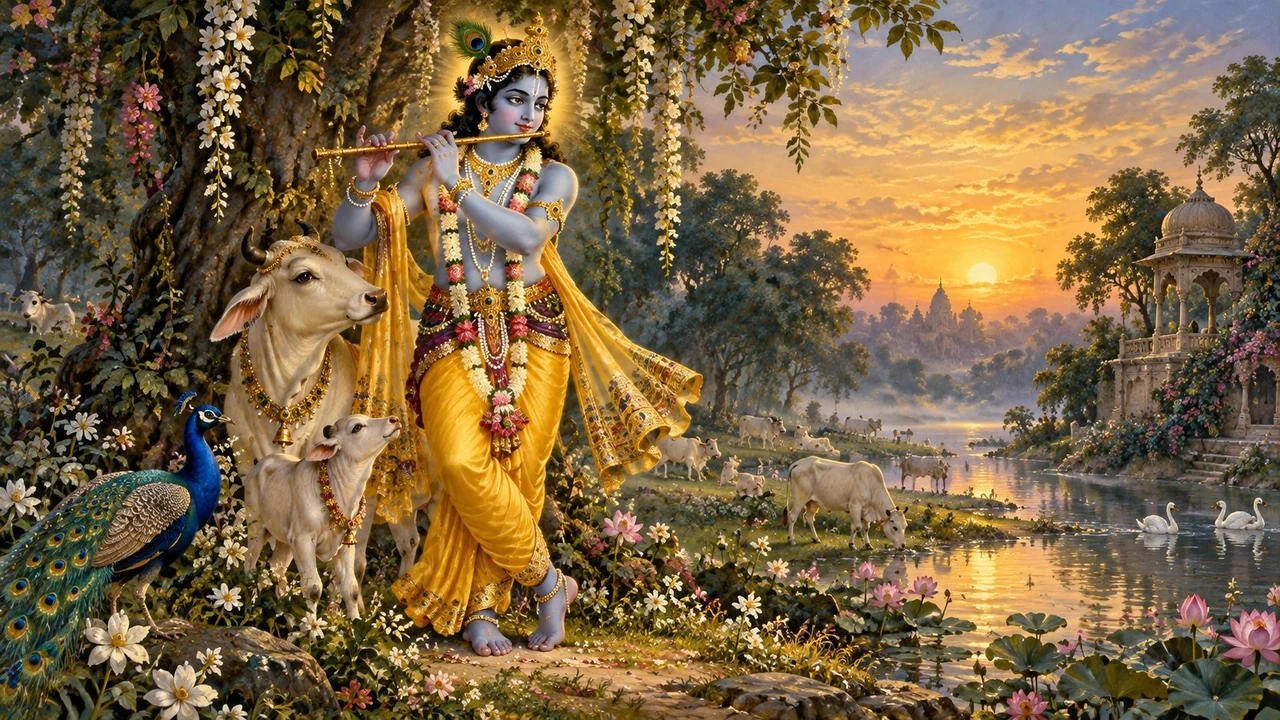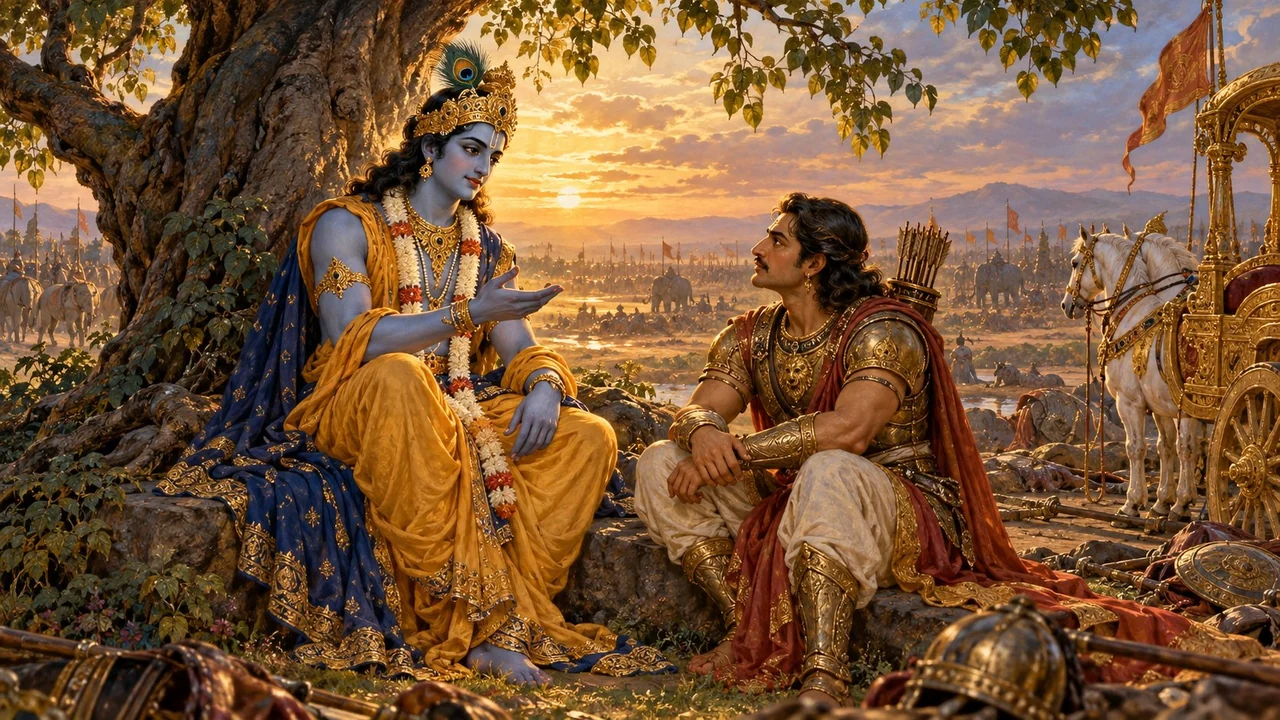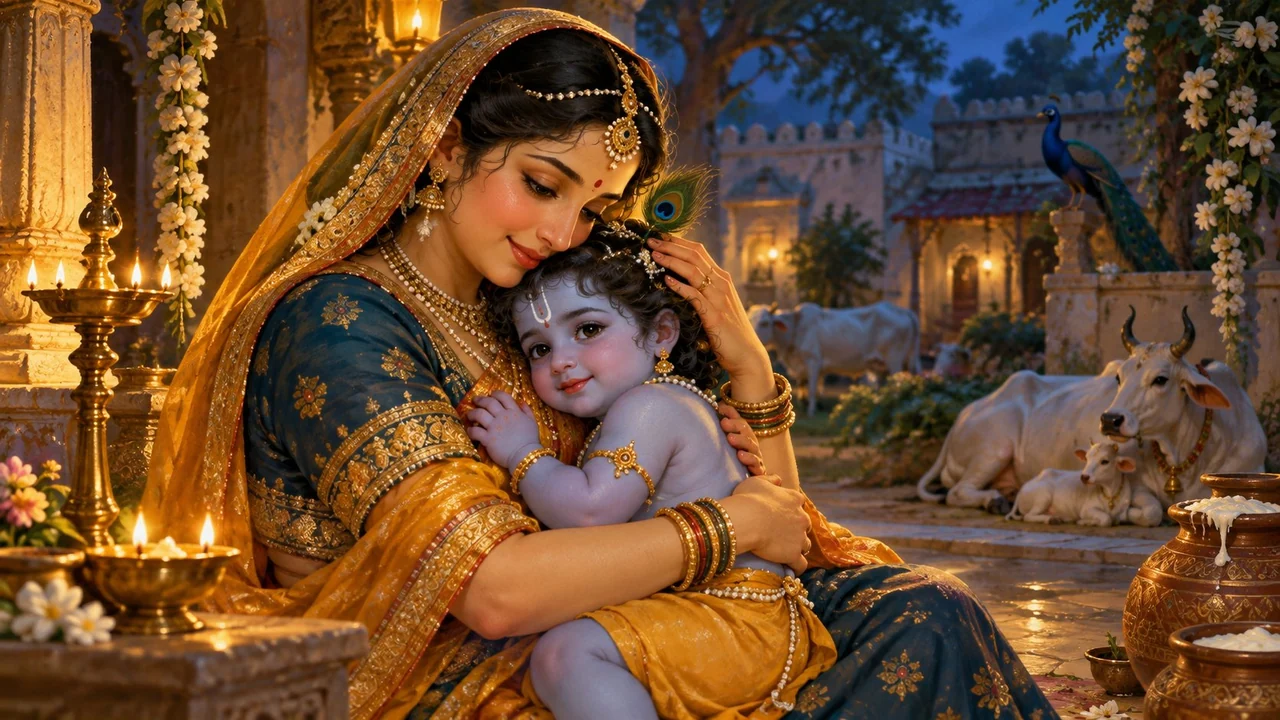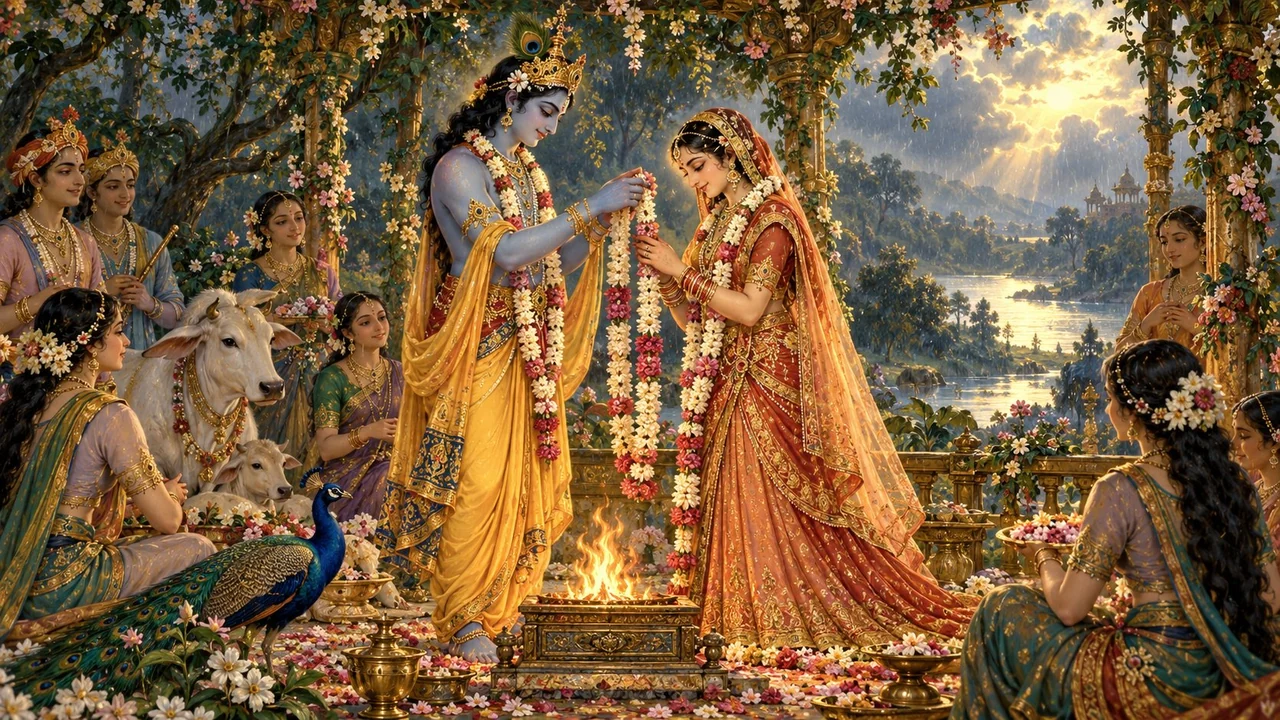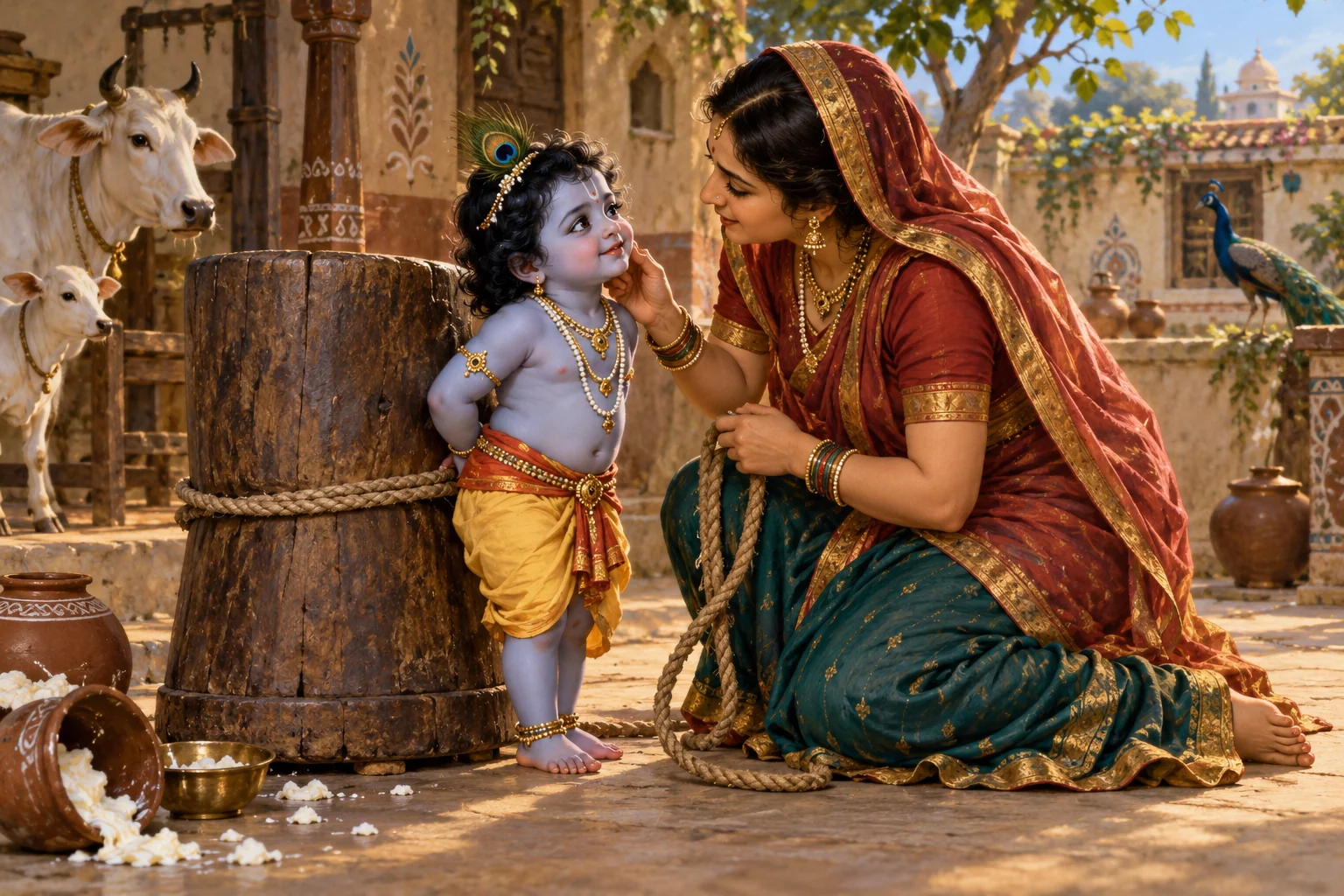
A child sits in his mother’s lap, yet he is also the divine figure in whom the mystery of creation rests. In the chapter “Yashoda Prem” of Dr. Rajesh
Read essay →6 October 2026 · Dr. Rajesh Takyar
Radha and the Portrait of Krishna
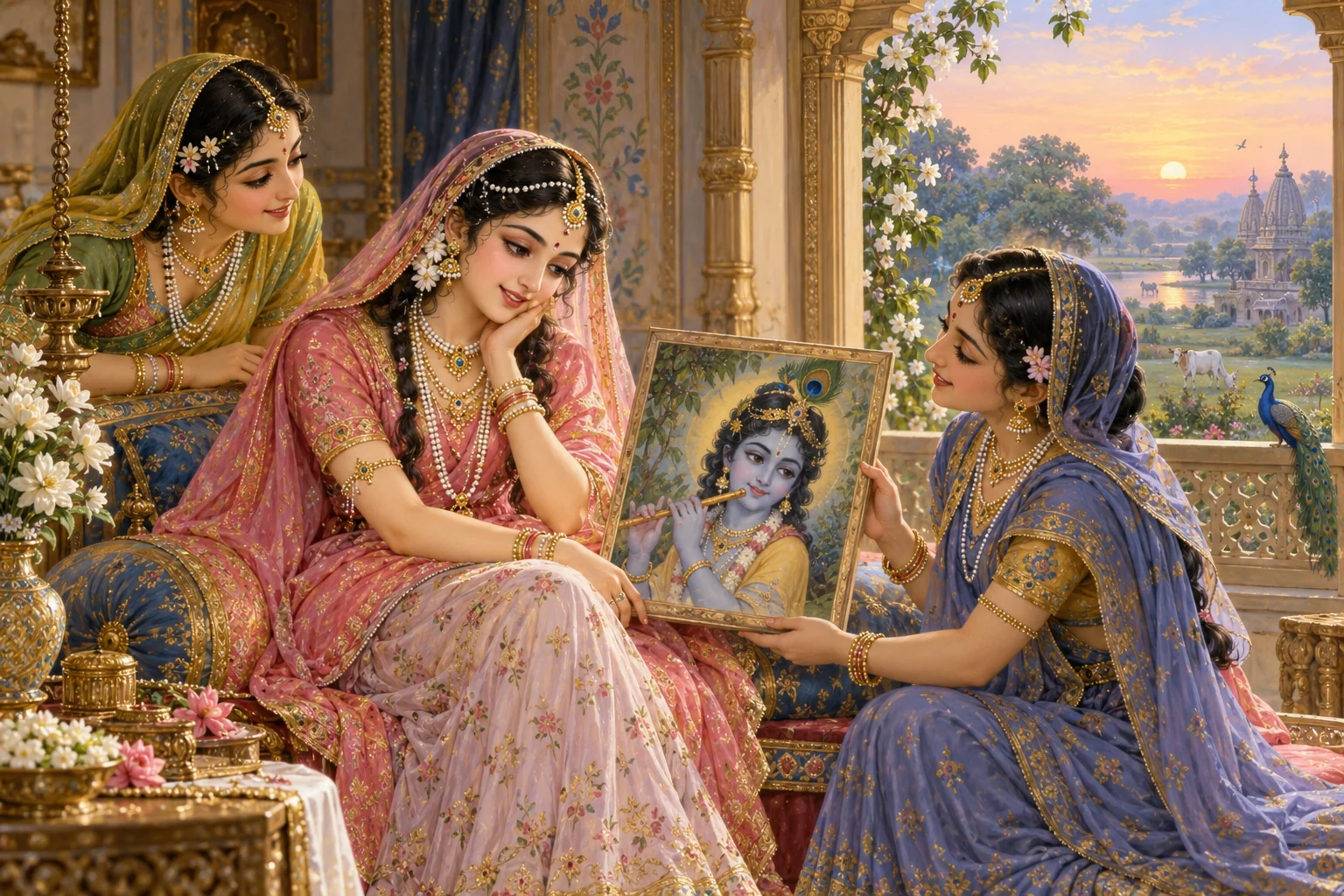
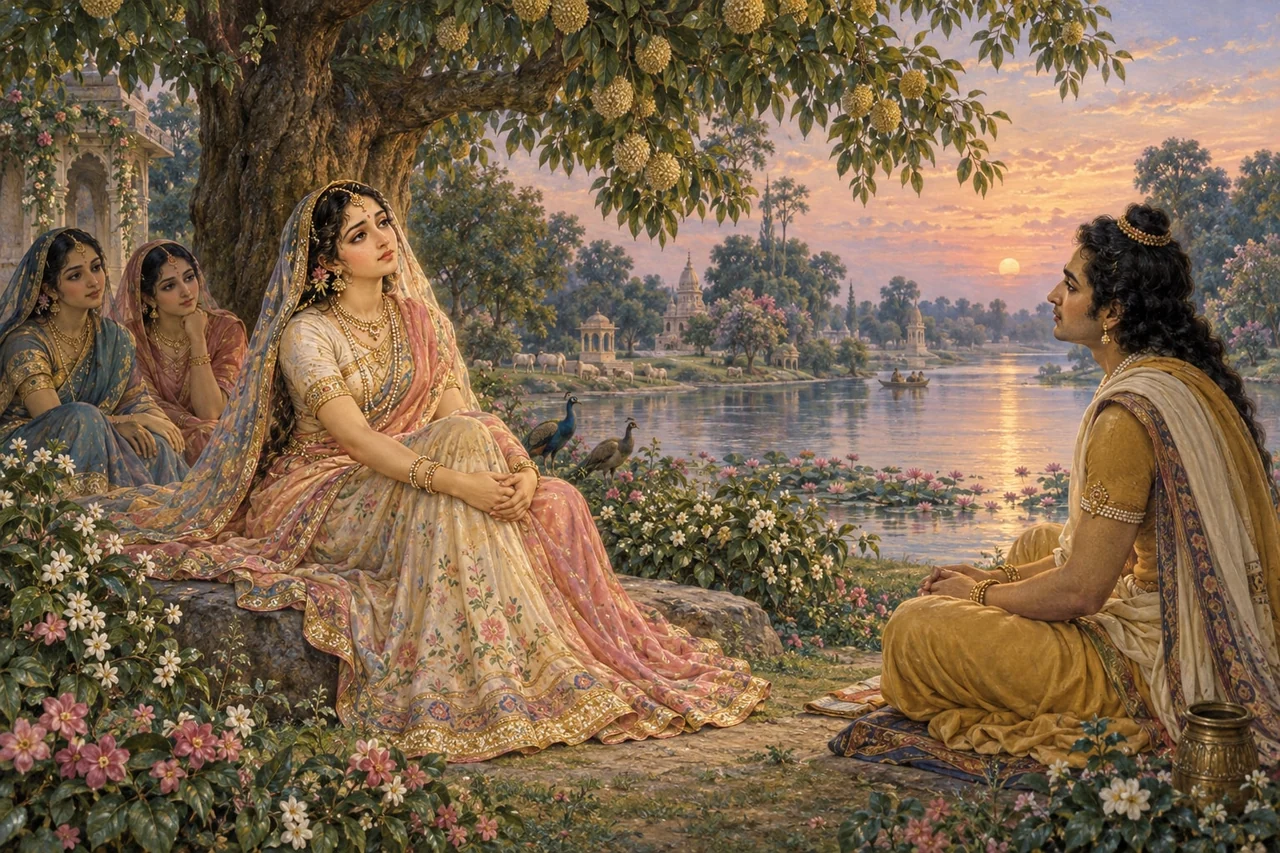
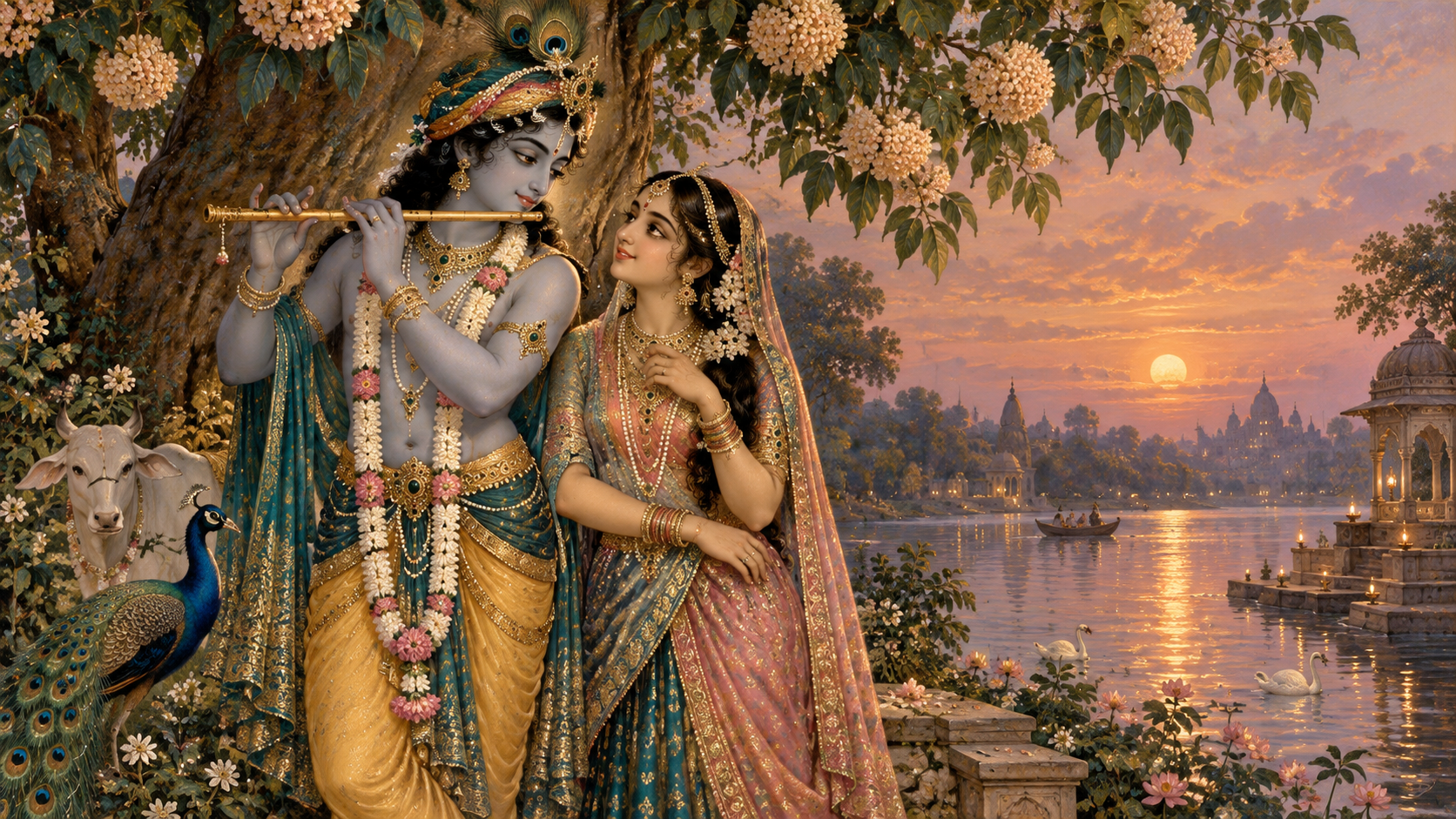
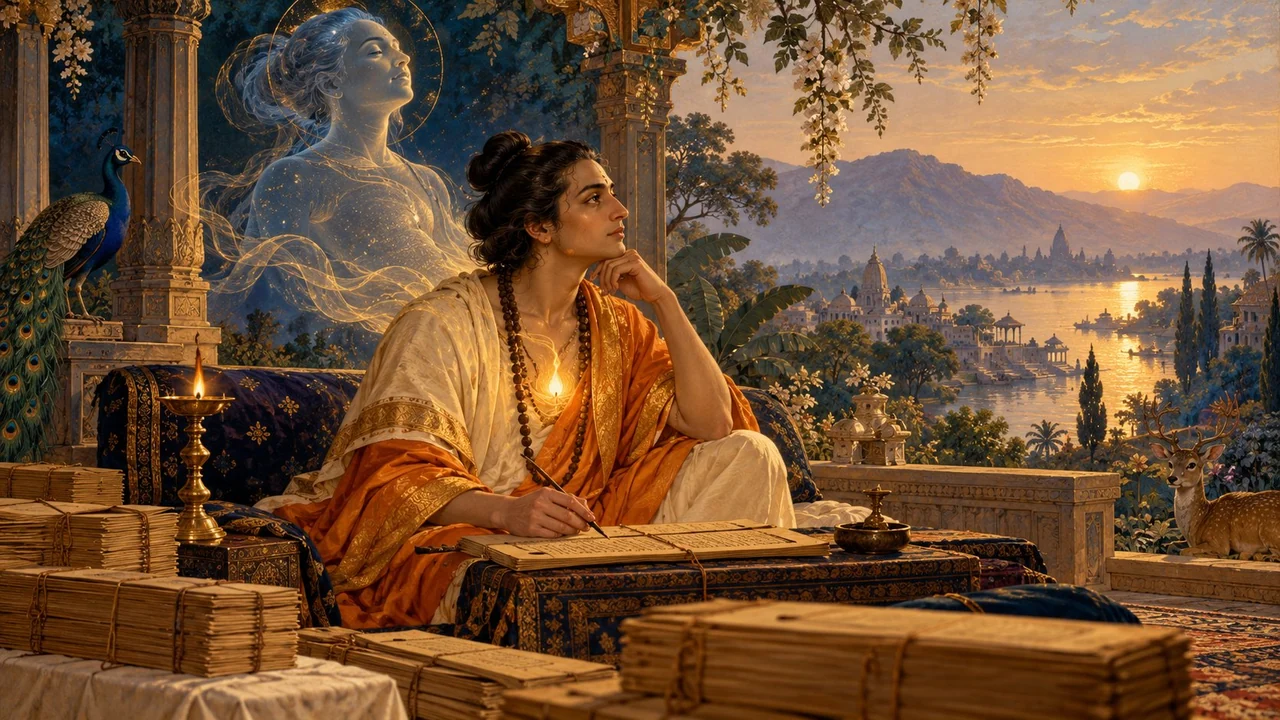
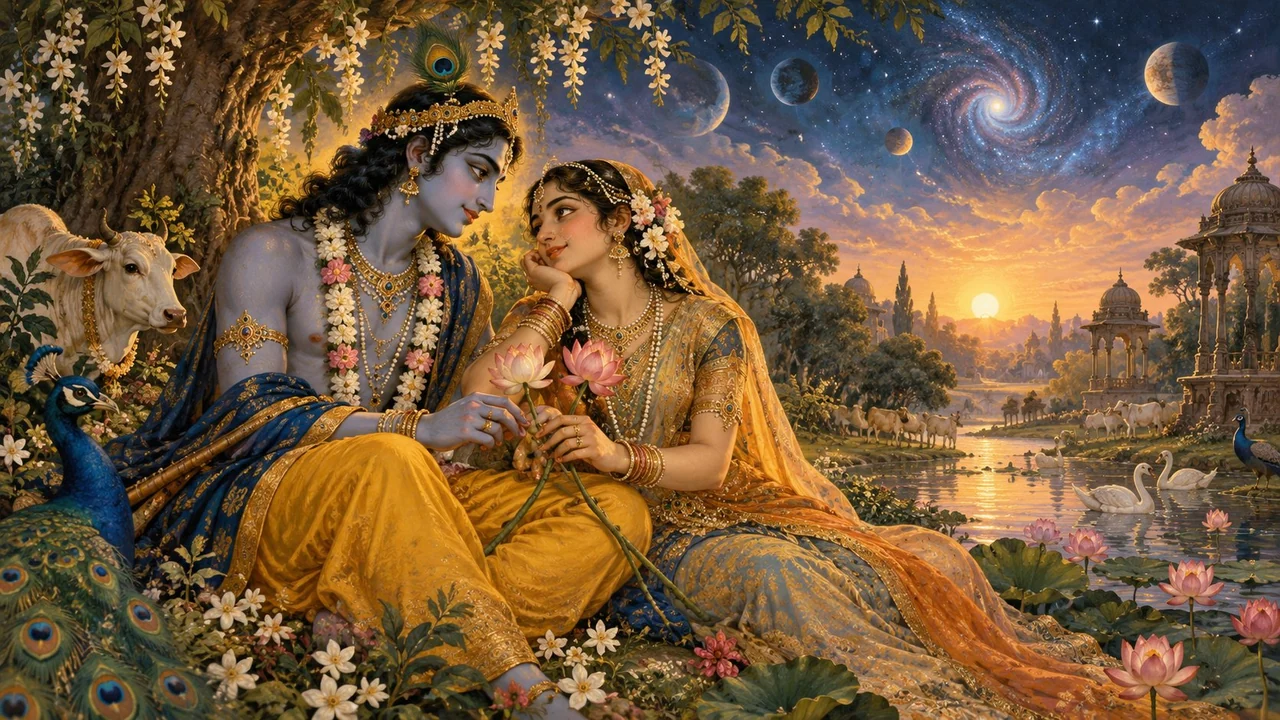
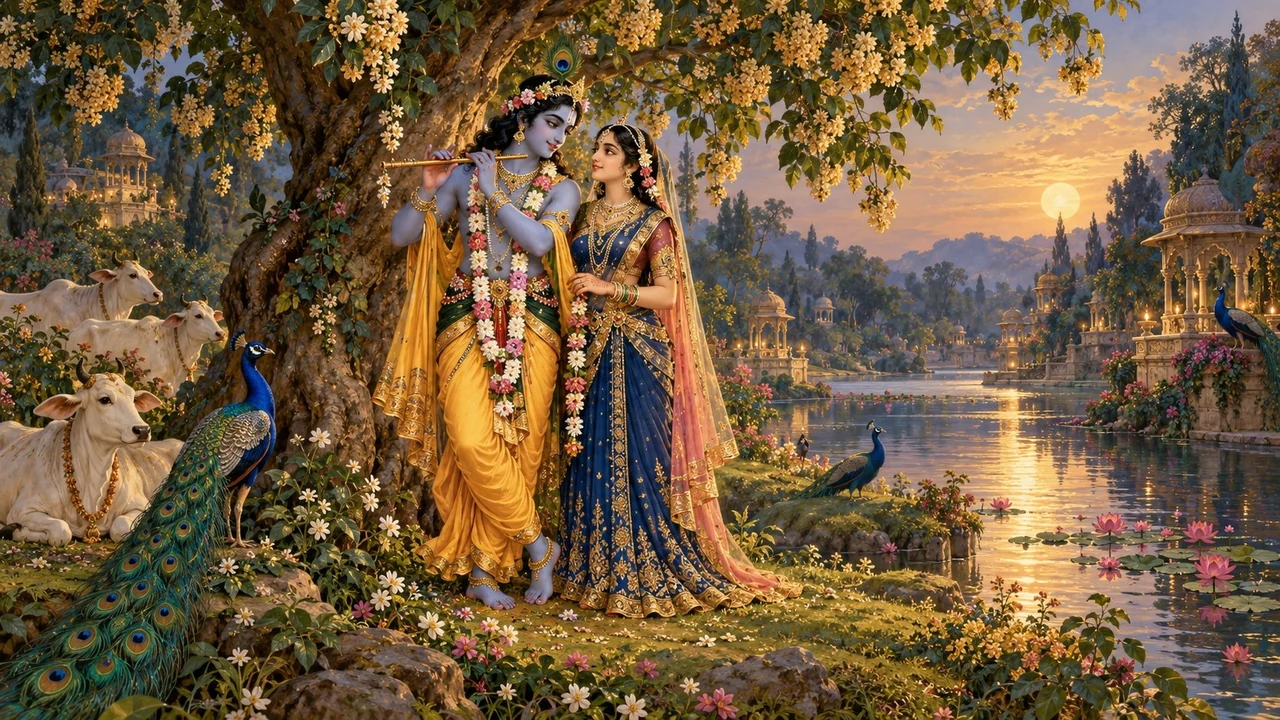
A picture of someone dear can make us happy and, at the same time, sharpen our awareness that the person is absent. A picture gives the eyes a form to behold, but it cannot offer the voice, touch, and conversation of someone standing before us. In Dr. Rajesh Takyar's Hindi book Krishna Ki Radha, the chapter “Shri Radha Sees Krishna's Portrait” turns this experience into a devotional story. Her friends Lalita and Vishakha make a portrait of Krishna and bring it to Radha. She gazes at it, dreams of him, and then longs to see him in person. The centre of the story is more than an ordinary picture: it is a relationship unfolding through that picture.
The Question That Opens the Story
The book places this episode in a conversation between Narada and Bahulashva. It first recalls a divine assurance that gave Radha patience and hope in Bhandiravana. Bahulashva wants to know how the promised desire was fulfilled in Vrindavan. Narada begins his answer with a private visit by two friends rather than a grand public event. Lalita and Vishakha arrive at Vrishabhanu's home and speak to Radha in private.
This beginning reveals the character of the story. A divine voice offers hope for the future, yet the path towards that hope is made of familiar experiences: receiving news, listening to a friend, looking at a picture, and waiting. Devotion does not remain a distant announcement. It comes close in the voices of two companions. They tell Radha that the Krishna on whom she has been meditating comes to Vrishabhanupura with the cowherd boys each day. She may see him in the morning when they set out to graze the cattle.
The friends bring more than news from outside. They connect it with the contemplation already alive within Radha. The one whose name lived in her heart also passes along the village road. That small fact builds a bridge between remembrance and sight. Hearing about someone dear can matter almost as much as seeing them, because news gives hope a direction. Her waiting is no longer without a shape; morning now holds a real possibility.
A Request for a Portrait
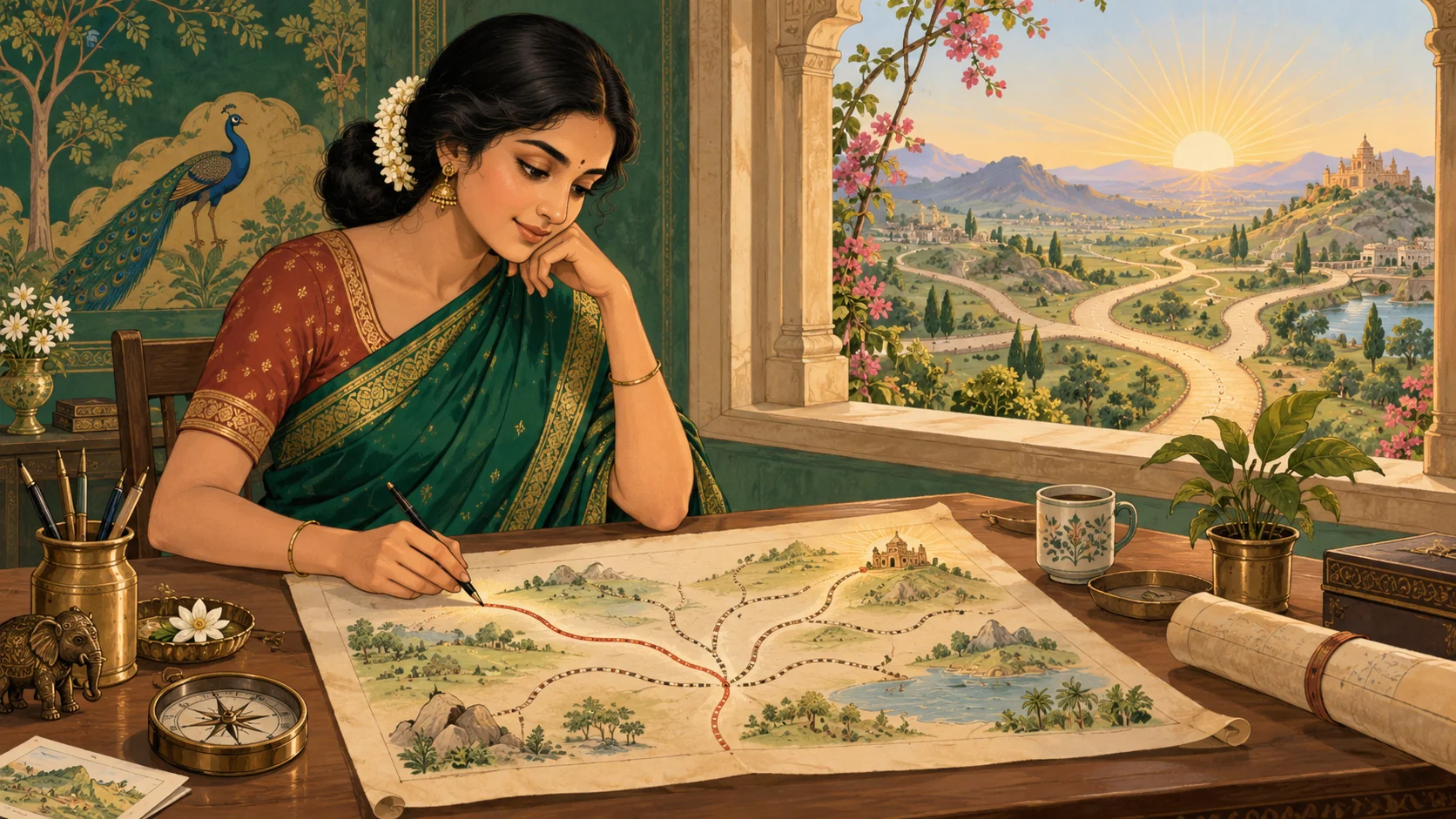
Radha asks her friends to draw Krishna for her. She wants to look at his portrait first and then see him in person. There is a beautiful hesitation in this order. She does not immediately rush outside. She wishes to see, in visible form, the presence she already carries within. Lalita and Vishakha answer her request. They make a lovely portrait of Krishna, Nanda's son, and promptly place it in Radha's hands. Their friendship grows beyond bringing information; it becomes an act of creation.
Making a portrait is meaningful work. An artist does not merely copy lines from a face; she gives her attention to it. The two friends understand that, for Radha, this will be more than paper and colour. They make an image that can awaken remembrance of the Krishna already present in her heart. Art cannot take the place of another person's eyes. Yet it can bring the absent one close for a moment. In this scene, friendship and art support one another.
Radha holds the portrait and gazes at it for a long time. She feels joy, and her longing to see Krishna grows. The two feelings arrive together. Receiving the picture has not ended her desire; it has made the wish for an actual meeting clearer. This is a familiar experience. A letter can recall someone's voice, and a photograph can recall time spent together. The medium does not become a meeting, but it gives the desire to meet a language of its own.
Dream and Awakening
Holding the picture, Radha falls asleep in happiness. In her dream she sees Krishna dancing near her in her home. When she wakes, the portrait is still in her hand, but Krishna is not before her. This is a tender turning point. The dream offered a sense of presence; waking makes the absence keenly felt. Radha dwells on Krishna's form, and her mind turns away from other things.
We should not turn Radha's state into a general rule of psychology. The book presents it as an intense state of love in a devotional tradition. Even so, its human tone reaches the reader. After an experience touches the heart deeply, ordinary routine does not always return at once. The picture in Radha's hand has not changed. What has changed is the mind looking at it. She knows now that, beyond the beauty of an image, she is waiting for a living presence.
This limit of art does not make art worthless. The portrait prepared Radha, gathered her attention, and opened the possibility her friends had recognised. It cannot speak with Krishna in her place. Giving a symbol its proper place matters in devotion. A symbol may deepen remembrance; a relationship must still be lived through one's own experience and conduct.
A First Glimpse from the Window
As Krishna returns from the forest through the streets of Vrishabhanupura, the friends lead Radha to a window. She now sees beyond the image to the person himself. Overwhelmed, she faints. Krishna also sees Vrishabhanu's daughter. The book describes her as accomplished and full of virtues, and says that love awakens in Madhava's heart as well. This moment matters because the sight is not one-sided. Their eyes meet.
Once again, the friends play a decisive part. They brought the news, made the portrait, and now accompany Radha to the window. Without them, her experience might have remained an inward imagining. Friends cannot make the greatest events in our lives happen by command, but they can open a path towards them. Taking someone to the right place at the right time, understanding her feelings, and standing beside her are no small acts of care. These friends are not onlookers at the edge of the chapter. They are sensitive companions on the journey of a relationship.
The story does not end with that direct glimpse. Radha's distress deepens. Ornaments and worldly pleasures lose their brightness for her. Lalita sees her condition, comforts her, and sets out to carry her message to Krishna. Taking someone's words truthfully and sensitively to the person she loves can itself be a form of service. Lalita does not diminish Radha's feelings. Nor does she merely sit with the sorrow; she takes a step towards help.
What a Friend Can Do
Lalita tells Krishna about Radha's state. The responsibility of friendship is clear here: listen first, then carry the truth to the right person. Sitting beside someone in distress matters, but taking the initiative when help is possible may matter too. The friend who brought Radha a picture now becomes a messenger. Her purpose has stayed the same in both acts: to lessen the distance between two hearts.
In our own lives, supporting someone does not mean taking over that person's experience. Lalita does not claim Radha's love for herself or make Krishna's decision for him. She speaks honestly about what she knows. A simple vision of friendship grows out of this story: do not make light of someone's deepest feelings, and when speaking on that person's behalf, guard both her words and her dignity.
As we read about Radha's distress, we should also remember that the heightened language of a devotional story belongs to a particular poetic world. It is not an invitation for readers to neglect their health or safety. The beautiful lesson of this chapter is not to imitate the intensity of Radha's suffering. It is to understand her friends' sensitivity towards it and the sincerity of the love at its centre. When someone is deeply troubled, staying near and helping them reach the support they need are practical expressions of affection.
Beyond the Portrait
The story gives us three ways of seeing. First is the inward picture: Radha already contemplates Krishna. Second is the outward portrait made by her friends, which gives remembrance a visible form. Third is the direct glimpse through the window, where the other person stands before her in his own living presence. Every stage matters, yet none can entirely replace another. An image in the mind can inspire art; art may call us towards a real relationship.
Sometimes we cling so tightly to our own picture of someone dear that we forget to see the person actually before us. Here the portrait becomes a path towards seeing Krishna, not a final boundary. Radha herself wants to go beyond the portrait to a direct glimpse. Her wish reminds us that true love is more than gazing at an idea we have formed. It also means opening the heart to the beloved's reality.
The picture made by Lalita and Vishakha is precious because it does not leave Radha alone. It carries their attention, effort, and affection too. A small work of art becomes a way for three people to speak with one another. Then it stirs a dream, leads to a window, and finally moves Lalita to become a messenger. So much grows out of one picture because art, in caring hands, becomes a language of relationship rather than a mere object.
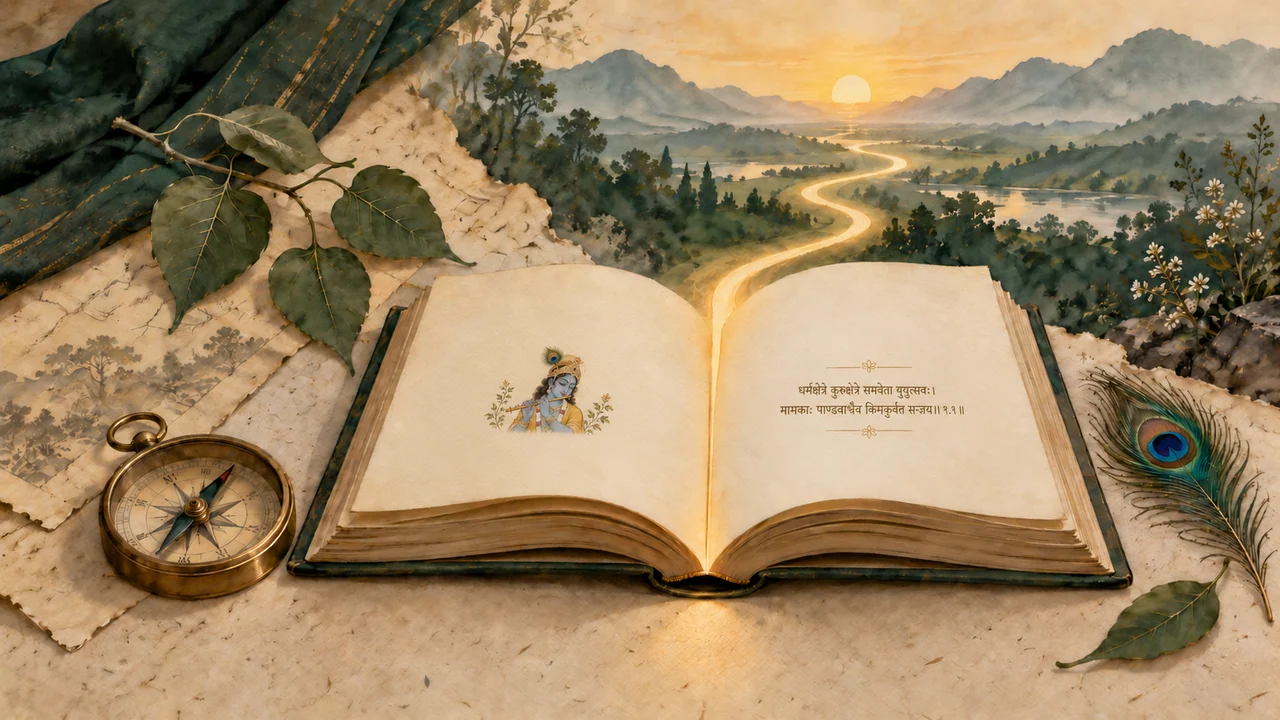
At the chapter's end, one scene remains: Radha holds Krishna's portrait, her friends are beside her, and the morning in Vrindavan is slowly opening. The picture is still, but life around it is moving. The desire it awakens rouses Radha, sets her friends in motion, and opens the way to seeing Krishna. Perhaps the finest work art can do is to take us beyond itself, nearer to living relationships and truth.
Was this essay helpful?