5 November 2026 · Dr. Rajesh Takyar
Discernment in Eating
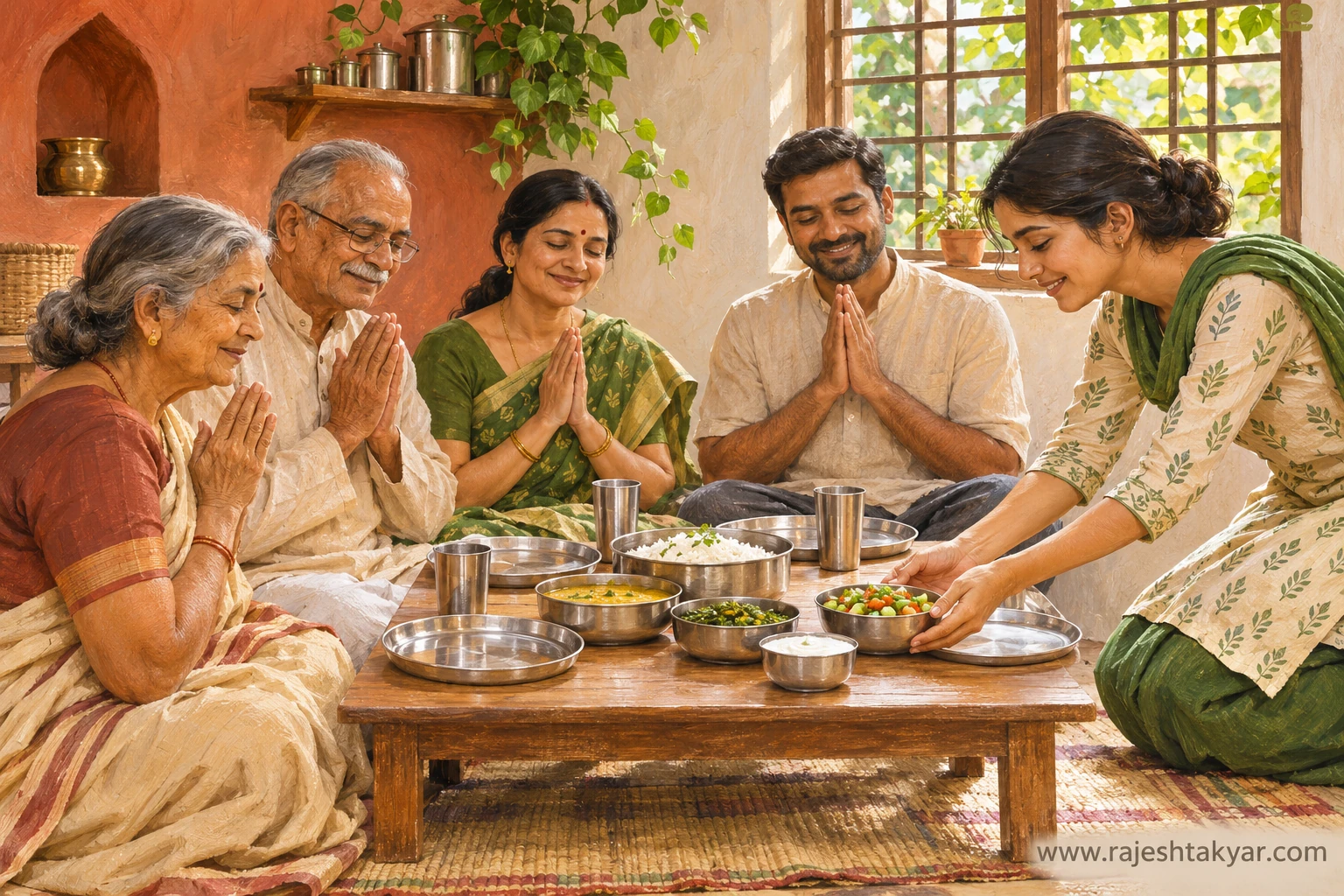
Pausing Before a Meal
Eating is so ordinary that we often never question our outlook toward it. We are pleased when a preferred dish appears and complain when it does not. Does the meaning of a meal end with likes and dislikes? The discussion in Part 17 of the Shrimad Bhagavad Gita invites me to notice a broader attentiveness within this ordinary act. Its concern extends beyond immediate attraction to taste. It places food alongside care for life, moderation and gratitude. Ordinary actions also reveal our outlook.
Verse 8 uses terms such as life, clarity, strength, wellbeing, ease and gladness in describing food dear to a sattvic disposition. I attend to their orientation toward sustaining life. The meal should relate to the responsibility of supporting life as well as a few moments of pleasure. I am not prescribing an identical diet for everyone or making a claim about treating illness. The reflection concerns a criterion in which immediate liking is considered alongside a wider good.
The discussion does not make taste an enemy. The verse includes qualities of pleasantness and appeal. Enjoyment and discernment need not oppose each other. Difficulty arises when liking becomes the sole deciding factor and leaves no room for other questions. Something being pleasing may matter, but it does not provide its complete meaning. Life has other purposes against which a choice can be considered. Food thus offers an opportunity to hold enjoyment intelligently rather than to remove it.
Before applying this criterion to others, we should turn it toward ourselves. Judging a whole character from someone’s plate would show neither humility about our knowledge nor understanding of their life. The commentary offers an occasion to recognize everyday choices and consider correction. What do I choose, with what disposition do I receive it, and what prompts my dissatisfaction? These can be starting questions. If discernment about food becomes a means to diminish someone, its essential gentleness is lost.
Giving Care a Place
In my book’s explanation of this verse, I consider qualities and consequences alongside taste. Food should not be measured only by its attractive appearance; responsibility toward life should remain present. The immediate meaning is care in choosing. How does what appeals now relate to the other purposes of my life? This question extends beyond the plate, but the meal brings it before us daily. Spiritual practice can then appear in ordinary conduct as well as in a separately reserved period.
Care would become narrow if it were reduced to a harsh list of prohibitions. The verse also points toward gladness and a natural sense of ease. Discernment need not be joined to bitterness. Attention to food can coexist with contentment and respect for others; it need not become an announcement of superiority. Receiving a meal calmly, with regard for one’s needs and limits, can carry meaning. The inward disposition guiding an ordinary act matters.
Simplicity in food differs from indifference toward it. Simple does not mean deficient, but carelessness should not be praised in the name of simplicity. Attention remains necessary. How am I receiving what is before me? Is complaint dominating the moment? Is the food being treated with regard? These questions need no new performance of strictness. They give practical form to the thought that we are responsible toward everyday supports and need not treat them lightly.
The verse does not tie the value of food simply to expense or social prestige. I find this particularly useful. If display becomes the measure, an ordinary plate appears lesser and a lavish one greater. Care for life does not fit that easy comparison. The disposition in which a meal is welcomed, the contentment accompanying it and the purpose attributed to it also matter. Reducing sattvic reflection to an image of one household’s prosperity would restrict its broader invitation to self-examination.
Gratitude Within an Ordinary Act
The commentary repeatedly considers receiving food as grace. This means more than saying a few words before a meal. Remembrance of grace can soften a sense of entitlement. Instead of measuring everything only against desire, the mind can notice what merits regard. What has been received has value. Gratitude does not glorify deprivation; it questions the habit of overlooking available supports and offers an opportunity to attend to them.
That disposition can extend to conduct around the meal. Did I hear the person serving it? Did a small shortcoming provoke harshness, or was there patience to understand the situation? If complaint occupies the whole moment, language about grace remains merely verbal. This does not require silence or pretending everything is satisfactory. A need can be expressed respectfully. The question is whether another’s dignity remains present while dissatisfaction is voiced. Gratitude can become visible in this gentleness.
Imagine students living together and taking turns arranging meals. One day a dish falls short of expectations. The group could make its maker an object of ridicule, or suggest improvements calmly while respecting the effort involved. This is an imagined contemporary example, not instruction in cooking. It illustrates the importance of disposition alongside choice. Cooperation, respect and carelessness can all become visible around an ordinary meal.
For me, receiving food as prasad also names humility in receiving. Before the supports sustaining life, the mind need not remain only a demander; it can retain a place for thanks. This does not promise the disappearance of preference. Liking and necessary correction can remain. The centre from which we view the meal changes: beyond whether my demand was fulfilled, can this occasion also hold contentment, respect and awareness? That question connects an ordinary act with devotion.
Preparation for a Young Life
Study and work require direction in youth. Treating ordinary routine as entirely insignificant gives an incomplete view. The book’s discussion of food reminds us that preparation for life appears in small choices as well as large resolutions. Study, work and necessary acts such as eating belong to one life. Viewing any of them only as an obstacle can distance us from our supports. The purpose is attentiveness to what we are doing, rather than binding every moment to a rigid rule.
If much time is spent searching for the next attraction, less room may remain for the task before us. Food reveals this habit on a small scale. Is the mind guided only by changing preferences, or does it remember its actual purpose? A young reader can ask this in an individual way. Giving time to education and effort, without turning every convenience into a continuing search for entertainment, can support meaningful preparation. The concern is a suitable place for enjoyment, not its prohibition.
Feeling inferior because of companions’ preferences, or considering them inferior because of our own, can bind us to comparison. If that occupies a learner’s whole attention, actual preparation recedes. A simple meal does not describe a whole person, just as an elaborate one does not establish depth of understanding. I therefore keep this subject with responsibility for our conduct and choices: regard for what is available, effort toward suitable improvement and time for the learning before us.
Necessary rest and enjoyment also belong to life. Discernment does not mean becoming harsh through deprivation of every pleasure. This discussion retains the language of gladness and balance. Giving a young mind only prohibitions seems insufficient. It needs the opportunity to see the place of an activity and how a choice relates to its purpose. A small practice of gratitude at a meal can express this wider outlook. Regard for life and meaningful use of time are connected.
From the Plate to Conduct
Attention to food cannot establish perfection throughout life. Care in one area may coexist with a gap elsewhere. Giving ourselves a final title of sattvic virtue on the basis of one choice would turn the subject back toward display. We can instead attend to the occasion before us. Does moderation at a meal also inform speech? Does gratitude before a plate remain when assistance arrives? Seeing these relationships matters more than constructing a particular image.
The verse’s criterion asks me to make some room around preference. Am I seeing only attraction, or care as well? Is conduct becoming harshly centred on myself, or does contentment remain? Asking this does not reject life; it values ordinary supports. If spiritual practice appears only during separate worship while other conduct is neglected, its meaning deserves reflection. A meal can offer an occasion for awareness when I use it for self-examination rather than for testing others.
Receiving an ordinary meal without contempt can begin this reflection. Maintaining a sense of measure when a favourite meal arrives is another expression of it. In both cases, we can notice the mind’s tone. Between complaint and display lies a place for receiving food with natural regard. That place grows through repeated awareness rather than a grand declaration. I can recognize preference while also recognizing responsibility toward life. Their meeting gives discernment its practical meaning.
Food can then be more than an object of preference. It can recall life’s supports, offer a moment of contentment and mirror our disposition. My immediate learning from this discussion is to retain care and gratitude within ordinary acts. Taste can keep its place without becoming the whole outlook. Let what is received have regard, let what needs doing have preparation, and let available time hold education, work and meaningful effort. Such awareness can reach beyond the meal into conduct.