11 October 2026 · Dr. Rajesh Takyar
How Does Faith Shape Our Nature?
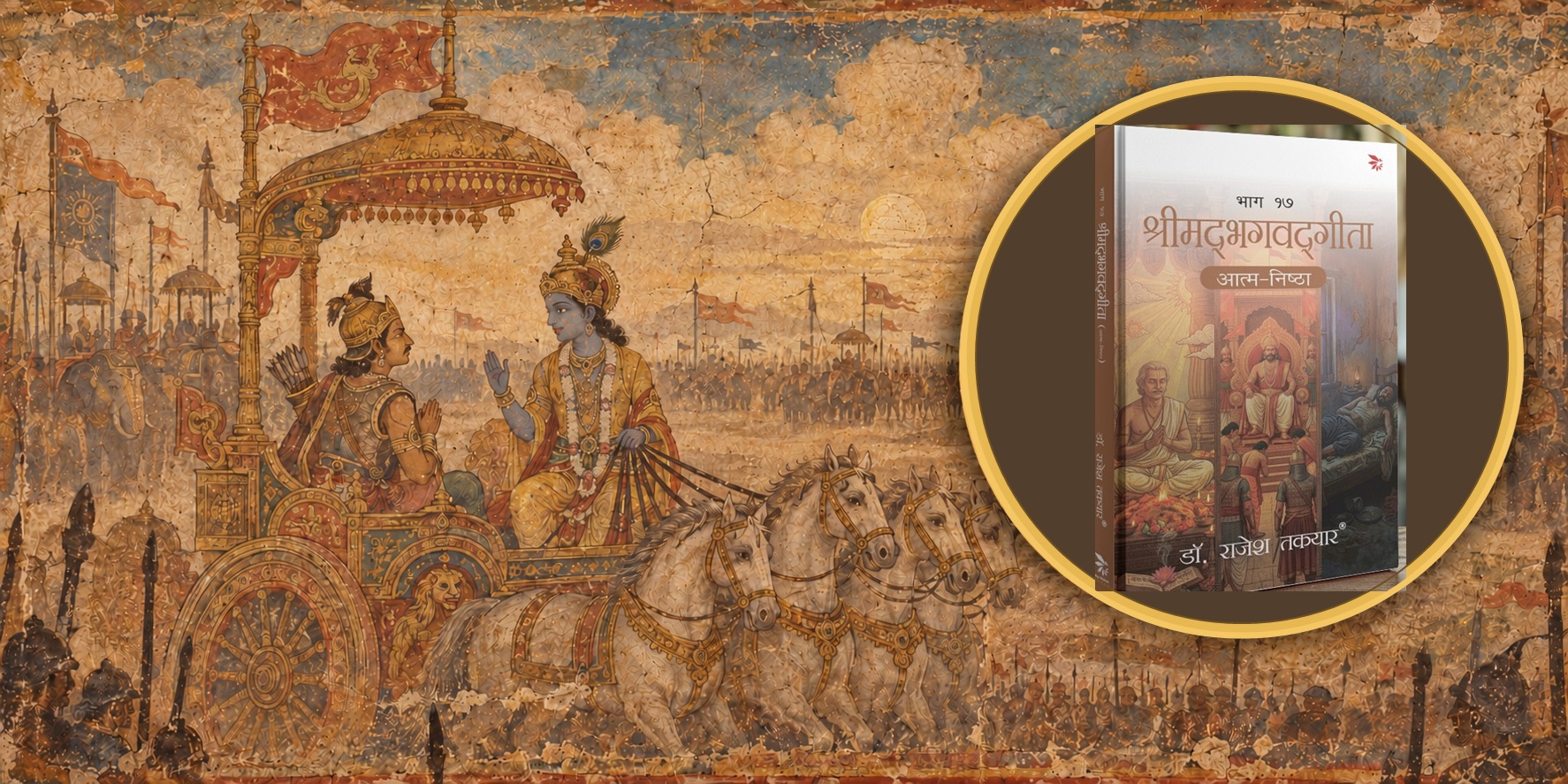
Arjuna asks Shri Krishna about people who do not follow the scriptural method but still worship with faith. What kind of commitment do they have—sattvic, rajasic or tamasic?
Shri Krishna explains that a person’s faith is connected with one’s nature. In accordance with the three qualities of nature, faith is also of three kinds. A person’s life begins to take shape according to the direction of their deep trust and commitment.
That is why discernment is also necessary alongside faith. Intense commitment to an action does not by itself make that action beneficial. The motive behind it, the method and its effects all need to be considered.
Shri Krishna refers to severe austerity practised through pretence, ego and stubbornness. Causing one’s body harm without discernment, or practising with the intention of harming others, is a form of demonic resolve.
He then clarifies how the three qualities influence food, yajna, austerity and charity. In this way, the question of faith reaches into daily life. A person’s commitment is also revealed through small choices.
The sattvic disposition prefers food that supports life, strength, happiness and balance. A rajasic preference turns toward excessive sharpness and stimulation. A tamasic preference leans toward impure, tasteless or spoiled food.
The motive also makes a difference in yajna. An offering performed as a duty, according to proper method and without desire for results is sattvic. An offering performed for gain or display is rajasic. Action without faith and the necessary discipline becomes tamasic.
Shri Krishna explains austerity in three areas: the body, speech and mind. Austerity of the body is connected with respect, purity, simplicity, self-control and non-violence. The effect of spiritual practice should also be visible in bodily conduct.
Austerity of speech consists of truthful, kind and beneficial words. It includes speaking in a way that does not cause needless disturbance and practising the study of sacred texts. Even when speaking the truth, discernment and concern for the other’s welfare should remain.
Austerity of the mind consists of cheerfulness, gentleness, silence, self-restraint and purity of feeling. If there is continual hostility and unrest within, outward restraint alone does not complete the practice. The mind’s intentions also need purification.
When all three forms of austerity are practised with faith and without desire for results, they are sattvic. The wish for respect and prestige makes them rajasic. Blind stubbornness and an intention to harm make them tamasic.
Charity is tested in the same way. Given at the right time and place to a worthy recipient, without expecting anything in return and with respect, charity is sattvic. The giver recognises a duty and protects the recipient’s dignity.
Charity given with an expectation of return, or with reluctance, is rajasic. Charity given in an improper manner and with contempt is tamasic. Thus, one and the same outward act can take a different direction because of the inner motive.
Shri Krishna describes “Om,” “Tat” and “Sat” as expressions pointing to Brahman. They remind the seeker of the supreme foundation, renunciation of results and commitment to truth. Steadfastness and a wholesome intention matter in yajna, austerity and charity.
Finally, He says that an offering, austerity or charity performed without faith is called asat, or unreal. The truth of steadfastness lies in harmony between the inner and outer life. Practice transforms life inwardly when faith in the mind, purity in speech and discernment in action move in the same direction. The author has expanded on this in his following book in 72,408 words. (Shrimad Bhagavad Gita — Part 17 — Steadfast Faith)