21 November 2026 · Dr. Rajesh Takyar
What Sustains Resolve
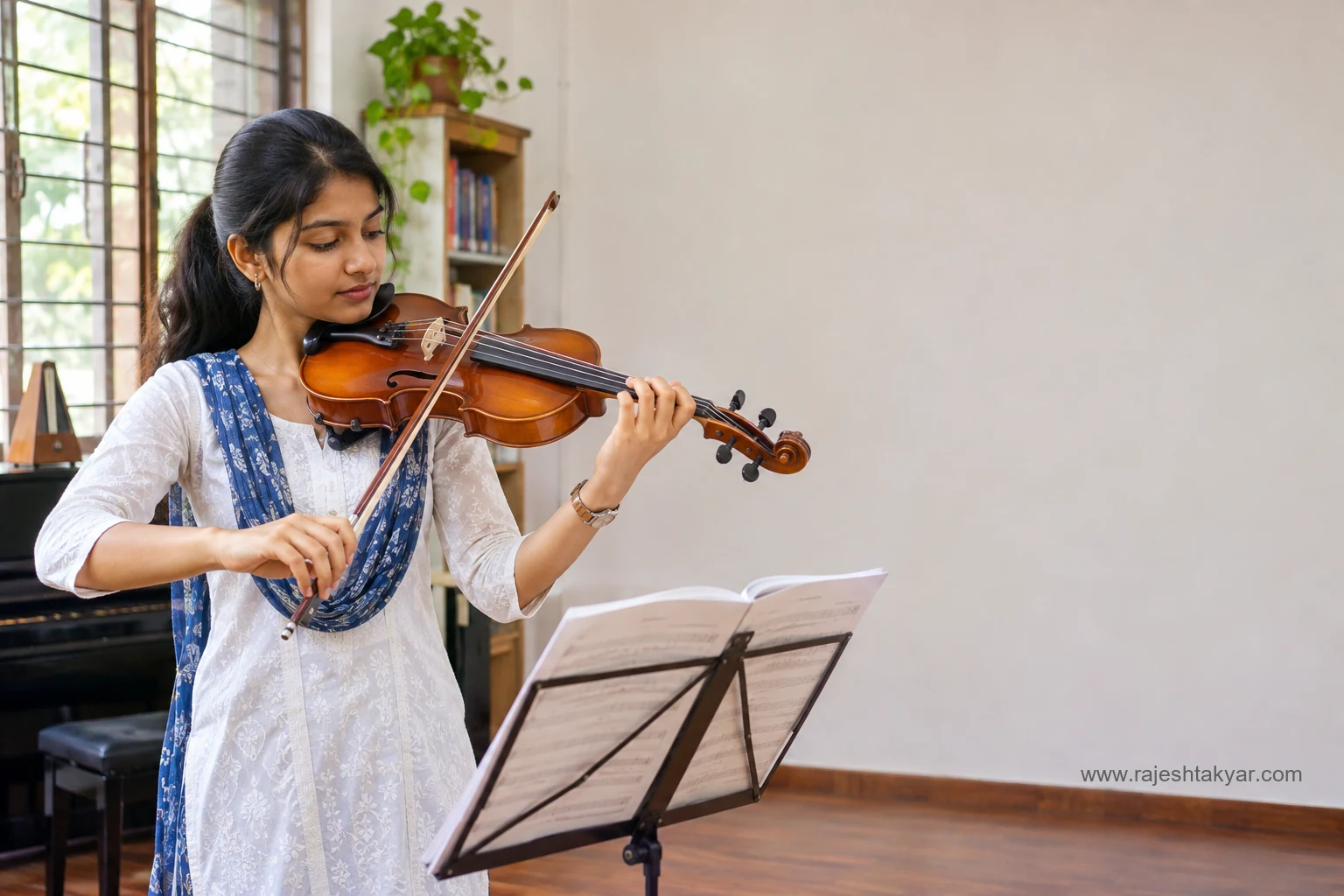
The work that follows a beginning
We feel enthusiastic when we set out to do something worthwhile. The thought of improving our education, learning a skill or taking responsibility for a service can move us to act at once. After a while, however, the same task begins to ask for regular practice. The pleasure of beginning recedes, and we discover what the repeated work really involves. That is when we learn the state of our resolve. We need to see how steady the mind is and where it continues to direct its energy.
We often measure the strength of our resolve by the intensity of a wish. When we want something very much, we imagine that following through will now be easy. Yet the force of a desire can change. Tomorrow a fresh attraction may compete with the very work that excites us today. To find steadiness, we must therefore understand how our mind and senses behave. Practice concerns both the task and the way we, as the people doing it, order our inner life.
In verse 33 of Part Eighteen of the Shrimad Bhagavad Gita, Shri Krishna explains how to recognise sāttvika dhṛti, or steadfastness of a pure and balanced kind.
धृत्या यया धारयते मनःप्राणेन्द्रियक्रियाः । योगेनाव्यभिचारिण्या धृतिः सा पार्थ सात्त्विकी ॥ ३३ ॥
Shri Krishna calls that steadfastness sāttvika by which, unwavering in yoga, one holds steady the activities of mind, vital energy and senses. Dhṛti carries a sense of patience, steadiness and continuity. This verse directs us to the strength that keeps our conduct grounded in the discipline of yoga. To understand our own resolve, we need to see whether it is bringing balance within us or whether a passing impulse is carrying us along.
Steadying the mind
Many thoughts and feelings arise in the mind. One thought leads us towards our task and the next immediately draws us away. Sometimes we trust our efforts. Sometimes a small difficulty is enough to drain our enthusiasm. We need to recognise these changes. When our actions change direction with every new feeling, continuity becomes hard to sustain. Amid these movements of the mind, dhṛti gives us a basis for holding to a sound resolve.
Steadying the mind means being aware of its behaviour. Which thought is drawing us away from our work? What expectation has made our task feel burdensome? Is our impatience making it difficult to accept the time that learning takes? Such questions help us to look within. Sāttvika steadfastness has a close connection with discernment and practice. Understanding our state of mind is therefore part of the work of keeping a commitment.
For a student who wants to study regularly, writing down the hours for study is only a beginning. Consider how present the student actually is with the subject during those hours. If the book lies open while the mind is absorbed in another desire, how can the practice yield its full benefit? We need to bring our attention back to the work. We may have to bring it back many times. Gradually, that effort gives our time more meaning.
When a difficulty comes into view, steadiness also helps us look at it squarely. If we keep doing only the easy parts and putting off the difficult ones, we will have a poor sense of how well prepared we are. Practise with humility wherever you still have something to learn. Ask for help when you need it. To honour our resolve is to attend to the actual work we undertook. Talking about our decision does little to advance the practice.
Directing our energy and senses
Alongside the mind, the verse speaks of the activities of prāṇa and the senses. The book’s explanation deals with how we direct our vital energy and exercise restraint in seeing, hearing, speaking and acting. Through yoga, the practitioner keeps effort focused instead of allowing it to scatter. The mention of prāṇa here gives us no grounds for introducing instructions about a particular breathing technique of our own choosing. The point is to bring the strength and activities of our life into balanced practice.
What our senses repeatedly turn towards affects our mind. When every new sight and sound immediately seems more important than our work, we keep losing touch with the task. It helps to look at our activities. Where is the time set aside for study going? Did the work you called essential receive a share of your energy? We need this honesty to understand the relationship between our time and our resolve.
Sāttvika steadiness has balance. Driving body and mind indiscriminately to keep going for a while falls short of the full meaning of dhṛti. The book connects this steadiness with practice, equanimity and restraint. Develop a pace of work that sustains dedication and reduces unnecessary swings within. When we understand both what our effort requires and what its limits are, our practice becomes more attentive.
This is why, before making large promises at the beginning, we ought to understand the regular labour a task entails. Be clear about the preparation required, what you need to practise and what responsibility you can actually take on. When we understand our capacities in accepting a responsibility, we give ourselves room to fulfil it. A resolution born entirely of impulse may have little to sustain it in continued action.
Stubbornness and steadiness
It would be a mistake to understand dhṛti as the habit of insisting on our way. Sāttvika dhṛti is a disciplined steadiness that arises from yoga. Discernment and equanimity belong with it. When we discover a mistake, acknowledging and correcting it can itself express fidelity to a worthwhile purpose. Repeating a mistaken method simply because we chose it earlier closes off self-examination.
It helps here to distinguish our purpose from our method. If our purpose is to learn, we will have to change a habit that gets in the way of learning. If our purpose is service, we must listen to what the other person needs. If our purpose is to purify our actions, we will have to look at our own pride. Sāttvika steadfastness holds us to a sound resolve and teaches us to guide mind and senses through yoga.
This idea has practical significance for young people. Ability develops through regular effort. An urge to prove ourselves to others cannot sustain our studies and work indefinitely. We need a genuine connection with our subject. Put what you understand into practice. Give what is still unclear the time it takes to understand it. Such continuity gradually gives depth to our work.
When you assess your progress, take account of more than the changing reactions of others. You may receive praise one day and none the next. In either case there may be necessary work in front of you. Examine the direction of your resolve. Is it guided by truth, service and duty, or by praise alone? Such an examination helps purify steadfastness. Its value also depends on the motive within.
The way we use speech also matters when we try to keep a commitment. If we repeatedly announce what we plan to do, the approval we receive may make us enthusiastic. Yet the actual preparation still awaits us. To put a decision into practice, we have to protect the time for learning, practice and service. The teaching about holding steady the activities of mind and senses also draws our attention to this inner responsibility. Keep looking at how what you say relates to what you do.
Our behaviour towards the people we work with also puts dhṛti to the test. Can we listen when someone disagrees with us? When we need another person’s help, can we loosen our hold on pride? In a difficult situation, can we continue to do the work we know to be right? Sāttvika steadiness does not occupy some separate corner of life. Its quality is evident in our decisions, our relationships and our work.
When practice falls short one day, it helps to examine the reason. Acknowledging a shortcoming and returning to the task can be a way of keeping faith with our resolve. If we repeatedly overlook incomplete practice and continue to think ourselves perfectly steady, our self-examination lacks honesty. Identify the habit that is drawing you away from your work. Practise restraint precisely there. We need to keep comparing the continuity we profess with the way we actually behave.
The explanation in this volume describes how purity, steadiness and equanimity grow with dhṛti. Simply completing a resolution cannot therefore be the sole test of it. Look also at what is growing within you as you keep it. If ill will towards someone, pride in yourself or a wish to appear superior predominates, your motive still needs examination. Steadfastness sustained in service and truthful conduct also gives the mind a sāttvika direction.
This form of patience esteems the task at hand. Understanding a difficult passage in our studies, meeting a commitment to serve and exercising restraint in our conduct all offer places to practise. If we put them off until some great opportunity arrives, we pass over the ground for practice already before us. Stay attentive in the opportunity you have. We recognise dhṛti in its connection with regular action. Our daily life is the nearest opportunity to examine it.
The practice of following through
In devotion, dhṛti means continuity in spiritual practice and service. Sometimes the mind is more enthusiastic and sometimes less. Even so, we need to make room in our lives for remembrance, service and truthful conduct. This is the sense of dhṛti explained in the book. Where we direct our speech, our gaze and our hands has a connection with our inner steadiness. Let practice extend beyond something done at a particular hour and find expression in the direction of life itself.
We can begin with the task before us. Understand the work you undertake. Give its preparation time. When you notice distraction, look at your mind. When a mistake becomes clear, have the patience to learn. Give your efforts a firmer basis than the changing course of your feelings. Gradually a steadiness may develop within you through which necessary work finds its place again and again.
The attention you give your education today, the care you take in your work and the small responsibility you fulfil in service all offer occasions for this practice. Through them the mind learns to direct its strength towards one purpose. The value of resolve shows in its fulfilment as well as in its beginning. Shri Krishna’s teaching guides us towards that fulfilment by holding mind, energy and senses steady through steadfastness grounded in yoga.