5 November 2026 · Dr. Rajesh Takyar
Silence: Cleansing Within
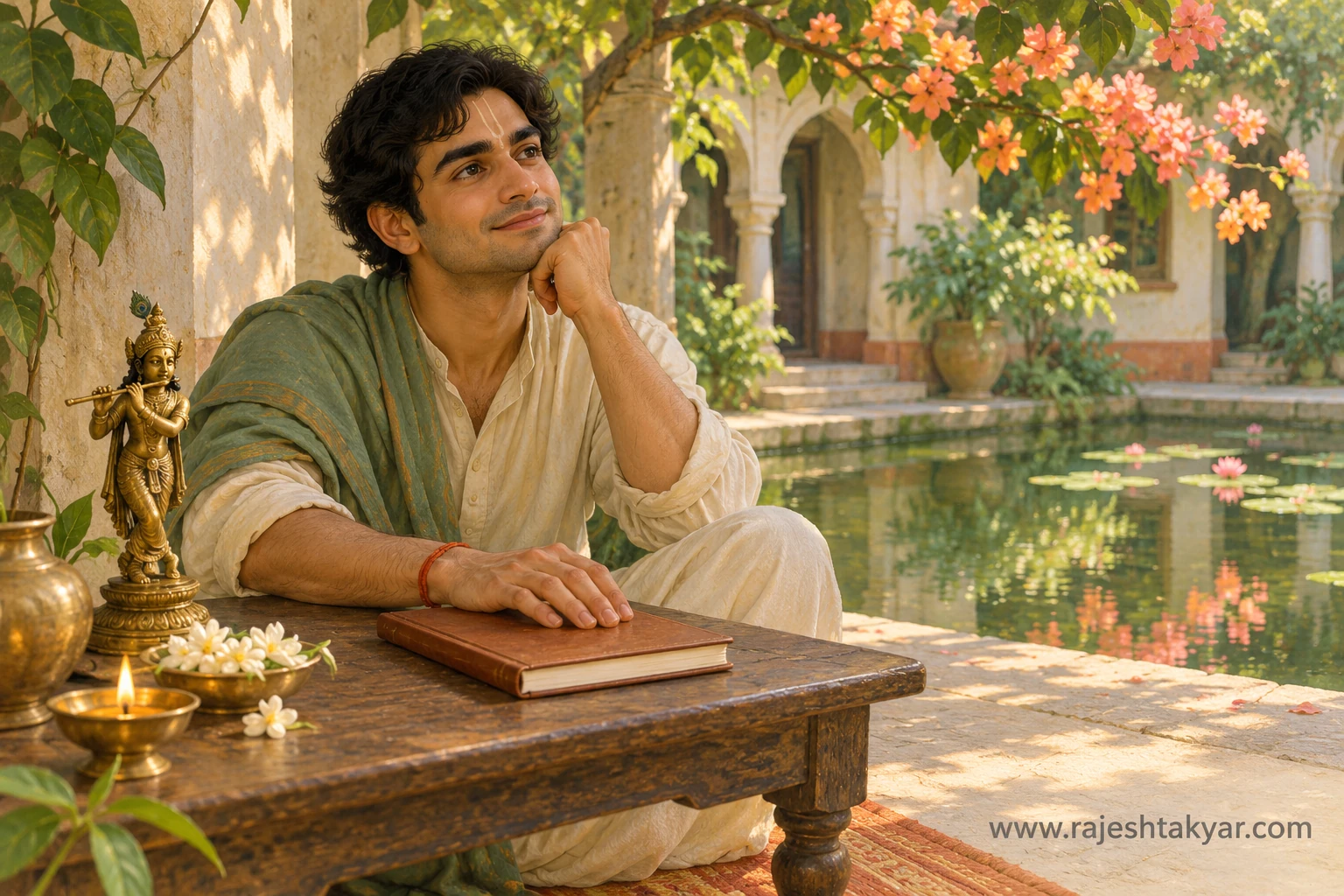
What Continues When Speech Stops
We can sit without speaking while an inward conversation continues: what someone said, what I should have answered, what I will say next. The quiet outside need not describe the condition within. The discussion of mental discipline in Part 17 of the Shrimad Bhagavad Gita directs me toward this difference. Silence is more than stopping speech. It involves recognizing unnecessary inward commotion and giving the mind a more attentive direction. Looking for every source of noise outside us would therefore remain incomplete.
Verse 16 names serenity of mind, gentleness, silence, self-restraint and purity of intention as mental discipline. These qualities should be read together. Isolating silence as a mere prohibition on speaking can lose its connection with gentleness and serenity. Treating restraint only as harsh pressure can weaken its relationship with purity of intention. The passage concerns an inward direction as a whole. Its purpose is attentive recognition of our tendencies, rather than displaying severity through injury to ourselves.
Reading this, I want to notice the character of my silence. Am I listening or waiting for my turn? Is there room to understand, or is an old complaint continuously making words? These questions are not meant to produce instant self-condemnation. They help recognize where an outward pause might become inward attentiveness. If silence is merely a heap of unspoken sentences, calling it peace would be premature. If the pause holds patience to observe and understand, it has another direction.
Silence need not mean withholding what should be said. Questions, responsibilities and clarity about injustice retain a place for speech. Mental discipline concerns the disposition behind speaking more than a count of words or their absence. Are words guided by discernment or by an unexamined reaction? Without that distinction, silence can become display and abundant speech can become self-justification. Awareness examines both situations instead of prescribing one outward posture for every occasion.
Serenity and Gentleness as Measures
Manah-prasada is not fulfilled merely by looking cheerful. The commentary relates it to clarity and inward peace. A smile and the condition of the inner being can differ, so outward appearance alone cannot measure practice. When something happens, does the mind immediately colour it as for or against me? Have my expectations already judged it before I have seen the situation? Such self-examination takes serenity beyond an assumed cheerful expression toward recognizing what burdens the mind.
This does not require an absence of problems. Amid difficulty, we can consider the actual task and what our imagination adds to it. It would also be mistaken to call every disturbance our own fault. The passage invites inward examination rather than dismissal of another’s struggle. Let recognized carelessness in our response have room to be seen, while responsibility toward a situation remains. This balance allows serenity to be considered without retreating from life.
Gentleness keeps softness within this reflection. A final judgment about someone’s behaviour may come easily; patience to understand requires another kind of preparation. Gentleness does not abandon clarity. It frees clarity from the supposed need for bitterness. I can disagree while remembering another’s dignity, or seek correction without using humiliation as my means. Such gentleness can express inward strength through calm conduct.
Forgiveness here does not justify injustice. The commentary considers how a gentle mind avoids giving lasting residence to resentment. Recognizing an error differs from immersing the whole present in its bitterness. Silence, serenity and gentleness therefore belong together. A silence preparing revenge remains distant from such softness. A pause that allows examination of intention can open another possibility of conduct. That possibility should be recognized inwardly rather than imposed upon someone else.
Giving Desire a Direction
Self-restraint involves recognizing desire. Following every impulse immediately is not the whole meaning of freedom. An attraction may make me abandon a chosen task; discomfort may make me want to leave it. Instead of becoming harshly angry with the mind, I need to consider its direction. Which desire supports my purpose, and which repeatedly carries me away? This question does not promise to erase desire. It prepares a discerning use of energy, so life need not be governed only by the next reaction.
The commentary explains restraint as giving direction. Available capacity can then serve its purpose rather than scatter. If training the mind becomes only an order to stop, the inward purpose may disappear. We also need clarity about the work for which energy is being preserved. Study, service, duty and remembrance of the divine call for presence. Self-restraint therefore involves active awareness rather than inactivity. It can open a more attentive relationship with work instead of an escape from it.
Without this awareness, an outwardly chosen task and inward attention can move apart. A book lies open while the mind composes an answer to an old dispute. A responsibility is in hand while praise is being calculated within. These are present-day illustrations, not events added to the verse. They distinguish being physically before a task from attending to it. Mental discipline can prepare us to notice that difference. Recognizing where attention has gone begins the next moment of awareness.
Before claiming mastery over ourselves, we can look at small occasions. Must every disagreement receive an immediate answer? Does one unmet preference take over the day? Can the mind stay for a while with work I have chosen as important? These are questions for self-examination rather than a test of perfection. Even when outcomes differ, the practice of noticing can continue. Humility finds its place here: a learner needs to keep the possibility of correction open.
Examining the Quality of Intention
Purity of intention is a deep aspect of mental discipline. Outwardly similar actions can arise from different dispositions: assistance from service or a wish for praise, silence from patient listening or hidden disregard. The external form of conduct therefore cannot end the inward work. I must also examine purpose. What am I expecting, and why? If outward humility conceals a desire to protect superiority, recognizing that difference begins the work of clarification.
It would be a further error to turn this reflection into a claimed right to know others’ hidden motives. We do not always know the intention behind someone’s action. We may, however, have an opportunity to notice comparison, envy or a wish for praise within ourselves. The verse turns attention toward that inner being first. Whether a religious act is large or small, the truth of its disposition remains a question. Keeping that question open restrains premature final declarations about my own conduct.
For a young reader, recognizing intention can connect with education and work. Imagine a companion doing well. If comparison occupies the mind, study time can be spent inside it. Recognizing that comparison and attending to one’s own gaps and possibilities offers another direction. This imagined situation is not intended to label someone envious. It considers protecting time from an unexamined inner contest and giving it to learning and effort. Another person’s achievement need not end our own endeavour.
The commentary gives truthfulness, compassion, gratitude and surrender a place in inward clarification. These are more than qualities to read about and attach to our names. They call for examination in small acts: honesty about a gap, gentleness toward another’s difficulty, thanks for assistance and awareness of pride within work. One answer does not settle these questions permanently. They can return with life, and this continuing attention gives refinement of intention the meaning of discipline.
Returning From Silence to Life
I do not want mental discipline to become a harsh island separate from responsibility. Its immediate value appears when it returns to ordinary conduct: greater presence in reading, fewer unnecessary reactions before understanding, or a clearer view of intention. These are possible directions rather than promised results. The meaningful journey joins outward silence with inward honesty and allows awareness to reach work, relationships and devotion.
The direction is not simply more pressure upon young people. It is room in the mind for a sound purpose. Education, chosen work and meaningful effort require time. Giving every comparison, unnecessary dispute and imagined reply equal importance can displace essential work. Silence can mean refusing to give every needless reaction a whole assembly. Ask where a question belongs, learn where learning is needed and attend where work is before you. This gives important tasks their place rather than narrowing life.
Necessary rest should retain respect. Sitting quietly is not useless, just as every quiet sitting is not automatically mental discipline. What direction is the occasion taking inwardly? Is something becoming clearer, or are harsh accusations against ourselves merely increasing? Keeping serenity and gentleness alongside silence preserves this distinction. Practice need not become a continual war upon ourselves. Understanding the mind, noticing carelessness and allowing a return to purposeful work can all carry gentleness.
Inner silence is more than an absence of words. It can be a space for seeing our dispositions more honestly, with unforced serenity, gentleness that is not mistaken for weakness and restraint that protects purpose. This reflection on mental discipline takes me from outward form toward inward direction and then back into conduct. Before asking how long I stayed silent, I can ask what I understood there. When understanding gives work, time and another’s dignity a more attentive place, silence has become connected with life.