25 November 2026 · Dr. Rajesh Takyar
The Guiding Hand of Experience
What Experience Can Offer
The elders in a family have a lifetime of experience to draw on. They have seen circumstances change. They remember how something that seemed almost incidental when they made a decision turned out to matter a great deal later. Young people today have many new opportunities, and with them come difficulties they are encountering for the first time. These are moments when the older members of a family can lend a hand.
Yet having experience does not mean that everything I say will be right. Experience can help us think before we decide. It cannot settle a question about a new situation before we have understood it. Some of the problems we faced growing up were different, as were the means available to us. New ways of studying and working, and new technologies, raise questions for our children. We should resist the urge to force their questions into the shape of our old answers.
When a young person brings you a plan, hear them out. Ask what they have learned about it, what excites them and what troubles them. Give yourself time to listen before composing your reply. You may know one side of the work they are describing and be unfamiliar with another. Listening to a child does not commit you to agreeing with every decision. It is the first thing you can do to make your advice worth giving.
Looking Ahead with Discernment
In verse 30 of Part 18 of my Shrimad Bhagavad Gita, Shri Krishna describes sattvic understanding.
प्रवृत्तिं च निवृत्तिं च कार्याकार्ये भयाभये । बन्धं मोक्षं च या वेत्ति बुद्धिः सा पार्थ सात्त्विकी ॥ ३० ॥
I have given its meaning in my book in these words: “O Partha, the understanding that rightly discerns what to do and what to refrain from doing, what is one's duty and what is not, what one ought to fear and what one need not fear, what constitutes bondage and what constitutes liberation, is sattvic understanding.”
Shri Krishna is speaking here of the fundamental distinctions involved in making a judgment. We can draw on this teaching when our family encounters an unfamiliar situation. Before we offer an opinion, we can look at the different sides of the decision and consider what might follow from it.
Suppose a young person wants to start a new line of work. An older relative can talk to them about the money, time and preparation it will take. They might recall an occasion in their own life when having incomplete information made a decision difficult. Then they can ask what thought the young person has given to that risk. They can also help distinguish a detail that really does need checking from a fear that comes simply from doing something unfamiliar.
Experience becomes a way of looking ahead. It cannot tell us every detail of the future in advance. There may be things about the field a young person hopes to enter that an elder will have to learn from them. If that new information changes the grounds for our earlier estimate, let us revise the estimate too. A child can then see what discernment looks like in practice. We examine a decision in the light of the evidence and the circumstances, even when that means giving up a position we have defended.
Two Generations at One Table
Picture Ravi in a small town, unfolding a sheet of paper across the table from his grandfather. He knows how to repair water pumps. A tradesman in a nearby town would like to take him on for a few months and teach him the work. Ravi is currently a bookkeeper in a shop where his wages are paid on time. His grandfather's first concern is a fair one. The household depends on Ravi's contribution. But when he says that anyone who leaves a steady job always regrets it, Ravi folds the paper. He had written something on it that his grandfather never saw. Next year the shopkeeper is handing the business over to his son. Nobody can promise Ravi that the job that looks secure today will always be so.
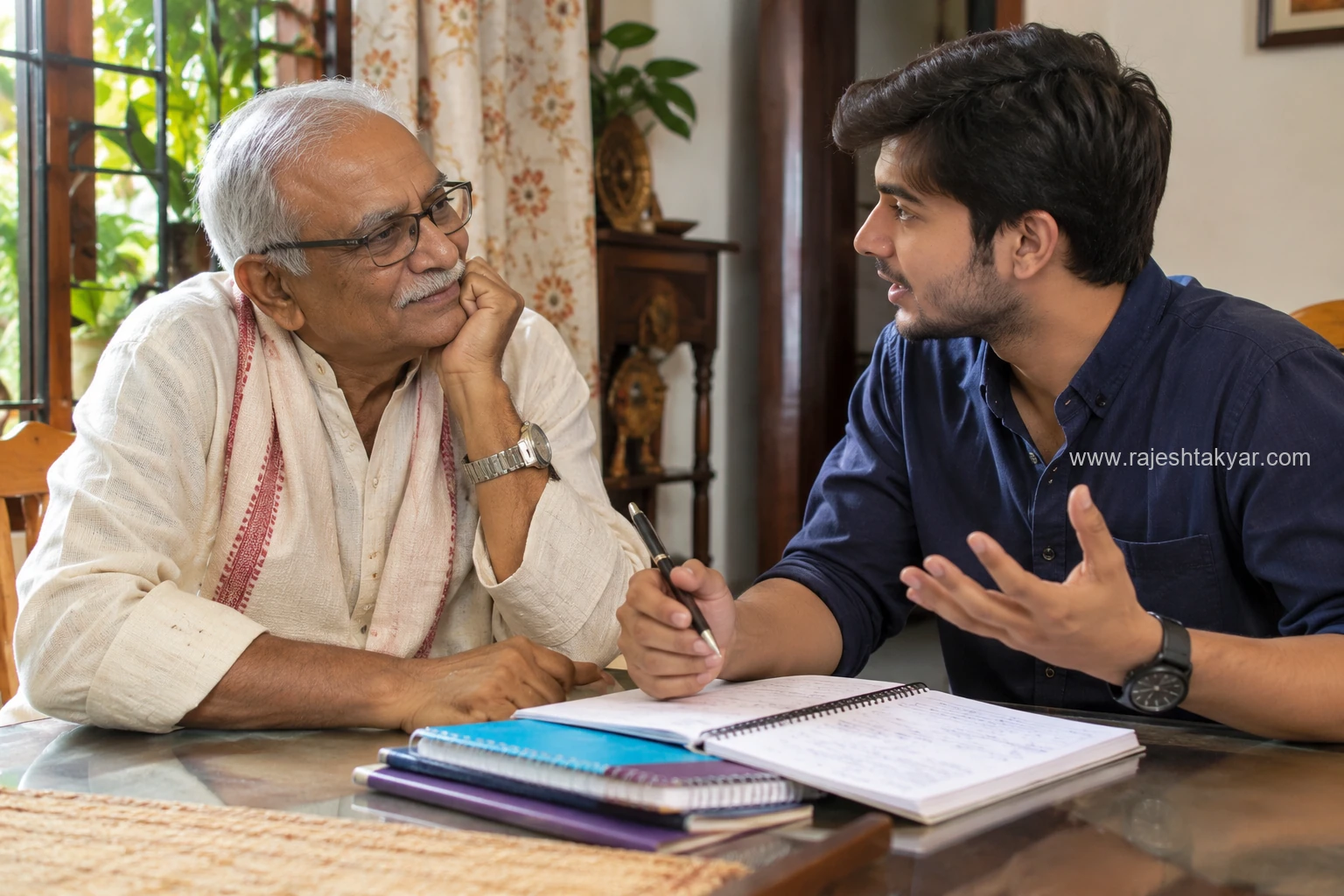
This is where having an elder beside him could make a difference. Ask Grandfather to open the paper again, and let the two sit on the same side of the table. On the first line Ravi has written what he hopes to learn from the tradesman. On the second he can write how much he will be able to contribute at home while he learns. The third line holds a question neither can answer yet. When the rains end and fewer pumps come in for repair, what other work does the tradesman do? Grandfather spent years working in the market. He knows from experience that multiplying a good month's earnings by twelve will not give a reliable figure for the year. That had not occurred to Ravi. This is precisely the part of his grandfather's experience he needs.
One evening the two could visit the workshop. Let Ravi ask first what work he will get to do with his own hands in the course of a day. Grandfather could talk to the boy who trained there last year. Was he sent out only to fetch supplies to begin with? Who stood beside him when he took a faulty motor apart? Did he have to buy his tools, or did the workshop provide them? If Grandfather says on the way home that he too learned something new today, Ravi will listen more closely the next time he raises an objection. After all, his grandfather has gone to the trouble of reconsidering his own opinion.
Sometimes the conversation will end in a decision to go ahead. Sometimes it will be wiser to wait. Suppose the tradesman says he has plenty to teach but needs Ravi there full-time from the first day. His sister's fees are due next month. Grandfather might ask whether Ravi could spend a day off watching the work first and decide once the fee money has been set aside. If that cannot be arranged, they can look for another workshop. Hearing a no about one opportunity need not put an end to a genuine interest. A young person who understands the distinction will not tie his entire future to the key to one shop.
How Big Is the Risk, and Who Bears It?
One difficult question often goes unasked when a family offers advice. If the plan fails, who will carry the loss? An elder may say proudly, “Go ahead without worrying. We will take care of everything.” That night his wife sat quietly counting her savings. Perhaps nobody had even asked her what that money had been set aside for. If we expect young people to be responsible, we elders owe them an honest account of our own limits. Promise the help we can comfortably give. If a sacrifice nobody discussed later becomes a reproach, the relationship is already in debt when the new venture is barely under way.
By the same token, if none of the family's money is at stake, why should its reputation be a reason to stop him? A son studies for years and then goes out into the lanes carrying a bag of tools. What will the neighbours say? Bring that fear into the conversation too. Is it the tools that will do harm, or is it their comments that may hurt us? If we treat the two as the same, the young man may begin to feel ashamed of his work. Surely we have lived long enough to know that, when trouble comes, we do not value a helping hand by the clothes its owner wears. We can show that generosity in our own home.
One way to look ahead is to ask what sign would tell the young person that it is time to change the plan. Ravi might decide that if he has not had a single chance to diagnose a fault by the end of the month, he will speak frankly to the tradesman. Another sign might be that the daily journey leaves too little time to study. Knowing the signs in advance makes turning back feel less like defeat. It also spares the elders the temptation to stand at the door asking for an account every evening. Sit down together on the date you have agreed. In the meantime, keep the door open should the young person want to talk.
Young people do not all find it easy to say what they feel. An answer may come to someone only late that evening, when everyone else is asleep. Let them put a couple of lines on paper. If they want to bring along a teacher they know to help explain, there is no slight to a parent's authority in that. Sometimes a third person supplies just the word the child has been searching for. For want of that little word, a family can spend months believing a child has no concern for the future. Listen for that concern and look for preparation in what the young person does. The volume of their voice tells us little about either.
When the Young Person Comes Back
Suppose Ravi says a few months later that he enjoys finding faults in motors but finds it hard to collect payment from customers. That admission tells us something about both the work he has put in and the understanding he has gained. To open with “We told you so” would close the door on that new understanding. Grandfather can help with a small experience of his own. Perhaps he once felt awkward about recording the amount when he gave goods on credit to someone he knew. Later, each remembered a different sum. He can tell Ravi how keeping a clear account can even save a friendship. An old mistake becomes a lesson Ravi can use at work that day.
Sometimes the lesson will go the other way. Grandfather may have believed that customers come only through people one knows. With the owner's permission, Ravi showed people photographs of the things he had repaired, and calls came in from two nearby villages. A simple remark at the dinner table can go a long way: “Son, your idea of how to find customers turned out to be better than mine.” An elder loses no standing by saying it. The next time Grandfather points out a serious risk, Ravi will remember that he does not sit down with him just to find fault. Both his approval and his objections will carry weight.
And if the work has to stop despite all their precautions, first look at what the young man has brought back from that month. Can he now listen to a customer's complaint on his own? When he writes up a job, does he distinguish the cost of materials from the cost of his labour? Has he learned how easy it is to make a mistake when he picks up a tool while tired? Such questions help the time count for something. They are no reason to understate a loss. Write down exactly how much money went. On the same sheet, write down what he learned, so that the family need not start from zero when the next decision comes.
I have a request for the young people in the family too. When you go to an elder for advice, go for more than permission. Take one question on which their experience might really help. And when we elders rise from giving an answer, let us carry away one question of our own, something we hope to learn from the child next time. Years from now Ravi may have forgotten what it cost to get to the repair shop. He may well remember that someone asked him to unfold his plan again, came and sat beside him, and said, “Come, let us work out together what belongs on this empty line.”
Book reference: Shrimad Bhagavad Gita, Part 18, Liberation, verse 30.