25 November 2026 · Dr. Rajesh Takyar
The Grip of Results
Before the Result Arrives
We begin to complete a task, but often the mind reaches its result before the work is done. While studying, we start thinking about the outcome. While serving, we begin waiting for our service to be accepted. While fulfilling a responsibility, the mind settles on other people's reactions. Our hands remain at work, while one question keeps arising within: what will I get from this? Gradually, that question begins to take control of our motivation to work.
It is necessary to observe the mind and distinguish between knowing about a result and being attached to it. Understanding what happened after a task was completed is useful. It can reveal shortcomings in our preparation and show a way forward. The difficulty lies in the grip that makes the entire value of our effort depend on obtaining the desired result. Even while acting, we then hand our mind over to an expectation that we cannot control according to our wishes in every situation.
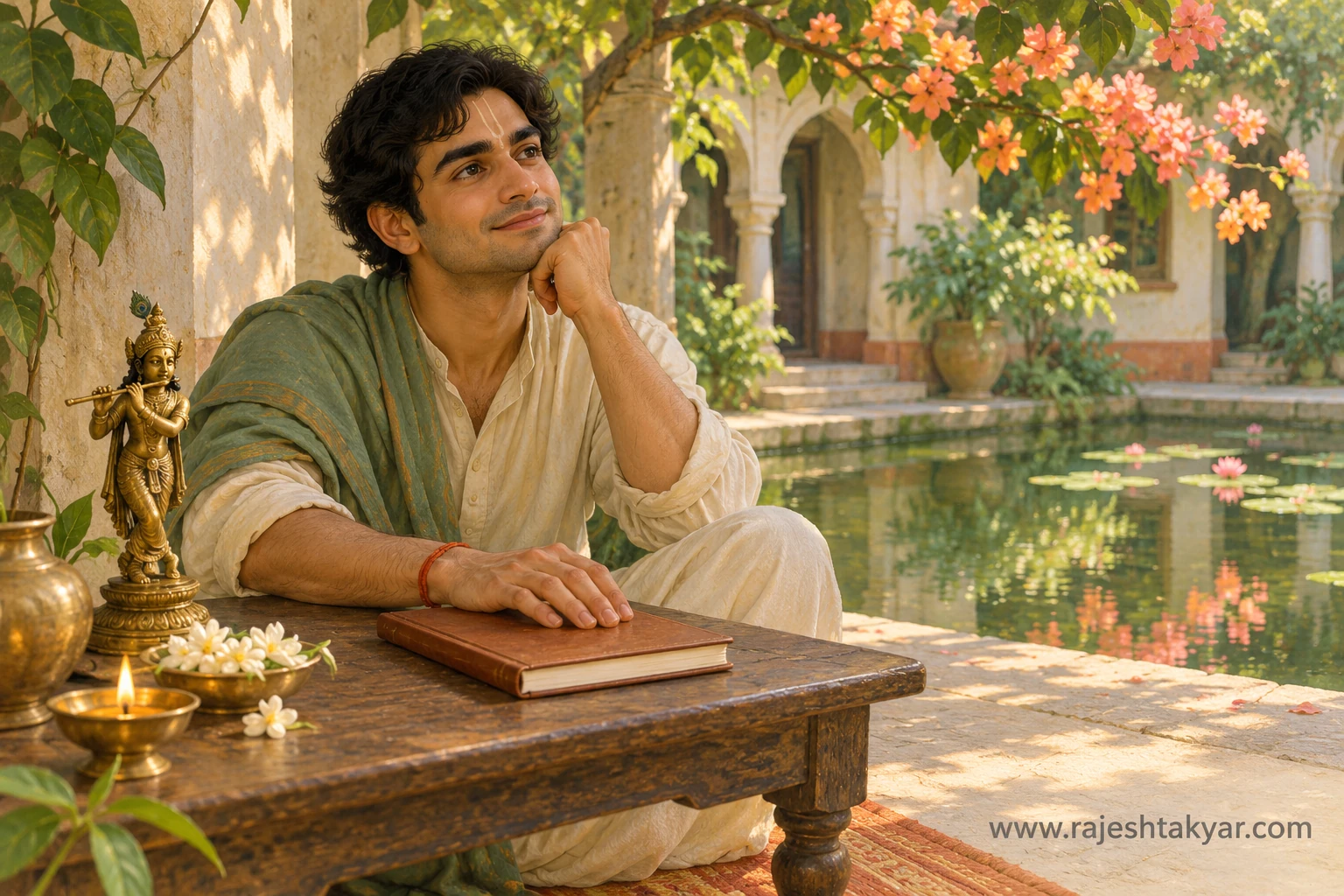
The following text appears under verse number 12 in Part Five of my book, Shrimad Bhagavad Gita.
युक्तः कर्मफलं त्यक्त्वा शान्तिमाप्नोति नैष्ठिकीम्। अयुक्तः कामकारेण फले सक्तो निबध्यते॥ १२ ॥
This explanation in the book describes the states of a person whose mind is disciplined and united in yoga, and of a person bound by attachment to results. One who lets go of this hold on the fruits of action moves towards lasting peace. One who is driven by desires and remains attached to the result becomes bound. Our attention here needs to rest on the inner state from which we act. Work that looks the same from outside can be done with different motivations.
Recognising attachment to results while remaining dedicated to our work is a spiritual practice. This recognition can make us more attentive to our efforts. Where responsibility is ours, we should put in our full effort. Where the mind repeatedly becomes entangled in imagined futures, we should bring it back towards present action. Understand what our studies, preparation and service actually require. Remaining caught in anxiety about the result makes it difficult to fulfil that need.
The Bondage of Attachment
Attachment to results does not remain limited to the wish to succeed. Fear can become connected with it too. The mind asks what will happen if the result does not match its wishes. Then other people's behaviour, their praise and their judgements begin to change our inner balance. Even while working, the mind repeatedly tries to protect its expectations. This divides our capacity to remain present in the task. We may spend more time worrying than making the preparations we needed to make.
In the explanation of the verse, “ayuktah” describes the state of a person who has moved away from self-restraint and remains subject to the mind's desires. Longing for the result and the anxiety connected with it become dominant in that person's work. Peace is expected from an external achievement, while the movement of expectation continues within. When one desire is fulfilled, another may appear. It is necessary to observe this sequence, because a change in one outcome does not automatically change the nature of attachment.
We can see this in our own experience. When some work receives praise, the mind immediately wants another similar approval. When there is less praise, we begin to doubt the work we have done. Instead of examining the actual qualities of our action, we then begin keeping an account of people's reactions. This state can also limit what we learn from our work. Where we needed to notice an improvement, protecting our own honour becomes the main concern.
When we return towards action, the questions change. How well do I understand my responsibility? How carefully did I use the resources available to me? What shortcoming in my work can I clearly see? Which quality needs more practice? These questions bring us into the area where we can make an effort. Repeatedly bringing the mind in this direction can be a practical beginning in understanding the bondage of results.
The Direction of Disciplined Action
The word “yuktah” carries the sense of restraint of the mind and intellect. The practitioner acts without attachment to personal reward. Stability rests on dedication to action and on inner practice. With every change, the entire foundation of peace does not have to be handed over to the outside world. This state is not attained merely by saying a sentence once. We must observe the mind's grip and continually try to bring evenness into our actions.
We can organise our preparation. When we sit down to study, understand the subject before us attentively. When we serve, understand the need for which that service is being offered. When we take charge of a task, make its responsibility clear. In this way, the real purpose of the action becomes visible. If the mind then runs only towards its own reward, recognising that movement becomes easier. Honesty towards our work gives the mind a concrete place for practice.
Hearing about relinquishing results and then treating our own effort lightly can also leave the meaning incomplete. The book's explanation concerns disciplined action without attachment to personal reward. The karma yogi remains engaged in action. The practice concerns attachment within. Therefore, being careless in preparation while merely claiming to have stopped worrying about results is not a complete examination of the mind. Both dedication in effort and purity of motivation need attention.
Information received from a result can also be understood calmly. If a shortcoming becomes visible, learn from it. If a necessary change must be made, consider it and make it. If the desired result arrives, observe the pride arising in the mind. If it does not arrive, understand the action before declaring all of it worthless in despair. The practice of evenness belongs to both situations. As the grip of results loosens, our actions can be seen more clearly.
Practice for Young People
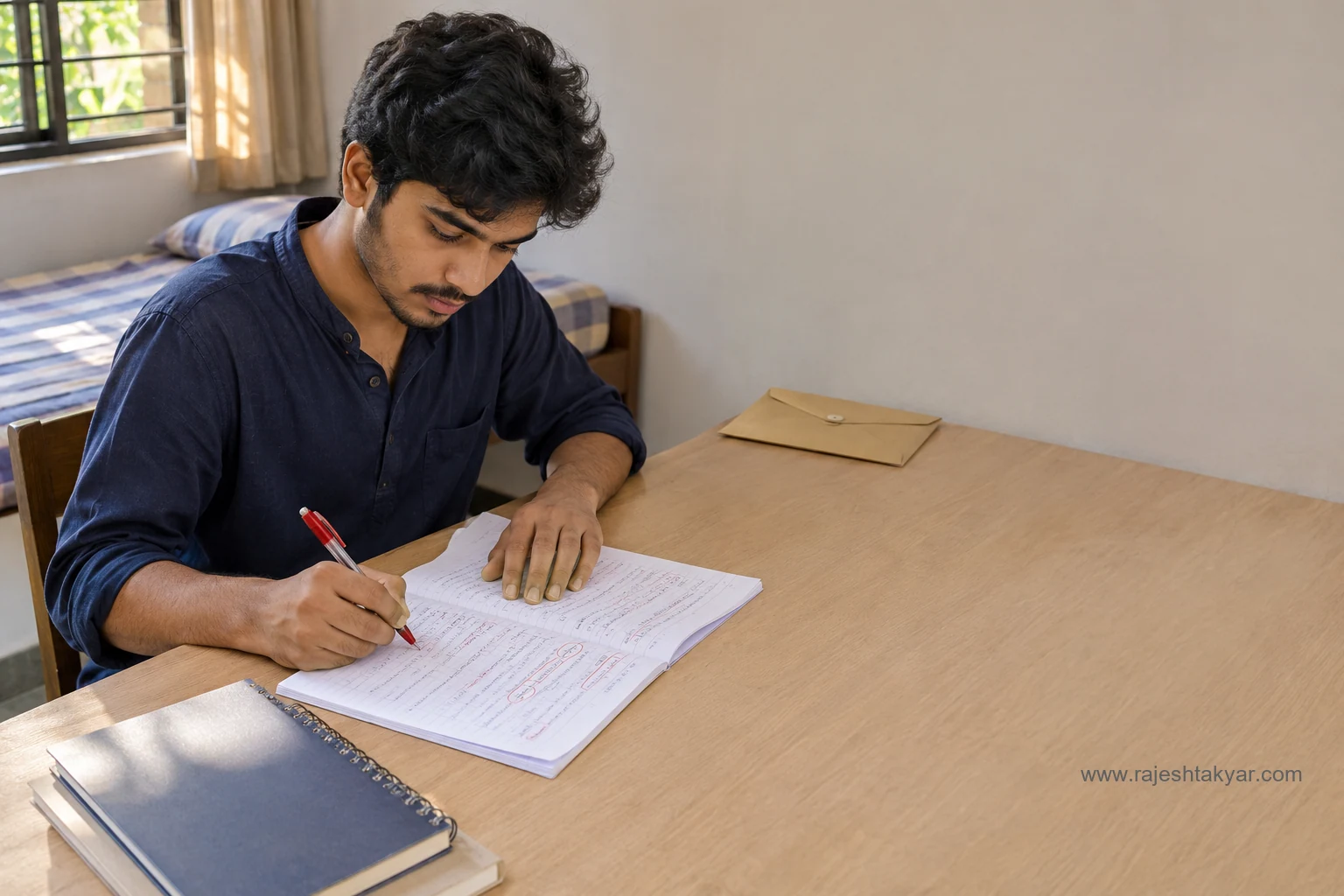
The pressure of results can be greater in the early years of education and work. A path ahead must be chosen, abilities must be developed, and many expectations accompany us. In this situation, reflection on the verse can deepen the seriousness of study. Spend time examining how much of the subject has been understood, how honestly practice has been done, and which difficulty remains. If the same time is repeatedly spent imagining the future, it becomes necessary to bring the mind back to present effort.
Suppose a student has received an examination result. When the marks are not as desired, the student begins to regard all the studying as wasted. At such a time, it is useful to distinguish between two things. Understanding a shortcoming revealed by the result is one thing; treating that result as the whole measure of one’s worth is another. The first can lead to questions about how to improve. In the second, the mind remains bound only to its expectations. Even an ordinary day like this can offer an opportunity to observe the grip of the fruits of action.
Another person's success can also help us understand our own mind. If it inspires us to learn, bring that learning into our efforts. If it only increases restlessness and envy, observe which result has acquired a tighter hold within. We have no control over another person's outcome. Before us lies an opportunity to work on our conduct, preparation and motivation. Repeatedly recognising this opportunity connects spiritual practice with life.
The same grip of the mind can appear in our rest and relationships. If the body is resting while calculations about results continue within, where has the mind found a pause? If we are talking with someone while our attention rests only on our achievements, how will that person be heard? This is why observing attachment to results extends into many forms of everyday behaviour. The effect of restraint in action can also appear in our relationships and in how we treat ourselves.
If the same student can calmly examine shortcomings in the answers, the next task in studying can become clearer. Which meaning was not fully understood? Was the question not read carefully? Which subject needs more preparation? This does not guarantee the next result, but it restores a connection with action. The same honesty is needed even when the desired marks are achieved. Allowing success to increase pride within can be another form of attachment to results.
The pride connected with attachment to results also needs to be recognised. We want all the credit for whatever has gone well. Less attention is given to another person's cooperation or to our own limitations. In this desire, the mind's peace again begins to depend on other people's judgements. A disciplined outlook can retain humility alongside action. Let the assistance received be respected, and let responsibility for our own effort also be fulfilled. This is a practice of purifying motivation.
Before applying the teaching about letting go of attachment to others, it is useful to bring it within ourselves. Merely telling someone in difficulty to forget the result does not increase their understanding of their work. We need to observe our own expectations and behaviour. The clearer the relationship between action and restraint becomes in our own life, the more sensitively we can understand another person's situation. The verse becomes a foundation for our own practice, not a means of quickly passing judgement on another person's sorrow.
Even while remaining steady in our efforts, we can acknowledge fear arising in the mind. If fear appears, examine where its grip lies. Complete the preparations that remain. Understand what assistance is needed. Do not allow the pictures of the future that the mind repeatedly creates to replace the action before us. In this way, the practitioner remains active in responsibility while moving towards inner restraint. This relationship between action and self-observation can be established in everyday life.
The Foundation of Peace
In this verse, peace is placed alongside disciplined action and relinquishing the fruits of action. The condition that we can be peaceful only after making every circumstance of life conform to our wishes becomes weaker. The practitioner attends to the direction of action and recognises desire within. Where the mind becomes bound by attachment, one practises returning through discernment. Patience is necessary in this practice, because old expectations can appear repeatedly.
If the mind is steadier one day and becomes restless again on another, regard that restlessness itself as an opportunity for observation. What are we holding on to? Which result have we taken to be our entire worth? Which aspect of our responsibility is before us now? Such questions can reconnect the mind with our actions. Spiritual practice is connected with this honest return. Without knowing our inner condition, continually changing external results leaves the question of stability incomplete.
Our effort is valuable. Make it with full dedication, and observe the mind in its midst. Learn to remain present in the work while doing it. If the result comes, retain humility; if difficulty comes, retain the patience to learn. The foundation of peace develops in this pure direction of action. Shri Krishna's teaching inspires us to carry out the work in our hands while recognising the grip within and gradually letting it go.