11 October 2026 · Dr. Rajesh Takyar
The Inner Way of Faith and Devotion
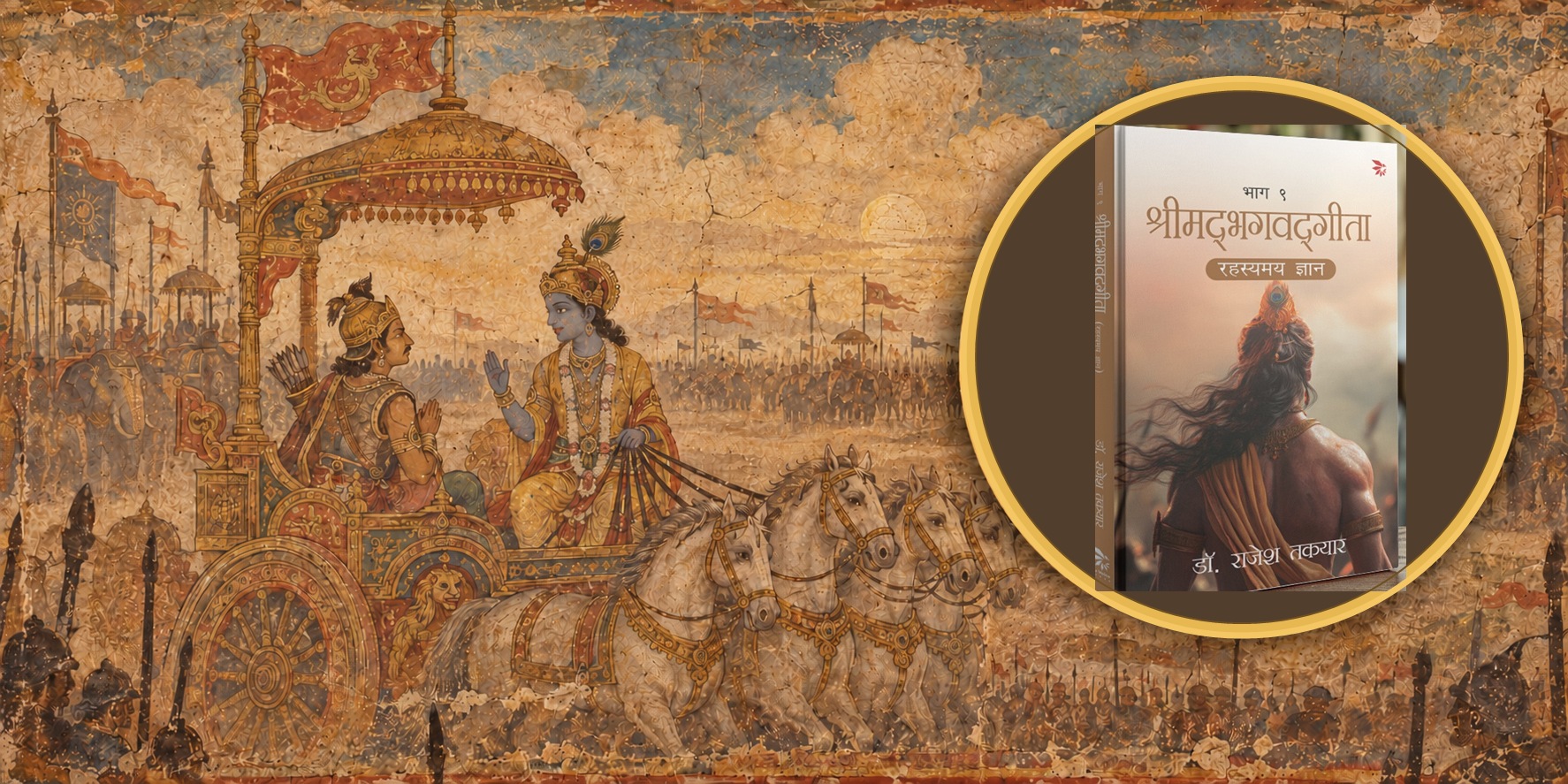
Shri Krishna tells Arjuna that He will now share profoundly subtle knowledge. It is connected with experience, purifies a person and points toward freedom from inauspicious bonds. To receive it, one needs faith and a mind free from the habit of finding fault.
This knowledge begins with a comprehensive truth: the entire universe is pervaded by the Divine. All beings depend on Him, yet the Divine is not confined within the limits of any one form or object.
Shri Krishna gives the example of space and wind. Wind moves through space, but space is not bound by its movement. In the same way, the Divine sustains all and yet remains free from them. He is their foundation, but the limits of the things that depend on Him do not apply to Him.
Creation repeatedly comes into manifestation and then dissolves into nature. This order proceeds under the Divine’s supervision. Yet attachment to these actions does not bind Him. Arjuna is shown a wider understanding of action and freedom from attachment.
Those who do not know the Divine’s true nature try to recognise Him only by outward form. Great souls who take refuge in the divine nature worship Him, knowing Him as the imperishable cause of all beings.
Their devotion is continuous. They remember, make an effort and connect their lives to the same goal. Some worship Him through knowledge; others see the same all-pervading reality in its many forms.
Shri Krishna explains that He is also the essential foundation of yajna, offering, fire and oblation. He is the father, mother, sustainer and refuge of the world. He is the witness, the friend, the source and the final foundation. In this vision, worship becomes connected with the whole of life.
But the direction of worship affects its fruit. Those who perform meritorious acts seeking heaven and enjoyment experience those results. When their merit is exhausted, they return. Limited desires lead spiritual practice toward limited attainments.
Of devotees who are wholeheartedly united with Him, Shri Krishna says that He carries the responsibility for their well-being and preservation. A devotee recognises the ultimate refuge. The relationship is no longer based merely on asking and receiving.
Shri Krishna also explains the simplicity of devotion. A leaf, a flower, a fruit or water—whatever is offered with a pure heart—He accepts. More important than the outward grandeur of the offering is the love with which it is given.
He then tells Arjuna to offer to Him whatever he does, eats, gives in charity or practises as austerity. Spiritual practice is thereby not limited to a particular place or time. Every action in life becomes an opportunity for dedication.
When action is performed with dedication, the grip of auspicious and inauspicious results begins to loosen. A person stops treating every achievement as the property of the ego and every difficulty as a defeat of one’s very being.
Shri Krishna regards all beings with equanimity. Birth and social position do not close the path of devotion. For anyone who takes refuge in Him, the way to the highest destination remains open.
He also makes the possibility of change clear. Even a person whose past conduct was wrong can choose the right direction through wholehearted commitment and become righteous. True dedication changes one’s resolve and conduct. Lasting peace comes with that transformation.
Finally, Shri Krishna asks Arjuna to fix his mind on Him, be devoted to Him and make Him his highest goal. The heart of this hidden knowledge can be expressed simply: recognise the foundation of life and perform all your actions with love and dedication toward it. The author has expanded on this in his following book in 82,500 words. (Shrimad Bhagavad Gita — Part 9 — The Hidden Knowledge)