19 November 2026 · Dr. Rajesh Takyar
Do Not Lose Today While Waiting for Tomorrow
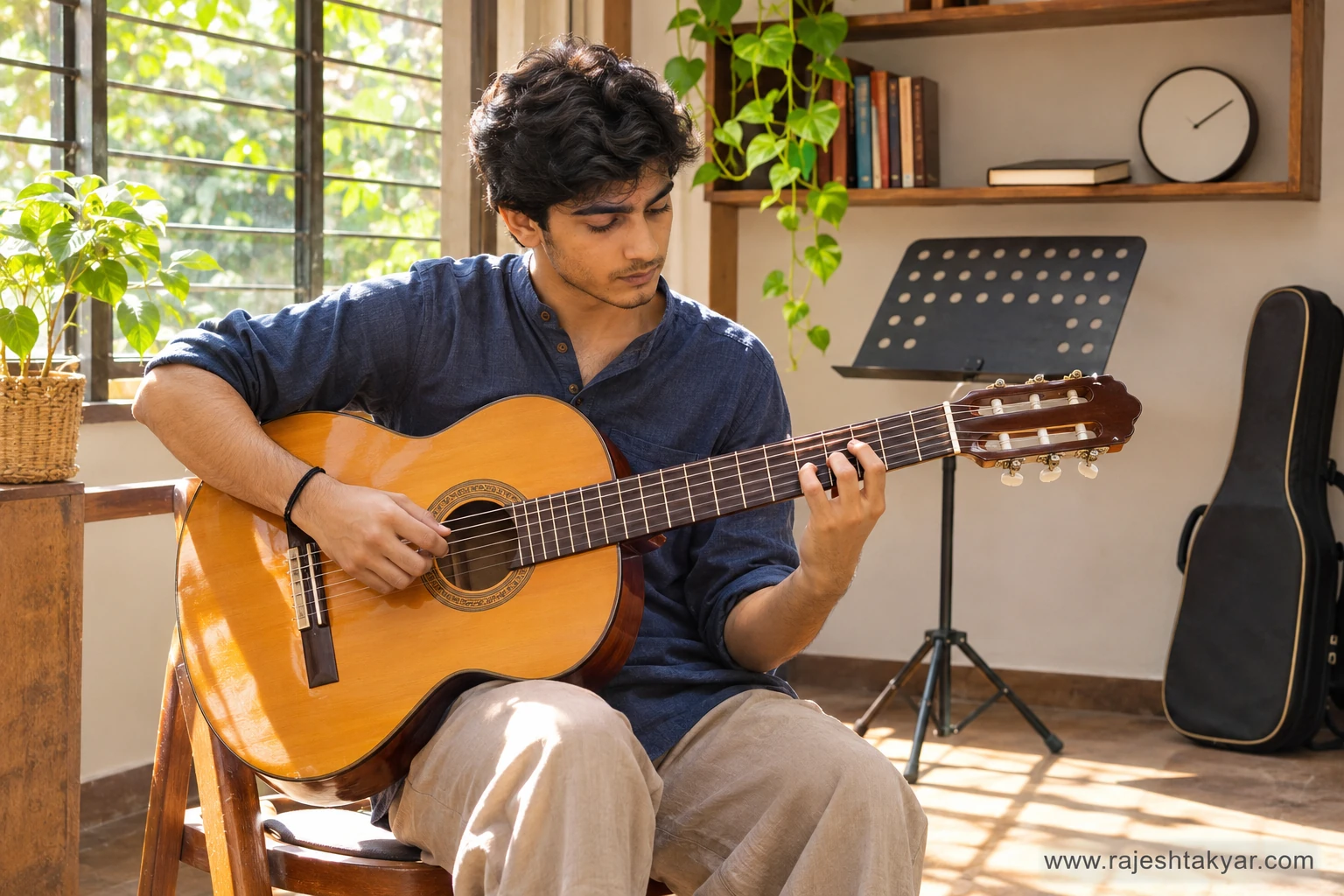
Why does the beginning keep moving away?
We want to learn a language, understand a difficult subject, finish preparation or develop an ability. The intention may be clear, yet the beginning keeps moving: today is busy, tomorrow the mood will be better, next week conditions will improve. Eventually we may discover that thinking about the task delayed us more than its actual difficulty. Good intentions acquire meaning through action.
Not every delay is laziness. Responsibilities, fatigue and limited resources are real, so blaming a young person without understanding their circumstances is unfair. Still, we can honestly ask why we postpone a small step already possible today. The whole destination may be unavailable, but part of the path may be open. Recognising that opportunity means finding appropriate action within our circumstances.
Sometimes we wait because the first attempt must already be excellent: a beautiful first page, an admired presentation, a successful practice. Yet incompleteness belongs to learning. Demanding mastery at the beginning can itself prevent progress. Instead of stopping at the possibility of error, choose a small task that produces understanding and clarifies the next step.
Youth holds possibilities, but regarding time only as future capital can lead us to neglect today. Coming opportunities are shaped partly by present practice. Complaining that a subject remains difficult does little if we never sit with it. We must actually spend time with what we wish to learn. The distance between intention and practice brings us towards Shri Krishna's teaching on action.
Shri Krishna's clear call: perform your duty
नियतं कुरु कर्म त्वं कर्म ज्यायो ह्यकर्मणः । शरीरयात्रापि च ते न प्रसिद्धयेदकर्मणः ॥ ८ ॥
The original Hindi meaning of Part 3, verse 8 is retained below:
“तू अपना निर्धारित कर्म कर, क्योंकि कर्म न करने की अपेक्षा कर्म करना श्रेष्ठ है। और कर्म न करने से तो तेरी शरीर-यात्रा भी नहीं चलेगी ।”
Action here does not mean running around without purpose. It means doing the appropriate and necessary duty before us. Even bodily life requires action. Merely thinking, or giving inactivity an elevated name, cannot fulfil real responsibilities. Study, learning, honest livelihood and duties within relationships offer everyday ways to consider this teaching.
The book uses a farmer to clarify the point. Thinking about cultivation does not prepare a field; the work must be done. Likewise, a student's plan is not completed study. Planning helps when it enters practice. If plans keep changing but the work never begins, the direction needs examination. Organisation should support action rather than permanently replace it.
Reducing this verse to greater output would narrow its meaning. It concerns duty. A visible activity is not necessarily important, and an ordinary responsibility is not necessarily unimportant. Discern what is appropriate in your situation. Begin thoughtfully, so that leaving procrastination behind does not lead into meaningless busyness.
See the next step rather than the whole mountain
Imagine a student intimidated by an entire difficult book. Today, they might choose to read the first question, record the difficulty and understand its answer. That will not finish the book immediately, but it moves the work from imagination into practice. A small step brings us into contact with the actual difficulty rather than only the fear of it.
The same applies to a skill. Buying an instrument is not musical practice; collecting a list of good articles is not learning to write. Gathering materials is preparation, while working with the skill is another task. Identify the actual activity without which learning cannot advance, and make a clear opportunity for it. Great enthusiasm need not become a condition for every attempt.
When something is unclear, asking for help may be the next action. Struggling alone is not the sole evidence of effort. Preparing a question for a teacher or informed person is active work. Explain what you have read, what you understand and where you are stuck. Humility in learning can open a way forward instead of losing time while concealing difficulty.
A small step does not require permanently small aspirations. It gives a large purpose a workable sequence. Notice what was completed and why something remained unfinished. Calling yourself a failure will not design the next attempt. Reduce a task that was too large; if an essential resource was missing, obtaining it can become the next step.
Let time become dependable practice
We sometimes reserve definite time for entertainment and leave study to whatever remains, then say there was no opportunity. Examine the day without harshness. Which activity genuinely offers rest, and which continues mainly from habit? The distinction may free some time for chosen work. This is not hostility towards enjoyment, but honesty towards purpose. Rest and meaningful activity both belong in life.
Regularity does not mean identical circumstances every day. Family needs or work may interrupt an arrangement, so it should fit real life. A missed day need not end the whole practice. Return at the next available opportunity. Do not turn one interruption into a permanent identity. Instead of declaring that you will never succeed, ask what small possible step comes next.
Displayed effort and actual practice also differ. Talking about a project, sharing preparation or hearing praise for a plan can feel satisfying. But examine the learning itself. Was the difficult point understood more clearly? Was the skill practised? Assess progress through work and understanding rather than solely through other people's reactions.
Slow results can discourage us. Early attempts may fall short of our expectations. Look for what can improve, review the work and seek guidance. Repetition alone is not enough: remain attentive to what needs changing and where understanding is missing. Time can then become an experience of learning rather than merely passing.
Preparing the workspace may help, but elaborate arrangements should not trap the task. Having the necessary book, material or question before us may be enough to begin. Before seeking another tool, ask whether it is genuinely needed. Use what is available; much initial practice need not wait for a purchase.
Give one small part proper attention after beginning. Turning to another activity at every difficulty can prevent understanding from developing. Record an obstacle and identify suitable help. Staying with a question for a while is also effort. Distinguish discomfort from actual impossibility before choosing the next step.
Today's action can give substance to tomorrow
Giving time to study and work does not mean copying someone else's pace. Resources differ. Comparison should not make our available opportunity seem worthless. Begin honestly with the time and means at hand, accept support and seek appropriate help with difficulty. Do not judge your first step against the whole of another person's journey.
Our tasks also affect others. Postponing a responsibility may delay somebody else's work. Time therefore concerns trust as well as personal achievement. Try to keep commitments, and communicate when circumstances change. Silent postponement leaves another person uncertain. Responsible use of our time includes respect for theirs.
At the day's end, notice more than unfinished tasks. What became real today: a question understood, a page written, a necessary job begun or a mistake corrected? Use that experience to guide the next step. Satisfaction need not mean stopping. It can acknowledge completed work while accepting further responsibility, maintaining a thoughtful connection with purpose without expecting a miracle.
A good intention for tomorrow is valuable, but it should not leave today empty. Shri Krishna's call brings us back to action. Life is shaped by what we do as well as what we imagine. Do one possible part of the work you consider right. A small beginning matters because it replaces waiting with responsible effort and gives the coming days a foundation now.