11 October 2026 · Dr. Rajesh Takyar
The Steadiness of a Beloved Devotee
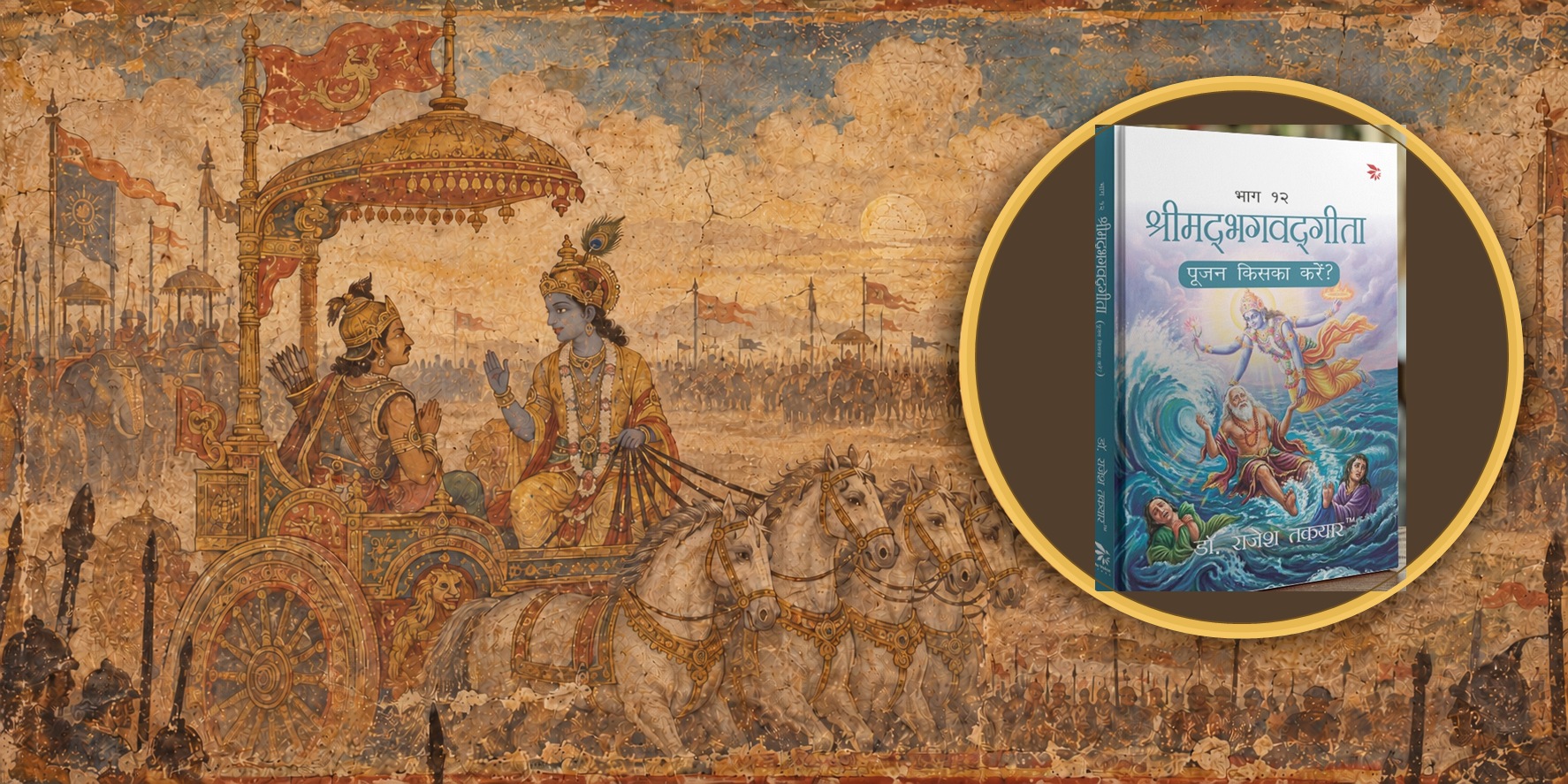
Arjuna asks Shri Krishna who is the greater yogi: those devotees who worship His personal form, or those who contemplate the unmanifest, imperishable Brahman. He wants to understand the direction of worship clearly.
Shri Krishna says that those who fix their minds on Him and worship Him continuously, with complete faith, are the highest yogis in His view. A mind connected with the Divine and an unwavering commitment are especially important in devotion.
Those who worship the unmanifest Brahman also attain Him. This requires control of the senses, an equal vision and dedication to the welfare of all beings. Yet for an embodied person, contemplation of the unmanifest is difficult.
Shri Krishna offers Arjuna a path by which the mind, intellect and actions can gradually come together around one goal. He asks him to offer all actions to Him, regard Him as the highest goal and meditate on Him.
He assures Arjuna that He will deliver one whose mind is fixed on Him. A devotee does not see himself as struggling alone. His refuge is clear, and confidence remains in his practice.
First, Shri Krishna asks that the mind and intellect be fixed on Him. If this steadiness is not immediately possible, there is the path of practice. Whenever the mind wanders, it can be brought back. Steady effort gradually prepares it.
If practice also seems difficult, one can work for Him. The tasks already present in life can be made opportunities for dedication. In this way, the hands remain engaged in action while its inner direction begins to change.
If even this does not come easily, one should act with self-discipline and give up attachment to the fruits. As the grip on results loosens, the mind finds peace. Shri Krishna shows the seeker ways to proceed according to their capacity.
Devotion then becomes visible in a person’s conduct. A beloved devotee bears ill will toward no being, offers friendship and compassion to all, and is free from the pressure of ego and possessiveness.
Such a person strives for equanimity in joy and sorrow and is forgiving. Contentment does not wait for every desire to be fulfilled. The person is self-restrained and firm in resolve.
One who does not agitate the world and is not disturbed by every external event is dear to Shri Krishna. Such a life does not spread fear or harshness. The person’s presence allows others to feel at ease.
A devotee is pure, capable and free from the restlessness of expectations. Commitment is joined with skill in action. The devotee avoids undertakings intended only to increase ego and self-interest.
Amid blame and praise, respect and disrespect, friends and opponents, such a person keeps discernment intact. Praise does not make the person feel superior, and criticism does not destroy the inner foundation.
The person’s speech is restrained and the mind content. One lives amid circumstances without clinging to any one arrangement as the sole basis of peace. The intellect grows steady in the highest goal.
Shri Krishna concludes that those who faithfully practise this teaching of dharma and make Him their highest goal are exceedingly dear to Him. Thus, the question of worship leads to character. The light of devotion appears in compassion, forgiveness, contentment, restraint and dedicated action. The author has expanded on this in his following book in 43,975 words. (Shrimad Bhagavad Gita — Part 12 — Whom Should We Worship?)