11 October 2026 · Dr. Rajesh Takyar
Action, Renunciation, and Inner Freedom
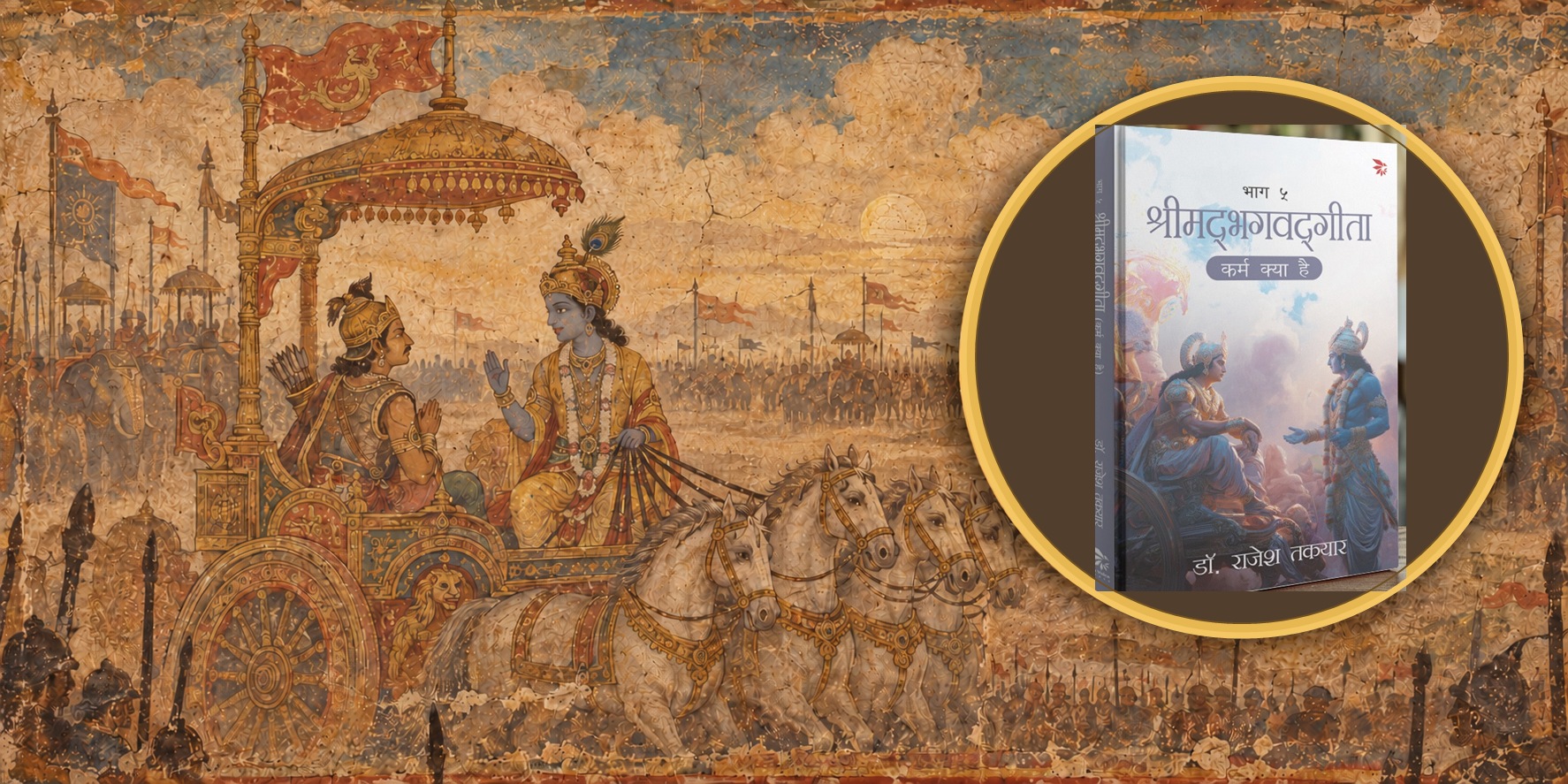
A question still remains in Arjuna’s mind. At times Shri Krishna speaks of renouncing actions, and at other times praises the yoga of action. Arjuna asks which of these paths would be more beneficial for him. He wants a clear answer he can understand and follow.
Shri Krishna explains that renunciation and karma yoga can both lead to liberation. Even so, the path of letting go of attachment while continuing to act is easier. A person can fulfil duties and still be inwardly free.
True renunciation is recognised by the state of the mind. One who bears no ill will toward anyone and does not constantly chase desires is a renunciant even while acting. Someone who has withdrawn from the world but remains restless within, preoccupied with gaining and losing, has not yet left bondage behind.
Knowledge and karma yoga have the same ultimate aim. Knowledge helps a person recognise one’s true nature. Selfless action purifies the inner being. When understanding and conduct move in the same direction, action becomes a spiritual discipline leading to freedom.
Shri Krishna tells Arjuna that a person whose inner being is disciplined and purified sees the self in all beings. Such a person does not understand life as something entirely separate from others. As a result, action begins to move beyond the narrow limits of self-interest.
That person sees, hears, walks and speaks without attaching the ego to every activity. There is an understanding that the senses are engaging with their objects. This understanding reduces the illusion that everything happens under one’s personal control.
Shri Krishna gives the example of a lotus leaf. It lives in water, yet water does not cling to it. In the same way, a person who offers actions to the Divine is not stained by them, even while living amid action.
Letting go of attachment does not mean making less effort. A yogi uses the body, mind, intellect and senses for inner purification. The work is done with care, but its result is not made the sole foundation of one’s peace.
An insistence on guaranteed results binds the mind. A person may think, “I will be happy only if I get the outcome I want.” The karma yogi lets go of this demand. Attention remains on one’s duty and commitment to it. This opens a path to lasting peace.
Ignorance veils knowledge of the self. When that covering is removed, truth becomes clear like sunlight. A person begins to recognise the same essential self present behind differences of body, position and outward appearance.
That is why the wise see with equality. Whether they encounter a learned person or someone who is neglected, a cow, an elephant or a dog, they see the same foundation of life in all. This vision of equality reduces ego and contempt in conduct.
When something pleasant comes, their discernment is not swept away; when an unpleasant situation arises, their steadiness does not collapse completely. They know that pleasures received through the senses have a beginning and an end. They therefore seek an inner happiness that does not depend on external conditions.
Learning to endure the surge of desire and anger is also a discipline. A person who does not immediately come under their sway begins to experience inner freedom. Restraint does not become harshness toward others; it enables a person to work for the welfare of all beings.
At the end, Shri Krishna explains the basis of peace. One who knows Him as the Lord of all worlds, the recipient of yajna and austerity, and the well-wisher of all beings attains peace. The essence of karma yoga is to keep fulfilling one’s duty, keep the mind pure and live one’s actions in a spirit of dedication. The author has expanded on this in his following book in 52,000 words. (Shrimad Bhagavad Gita — Part 5 — What Is Action?)