18 October 2026 · Dr. Rajesh Takyar
Gratitude After Crisis
The Meaning of Returning Home
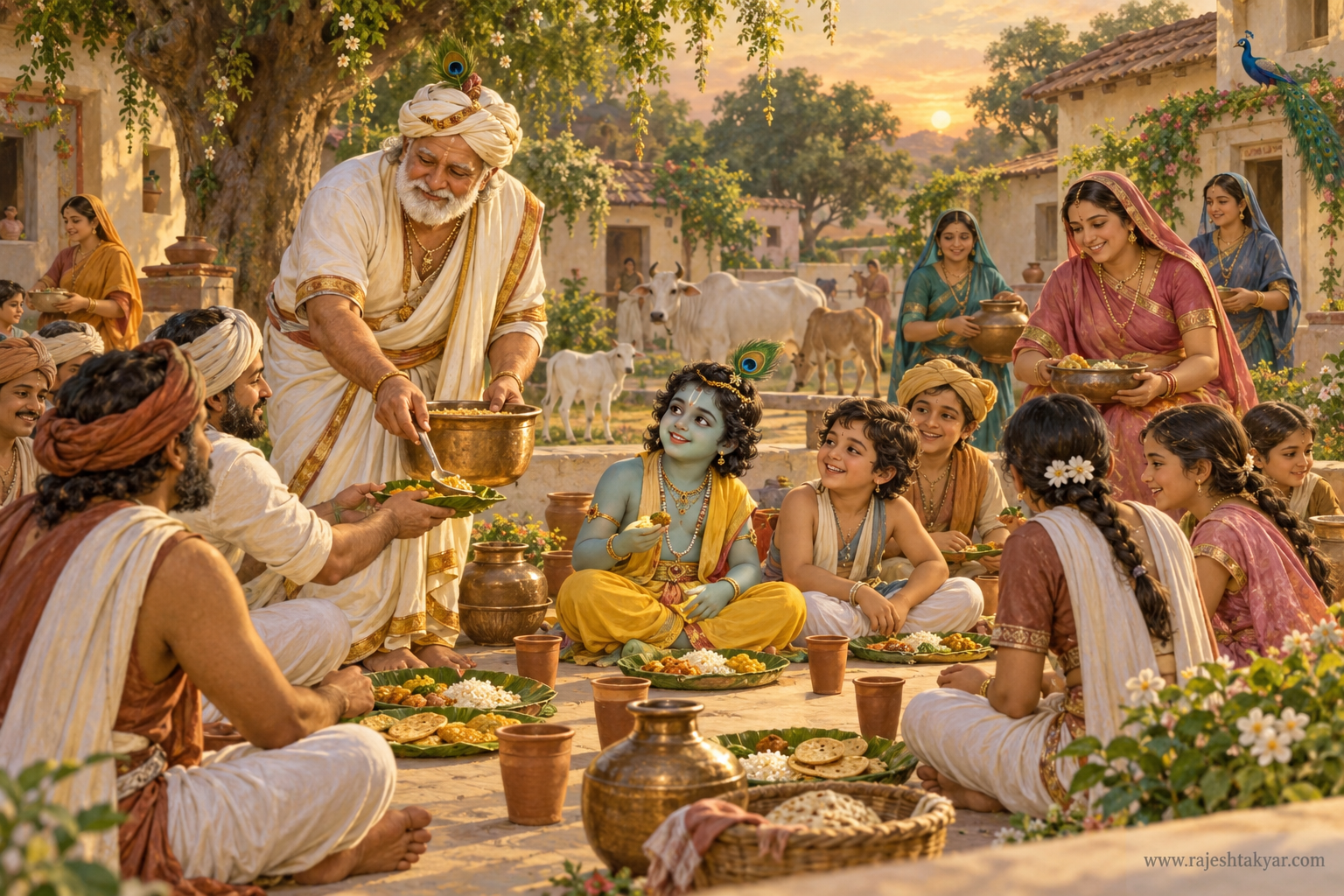
We remember the prayer that rises during a crisis. Sometimes the scene of returning home afterwards escapes our attention. In Krishna’s forest-fire episode, I want to pause over precisely this return. The fire has subsided, fear has lifted and the people of Vraja are filled with joy. But the story does not end there. Krishna comes home with everyone. Nanda gives gifts, feeds everyone, auspicious observances take place and the Lord’s name is sung. For me, these final events contain an important question: how will we now treat the life that we have experienced as being spared?
In fear, the heart recognises its needs very clearly. It wants safety, the company of its loved ones and a way out of danger. When the difficulty passes, the same heart finds relief. Should only the old busyness return after that relief, or can something remain within that changes how we look at life? Vraja’s shared joy after the fire draws me towards the second question. Returning safely does not remain enclosed within one person’s happiness. Through food, giving and devotional singing, it connects with others. The relief received appears to open room for generosity in life.
Reading this episode, I do not want to confine gratitude to spoken thanks. Words have their importance, but action is present alongside them in Nanda’s home. After returning, his joy finds expression in giving and feeding. The story’s centre moves beyond the terror of the crisis towards the companionship that has survived. The people are together again, Krishna is among them and an auspicious atmosphere fills the home. What they had feared losing can now be experienced anew in its presence.
Two scenes from this story remain before me together. In one, fire surrounds everyone and people pray for protection with joined hands. In the other, they have returned home and everyone is being fed. The first reveals life’s insecurity; the second offers an opportunity to understand its value. Between them lies the episode of Krishna’s grace. Remembering only the first scene would arrest the story in fear. I also want to notice the openness of heart that follows, making room for others within its happiness.
From Wonder to Belonging
The forest-fire chapter begins with the people of Vraja awakening to an extraordinary town. The night has passed, Vishwakarma has departed and people come outside in wonder at dawn. Where did this town come from, who built it, and how did it appear in this way? They ask these questions among themselves. Nanda remembers the words of the sage Garga and understands it as the will of Shri Hari. For him, the scene becomes a reminder of Krishna’s power. The people’s questions and Nanda’s remembrance stand together before the same wonder.
People then explore the town, identify the houses and reach their allotted places. Nanda and Vrishabhanu begin living there with their people. Children play; Krishna and Balarama also play with the other boys. I see a beautiful change in this sequence. The town first regarded with astonishment gradually becomes a home. Amid its splendour, the familiar rhythm of life returns. Home comes to mean more than its beauty; the people living together, the children’s happiness and the beginning of daily life also belong within it.
This background deepens the meaning of the fire that follows. The danger does not surround only a place; it surrounds the lives of people who have begun living together. Their happiness, relationships and ordinary activities are parts of that life. To understand the joy of survival, we therefore also need to see what was dear to them. The story first shows us people settling in and playing. The sense of danger comes afterwards. Returning home thus means more than reaching a location again; it also means recovering that belonging.
Turning towards my own life, I reflect on how easily the value of familiar things can disappear from view. We take the people beside us, easy conversation at home and children’s happiness as ordinary parts of life. This scene of Vraja draws attention to those seemingly simple joys. Happiness in the story does not belong to one person alone; the cowherds entering their homes, the children playing and the families living together all participate in it. When this shared life is protected, a shared celebration also feels natural. To understand gratitude, I first need to see that life together.
Remembrance in the Face of Fear
The same chapter describes Krishna emerging from the water after the Kaliya episode. Yashoda and Radha have not yet become entirely calm. The sorrow of separation has left a deep impression. When Krishna appears, everyone is filled with joy. Yashoda takes him into her lap and kisses him, the boys embrace him, and the cowherds and gopis keep gazing at his face. Happiness here does not arise merely from knowing that danger has ended. The beloved’s presence, seeing him and coming close to him complete that joy. After fear, the relationship reveals its warmth again.
Then, one day, a forest fire spreads all around. The people of Vraja feel that everything will now be destroyed. With joined hands, they praise Krishna. Remembering his earlier protection in their prayer, they ask for freedom from fear in this crisis too. Remembrance here is more than recounting an event from the past. It becomes the foundation of their present call. They place their fear before the one they call their chosen deity and the deity of their family. The children’s and gopis’ humility, and their deep attachment to life, are both present in this collective appeal.
In the story, everyone takes refuge while contemplating the Lord’s feet, and Krishna’s gracious glance stills the fire. His grace is at the centre of that moment. I receive this account within its devotional feeling. Rather than an outward display, it places before us a scene of trust rising within the people. The fear surrounding them is not being endured in separate isolation. They are together, and their call rises in one direction. This gathering of hearts amid danger also prepares the way for the joy in which they will all participate.
Joy after fear appears more than once in this chapter. Hearts open when Krishna comes out of the water, and again when the fire subsides. Yet each event has its own context. First there is the embrace of the returning beloved; then the happiness of everyone’s protection. Reading these scenes together helps me understand that Vraja’s relationship with Krishna is more than praise offered from a distance. The pulse of their lives is connected to that relationship. This is why the joy after danger feels so intimate in the story. It carries the feeling of finding their people and their Krishna together once more.
When Happiness Is Shared
When the fire subsides, people begin to dance with joy. This is the first spontaneous release: the weight of fear has lifted. Krishna then comes home with them. Afterwards, Nanda gives gifts to the Brahmins and feeds everyone. This sequence touches me particularly. The first surge of joy develops into tangible conduct. The happiness of dancing and the generosity of feeding are not separate lives. Both express the same companionship that has been preserved. Joy rising within becomes room and nourishment for another person.
This form of gratitude takes our attention from receiving towards giving. In danger, the heart wanted protection. Upon returning home, Nanda’s hand reaches out to give. There is no discussion of a bargain, as though a certain amount of protection required a corresponding payment. The story keeps no such account. It shows conduct after relief. I therefore see this giving as openness of heart rather than the settling of a debt. Remembrance of grace allows one’s possessions to become useful to someone, instead of being held even more tightly.
Feeding everyone is also profound in its simplicity. Its centre is not the thought that one’s own family is safe and everyone else can now be forgotten. Others are included in the meal. Room is made for everyone within the happiness that all have experienced. I want to ask myself through this scene how far my relief reaches. After coming through a difficulty, does my heart become at ease only for myself, or does it open a little towards others too? The episode in Nanda’s home answers the question through action rather than a long sermon.
Auspicious observances, Vedic recitation and the singing of the Lord’s name also take place. Food and remembrance are present within the same atmosphere. Life’s needs and devotion have not been placed in separate compartments. People are to be fed, and the divine name is to be sung. This companionship matters to me. The joy that entered the heart did not remain closed within an individual experience; it touched the atmosphere of the home and community. The happiness spreading through Vrindavan can be understood through this expansion. Remembrance of grace expresses itself through life there.
Let Gratitude Remain in Life
At the end of the forest-fire episode, people begin to live happily while contemplating the Lord’s feet. This final detail tells me that remembrance does not remain confined to the hour of danger. Life continues after the fire is extinguished, and contemplation remains within that life. For me, gratitude reveals its meaning in this continuity. The voice of prayer may become quieter, and the sharpness of fear may fade, but the relationship need not be forgotten. The one who felt close during danger can retain a place in life during happiness too.
Reading this episode, I do not want to make grand declarations about my own experience. I simply want to see what remains in my conduct after a difficult time. Only the memory of an event, or some generosity of heart as well? Nanda’s giving and the meal for everyone ask me to examine the form of my happiness. The story seeks no public praise for it. What happens is part of life returned home. The beauty of gratitude appears in this naturalness. It does not always need to express itself in great words.
The story began in wonder and ends in peaceful living. Between them are scenes of fear, reunion with the beloved, prayer and grace. Seeing the entire sequence together, life’s value does not rest only within an extraordinary event. As much as the splendour of the town attracts attention, returning home and sharing a meal becomes equally meaningful. I do not want to forget this second scene. Here, relief from danger enters everyday relationships. The people are together again, and their happiness is visible in their conduct.
In the end, Nanda’s home remains before me, where people are eating and Krishna is among them. The danger outside has subsided. Within, room remains for remembrance and auspiciousness. I return from this scene with a question for myself: can my gratitude also make room for someone? When relief comes, does my heart open to giving, listening and being together? May conduct after a crisis be as sincere as the prayer offered during it. This episode of Vraja awakens precisely that aspiration within me.